

Craving authentic Pad Thai? This recipe delivers all the classic sweet, sour, and savory flavors you love, made easily in your own kitchen. Perfect for a quick weeknight meal or impressing guests.
Why You’ll Love This Authentic Pad Thai Recipe
Forget soggy noodles and bland flavors! This authentic Pad Thai recipe brings the vibrant, complex tastes of Thailand right to your kitchen. You’ll love how quickly it comes together, making it a perfect weeknight meal, yet it’s impressive enough for entertaining. The balance of sweet, sour, salty, and spicy notes will have you reaching for seconds, and you’ll discover just how easy it is to create a restaurant-quality dish that truly beats takeout.
What Makes This Pad Thai Recipe Special
Our Pad Thai stands out for its commitment to authentic flavors and simple, effective techniques. We focus on a balanced sauce, the right noodle texture, and fresh ingredients to achieve that signature taste. Unlike many recipes that cut corners, we guide you through each step to ensure your noodles are perfectly pliable, your protein is tender, and the sauce clings beautifully to every strand. It’s a recipe designed for success, even if you’re new to Thai cooking, promising a dish that’s both deeply satisfying and genuinely flavorful.





Ingredients You’ll Need

Gathering the right ingredients is crucial for an authentic Pad Thai. Here’s what you’ll need to create this flavorful dish:
1. Chicken thighs (bone-in, skin-on)
Amount: 8 (about 3 lbs)
Bone-in chicken gives richer flavor and crispier texture
2. Kosher salt
Amount: 2 teaspoons
Season generously and adjust at the end if needed
3. Black pepper
Amount: 1/2 teaspoon
Freshly ground gives best aroma and taste
4. All-purpose flour
Amount: 1/2 cup
Light coating helps browning and slightly thickens sauce
5. Olive oil
Amount: 2 tablespoons
Butter can be used for richer flavor
6. Garlic
Amount: 4 cloves (minced)
Add near end of sautéing to prevent burning
7. Yellow onion
Amount: 1 (diced)
White or sweet onion can also be used
8. Cremini mushrooms
Amount: 8 ounces (sliced)
Baby bella or button mushrooms also work
9. Fresh thyme
Amount: 1 tablespoon leaves
Dried thyme (1 tsp) can be used instead
10. Bay leaves
Amount: 2
Remove before serving
11. Dry white wine
Amount: 1 cup
Sauvignon Blanc or Pinot Grigio adds depth
12. Chicken broth
Amount: 1 cup
Low-sodium preferred for better control
13. Diced tomatoes
Amount: 1 (15-ounce) can
Crushed tomatoes or fresh diced tomatoes can be used
14. Fresh parsley (chopped)
Amount: 2 tablespoons
Adds freshness at the end
15. Cooked pasta or rice (for serving)
Amount: 1 lb pasta or 2 cups rice
Any preferred pasta or grain works well
Pro-Tips for Authentic Pad Thai Success
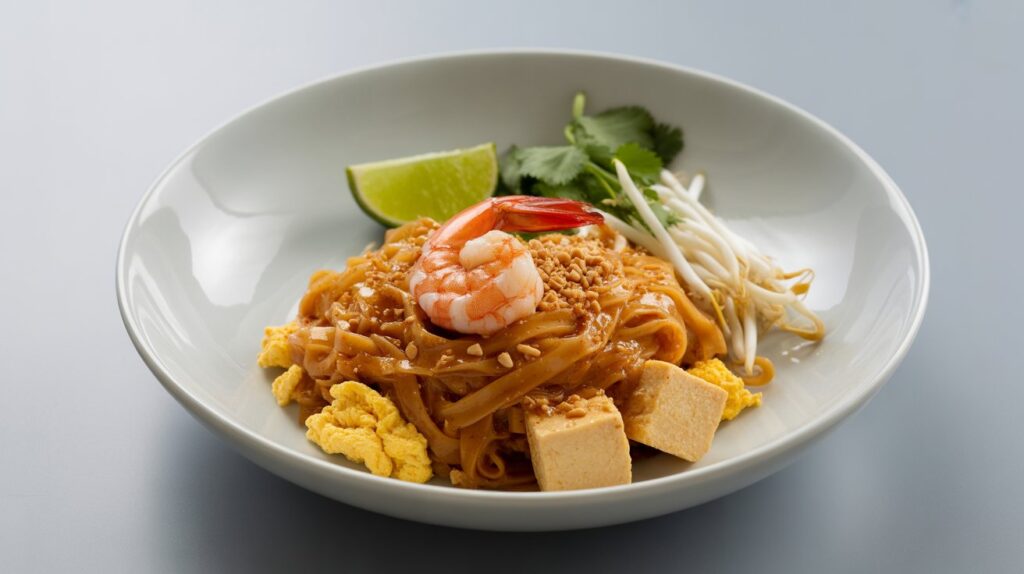
- Don’t Overcook the Noodles: The key to perfect Pad Thai is al dente noodles. They should be pliable after soaking, then finish cooking in the wok to absorb the sauce without becoming mushy.
- High Heat is Your Friend: Use a hot wok or large skillet to get a good sear on your protein and vegetables, and to prevent the noodles from sticking. This creates that signature ‘wok hei’ flavor.
- Prep Everything First: Pad Thai cooks very quickly. Have all your ingredients chopped, sauces mixed, and noodles ready before you start stir-frying to ensure a smooth and successful cooking process.
- Balance the Flavors: Pad Thai is all about the balance of sweet, sour, and salty. Taste your sauce before adding it to the wok and adjust to your preference. A squeeze of fresh lime at the end can elevate all the flavors.
Common Mistakes to Avoid When Making Pad Thai
- Over-soaking Noodles: This is the most common mistake. Noodles should be pliable but still firm after soaking, as they will continue to cook in the wok. Over-soaked noodles become mushy and break apart.
- Low Heat: A common error that leads to steamed ingredients rather than properly stir-fried ones. Ensure your wok is screaming hot before adding ingredients to achieve that desirable char and flavor.
- Skipping Tamarind Paste: While some recipes substitute with lime juice, authentic Pad Thai gets its unique tangy depth from tamarind paste. Don’t skip it for the true flavor profile.
Flavor Variations for Your Pad Thai
- Spicy Lover’s Pad Thai: Increase the sriracha or chili garlic sauce in the sauce. You can also add thinly sliced bird’s eye chilies to the wok with the garlic and shallots for an extra kick.
- Vegetarian/Vegan Pad Thai: Replace chicken/shrimp with extra firm tofu or a mix of vegetables like bell peppers, carrots, and broccoli. Substitute fish sauce with a vegetarian stir-fry sauce.
- Seafood Medley Pad Thai: Instead of just shrimp, use a mix of shrimp, squid, and scallops for a richer seafood experience.
What to Serve With Pad Thai

Pad Thai is a complete meal on its own, but a few accompaniments can elevate the dining experience:
- Fresh Lime Wedges: Always serve with extra lime wedges for a burst of fresh acidity.
- Chili Flakes or Sriracha: For those who like extra heat, offer a side of chili flakes or sriracha.
- Thai Iced Tea: A classic pairing, the sweet and creamy Thai iced tea perfectly complements the savory and spicy notes.
Storage and Reheating Your Pad Thai
Leftover Pad Thai can be stored in an airtight container in the refrigerator for up to 3 days. To reheat, gently warm in a skillet over medium heat, adding a splash of water or chicken broth to rehydrate the noodles and sauce. Avoid microwaving if possible, as it can make the noodles rubbery.
View Full Recipe

Pad Thai (Better Than Takeout)
Description
Craving authentic Pad Thai? This recipe delivers all the classic sweet, sour, and savory flavors you love, made easily in your own kitchen. Perfect for a quick weeknight meal or impressing guests.
Ingredients
Instructions
-
Step 1: Prepare the Noodles (0-10 min)
Soak rice noodles in hot water (not boiling) for 8-10 minutes, or until pliable but still firm. Drain and set aside. Do not oversoak, as they will cook further in the wok.
-
Step 2: Make the Pad Thai Sauce (0-5 min)
In a small bowl, whisk together tamarind paste, fish sauce, palm sugar, rice vinegar, and sriracha (if using). Stir until the sugar is dissolved. This sweet, sour, and savory sauce is the heart of authentic Pad Thai.
-
Step 3: Stir-Fry Aromatics and Protein (0-5 min)
Heat vegetable oil in a large wok or skillet over medium-high heat. Add chicken or shrimp and stir-fry until cooked through, about 2-3 minutes. Push to one side of the wok. Add minced garlic and sliced shallot to the other side and stir-fry until fragrant, about 30 seconds.
-
Step 4: Add Tofu and Eggs (0-3 min)
Add the pressed tofu cubes to the wok and stir-fry until lightly golden. Pour the beaten eggs into the empty space in the wok and scramble until just set. Mix everything together.
-
Step 5: Combine Noodles and Sauce (0-5 min)
Add the drained rice noodles to the wok. Pour the Pad Thai sauce over the noodles. Toss everything together using tongs, ensuring the noodles are evenly coated. Continue to stir-fry for 2-3 minutes until the noodles are tender and the sauce has thickened slightly.
-
Step 6: Finish with Fresh Ingredients (0-2 min)
Stir in 1.5 cups of bean sprouts and half of the chopped chives/green onions. Toss quickly until just combined and the bean sprouts are slightly softened but still retain their crunch. Remove from heat immediately to prevent overcooking.
-
Step 7: Serve and Garnish (0-1 min)
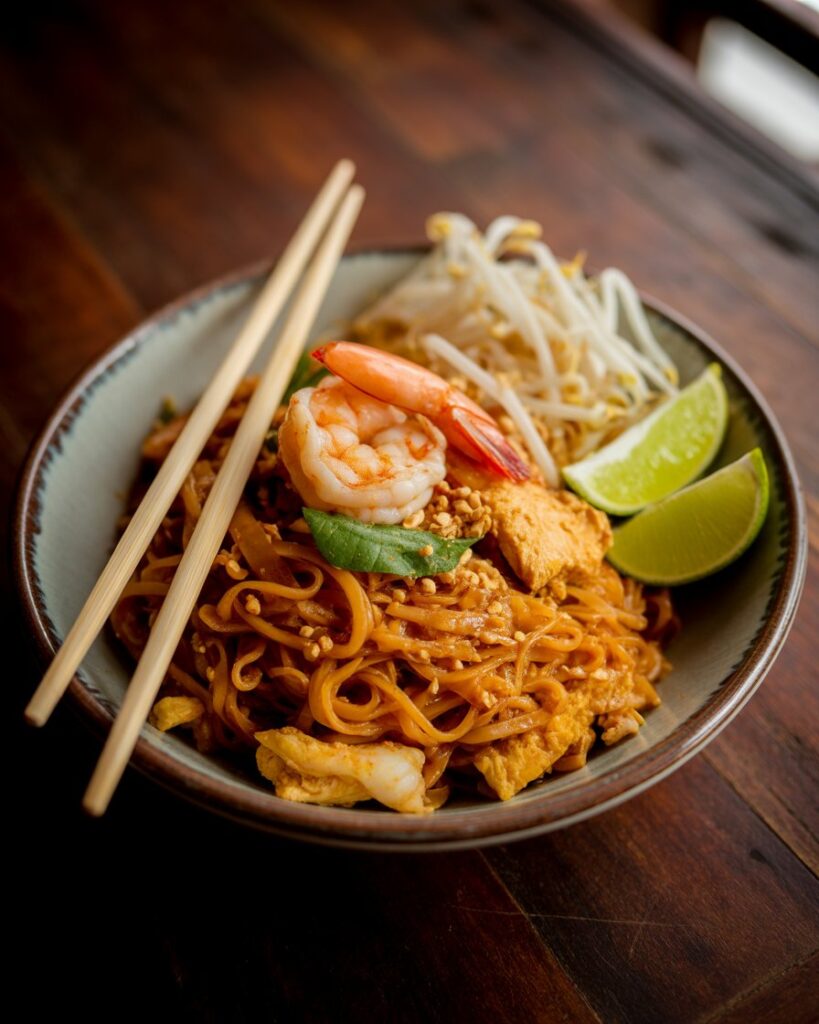
Divide the Pad Thai among serving plates. Garnish generously with the remaining bean sprouts, chopped roasted peanuts, and a lime wedge. Serve hot and enjoy your homemade authentic Pad Thai!
Nutrition Facts
Servings 4
- Amount Per Serving
- Calories 650kcal
- % Daily Value *
- Total Fat 25g39%
- Saturated Fat 5g25%
- Cholesterol 100mg34%
- Sodium 1200mg50%
- Total Carbohydrate 80g27%
- Dietary Fiber 5g20%
- Sugars 20g
- Protein 30g60%
* Percent Daily Values are based on a 2,000 calorie diet. Your daily value may be higher or lower depending on your calorie needs.
Note
- Don't Overcook the Noodles: The key to perfect Pad Thai is al dente noodles. They should be pliable after soaking, then finish cooking in the wok to absorb the sauce without becoming mushy.
- High Heat is Your Friend: Use a hot wok or large skillet to get a good sear on your protein and vegetables, and to prevent the noodles from sticking. This creates that signature 'wok hei' flavor.
- Prep Everything First: Pad Thai cooks very quickly. Have all your ingredients chopped, sauces mixed, and noodles ready before you start stir-frying to ensure a smooth and successful cooking process.
