

If you’ve been searching for the creamiest, most indulgent 3 cheese mac and cheese recipe, you just found it. This is the kind of dish that makes everyone go quiet at the dinner table — in the best way possible. Made with a blend of sharp cheddar, gruyère, and parmesan, it’s rich, gooey, and deeply satisfying.
Why You’ll Love This 3 Cheese Mac and Cheese Recipe
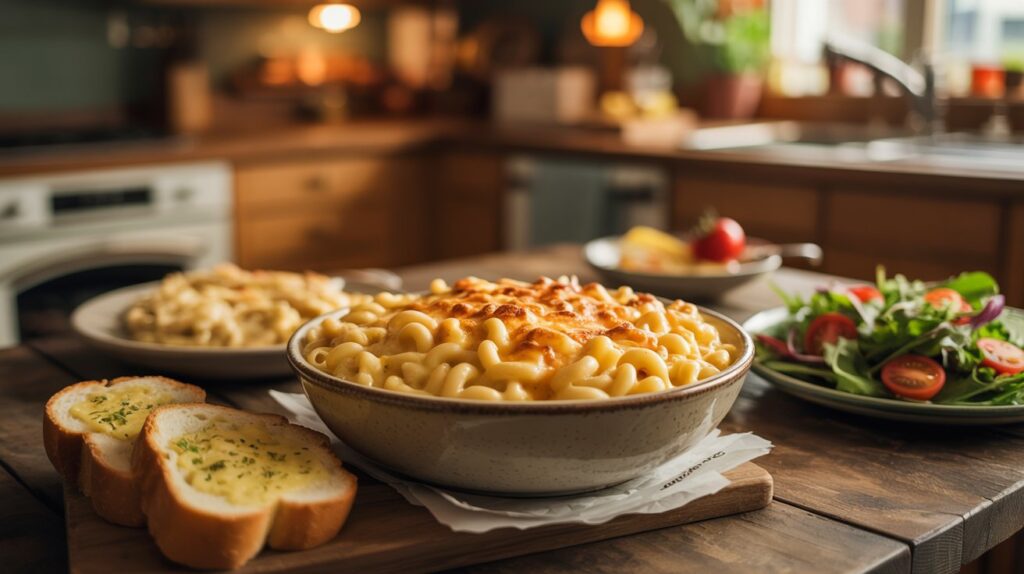
Boxed mac and cheese is fine, but this? This is on a completely different level. Here’s why this recipe earns a permanent spot in your rotation:
- Ultra-creamy texture — the béchamel base guarantees zero clumping or graininess.
- Three-cheese depth — each cheese brings something different: sharpness, nuttiness, and saltiness.
- Ready in 30 minutes — comfort food without a long commitment.
- Crowd-pleaser — kids love it, adults love it, everyone loves it.
What Makes This Recipe Special
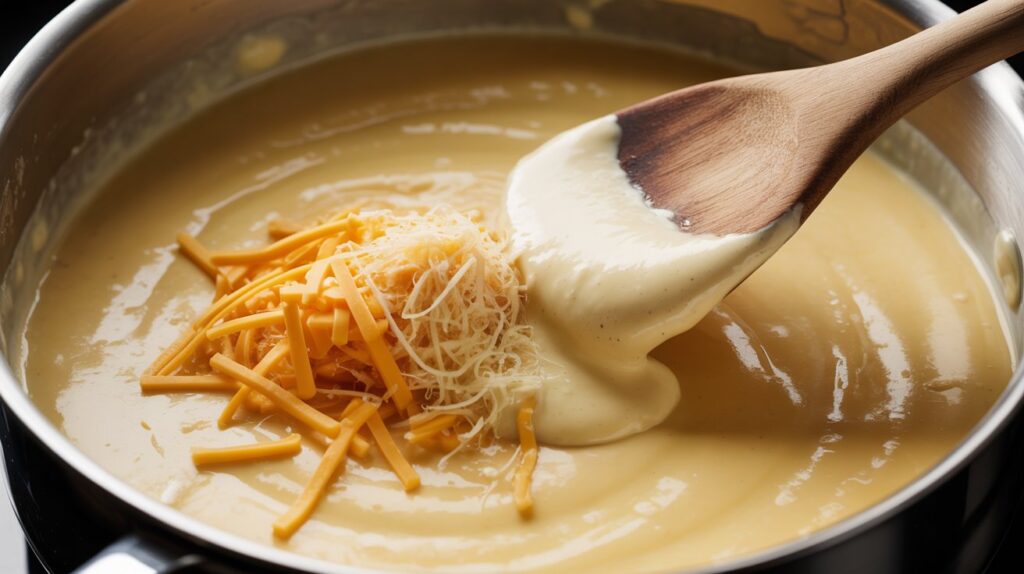
Most homemade mac and cheese recipes use just one or two cheeses. By combining sharp cheddar, gruyère, and parmesan, you get a layered flavor profile that a single cheese simply can’t achieve.
The base is a classic béchamel sauce — butter, flour, and whole milk — which ensures the sauce stays silky and coats every piece of pasta. No separated, oily, or grainy cheese sauce here. Just pure, creamy comfort.
Ingredients You’ll Need
You don’t need anything fancy — just good-quality cheeses and pantry staples. Grating the cheese yourself (instead of using pre-shredded bags) makes a noticeable difference in how smoothly it melts.
- Elbow macaroni — the classic choice; holds the sauce beautifully in its curves.
- Butter — unsalted gives you control over the final salt level.
- All-purpose flour — thickens the sauce into a smooth béchamel.
- Whole milk — full-fat for the creamiest result.
- Heavy cream — just a splash adds serious richness.
- Sharp cheddar — the bold, tangy backbone of the sauce.
- Gruyère — nutty, slightly sweet, melts like a dream.
- Parmesan — adds a savory, salty punch and depth.
- Dijon mustard — a secret weapon; enhances the cheesy flavor without tasting mustardy.
- Garlic powder, smoked paprika, salt, pepper — the seasoning that pulls everything together.
Pro-Tips for Success
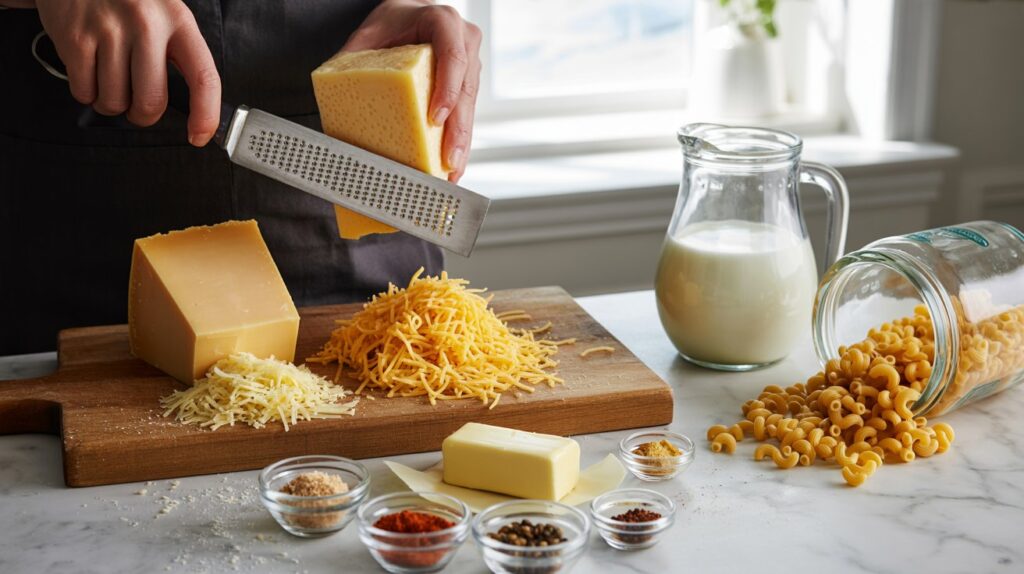
- Grate your own cheese. Pre-shredded cheese contains anti-caking agents that prevent smooth melting. Always grate fresh from the block.
- Don’t rush the roux. Cook the butter and flour for a full 2 minutes before adding milk. This removes the raw flour taste completely.
- Add milk slowly. Pour in the milk a little at a time while whisking constantly. This prevents lumps from forming.
- Take the pan off heat before adding cheese. High heat causes the proteins in cheese to seize and turn grainy. Remove from heat, then stir in the cheese gradually.
- Salt the pasta water generously. It should taste like the sea. This is your one chance to season the pasta itself.
- Undercook the pasta slightly. Pull it out 1–2 minutes before al dente. It finishes cooking in the sauce and won’t turn mushy.
Common Mistakes to Avoid
- Using pre-shredded cheese. The starch coating makes your sauce grainy and clumpy. Always shred fresh.
- Boiling the cheese sauce. Once the cheese is in, the sauce should never boil again. Keep it on low heat or completely off the stove.
- Skipping the mustard. It sounds odd, but Dijon doesn’t make it taste like mustard — it amplifies the cheesy flavor. Don’t skip it.
- Overcooking the pasta. Mushy pasta cannot be saved by even the best cheese sauce. Cook it short.
Flavor Variations
- Baked Mac and Cheese: Transfer to a baking dish, top with buttered breadcrumbs and extra parmesan, and bake at 190°C (375°F) for 20 minutes until golden and crispy.
- Spicy Mac and Cheese: Add 1 tsp hot sauce (like Frank’s RedHot) and ¼ tsp cayenne pepper to the sauce for a kick.
- Truffle Mac and Cheese: Drizzle with 1 tsp truffle oil just before serving and garnish with fresh chives. Instant dinner party dish.
- Smoky Bacon Mac: Fold in ½ cup cooked, crumbled crispy bacon and increase the smoked paprika to ½ tsp.
- Veggie-Loaded Mac: Stir in roasted broccoli florets, caramelized onions, or sautéed mushrooms for a heartier meal.
What to Serve With 3 Cheese Mac and Cheese
This dish is rich on its own, so pair it with something fresh or light to balance the meal:
- A crisp green salad with lemon vinaigrette
- Garlic bread or crusty sourdough
- Roasted broccoli or Brussels sprouts
- Grilled chicken for a protein-packed plate
- Tomato soup — the classic combination for a reason
Storage and Reheating
Storage: Let the mac and cheese cool completely, then transfer to an airtight container. It keeps in the refrigerator for up to 4 days.
Freezing: Not recommended — the cheese sauce tends to separate and become grainy when thawed.
Reheating on the stovetop: Add a splash of milk to the pan over low heat, stir frequently until creamy and warmed through. This is the best method.
Reheating in the microwave: Add a splash of milk, cover loosely, and heat in 30-second bursts, stirring between each round.
View Full Recipe


3 Cheese Mac and Cheese Recipe
Description
A rich, velvety 3 cheese mac and cheese made with sharp cheddar, gruyère, and parmesan — all wrapped in a silky homemade béchamel sauce. The ultimate comfort food dinner, ready in just 30 minutes.
Ingredients
Instructions
-
Step 1: Cook the Pasta (0–10 min)
Bring a large pot of generously salted water to a boil. Add the elbow macaroni and cook for 1–2 minutes less than the package directions (it will finish cooking in the sauce). Drain and set aside. Do not rinse.
-
Step 2: Make the Roux (10–13 min)
In a large saucepan or deep skillet, melt the butter over medium heat. Add the flour and whisk constantly for 2 full minutes until the mixture turns a light golden color and smells slightly nutty. This step removes the raw flour taste — don't rush it.
-
Step 3: Build the Béchamel (13–18 min)
Slowly pour in the warm milk, a little at a time, whisking continuously to prevent lumps. Once all the milk is incorporated, add the heavy cream. Continue to cook over medium heat, stirring frequently, for about 4–5 minutes until the sauce thickens enough to coat the back of a spoon.
-
Step 4: Add Seasoning (18–19 min)
Stir in the Dijon mustard, garlic powder, smoked paprika, salt, and black pepper. Taste and adjust seasoning as needed.
-
Step 5: Melt in the Cheeses (19–21 min)
Remove the pan from heat. Add the grated cheddar, gruyère, and parmesan in three additions, stirring well after each addition until fully melted and the sauce is completely smooth and glossy. Taking the pan off heat prevents the sauce from becoming grainy.
-
Step 6: Combine and Serve (21–25 min)
Add the drained pasta to the cheese sauce and stir gently to coat every piece thoroughly. If the sauce feels too thick, add a splash of warm milk and stir to loosen. Let it rest for 3–5 minutes before serving — it will thicken slightly as it sits. Serve immediately with an extra pinch of smoked paprika on top.
Nutrition Facts
Servings 4
- Amount Per Serving
- Calories 520kcal
- % Daily Value *
- Total Fat 28g44%
- Saturated Fat 17g85%
- Cholesterol 85mg29%
- Sodium 620mg26%
- Total Carbohydrate 48g16%
- Dietary Fiber 2g8%
- Sugars 6g
- Protein 22g44%
* Percent Daily Values are based on a 2,000 calorie diet. Your daily value may be higher or lower depending on your calorie needs.
Note
- Always Grate Your Own Cheese: Pre-shredded cheese is coated with potato starch or cellulose to prevent clumping in the bag. This same coating prevents it from melting smoothly into your sauce, resulting in a grainy texture. Buy blocks of cheddar, gruyère, and parmesan and grate them fresh — the difference is immediately noticeable.
- Warm Your Milk Before Adding: Adding cold milk to a hot roux causes the mixture to seize and form lumps. Warm the milk in the microwave for 60–90 seconds or on the stovetop until just steaming before you start whisking it in. This small step guarantees a perfectly smooth, lump-free béchamel every time.
- The Mustard is Non-Negotiable: A teaspoon of Dijon mustard might seem out of place, but it doesn't make your mac and cheese taste like mustard. Mustard contains compounds that chemically enhance and amplify cheese flavor — it's the same reason many cheese sauce recipes include it. Don't skip it, and don't add more than the recipe calls for.
