

The unloaf sourdough recipe is a relaxed, no-knead approach to sourdough baking that skips the shaped boule and bakes the dough straight in a dish. You get a hearty, sliceable loaf with a crackly top and a moist, open interior. It’s a good fit for anyone who wants real sourdough flavor without the fuss of stretching, folding, and scoring a tight round.
This method leans on a long cold ferment to build tang and structure. Because there’s no kneading, the gluten develops slowly while the dough rests in the fridge. The result is a rustic bread that tastes like a weekend bake but fits a weeknight schedule. If you enjoyed this, our image is worth trying next. Making this unloaf sourdough at home is surprisingly straightforward once you know the key steps.
Why You’ll Love These Unloaf Sourdough
- Minimal hands-on time since there’s no kneading or shaping required.
- Reliable crumb thanks to a long cold proof that strengthens the dough.
- Flexible schedule with a 12 to 48 hour chill window before baking.
- Great use for active starter and simple pantry flour and water.
- Easy cleanup because the loaf bakes right in the same dish.
Ingredients You’ll Need
- 100 g active sourdough starter (100% hydration, bubbly and peaked)
- 350 g water, room temperature (about 22°C)
- 500 g bread flour (12 to 13% protein)
- 10 g fine sea salt
- 15 g olive oil (for greasing the baking dish)
The starter must be active and doubled so the loaf rises without commercial yeast. Bread flour gives the chew and height; all-purpose can work but yields a softer crumb. Salt controls fermentation and tightens the structure. The unloaf sourdough works well for weeknight cooking when time is limited.

Ingredient Substitutions
Bread flour: Replace with an equal weight of all-purpose flour for a softer, less chewy loaf. All-purpose has lower protein, so the crumb will be more tender and the crust a bit thinner. Expect less oven spring and a slightly denser center, which is fine for toast but less ideal for open crumb. Storing leftover unloaf sourdough correctly keeps it tasting good for days.
Active sourdough starter: Use 120 g of discard-based starter fed 1:1:1 four hours before mixing if you don’t have a peaked one. The loaf will need an extra 1 to 2 hours at room temperature to rise. Flavor will be milder and the crumb tighter because the culture is less vigorous.
Olive oil: Swap with an equal amount of neutral oil or softened butter to grease the dish. Butter adds a faint sweetness and helps browning; neutral oil keeps the crust more matte. Either prevents sticking, but butter can brown faster near the edges.
Fine sea salt: Use an equal weight of kosher salt, though it dissolves slightly slower. Because kosher flakes are larger, mix thoroughly to avoid salty pockets. The loaf’s fermentation pace stays the same with this direct swap. For another easy option, check out our default kit.
Step-by-Step Instructions
- Whisk 100 g active sourdough starter with 350 g room-temperature water in a large bowl until mostly smooth. Add 500 g bread flour and 10 g fine sea salt, then mix with a spoon until no dry flour remains and the dough looks shaggy.
- Cover the bowl and rest at room temperature for 30 minutes so the flour hydrates. The dough will look sticky and uneven, which is expected before the gluten relaxes.
- Perform 3 sets of gentle coil folds in the bowl, spaced 30 minutes apart, using wet hands to lift and fold the dough over itself. Stop when the dough feels smoother and holds a loose shape.
- Brush a 9×5 inch loaf pan with 15 g olive oil and scrape the dough in. Cover and leave at room temperature for 3 to 4 hours until it rises by about half and looks domed.
- Move the pan to the fridge and cold proof for 12 to 48 hours. A longer chill deepens the sour note and improves sliceability the next day.
- Heat the oven to 230°C / 445°F with the pan inside if it’s metal, or preheat a stone for 20 minutes. Bake the chilled dough for 35 to 40 minutes until the top is golden and crispy and the internal temp hits 96°C.
- Cool in the pan for 10 minutes, then turn out onto a rack. Let it rest 1 hour before slicing so the crumb sets and doesn’t gummy.
Pro Tips
Keep your starter at peak by feeding it 8 to 10 hours before mix time at 22°C. A sluggish starter is the main reason an sourdough discard focaccia or this loaf comes out flat.
Use a digital thermometer to confirm doneness instead of guessing by color. The crumb near the pan center should read 96°C for a fully set loaf.
For a thicker crust, remove the loaf from the pan for the last 10 minutes of bake. This lets hot air dry the sides so they stay crisp after cooling.
Read the cold-proof guide from bread baking tips if your kitchen runs warm and the dough overproofs in the fridge.
Slice with a serrated knife using a gentle saw motion. A dull blade compresses the open crumb that the long ferment built.
Common Mistakes to Avoid
Skipping the coil folds leads to a slack dough that spreads thin in the pan. Fold gently so the gluten aligns without knocking out the gas bubbles.
Baking straight from a short room-temperature proof gives a bland, tight crumb. The cold stage is where flavor and slice structure develop, so avoid opening the oven early and plan ahead.
Cutting the loaf while hot traps steam and makes the center look underbaked. Rest it 1 hour so the starch firms and slices stay clean.
Using cold water with a cold starter slows fermentation too much in winter. Room-temperature water helps the culture wake up during the first 3 to 4 hours.
Serving Suggestions
Toast thick slices and pair with butter and jam for a simple breakfast. The sturdy crumb holds up under soft toppings better than a delicate boule.
Serve alongside zucchini and mushrooms for a light lunch with protein from the cheese. The tang cuts through the richness of burrata.
Use day-old slices for grilled cheese or panzanella. The loaf’s density means it won’t fall apart when tossed with tomatoes and dressing.
Storage and Reheating
Keep the cooled loaf in an airtight container or wrapped in linen at room temperature for up to 3 days. The crust softens after day one, which is normal for a no-knead bake.
For longer keeping, slice and freeze in a zip bag for freeze for up to 2 months. Reheat frozen slices in a 180°C / 350°F toaster or oven for 5 minutes until steaming hot.
Don’t leave baked loaves out unrefrigerated for more than 2 hours in a warm kitchen. Sourdough resists mold better than soft bread, but safety still matters after long exposure.
Recipe Variations
Seeded Version
Add 40 g mixed sunflower and flax seeds to the flour before mixing for a nutty, crunchy loaf. The seeds add moisture retention, so extend the bake by 5 minutes if the center reads low. Expect a denser slice that pairs well with cheese.
Whole Wheat Swap
Replace 150 g of bread flour with whole wheat flour and add 20 g extra water. The bran cuts gluten strands, giving a heartier crumb and darker crust. This version benefits from a full 48-hour cold proof to soften the grain.
Discard Bagel Side
Bake a batch of discard bagels on the same day you feed your starter for a full sourdough breakfast. The bagels use up excess culture while this unloaf sourdough recipe uses the peaked part. Both share the same tangy profile and complement a spread board.
Overnight Rolls
Divide the mixed dough into 9 portions and proof in a muffin tin for individual rolls. They bake at 210°C / 410°F for 22 to 25 minutes and freeze well for overnight oatmeal mornings. The crumb stays soft because the smaller mass cooks faster.
Herb Crust
Brush the top with olive oil and sprinkle 2 g rosemary and thyme before the bake for an aromatic crust. The herbs crisp on the surface and add a savory note to the mild crumb. Try this with ciambotta as a side for a rustic Italian meal.
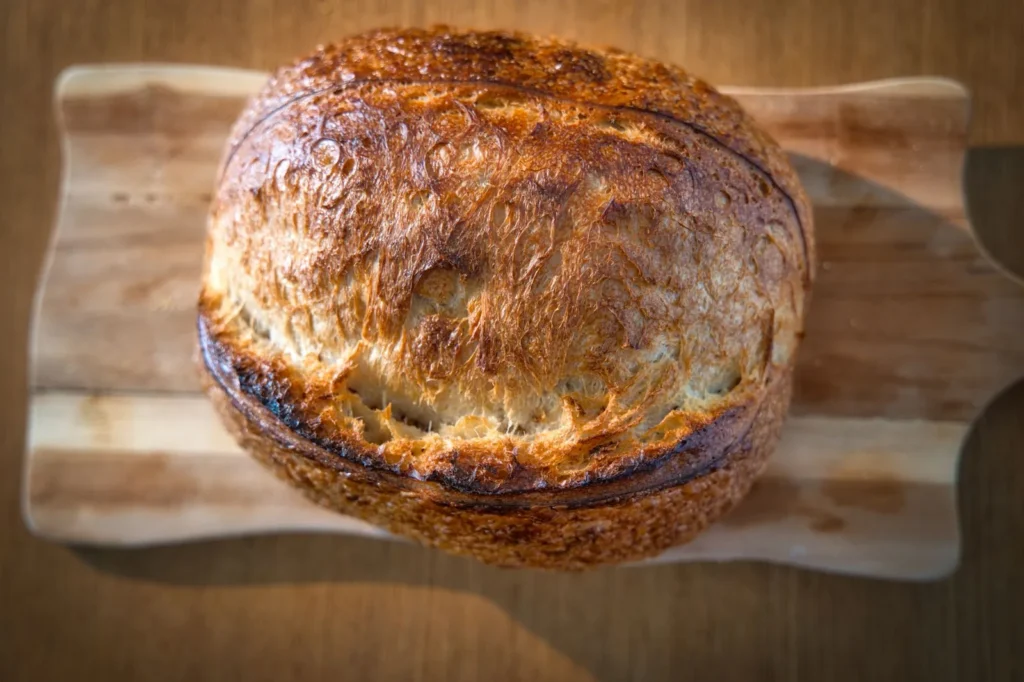

unloaf sourdough recipe
Description
The unloaf sourdough is a relaxed, no-knead bread that skips shaping and bakes straight in a dish for a hearty, sliceable loaf with a crackly top and moist, open interior.
A long cold ferment builds tang and structure, giving real sourdough flavor with minimal hands-on time.
Ingredients
Instructions
-
Mix starter and water
Whisk 100 g active sourdough starter with 350 g room-temperature water (about 22°C) in a large bowl until mostly smooth. The mixture should look loose and slightly bubbly from the starter, with no large clumps remaining before you add flour.
-
Add flour and salt
Add 500 g bread flour and 10 g fine sea salt to the bowl, then mix with a spoon until no dry flour remains and the dough looks shaggy. The dough will be rough and sticky at this stage, which is expected before hydration and rest.
-
Rest and hydrate dough
Cover the bowl and rest at room temperature for 30 minutes so the flour hydrates fully. The dough will look sticky and uneven, which is normal before the gluten relaxes and before any folding begins.
-
Perform coil folds
Perform 3 sets of gentle coil folds in the bowl, spaced 30 minutes apart, using wet hands to lift and fold the dough over itself. Stop when the dough feels smoother and holds a loose shape, showing that the gluten has aligned without knocking out gas bubbles.
-
Oil pan and add dough
Brush a 9x5 inch loaf pan with 15 g olive oil and scrape the dough in to coat the sides lightly. The oiled pan prevents sticking and helps the crust brown during baking.
-
Room temp proof
Cover the pan and leave at room temperature for 3 to 4 hours until it rises by about half and looks domed. You should see the dough puff upward and round at the top, indicating enough gas development before chilling.
-
Cold proof in fridge
Move the pan to the fridge and cold proof for 12 to 48 hours to build tang and sliceable structure. A longer chill deepens the sour note and improves texture the next day, so plan ahead for the full window.
-
Preheat and bake
Heat the oven to 230°C / 445°F with the pan inside if it is metal, or preheat a stone for 20 minutes. Bake the chilled dough for 35 to 40 minutes until the top is golden and crispy and the internal temp hits 96°C, confirming the crumb is fully set.
-
Cool before slicing
Cool in the pan for 10 minutes, then turn out onto a rack and let it rest 1 hour before slicing so the crumb sets and does not turn gummy. The loaf should feel firm and only lightly warm before you cut with a serrated knife.
Nutrition Facts
Servings 8
- Amount Per Serving
- Calories 250kcal
- % Daily Value *
- Total Fat 3g5%
- Sodium 450mg19%
- Total Carbohydrate 48g16%
- Dietary Fiber 2g8%
- Sugars 1g
- Protein 8g16%
* Percent Daily Values are based on a 2,000 calorie diet. Your daily value may be higher or lower depending on your calorie needs.
Note
- Storage: Keep the cooled loaf in an airtight container or wrapped in linen at room temperature for up to 3 days; refrigerate within 2 hours in a warm kitchen.
- Make ahead: Use a peaked starter fed 8 to 10 hours before mix at 22°C, and read the discard focaccia if your starter is sluggish.
- Pro tip: Remove the loaf from the pan for the last 10 minutes of bake for a thicker, crisper side crust.
- Slicing: Rest 1 hour and use a serrated knife with a gentle saw motion to protect the open crumb.
