

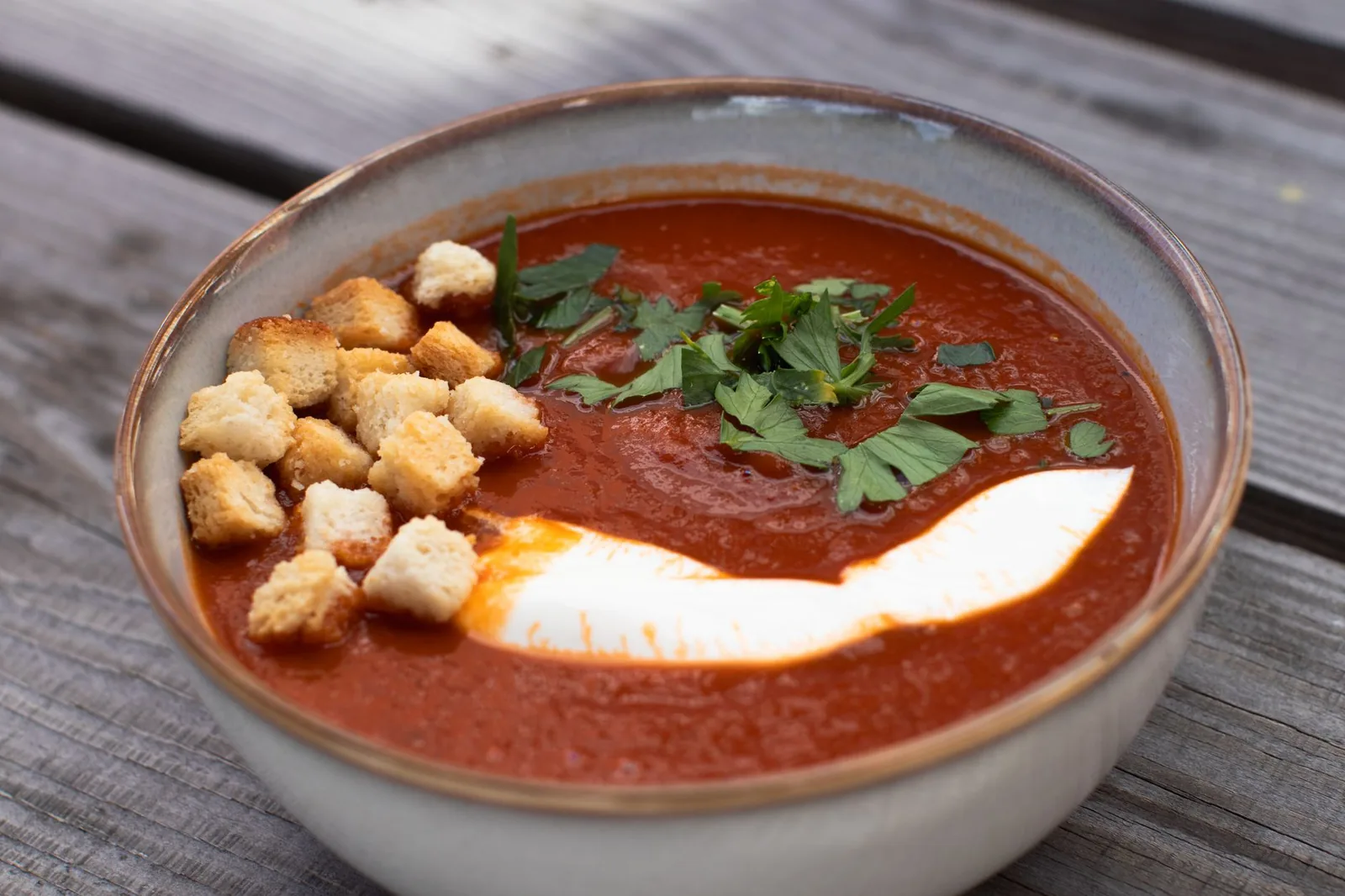
A good roasted tomato soup recipe starts with tomatoes that have been slowly browned in the oven so their sugars caramelize instead of staying sharp and watery. You end up with a bowl that tastes concentrated and round, not like canned sauce thinned with stock. This version uses a blender and a short simmer, so the work stays light while the flavor stays serious.
The method below walks through tomato selection, roasting times, and the small additions that keep the soup from tasting flat. You’ll get a smooth, pourable texture that holds a swirl of cream without breaking. It freezes cleanly, which makes it a practical choice for weekday lunches. If you enjoyed this, our roasted lemonade copycat is worth trying next. Making this roasted tomato soup at home is surprisingly straightforward once you know the key steps.
Why You’ll Love These Roasted Tomato Soup
- Roasting builds a sweet, almost smoky base that raw tomatoes can’t match.
- One sheet pan and one pot keep cleanup short.
- The texture blends smooth without needing a fine sieve.
- It freezes for up to three months without losing body.
- You can scale the batch up using cherry tomatoes when large ones are out of season.
Ingredients You’ll Need
- 2.5 lb Roma tomatoes, halved lengthwise — their low pulp keeps the soup from getting foamy.
- 1 medium yellow onion, cut into 8 wedges — adds gentle sweetness during the long roast.
- 4 cloves garlic, peeled — roasts mellow and removes raw bite.
- 3 tbsp olive oil — helps browning and carries fat-soluble tomato flavor.
- 1 tbsp tomato paste — deepens color and umami after roasting.
- 2 cups vegetable broth — controls consistency without adding meat notes.
- 1/2 cup heavy cream — softens acidity and gives a silky mouthfeel.
- 1 tsp salt — adjust at the end once reduced.
- 1/4 tsp black pepper — fresh ground keeps it bright.
- 5 fresh basil leaves — stirred in off heat for aromatic lift.
Ingredient Substitutions
Heavy cream: Replace with an equal volume of full-fat coconut milk for a dairy-free version. Coconut milk is thinner and carries a faint sweetness, so cut the onion by a quarter to keep balance. The soup will look slightly lighter and won’t thicken quite as much on cooling. The roasted tomato soup works well for weeknight cooking when time is limited.



Vegetable broth: Use an equal amount of water plus 1 tsp nutritional yeast if you have no broth. Nutritional yeast adds a savory note that plain water lacks, though the body will be a touch weaker. Simmer 2 minutes longer to concentrate the flavor before blending. Storing leftover roasted tomato soup correctly keeps it tasting good for days.
Roma tomatoes: Swap in 2 lb plum or beefsteak tomatoes if Roma are unavailable. Beefsteak holds more water, so roast 10 minutes longer to drive off moisture. Expect a slightly looser puree that may need a short reduction. For the best results with this roasted tomato soup, read through all the steps before starting.
Fresh basil: Substitute 1 tsp dried oregano added with the tomato paste if basil isn’t fresh. Dried oregano gives a warmer, more medicinal aroma rather than the green lift of basil. Add it during the simmer so it blooms in the liquid.
Step-by-Step Instructions
- Heat the oven to 200°C / 400°F. Place tomato halves cut-side up on a rimmed sheet pan with onion wedges and garlic cloves. Drizzle with olive oil and roast 35 minutes until tomatoes collapse and edges char.
- Scrape the pan contents into a blender. Add tomato paste and vegetable broth. Blend on high 45 seconds until completely smooth with no visible skins.
- Pour the puree into a 3-quart pot. Bring to a gentle bubble over medium-low heat, stirring often so it doesn’t catch on the bottom.
- Stir in heavy cream, salt, and pepper. Keep at medium-low heat for 8 minutes until the surface shows slow lazy bubbles and the color turns uniform orange-red.
- Remove from heat. Tear in basil leaves and stir 30 seconds until wilted. Taste and add salt if the acidity reads sharp.
- Ladle into bowls. The soup should coat a spoon and hold a cream swirl without separating.
Pro Tips
Roast the tomatoes until you see dark spots on the cut surface; that browning is where the sweet depth comes from. Shallow roasting leaves the soup tasting like warmed juice.
Let the blended puree sit 5 minutes before heating so the foam settles and the texture stays even. Skipping this step can leave a frothy top after blending.
For a cleaner pour, use a immersion blender directly in the pot if you don’t want to move hot liquid. It won’t be quite as silky but saves a step.
Finish with a few drops of olive oil per bowl to round the acidity. A light drizzle also improves the way the cream swirl holds on the surface.
Pair the soup with discard bagels for a chewy contrast that doesn’t go soft too fast.
Common Mistakes to Avoid
Overcrowding the sheet pan steams the tomatoes instead of roasting them. Give each half space so moisture escapes and browning happens.
Adding cream over high heat can make it split and turn grainy. Keep the temperature at medium-low heat once dairy goes in.
Blending hot liquid in a closed blender without venting builds pressure. Always leave the cap loose or use a towel over the top to release steam.
Skipping the basil or adding it during the boil wastes its aroma. Stir it in off heat so the oils stay bright rather than cooked off.
Serving Suggestions
Serve the soup with green beans on the side for a vegetable that echoes the tomato theme without repeating texture. The crisp-tender beans cut the richness of the cream.
A grilled cheese made on pizza dough gives a sturdy dip vehicle with a blistered crust. Cut it into strips so each bite fits the bowl.
For a lighter plate, add a cucumber salad with vinegar to contrast the soup’s warmth. The cool crunch keeps the meal from feeling heavy.
Storage and Reheating
Refrigerate the cooled soup in an airtight container for up to 4 days. Keep it out of the danger zone by chilling within 2 hours of cooking.
Freeze in flat freezer bags for up to 3 months. Thaw overnight in the fridge before reheating to keep the cream from separating.
Reheat on medium-low heat, stirring, until it reaches 74°C / 165°F throughout. A quick microwave works but stir halfway so the edges don’t overheat.
Recipe Variations
Spicy Version
Add 1/2 tsp crushed red pepper with the tomato paste and roast 2 garlic cloves extra for a deeper base. The heat stays in the background and builds slowly rather than hitting sharp at the front.
Roasted Pepper Version
Roast 1 red bell pepper alongside the tomatoes and blend it in for a sweeter, softer profile. The pepper adds body so you can cut the cream by a third if you want it lighter.
Smoky Version
Stir 1/2 tsp smoked paprika into the pot with the broth before simmering. The soup takes on a campfire note that pairs well with maple carrots on the side.
Chunky Version
Reserve a cup of roasted tomatoes before blending and fold them back in at the end. You get a rustic texture with soft pieces instead of a fully smooth pour.

Roasted Tomato Soup
Description
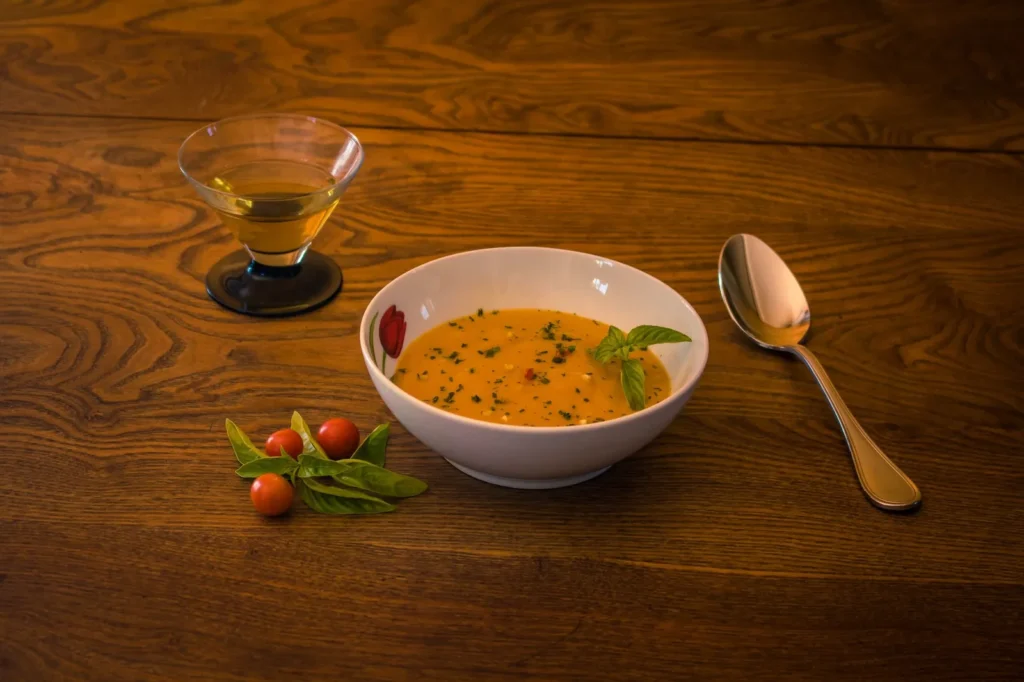
This roasted tomato soup builds a concentrated, round flavor by slowly browning Roma tomatoes, onion, and garlic in the oven before blending. It yields a silky, pourable bowl that holds a cream swirl and freezes cleanly for weekday lunches.
Ingredients
Instructions
-
Heat oven and prep pan
Heat the oven to 200°C / 400°F so it is fully preheated before roasting. Place the tomato halves cut-side up on a rimmed sheet pan with the onion wedges and peeled garlic cloves, giving each half space so moisture escapes instead of steaming.
-
Roast vegetables
Drizzle the arranged tomatoes, onion, and garlic with 3 tbsp olive oil so the surfaces are lightly coated for browning. Roast for 35 minutes until the tomatoes collapse, the edges char, and you see dark spots on the cut surfaces where the sweet depth comes from.
-
Blend roasted base
Scrape the pan contents into a blender, including all browned juices, then add 1 tbsp tomato paste and 2 cups vegetable broth. Blend on high for 45 seconds until completely smooth with no visible skins, leaving the cap loose or covering with a towel to release steam from the hot liquid.
-
Simmer puree
Pour the puree into a 3-quart pot and bring to a gentle bubble over medium-low heat, stirring often so it doesn't catch on the bottom. Let it sit 5 minutes before heating if you have time, so the foam settles and the texture stays even.
-
Add cream and season
Stir in 1/2 cup heavy cream, 1 tsp salt, and 1/4 tsp black pepper while keeping the temperature at medium-low heat to avoid splitting the dairy. Cook for 8 minutes until the surface shows slow lazy bubbles and the color turns uniform orange-red.
-
Finish with basil
Remove the pot from heat so the aromatic oils in the herbs stay bright rather than cooking off. Tear in 5 fresh basil leaves and stir for 30 seconds until wilted, then taste and add more salt only if the acidity reads sharp.
-
Check texture and serve
Ladle the soup into bowls while it is hot and pourable. The finished soup should coat a spoon and hold a cream swirl without separating, confirming the body is right before serving.
Nutrition Facts
Servings 4
- Amount Per Serving
- Calories 220kcal
- % Daily Value *
- Total Fat 14g22%
- Saturated Fat 5g25%
- Cholesterol 20mg7%
- Sodium 480mg20%
- Total Carbohydrate 20g7%
- Dietary Fiber 4g16%
- Sugars 11g
- Protein 4g8%
* Percent Daily Values are based on a 2,000 calorie diet. Your daily value may be higher or lower depending on your calorie needs.
Note
- Storage: Refrigerate cooled soup in an airtight container within 2 hours of cooking for up to 4 days; freeze flat for 3 months.
- Roasting tip: Roast until dark spots appear on tomato cut surfaces; shallow roasting leaves it tasting like warmed juice.
- Serving pair: Try green beans on the side for a crisp-tender vegetable that cuts the cream richness.
- Reheating: Reheat on medium-low heat stirring until 74°C / 165°F throughout; avoid reheating the same portion more than once.
