

Potenza style pork ragu with farro is a southern Italian braise from the Basilicata region, built on pork shoulder, tomato, and chewy whole farro. The dish leans on slow simmering so the pork breaks down while the grain soaks up the savory sauce. You get a one-pot dinner that reheats better on day two than day one.
This version keeps the technique straightforward: brown the meat, soften the soffritto, then let time do the work. Farro holds its bite where pasta turns soft, which gives the bowl a nutty, substantial texture. It’s a practical recipe for cooks who want a make-ahead meal without fussy steps. If you enjoyed this, our search recipes is worth trying next. Making this potenza style pork ragu with farro at home is surprisingly straightforward once you know the key steps.
Why You’ll Love These Potenza Style Pork Ragu With Farro
- One pot handles the entire braise, so cleanup stays minimal after a long simmer.
- Farro keeps a firm chew that stands up to a thick tomato-pork sauce without going mushy.
- The ragù freezes cleanly, which makes it a strong candidate for batch cooking on Sundays.
- Pork shoulder is a budget cut that turns tender after 2 hours of gentle heat.
- Leftovers thicken overnight, so reheated bowls taste more concentrated than the first serve.
Ingredients You’ll Need
- 2 lb pork shoulder, cut into 1.5-inch cubes – fat cap left on for moisture during the braise.
- 1 cup farro, rinsed – whole grain, not pearled, for maximum chew.
- 1 large yellow onion, diced – forms the base sweetness of the soffritto.
- 2 medium carrots, diced – adds earthy sugar to balance the tomato acid.
- 2 celery stalks, diced – brings a savory backbone to the vegetable base.
- 4 garlic cloves, minced – added late so it stays sharp, not burnt.
- 1 (28 oz) can crushed tomatoes – San Marzano type preferred for lower acidity.
- 1 cup dry white wine – lifts the browned bits off the pot floor.
- 2 cups pork or chicken stock – keeps the braise loose enough to simmer.
- 2 tbsp olive oil – for browning the pork without sticking.
- 1 tsp salt, plus more to finish – controls seasoning across the long cook.
- 1/2 tsp black pepper – ground fresh for cleaner heat.
- 2 bay leaves – steeped then removed before serving.
- 1/4 cup grated pecorino, to finish – salty sheep’s milk cheese for the top.
Ingredient Substitutions
Pork shoulder: Replace with an equal weight of boneless beef chuck for a deeper, mineral-rich ragù. Beef renders less surface fat than pork, so add 1 tbsp olive oil at browning and expect a darker sauce. The cook time stays the same, but the flavor reads heavier and less sweet than the Potenza style pork ragu with farro original.






Farro: Use an equal volume of pearled barley if farro is unavailable at your store. Barley softens faster than whole farro, so check doneness at 35 minutes instead of 45. The bowl loses some nutty bite but gains a slippery, comforting texture that still carries the sauce well.
Dry white wine: Swap with 1 cup of extra stock plus 1 tbsp lemon juice to keep acidity without alcohol. The sauce will be slightly less aromatic and a touch sweeter from the stock. No change to simmer time, though you lose the sharp lift wine gives the browned pork.
Crushed tomatoes: Substitute 2 cups of peeled fresh tomatoes, chopped, during summer harvest. Fresh tomatoes carry more water, so simmer uncovered for the final 20 minutes to reduce. The color stays brighter and the acid feels lighter than canned. For another easy option, check out our magnesium oil.
Step-by-Step Instructions
- Heat 2 tbsp olive oil in a heavy pot over medium-high heat. Pat pork cubes dry, season with salt and pepper, then brown on all sides until golden and crispy, about 8 minutes. Remove pork to a plate.
- Lower heat to medium-low heat and add onion, carrot, and celery to the same pot. Cook the soffritto until soft and translucent, 10 minutes, stirring so nothing browns.
- Pour in 1 cup dry white wine and scrape the pot floor with a wooden spoon until the liquid drops by half, about 4 minutes. Add garlic and stir 30 seconds until fragrant.
- Return pork with juices to the pot. Add crushed tomatoes, 2 cups stock, and bay leaves. Bring to a gentle bubble then drop to low heat and cover loosely.
- Simmer 2 hours, turning pork once at the halfway point, until the meat pulls apart with a fork and the sauce coats a spoon.
- Stir in 1 cup rinsed farro, submerging it in the liquid. Cook uncovered at medium-low heat for 45 minutes, until farro is tender but chewy and the sauce is thick.
- Discard bay leaves, shred pork lightly in the pot, and adjust salt. Serve topped with grated pecorino and a little black pepper.
Pro Tips
Dry the pork cubes with paper towels before browning so the surface sears instead of steaming, which builds the browned flavor base. A wet piece of meat sticks and turns gray rather than golden and crispy.
After browning, the wine step is not optional – it dissolves the fond stuck to the pot, and that layer carries most of the savory depth. For a wider look at gentle braising technique, see slow cooking methods from Minimalist Baker.
Farro varies by brand; if the package says pre-cooked, cut the grain step to 15 minutes or it will turn to paste in the sauce. Always read the bag before adding it to a long simmer.
Make the ragù a day ahead and refrigerate before adding farro, then finish the grain fresh – this keeps the farro from over-softening during storage. The pork sauce actually improves after a night in the fridge.
Common Mistakes to Avoid
Crowding the pot when browning pork traps steam and prevents a crust from forming. Brown in two batches if needed so each cube touches hot metal and medium-high heat can do its job.
Adding farro too early makes it dissolve into the sauce during the 2-hour pork simmer. Wait until the pork is done, then stir the grain in for its own separate cook window.
Skipping the soffritto rest at medium-low heat leaves raw onion bite in the finished ragù. Those vegetables need the full 10 minutes to soften and sweeten before any liquid goes in.
Serving Suggestions
Spoon the ragù into shallow bowls and shower with pecorino, then add a drizzle of raw olive oil for shine. A side of three bean salad gives a cold, acidic contrast that cuts the pork richness.
For bread, tear a chunk of fresh milled bread to mop the sauce – its open crumb holds the thick ragù better than a tight commercial loaf. Keep the plate simple so the potenza style pork ragu with farro stays the focus.
Storage and Reheating
Cool the ragù to room temperature within 2 hours, then refrigerate in an airtight container for up to 4 days. The farro continues to drink liquid, so loosen reheated portions with a splash of stock.
Freeze the pork sauce alone, before farro, for up to 3 months; cook the grain fresh when defrosted. Reheat gently on medium-low heat until the pork reaches 165°F internally, which keeps it safe and tender.
Leftover farro ragù also packs well for meal prep lunches since the grain holds texture better than pasta after freezing. Store in single portions to speed reheating.
Recipe Variations
Spicy Version
Add 1 tsp crushed red pepper with the garlic and use a hot pork sausage mix instead of plain shoulder. The heat builds slowly through the simmer and leaves a warm finish that pairs with extra pecorino on top.
White Wine Free
Replace wine with stock and lemon as noted in substitutions, then add 1 tsp fennel seed to the soffritto for aromatic lift. The potenza style pork ragu with farro reads cleaner and slightly sweeter without alcohol.
Slow Cooker Method
Brown pork and soffritto on the stove, then move everything to a slow braise vessel for 4 hours on low. Stir farro in for the final 45 minutes so it cooks through without overbreaking.
Mushroom Boost
Add 8 oz chopped cremini mushrooms with the carrots for an earthy layer that stretches the meat. They release water then brown, deepening the sauce color and giving the bowl a forest-edge savor.

Potenza Style Pork Ragu With Farro
Description
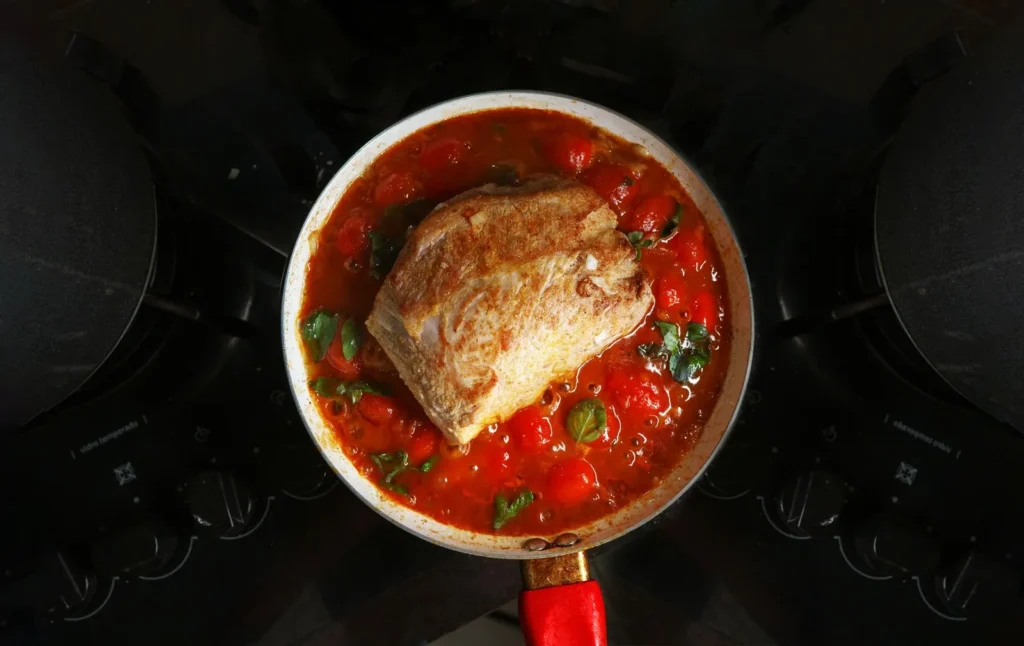
Potenza style pork ragu with farro is a slow-simmered southern Italian braise from Basilicata built on pork shoulder, tomato, and whole farro. The grain stays chewy while the pork turns fork-tender, making a make-ahead one-pot dinner that tastes even better on day two.
Ingredients
Instructions
-
Heat oil and brown pork
Heat 2 tbsp olive oil in a heavy pot over medium-high heat. Pat pork cubes dry, season with salt and pepper, then brown on all sides until golden and crispy, about 8 minutes, then remove pork to a plate.
-
Cook the soffritto
Lower heat to medium-low heat and add onion, carrot, and celery to the same pot. Cook the soffritto until soft and translucent, 10 minutes, stirring so nothing browns.
-
Deglaze with wine
Pour in 1 cup dry white wine and scrape the pot floor with a wooden spoon until the liquid drops by half, about 4 minutes. Add garlic and stir 30 seconds until fragrant.
-
Return pork and simmer
Return pork with juices to the pot. Add crushed tomatoes, 2 cups stock, and bay leaves, bring to a gentle bubble then drop to low heat and cover loosely.
-
Braise pork two hours
Simmer 2 hours, turning pork once at the halfway point, until the meat pulls apart with a fork and the sauce coats a spoon. The pork should reach an internal temperature of at least 63°C for safe doneness of this whole cut.
-
Add farro and cook
Stir in 1 cup rinsed farro, submerging it in the liquid. Cook uncovered at medium-low heat for 45 minutes, until farro is tender but chewy and the sauce is thick.
-
Finish and season
Discard bay leaves, shred pork lightly in the pot, and adjust salt. The ragù is ready when the pork is evenly shredded and the farro holds a firm bite.
-
Serve with pecorino
Serve topped with grated pecorino and a little black pepper. Spoon into shallow bowls so the chewy farro and pork are visible under the cheese.
Nutrition Facts
Servings 4
- Amount Per Serving
- Calories 520kcal
- % Daily Value *
- Total Fat 28g44%
- Saturated Fat 9g45%
- Cholesterol 110mg37%
- Sodium 780mg33%
- Total Carbohydrate 35g12%
- Dietary Fiber 6g24%
- Sugars 9g
- Protein 34g68%
* Percent Daily Values are based on a 2,000 calorie diet. Your daily value may be higher or lower depending on your calorie needs.
Note
- Storage: Cool the ragù to room temperature within 2 hours, then refrigerate in an airtight container for up to 4 days; loosen reheated portions with a splash of stock.
- Make ahead: Make the pork sauce a day ahead and refrigerate before adding farro, then finish the grain fresh — see our pork pasta ideas for similar meal prep.
- Pro tip: Dry pork cubes with paper towels before browning so the surface sears instead of steaming and builds a golden crust.
- Reheating: Reheat gently on medium-low heat until pork reaches 165°F internally; do not reheat the same portion more than once.
