

A good pasta with pancetta and peas comes together faster than most people expect, and it uses a short list of ingredients that already work well together. The salt from the cured pork, the slight sweetness from the green peas, and the starch from the noodles build a sauce without any cream required. This version keeps the steps simple so you get a reliable dinner on the weeknights when you don’t want to think too hard.
The method below renders the pancetta slowly so it stays chewy rather than burnt, then uses the leftover fat to carry the peas and a little garlic. You end up with a skillet of pasta that tastes like a Roman trattoria special but costs a fraction of the takeout price. It scales easily for two or four, and the leftovers reheat without turning to glue. If you enjoyed this, our black truffle pasta is worth trying next. Making this pasta with pancetta and peas at home is surprisingly straightforward once you know the key steps.
Why You’ll Love These Pasta With Pancetta And Peas
- Ready in about 25 minutes from cold pan to plate, so it fits a busy evening.
- Uses pantry pasta plus one cured meat and one frozen vegetable, with no hard-to-find items.
- The pancetta fat does the saucing, so you skip heavy cream and still get richness.
- Naturally high in protein from the pork and peas, with a balanced salt-sweet bite.
- One skillet plus one pot means minimal cleanup compared with a multi-component dinner.
Ingredients You’ll Need
- 12 oz (340 g) rigatoni or mezze maniche pasta
- 6 oz (170 g) pancetta, diced into 1/4-inch cubes
- 1 cup frozen peas, not thawed
- 2 cloves garlic, thinly sliced
- 2 tbsp extra-virgin olive oil
- 1/2 cup grated Pecorino Romano
- 1/2 tsp black pepper, coarse ground
- 1/2 tsp salt for the pasta water only
- Reserved pasta water, about 1 cup
Ingredient Substitutions
Pancetta: Replace with an equal weight of guanciale for a more pronounced pork flavor and a softer rendered texture. Guanciale has higher fat content, so expect more liquid in the skillet and shorten the render time by about 2 minutes. The finished dish tastes closer to a true Roman amatriciana base without the tomato. The pasta with pancetta and peas works well for weeknight cooking when time is limited.





Frozen peas: Use an equal volume of fresh shelled peas when they are in season, but add them 3 minutes earlier in the step where they hit the pan. Fresh peas need more heat to soften and lose their raw grassy note, while frozen ones only need warming through. The color stays brighter with fresh, though the cook window is tighter. Storing leftover pasta with pancetta and peas correctly keeps it tasting good for days.
Pecorino Romano: Swap for an equal amount of Parmigiano-Reggiano if you prefer a milder, nuttier finish. Parmigiano melts a little more smoothly and lacks the sharp sheep-milk tang, so the sauce reads rounder rather than salty-edged. Keep the heat low when you add it to avoid clumping from the different protein structure. For the best results with this pasta with pancetta and peas, read through all the steps before starting.
Rigatoni: Substitute an equal weight of spaghetti if that is what you have, though the sauce clings less to smooth noodles. You will want an extra 2 tablespoons of pasta water to help the loose coating adhere. Tube shapes hold the peas better, so the bite stays more even per forkful.
Step-by-Step Instructions
- Bring 3 quarts of water to a boil with 1/2 tsp salt. Add the rigatoni and cook at a rolling boil for 9 minutes, then drain but keep 1 cup of the cloudy water.
- Set a wide skillet on medium-low heat and add the olive oil with the diced pancetta. Render for 8 minutes until the cubes are golden and crispy at the edges but still chewy in the center.
- Add the sliced garlic to the fat and stir for 60 seconds on medium heat until it smells toasty but has not browned.
- Tip in the frozen peas with a splash of the reserved pasta water. Cook for 3 minutes until they are bright green and tender, scraping the bottom to loosen the browned bits.
- Add the drained pasta to the skillet and toss with 1/2 cup of the reserved water over medium heat for 2 minutes so the starch thickens the coating.
- Take the pan off the heat, stir in the Pecorino and black pepper, and toss until the cheese emulsifies into a glossy sauce that coats each tube.
Pro Tips
Cut the pancetta to a uniform 1/4-inch dice so every piece renders at the same rate instead of some turning to charcoal while others stay raw. A uneven cube size is the main reason home versions taste bitter.
Save more pasta water than you think you need because the skillet keeps absorbing it as you toss. The emulsification technique depends on that starch to bind fat and water into a sauce.
Grind the black pepper coarsely right before adding it so the oils stay fresh and the pieces stay visible against the pale sauce. Pre-ground pepper loses punch within a week of opening.
Rest the pasta for 90 seconds off heat before serving so the coating settles instead of sliding to the bottom of the bowl. That short pause firms the emulsion without cooling the dish.
Common Mistakes to Avoid
Boiling the pancetta at high heat from the start makes it seize and turn rubbery before the fat renders. Keep the skillet at medium-low heat and let the cubes slowly give up their fat for a better chew.
Adding the cheese while the pan is still over the burner causes it to clump into strings instead of a smooth coat. The residual heat after you pull it off is enough to melt Pecorino without scrambling it.
Skipping the pasta water and using plain tap water leaves you with a thin, broken sauce that pools at the plate bottom. The starch in the cook water is what makes the dish cling and shine.
Serving Suggestions
Plate the pasta in shallow bowls and add a little extra Pecorino at the table for those who want more salt. A celery pasta on the side adds a crunchy contrast if you want a second vegetable.
For a fuller spread, open with Mediterranean pasta salad as a cold starter that uses the same pantry staples. The warm pork and cool vegetables balance the meal without extra cooking.
Storage and Reheating
Pack leftovers in an airtight container and refrigerate for up to 3 days since the pork and cheese are both cooked. Do not leave the skillet out for more than 2 hours or the fat turns unsafe.
Reheat in a skillet with 2 tablespoons of water on medium-low heat until the internal temperature reaches 165°F for the meat. Microwave reheating works but dries the peas, so cover with a damp paper towel if you use it.
The dish does not freeze well because the Pecorino separates when thawed and the peas turn mealy. Make a fresh batch instead of storing it for lenticchie pasta style meal prep if you need freezer options.
Recipe Variations
Spicy Version
Add 1/2 tsp red pepper flakes with the garlic so the oil picks up heat before the peas go in. The pancetta stays salty but gains a back-of-throat warmth that cuts the richness. Serve with extra cheese to cool the bite if needed.
Tomato Twist
Stir in 1/2 cup chopped canned tomatoes after the garlic and cook 5 minutes before the peas. The acid balances the pork fat and turns the sauce pink rather than creamy white. This pairs well with cherry tomato pasta night if you rotate sauces.
White Wine Reduction
Pour 1/4 cup dry white wine into the skillet after rendering the pancetta and let it bubble off for 2 minutes. The alcohol carries more of the meat aroma and leaves a light tang behind. You will need 1 less tablespoon of pasta water since the wine adds liquid.
Extra Pork Option
Brown 4 oz sliced sausage with the pancetta for a heavier plate that suits pork and pasta fans. The cook time stays the same, but drain a spoon of fat if the skillet looks oily before the peas join.

Pasta With Pancetta And Peas
Description
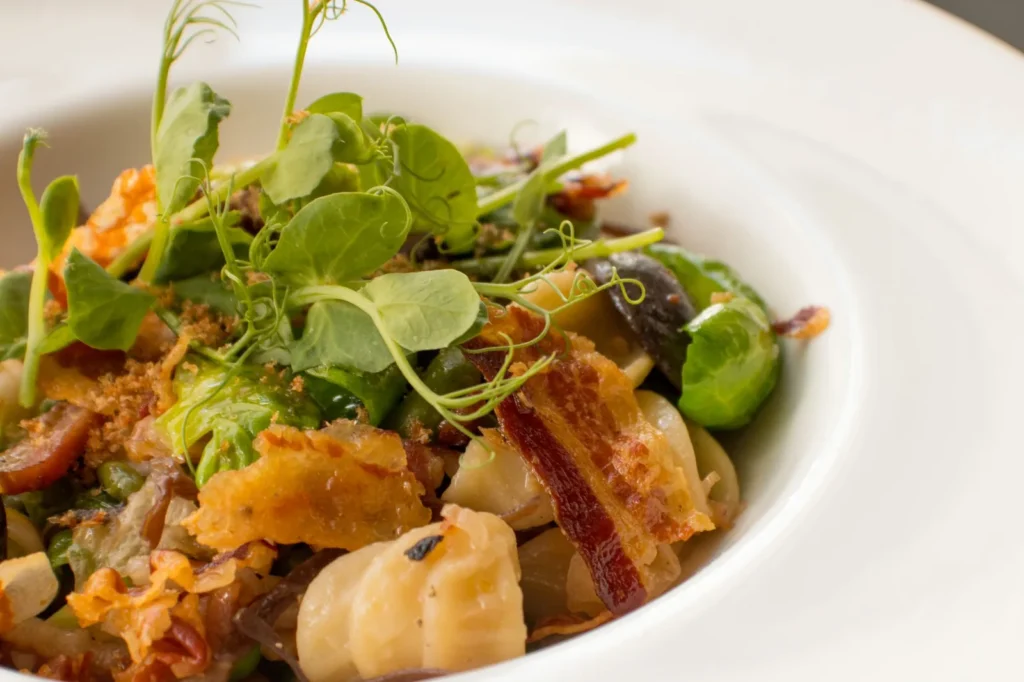
This pasta with pancetta and peas comes together in about 25 minutes using a short list of pantry-friendly ingredients. The pancetta fat carries the peas and garlic to build a creamy, no-cream sauce that tastes like a Roman trattoria special.
Ingredients
Instructions
-
Boil the pasta
Bring 3 quarts of water to a boil in a large pot with 1/2 tsp salt. Add the rigatoni and cook at a rolling boil for 9 minutes until al dente with a slight bite, then drain but keep 1 cup of the cloudy starch-filled water for the sauce.
-
Render the pancetta
Set a wide skillet on medium-low heat and add the olive oil with the diced pancetta. Render for 8 minutes until the cubes are golden and crispy at the edges but still chewy in the center, letting the fat slowly release without seizing.
-
Toast the garlic
Add the sliced garlic to the rendered fat and stir for 60 seconds on medium heat. Cook until it smells toasty but has not browned, keeping it pale to avoid any bitter notes.
-
Cook the peas
Tip in the frozen peas with a splash of the reserved pasta water and cook for 3 minutes. They should be bright green and tender, scraping the bottom to loosen the browned bits into the sauce.
-
Toss the pasta
Add the drained pasta to the skillet and toss with 1/2 cup of the reserved water over medium heat for 2 minutes. The starch thickens the coating so it clings to each tube as you mix.
-
Emulsify the cheese
Take the pan off the heat, stir in the Pecorino and black pepper, and toss until the cheese emulsifies into a glossy sauce. The residual heat melts the cheese smoothly without clumping into strings.
-
Rest before serving
Rest the pasta for 90 seconds off heat before serving so the coating settles instead of sliding to the bottom. This short pause firms the emulsion without cooling the dish below serving temperature.
Nutrition Facts
Servings 4
- Amount Per Serving
- Calories 350kcal
- % Daily Value *
- Total Fat 14g22%
- Saturated Fat 5g25%
- Cholesterol 35mg12%
- Sodium 620mg26%
- Total Carbohydrate 38g13%
- Dietary Fiber 3g12%
- Sugars 4g
- Protein 18g36%
* Percent Daily Values are based on a 2,000 calorie diet. Your daily value may be higher or lower depending on your calorie needs.
Note
- Storage: Pack leftovers in an airtight container and refrigerate within 2 hours for up to 3 days since the pork and cheese are both cooked.
- Reheating: Reheat in a skillet with 2 tablespoons of water on medium-low until the internal temperature reaches 165°F for the meat; microwave only with a damp cover to avoid drying peas.
- Pro tip: Save more pasta water than you think you need because the skillet keeps absorbing it as you toss the pasta with celery side or main.
- Rest: Let the pasta sit 90 seconds off heat so the emulsion sets before plating.
