
A football hummus board is the easiest way to feed a crowd during a watch party without standing over a stove for an hour. It centers on a large bowl of smooth chickpea dip surrounded by dippers arranged in the shape of a football field. You get a make-ahead snack that holds up at room temperature for a couple of hours while people graze.
The appeal is in the contrast: cool creamy hummus, crunchy raw vegetables, and chewy bread. Because everything is assembled cold or at room temp, there’s no timing stress when the game starts. This specific board uses a single homemade hummus recipe plus store-friendly accompaniments so the prep stays under 25 minutes. If you enjoyed this, our hamachi collar is worth trying next. Making this football hummus board at home is surprisingly straightforward once you know the key steps.
Why You’ll Love These Football Hummus Board
- One bowl of hummus stretches to serve ten people with minimal cost per head.
- You can build the football hummus board up to four hours before guests arrive and keep it chilled.
- Every dipper is finger food, so there are no plates or forks required during the game.
- The green and white layout reads as a field, which makes the board feel themed without extra decor.
Ingredients You’ll Need
- 2 cans (15 oz each) chickpeas, drained, half the liquid reserved
- 1/3 cup tahini
- 1/4 cup fresh lemon juice
- 2 garlic cloves, peeled
- 3 tbsp extra-virgin olive oil, plus more for drizzling
- 1 tsp ground cumin
- 3/4 tsp salt
- 2 tbsp chopped parsley
- 1 cup baby carrots
- 1 cup celery sticks
- 1 cup cucumber slices
- 1 cup cherry tomatoes, halved
- 8 oz pita bread, cut into triangles
- 1/2 cup pretzel rods
- 2 tbsp crumbled feta
- 2 tbsp sliced black olives
Ingredient Substitutions
Tahini: Replace with an equal amount of well-stirred sunflower seed butter for a nut-free version. Sunflower butter is slightly sweeter and thinner, so cut the lemon juice by 1 tbsp to keep the acidity balanced. The hummus will be paler and lack the bitter depth of sesame, but the texture stays scoopable.


Pita bread: Use an equal weight of toasted sourdough cubes if you want a firmer dipper. Sourdough won’t soften as fast from hummus moisture, holding shape for up to 2 hours on the board. Expect a tangier bite that contrasts the mild chickpea base.
Feta: Swap with 2 tbsp of dairy-free almond crumble for a vegan plate. Almond crumble browns faster under lights, so add it right before serving to avoid drying. The salt hit is lower, so bump salt in the hummus by 1/4 tsp.
Chickpeas: Use 3 cups cooked white beans for a lighter-colored spread. White beans puree softer, needing only 2 tbsp reserved liquid instead of 4. The flavor is milder and the board loses its beige field center, reading more cream colored.
Step-by-Step Instructions
- Place chickpeas, tahini, lemon juice, garlic, olive oil, cumin, and salt in a food processor. Blend on medium speed for 60 seconds, scraping down once, until no whole beans remain.
- With the motor running, add reserved chickpea liquid 1 tbsp at a time until the hummus falls in ribbons from the blade and looks smooth and glossy.
- Spoon the hummus into a 9-inch round bowl and smooth the top with the back of a spoon. Drizzle 1 tbsp olive oil across the surface.
- Arrange parsley over the center to form a horizontal midfield stripe, then place olive slices as yard markers along the stripe.
- Set carrots, celery, and cucumber in rows on the left and right of the bowl to mimic sidelines on the football hummus board.
- Fill gaps with pita triangles and pretzel rods pointing outward like field edges. Scatter feta and tomatoes on the corners.
- Cover with wrap and refrigerate 30 minutes so the flavors settle before guests dip.
Pro Tips
Chill your serving board in the fridge for 10 minutes before assembly so the hummus stays cool longer once the room fills with people. A cold base slows warming during a 2 hour party window.
When blending, let the processor run a full minute past the point it looks done; that extra time shears the chickpea skins for a truly creamy result. For more technique detail see creamy hummus method from a reliable source.
Cut pita triangles thick, about 1/2 inch, so they don’t snap when loaded with hummus. Thin crackers crumble and leave debris on the board that looks messy by halftime.
Reserve the chickpea liquid instead of dumping it; that starchy water is the difference between tight paste and silky dip. Add it slowly because too much makes the spread slide off vegetables.
Common Mistakes to Avoid
Over-processing with no liquid added makes the hummus seize into a dry ball. Keep the motor running while you pour the reserved liquid to prevent that thick clump from forming.
Skipping the parsley stripe removes the field identity, leaving a plain dip tray. The green line is what tells guests this is a themed football hummus board rather than random snacks.
Adding tomatoes directly on the hummus makes the center weep water and turn pink. Keep wet items at the board edges so the dip stays clean and beige until scooped.
Serving Suggestions
Pair the board with a pitcher of gin cocktail for adults who want a light drink alongside the salty dippers. The citrus cuts the tahini richness well.
Set out sausage and peppers as a warm side if you need a protein anchor beyond chickpeas. The hot tray beside the cold board balances temperature on the buffet.
Use a wooden cutting board at least 18 inches long so the bowl fits with a 3-inch margin for dippers. A cramped board forces overlap and the layout loses its field shape.
Storage and Reheating
Hummus itself keeps in an airtight container for up to 4 days in the fridge, but once dipped vegetables touch it, discard within 2 hours of room temp exposure. Never leave the assembled board out past that window.
If you prep components separately, the cut carrots and celery stay crisp in water-filled containers for 3 days. The pita softens after day one, so toast it 5 minutes at 180°C / 350°F before reuse.
This board does not freeze well because cucumbers and tomatoes turn to mush on thaw. Only the plain hummus freezes, up to 2 months, in a flat freezer bag squeezed free of air.
Recipe Variations
Roasted Red Pepper Version
Blend 1/2 cup jarred roasted peppers with the chickpeas in step one for a pink-orange spread. The peppers add sweetness and reduce needed lemon by 1 tbsp. The field center becomes salmon colored but still reads as a board.
Spicy Jalapeno Version
Add 1 seeded jalapeno to the processor and 1/4 tsp cayenne for heat that builds after the bite. The dip stays beige with visible green flecks from the pepper. Serve with extra beef hotpot broth on the side for daring guests.
White Bean Light Version
Substitute the chickpeas with cannellini beans and drop cumin to 1/2 tsp for a milder profile. The texture is looser, so use only 2 tbsp liquid. This version pairs with pork and pasta leftovers as a spread on bread.
Greek Style Version
Stir 1 tbsp oregano into the hummus and replace feta amount with 3 tbsp for stronger salt. Add Mediterranean cuisine olives across the stripe. The board reads more coastal and less field-like but stays crowd friendly.
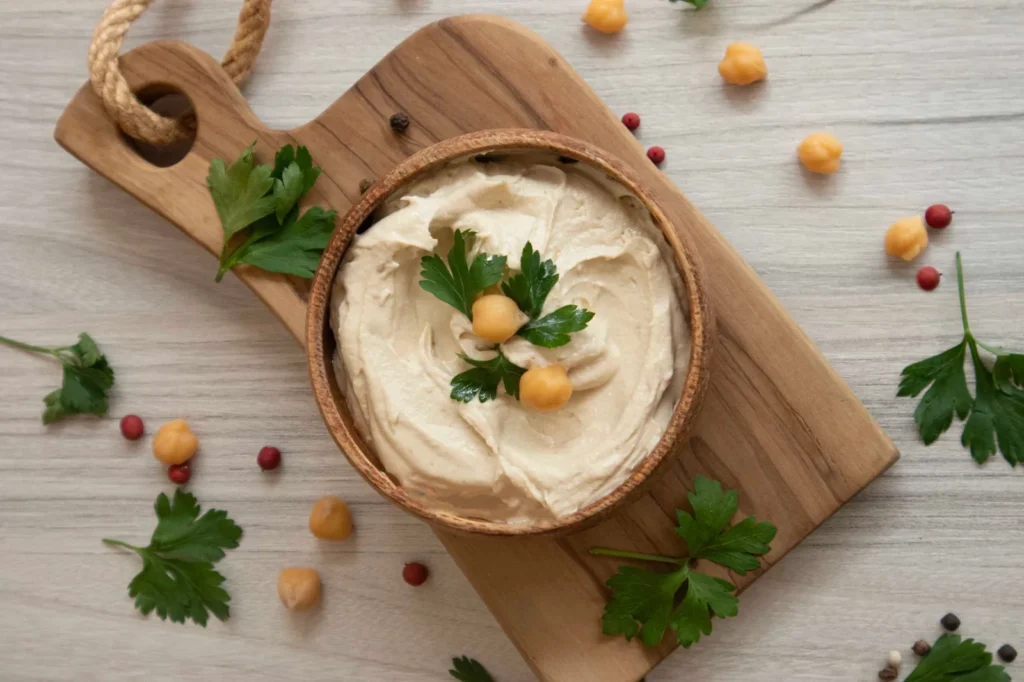

Football Hummus Board
Description
A football hummus board is a make-ahead watch party snack built around a bowl of smooth chickpea dip with dippers arranged like a field. It feeds a crowd at room temperature with no stove timing stress when the game starts.
Ingredients
Instructions
-
Blend hummus base
Place chickpeas, tahini, lemon juice, garlic, olive oil, cumin, and salt in a food processor. Blend on medium speed for 60 seconds, scraping down once, until no whole beans remain and the mixture looks uniform.
-
Adjust hummus texture
With the motor running, add reserved chickpea liquid 1 tbsp at a time until the hummus falls in ribbons from the blade and looks smooth and glossy. This slow addition prevents a tight paste and gives a silky dip that holds on vegetables.
-
Fill and smooth bowl
Spoon the hummus into a 9-inch round bowl and smooth the top with the back of a spoon. Drizzle 1 tbsp olive oil across the surface so the center stays moist and glossy before decorating.
-
Make field stripe
Arrange parsley over the center to form a horizontal midfield stripe, then place olive slices as yard markers along the stripe. The green line tells guests this is a themed football hummus board rather than a plain dip tray.
-
Place vegetable rows
Set carrots, celery, and cucumber in rows on the left and right of the bowl to mimic sidelines on the football hummus board. Keep these crunchy items off the hummus so the center stays clean and beige until scooped.
-
Add bread dippers
Fill gaps with pita triangles and pretzel rods pointing outward like field edges. Cut pita about 1/2 inch thick so they don't snap when loaded with hummus and leave debris by halftime.
-
Scatter corners
Scatter feta and tomatoes on the corners of the board, away from the hummus center. Adding tomatoes directly on the dip would make the center weep water and turn pink, so keep wet items at the edges.
-
Chill before serving
Cover with wrap and refrigerate 30 minutes so the flavors settle before guests dip. Chilling also keeps the board cool longer once the room fills, slowing warming during a 2 hour party window.
Nutrition Facts
Servings 10
- Amount Per Serving
- Calories 220kcal
- % Daily Value *
- Total Fat 10g16%
- Saturated Fat 2g10%
- Cholesterol 3mg1%
- Sodium 380mg16%
- Total Carbohydrate 26g9%
- Dietary Fiber 5g20%
- Sugars 4g
- Protein 7g15%
* Percent Daily Values are based on a 2,000 calorie diet. Your daily value may be higher or lower depending on your calorie needs.
Note
- Storage: Hummus alone keeps in an airtight container for up to 4 days in the fridge, but discard the assembled board within 2 hours of room temp exposure once dipped vegetables touch it.
- Make ahead: Chill your serving board in the fridge for 10 minutes before assembly so the hummus stays cool longer; prep components separately and review our potato gnocchi for another make-ahead method.
- Pro tip: Reserve the chickpea liquid instead of dumping it; that starchy water is the difference between tight paste and silky dip, so add it slowly to avoid sliding off vegetables.
- Reuse: Pita softens after day one, so toast it 5 minutes at 180°C before reuse and keep cut carrots and celery crisp in water-filled containers for 3 days.
