

Store-bought yellow curry paste is convenient, but it almost always falls flat — too salty, too one-dimensional, and nowhere near as aromatic as the real thing. This yellow curry vegan paste recipe takes about 15 minutes to blend together and delivers a deeply layered, fragrant paste that transforms any curry into something genuinely special. It keeps in the fridge for two weeks and freezes beautifully, so making a big batch is always worth it.
Why You’ll Love This Yellow Curry Vegan Paste Recipe
- 100% plant-based — Traditional yellow curry paste sometimes contains shrimp paste. This version is fully vegan without sacrificing any depth of flavor.
- Fresher and more fragrant — Fresh lemongrass, galangal, and kaffir lime zest produce an aroma that no jarred paste can come close to matching.
- Make-ahead friendly — Batch it once, use it all month. Freezes in portions for instant weeknight curries.
- Fully customizable heat — Control the spice level by adjusting the chiles, from mild and warming to properly fiery.
What Makes This Recipe Special
Yellow curry paste sits between red and green in terms of heat, but it’s unique in its warm, earthy character driven by turmeric and yellow chiles. What separates a great yellow paste from a mediocre one is the treatment of aromatics before blending — dry-toasting whole spices like cumin and coriander seeds releases their essential oils and adds a roasted depth that ground spices from a jar simply cannot deliver.
The other key is using fresh galangal instead of ginger. Galangal has a sharper, more citrusy, almost piney bite that is quintessentially Thai. Together with fresh lemongrass and kaffir lime zest, it creates the signature floral-citrus base that makes yellow curry so distinctive and craveable.
Ingredients You’ll Need
Most of these ingredients are available at Asian grocery stores, and many are now stocked at larger supermarkets. If fresh galangal is unavailable, dried galangal slices (soaked in warm water) or a smaller amount of fresh ginger are acceptable substitutes.
- 4 dried yellow chiles or mild dried chiles — Soaked in warm water for 20 minutes, then drained. Yellow chiles keep the color true. Substitute with 2 fresh yellow banana peppers for a milder, fresher paste.
- 1 stalk fresh lemongrass — Use only the bottom 4–5 inches (the pale, tender part). Remove the tough outer layers and roughly chop.
- 1-inch piece fresh galangal, peeled and sliced — Sharper and more citrusy than ginger. If unavailable, use ¾-inch fresh ginger as a substitute.
- 4 garlic cloves, peeled — Standard white garlic works best here for a clean, bold flavor.
- 1 small shallot, roughly chopped — Adds sweetness and body to the paste base.
- 1 tsp fresh turmeric, grated (or ½ tsp ground turmeric) — Fresh turmeric gives a brighter, more vibrant color and flavor. Wear gloves — it stains everything.
- Zest of 1 kaffir lime (or regular lime) — Kaffir lime zest is more intensely floral and aromatic than regular lime. Use it if you can find it.
- 1 tsp coriander seeds — Dry-toasted in a skillet until fragrant, then ground. Do not use pre-ground — it won’t taste the same.
- ½ tsp cumin seeds — Also dry-toasted alongside the coriander seeds.
- ½ tsp white pepper — Traditional in Thai curry pastes. Adds heat without the visual specks of black pepper.
- 1 tsp sea salt — Helps the paste blend smoothly and acts as a mild preservative.
- 2 tbsp neutral oil — Coconut oil, avocado oil, or sunflower oil. Helps bind the paste and makes it easier to fry off in a pan later.
- 1 tbsp water (optional) — Add a splash only if the paste is too thick to blend smoothly.
Pro-Tips for Success
- Toast your whole spices first. Place coriander seeds and cumin seeds in a dry skillet over medium heat for 60–90 seconds until they smell nutty and fragrant. Let them cool, then grind in a spice grinder or with a mortar and pestle. This step takes 3 minutes and makes a significant difference to the final flavor.
- Soak dried chiles thoroughly. Under-soaked dried chiles leave tough bits of skin that won’t blend fully, giving your paste a gritty texture. A full 20 minutes in hot water is the minimum — 30 is better. Squeeze out excess water before adding to the blender.
- Use a high-powered blender or food processor. A regular blender may struggle with the fibrous lemongrass and galangal. If you don’t have a high-powered machine, use a mortar and pestle — pound the fibrous ingredients first, then add the softer ones. The result is actually more textured and authentic.
- Blend in stages. Add the fibrous ingredients first (lemongrass, galangal) with a little oil and blend until broken down. Then add the softer aromatics and spices. This prevents the motor from straining and ensures a smoother paste.
- Fry the paste before using it. Always cook curry paste in a little oil or coconut milk cream for 2–3 minutes before adding other liquids. This step — called “blooming” — activates the aromatics, deepens the color, and removes any raw edge from the garlic and shallot.
Common Mistakes to Avoid
- Using the tough outer layers of lemongrass. The woody outer sheaths are too fibrous to blend properly, even in a powerful blender. Peel back 2–3 layers to reach the pale, tender stalk before chopping.
- Skipping the oil in the paste. Dry paste blends poorly and can seize up when frying. The oil helps emulsify everything together and gives you a smooth, consistent paste that cooks evenly in the pan.
- Adding too much water during blending. Water thins the paste and shortens its shelf life. Add only a tablespoon at a time if truly needed. Oil is always a better blending aid than water.
- Storing in a plastic container. Fresh turmeric stains plastic permanently. Store your paste in a glass jar to avoid permanently yellowing your containers — and your hands.
Flavor Variations
- Mild Yellow Paste — Replace dried chiles with 1 roasted yellow bell pepper and reduce or omit the white pepper entirely. Great for kids or spice-sensitive eaters while keeping all the aromatic complexity.
- Extra Spicy Yellow Paste — Add 2 fresh bird’s eye chiles along with the dried chiles. The combination of heat types (dried and fresh) gives a more complex, building heat.
- Massaman-Style Paste — Add ¼ tsp ground cinnamon, 2 whole cloves, and 1 cardamom pod (seeds only) to lean the paste toward the richer, warmly spiced massaman flavor profile.
- Roasted Yellow Paste — Char the shallot and garlic under a broiler for 5 minutes before blending. Adds a subtle smokiness that works beautifully in heartier vegetable curries with root vegetables.
- Green-Yellow Fusion — Swap dried chiles for 2 fresh green serranos and add a small handful of fresh Thai basil leaves to the blender. The result is a vibrant, green-tinged paste with the warmth of yellow curry and the herbal freshness of green.
What to Serve With Yellow Curry Vegan Paste
This paste is your starting point — here are the best ways to put it to work:
- Classic vegan yellow curry with chickpeas, potatoes, and coconut milk over jasmine rice
- Yellow curry roasted cauliflower with tofu and snap peas
- Yellow curry noodle soup with rice noodles and bok choy
- As a marinade for tempeh before grilling or air-frying
- Stirred into hummus or mixed with tahini for a bold dipping sauce
- Used as the flavor base for a yellow curry flatbread or spring roll bowl
- Tossed with vegetable stir-fry for an instant Thai-inspired dinner
- Swirled into creamy pasta sauces for a fusion twist
Storage and Reheating
This paste stores exceptionally well. In the refrigerator in a sealed glass jar with a thin layer of oil pressed on top to seal out air, it keeps for up to 2 weeks. The oil layer is important — it creates a barrier against oxidation and keeps the paste fresher for longer.
For longer storage, freeze the paste in ice cube trays. Once frozen solid, transfer the cubes to a sealed freezer bag. Each cube is roughly 1 tablespoon — a perfect single-serving amount for a quick weeknight dinner. Frozen paste keeps for up to 3 months with no meaningful loss of flavor. Use straight from frozen — no need to thaw before frying off in the pan.
Try pairing your finished curry with a refreshing fresas con crema for dessert, or serve alongside a vibrant Mediterranean salad for a complete plant-based spread.
View Full Recipe
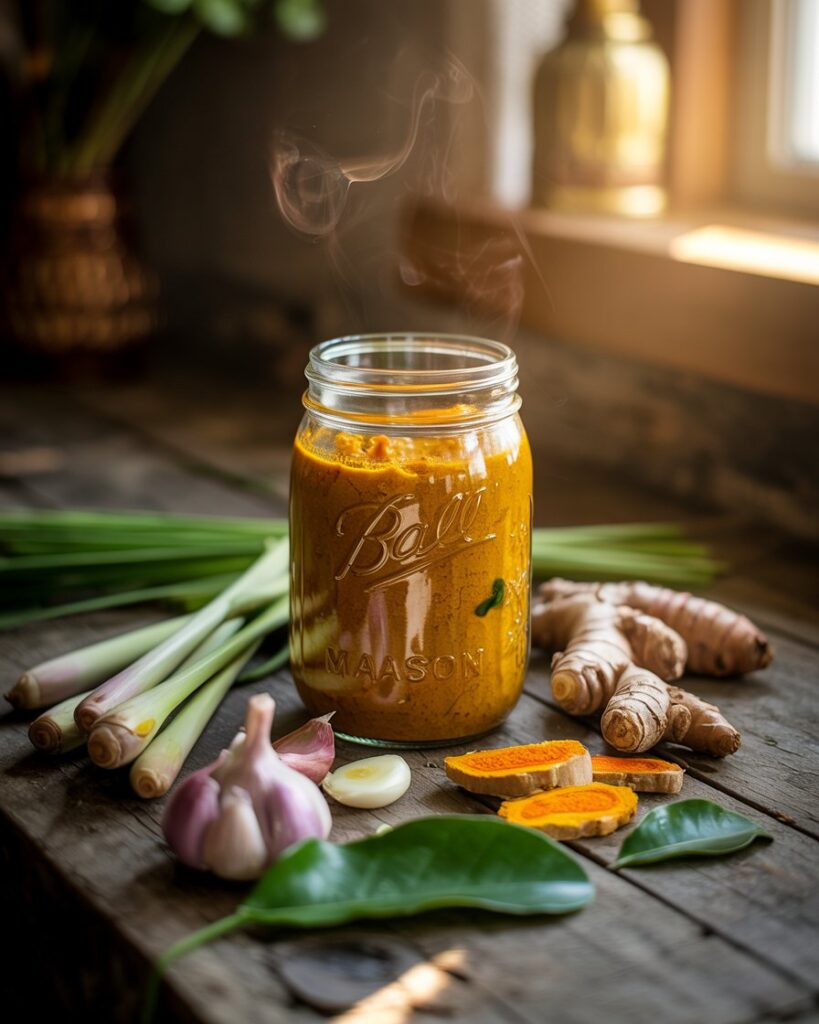

Yellow Curry Vegan Paste Recipe
Description
A bold, aromatic vegan yellow curry paste made from scratch with fresh lemongrass, galangal, turmeric, and toasted spices — no shrimp paste, no shortcuts, and far better than anything from a jar.
Ingredients
Instructions
-
Step 1: Soak the Dried Chiles (0-20 min)
Place the dried yellow chiles in a small bowl and cover with hot water. Let them soak for at least 20 minutes until completely softened. Drain and squeeze out excess water before using. If using fresh banana peppers instead, simply remove the stems and seeds and chop roughly — no soaking needed.
-
Step 2: Toast and Grind the Spices (20-23 min)
Place the coriander seeds and cumin seeds in a small dry skillet over medium heat. Toast for 60–90 seconds, stirring constantly, until the spices are fragrant and slightly golden. Do not let them burn. Remove from heat immediately and let cool for 2 minutes, then grind to a fine powder using a spice grinder or mortar and pestle. Set aside.
-
Step 3: Prep the Fibrous Aromatics (23-28 min)
Peel back and discard the tough outer layers of the lemongrass. Roughly chop the tender bottom 4–5 inches into small pieces. Peel and slice the galangal. These fibrous ingredients need to be processed first to ensure a smooth paste. If using a mortar and pestle, pound the lemongrass and galangal together until they form a rough pulp before adding other ingredients.
-
Step 4: Blend the Paste (28-33 min)
Add the lemongrass and galangal to a high-powered blender or food processor with 1 tablespoon of oil. Blend for 30 seconds to break them down. Add the soaked chiles, garlic, shallot, grated turmeric, lime zest, ground spices, white pepper, and salt. Add the remaining oil. Blend, scraping down the sides as needed, until a smooth, thick paste forms. Add 1 tablespoon of water only if needed to help the paste move in the blender.
-
Step 5: Taste, Adjust, and Store (33-35 min)
Taste the paste and adjust as needed — more salt for savoriness, more lime zest for brightness, more chile for heat. Transfer to a clean glass jar and press a thin layer of oil over the surface to seal out air. Refrigerate for up to 2 weeks, or freeze in ice cube trays for up to 3 months. To use: fry 2–3 tablespoons of paste in a little oil or coconut milk cream for 2–3 minutes before adding your curry liquid.
Nutrition Facts
Servings 8
- Amount Per Serving
- Calories 45kcal
- % Daily Value *
- Total Fat 3g5%
- Sodium 290mg13%
- Total Carbohydrate 4g2%
- Dietary Fiber 1g4%
- Sugars 1g
- Protein 1g2%
* Percent Daily Values are based on a 2,000 calorie diet. Your daily value may be higher or lower depending on your calorie needs.
Note
- Freeze in Ice Cube Trays: Pour leftover paste into an ice cube tray and freeze until solid, then transfer cubes to a sealed freezer bag. Each cube is roughly 1 tablespoon — perfect for pulling out exactly what you need for a single batch of curry without thawing the whole jar.
- Always Bloom the Paste: Never add curry paste directly to liquid. Always fry it first in a little oil or the thick cream from the top of a can of coconut milk for 2–3 minutes over medium heat. This step activates the aromatics, deepens the color, and removes the raw edge — it is the difference between a good curry and a great one.
- Wear Gloves with Fresh Turmeric: Fresh turmeric stains skin, nails, cutting boards, and clothing a deep yellow that is difficult to remove. Wear disposable gloves when handling it, use a stainless steel grater, and work on a surface you don't mind staining temporarily.
