

A short rib ragu recipe turns a tough, marbled cut of beef into a fork-tender sauce that clings to wide pasta. The magic is slow braising: collagen breaks down into gelatin, which gives the sauce body and a glossy finish. You get a weeknight-worthy bowl that tastes like it came from a Sunday kitchen.
This version keeps the ingredient list honest and the steps clear. You sear the ribs, build a soffritto, then let time do the work at a bare simmer. The result is a deep red sauce with strands of beef that melt rather than chew. If you enjoyed this, our elementor is worth trying next. Making this short rib ragu at home is surprisingly straightforward once you know the key steps.
Why You’ll Love These Short Rib Ragu
- Beef short ribs become shreddable after a low, slow braise with no special equipment.
- The sauce thickens from gelatin, not flour, so it coats pappardelle without feeling heavy.
- Leftovers tighten up overnight, making the second-day bowl even better over polenta.
- One pot handles the sauce, so cleanup stays small compared to a multi-pan dinner.

Ingredients You’ll Need
- 3 lbs bone-in beef short ribs, cut into 3-inch pieces
- 2 tbsp olive oil
- 1 large yellow onion, finely diced (about 1.5 cups)
- 2 medium carrots, peeled and diced (about 1 cup)
- 2 celery stalks, diced (about 1 cup)
- 4 garlic cloves, minced
- 2 tbsp tomato paste
- 1 cup dry red wine (such as Chianti)
- 1 can (28 oz) crushed tomatoes
- 2 cups beef stock
- 2 sprigs fresh rosemary
- 3 sprigs fresh thyme
- 1 bay leaf
- 1 tsp kosher salt, plus more to finish
- 1/2 tsp black pepper
- 1 lb pappardelle pasta
- 1/2 cup grated Parmesan, for serving
Ingredient Substitutions
Bone-in beef short ribs: Replace with 2.5 lbs boneless beef chuck cut into 3-inch chunks for a leaner result. Chuck has less surface fat and collagen near the bone, so the sauce will be slightly less glossy and need 15 minutes less braising. You lose a little of the marrow richness but keep the shreddable texture if you braise to an internal temp of 200°F. The short rib ragu works well for weeknight cooking when time is limited.


Dry red wine: Use 1 cup extra beef stock plus 1 tbsp balsamic vinegar if you avoid alcohol. The vinegar brings the acidic edge wine normally gives, but the sauce will miss the fruity depth, so add the vinegar at the end to taste. Skip the early deglazing step with alcohol and scrape the pan with stock instead.
Pappardelle pasta: Swap for 1 lb rigatoni if you want a shorter noodle that traps sauce in the tubes. Rigatoni holds more ragu per bite but needs 1 minute less boil time than ribbon pasta. The wider sauce still works; just stir gently so the tubes don’t break.
Crushed tomatoes: Use 1 can (28 oz) peeled San Marzano tomatoes, hand-crushed, for a sweeter, lower-acid base. San Marzanos break down softer and leave fewer seeds, giving a smoother mouthfeel after 2 hours. Expect a lighter red color and a need to simmer 10 minutes longer to thicken. For another easy option, check out our creme brulee authentic.
Step-by-Step Instructions
- Heat 2 tbsp olive oil in a Dutch oven over medium-high heat. Pat the ribs dry, season with 1 tsp salt and 1/2 tsp pepper, and sear 4 minutes per side until deep brown crust forms. Remove ribs to a plate.
- Lower heat to medium-low heat and add onion, carrot, celery. Cook 8 minutes until softened and edges turn translucent, stirring so nothing browns.
- Add garlic and tomato paste, stir 1 minute until paste darkens to rust color. Pour in red wine, scrape the bottom, and simmer 3 minutes until raw alcohol smell leaves.
- Return ribs with juices, add crushed tomatoes, beef stock, rosemary, thyme, bay leaf. Bring to gentle bubble then cover and move to 160°C / 325°F oven for 2.5 hours.
- Check ribs; meat should pull apart with a fork and internal temp near 200°F. Discard herb stems and bay leaf, then shred meat off bone, discarding bone and fat caps.
- Simmer sauce uncovered on stovetop 15 minutes until it coats a spoon. Meanwhile boil pappardelle in salted water 10 minutes until al dente.
- Toss pasta with ragu using a splash of pasta water. Top with Parmesan and serve immediately.
Pro Tips
Sear in batches if the pot crowds; never crowd the pan or the ribs steam instead of brown, leaving less flavor in the base. A dark crust means more Maillard compounds for the sauce.
Chill the braise overnight before reheating if you can. Fat rises and solidifies so you can lift it off, and the gelatin sets the sauce for a cleaner texture the next day.
Use a low and slow braise reference if your oven runs hot; an extra 10°C over time can dry the meat before collagen converts.
Reserve 1 cup pasta water before draining. The starchy liquid loosens the ragu without adding fat and helps the sauce bind to the noodles.
Finish with a small knob of butter off heat for shine if serving to guests; it rounds the tomato acidity without changing the core short rib ragu recipe structure.
Common Mistakes to Avoid
Rushing the soffritto at high heat burns the onion and turns the sauce bitter. Keep it at medium-low heat and watch for translucency, not color.
Skipping the wine deglaze leaves browned bits stuck to the pot. Those fond particles carry roasted flavor, so always scrape with liquid before adding tomatoes.
Shredding the beef too early, before 2.5 hours, gives stringy bites. Wait until a fork slides in with no resistance, usually near 200°F internal.
Boiling the sauce hard after shredding breaks the emulsion and makes it watery. Keep it at a bare simmer so the gelatin stays suspended. You might also like our search recipes.
Serving Suggestions
Plate the ragu over pappardelle with a side of brown bread to soak the sauce. The dense loaf holds up better than airy rolls.
For a low-starch plate, spoon the ragu over garlic bread toasts cut into soldiers. The crisp base contrasts the soft beef.
Pair with a bitter green salad dressed in lemon to cut the richness. A squeeze of acid at the table brightens each bite without altering the cook.
Storage and Reheating
Cool the ragu to room temp within 2 hours, then refrigerate in an airtight container up to 4 days. The sauce thickens as gelatin sets.
Freeze flat in zip bags up to 3 months; thaw overnight in the fridge before use. Reheat on medium-low heat to 165°F internal for meat safety.
Do not reheat the mixed pasta more than once; instead reheat sauce alone and toss with fresh boiled noodles to avoid mush.
Recipe Variations
Spicy Version
Add 1 tsp crushed red pepper with the garlic and use a peppery Nero d’Avola wine. The heat sits in the background and lifts the tomato sweetness without overwhelming the beef.
White Wine Swap
Replace red wine with 1 cup dry white and add 1 cup cream at the end for a pale ragu. The sauce turns silky and milder; reduce simmer by 10 minutes so it doesn’t split.
Polenta Base
Skip pasta and pour ragu over brown gravy-style polenta cooked from coarse cornmeal. The soft grain catches more sauce per spoon than ribbons.
Mushroom Boost
Stir 8 oz sliced cremini with the soffritto for an earthy note. They release water then brown, adding umami that supports the short rib ragu recipe without changing braise time.
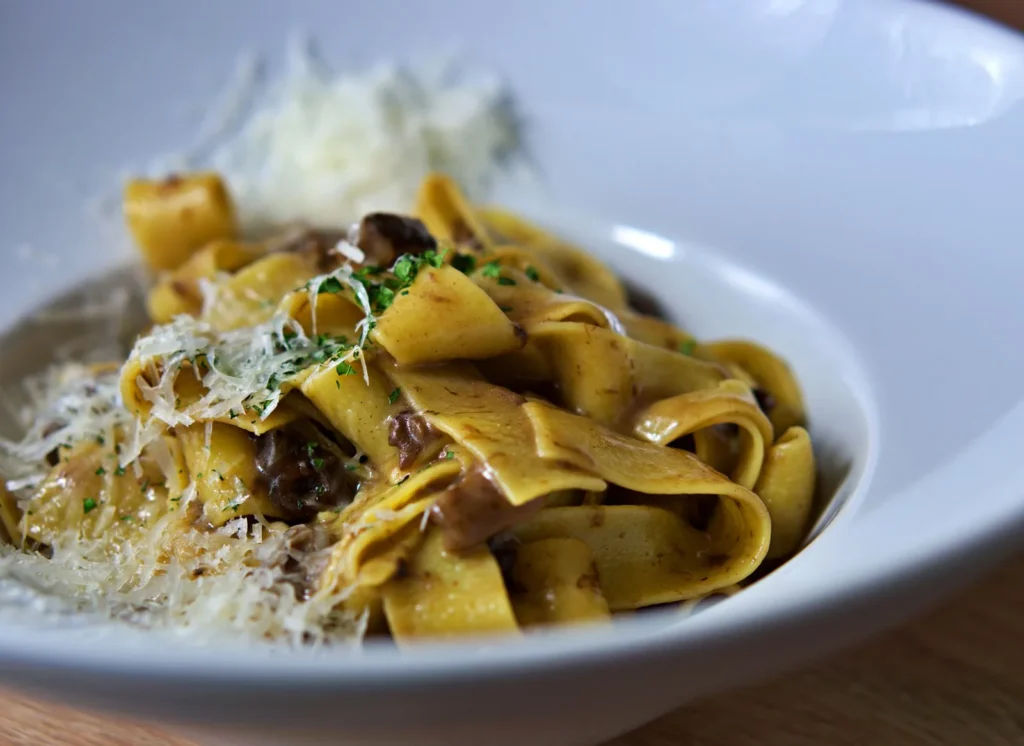

Short Rib Ragu
Description
A short rib ragu turns tough, marbled beef into a fork-tender sauce that clings to wide pasta through slow braising. Collagen breaks down into gelatin for a glossy, body-rich sauce that tastes like a Sunday kitchen on a weeknight.
Ingredients
Instructions
-
Sear the short ribs
Heat 2 tbsp olive oil in a Dutch oven over medium-high heat. Pat the ribs dry, season with 1 tsp salt and 1/2 tsp pepper, and sear 4 minutes per side until a deep brown crust forms and the meat releases easily from the pot. Remove ribs to a plate and set aside.
-
Cook the soffritto
Lower heat to medium-low heat and add onion, carrot, and celery to the same pot. Cook 8 minutes until softened and the edges turn translucent, stirring so nothing browns. Add garlic and tomato paste, stir 1 minute until the paste darkens to a rust color.
-
Deglaze with wine
Pour in 1 cup dry red wine and scrape the bottom of the pot to release browned bits. Simmer 3 minutes until the raw alcohol smell leaves and the liquid reduces slightly. This builds the roasted flavor base for the sauce.
-
Add liquids and braise
Return ribs with their juices to the pot and add crushed tomatoes, beef stock, rosemary, thyme, and bay leaf. Bring to a gentle bubble, then cover and move to a 160°C / 325°F oven for 2.5 hours. The meat should reach an internal temp near 200°F and pull apart with a fork.
-
Shred the beef
Discard herb stems and bay leaf, then shred meat off the bone, discarding bone and fat caps. Check that the beef slides apart with no resistance, confirming it is fully tender. Leave the sauce with the shredded meat in the pot.
-
Simmer the sauce
Simmer sauce uncovered on the stovetop 15 minutes at a bare simmer until it coats a spoon and the gelatin stays suspended. Avoid boiling hard or the emulsion will break and turn watery. Keep watch for a glossy, thick consistency.
-
Boil the pappardelle
Meanwhile boil 1 lb pappardelle in salted water 10 minutes until al dente, with a slight bite at the center. Reserve 1 cup pasta water before draining for loosening the sauce later. Drain the noodles when they are tender but not mushy.
-
Toss and serve
Toss pasta with ragu using a splash of pasta water to help the sauce bind to the noodles. Top with 1/2 cup grated Parmesan and serve immediately while hot. The ribbons should be fully coated in the deep red sauce.
Nutrition Facts
Servings 4
- Amount Per Serving
- Calories 650kcal
- % Daily Value *
- Total Fat 34g53%
- Saturated Fat 13g65%
- Cholesterol 135mg45%
- Sodium 980mg41%
- Total Carbohydrate 52g18%
- Dietary Fiber 5g20%
- Sugars 9g
- Protein 38g76%
* Percent Daily Values are based on a 2,000 calorie diet. Your daily value may be higher or lower depending on your calorie needs.
Note
- Storage: Cool the ragu to room temp within 2 hours, then refrigerate in an airtight container up to 4 days; the sauce thickens as gelatin sets.
- Make ahead: Chill the braise overnight so fat lifts off and texture improves; for a side, try mashed potatoes to soak the sauce.
- Pro tip: Reserve 1 cup pasta water before draining to loosen ragu without added fat and help it bind to noodles.
- Reheating: Reheat sauce alone to 165°F and toss with fresh pasta; do not reheat mixed pasta more than once.
