
A sheet pan salmon nicoise salad takes the classic French composed salad and moves the whole thing onto one tray in the oven. You get flaky salmon, tender potatoes, crisp green beans, and soft-boiled eggs without juggling several pots on the stove. This version keeps the flavors of the original but cuts the cleanup down to a single pan.
The salmon roasts alongside the vegetables so the potatoes pick up a little rendered fat and the beans stay bright. A simple mustard vinaigrette ties the warm components to the cool elements like olives and tomato. It is a complete meal that works for a weeknight dinner or a relaxed weekend lunch. Making this sheet pan salmon nicoise salad at home is surprisingly straightforward once you know the key steps.
Why You’ll Love These Sheet Pan Salmon Nicoise Salad
- One pan means you roast the salmon and vegetables together, so there are fewer dishes and the flavors blend.
- The salmon stays moist because it cooks at the same time as the potatoes at a moderate oven temperature.
- You control the doneness of the eggs by boiling them separately for a predictable soft yolk.
- The vinaigrette uses pantry staples and comes together in under two minutes.
- Leftovers hold up well for lunch the next day if you store the salmon and vegetables separately from the dressing.
Ingredients You’ll Need
- 4 salmon fillets (about 6 oz each), skin on or off
- 1 lb baby potatoes, halved
- 1/2 lb green beans, trimmed
- 4 large eggs
- 1 cup cherry tomatoes, halved
- 1/2 cup pitted Niçoise or Kalamata olives
- 3 tbsp olive oil, divided
- 1 tbsp Dijon mustard
- 1 tbsp red wine vinegar
- 1 tsp fresh thyme leaves
- 1/2 tsp salt, plus more for eggs
- 1/4 tsp black pepper
Ingredient Substitutions
Baby potatoes: Replace with an equal weight of cubed Yukon Gold or red potatoes cut to 1-inch pieces. Waxy potatoes hold their shape better than russets, which can break apart during roasting. Expect a slightly creamier bite but the same roasting time at 200°C / 400°F. The sheet pan salmon nicoise salad works well for weeknight cooking when time is limited.







Green beans: Use an equal weight of trimmed haricots verts or asparagus spears cut into 2-inch lengths. Thinner vegetables cook faster, so check them at 12 minutes instead of 15. The texture will be more delicate and less snappy than standard green beans.
Niçoise olives: Swap in an equal volume of pitted Kalamata olives if Niçoise are unavailable. Kalamata are larger and sharper, so chop them roughly so the flavor spreads evenly. The salad will read slightly more Greek than French but stays balanced with the mustard dressing.
Salmon fillets: Replace with an equal weight of skinless cod or trout if salmon is not on hand. Both are leaner than salmon, so brush with an extra teaspoon of olive oil to prevent drying. Reduce the roast time by 3 to 4 minutes and watch for opaque flesh.
Step-by-Step Instructions
- Place the eggs in a saucepan and cover with cold water by 1 inch. Bring to a medium-low heat simmer and cook 9 minutes for a soft yolk, then transfer to ice water for 5 minutes and peel.
- Heat the oven to 200°C / 400°F. Toss the halved baby potatoes with 1 tbsp olive oil, thyme, salt, and pepper on a large sheet pan.
- Roast the potatoes alone for 15 minutes until they begin to brown at the edges and a knife slides in with slight resistance.
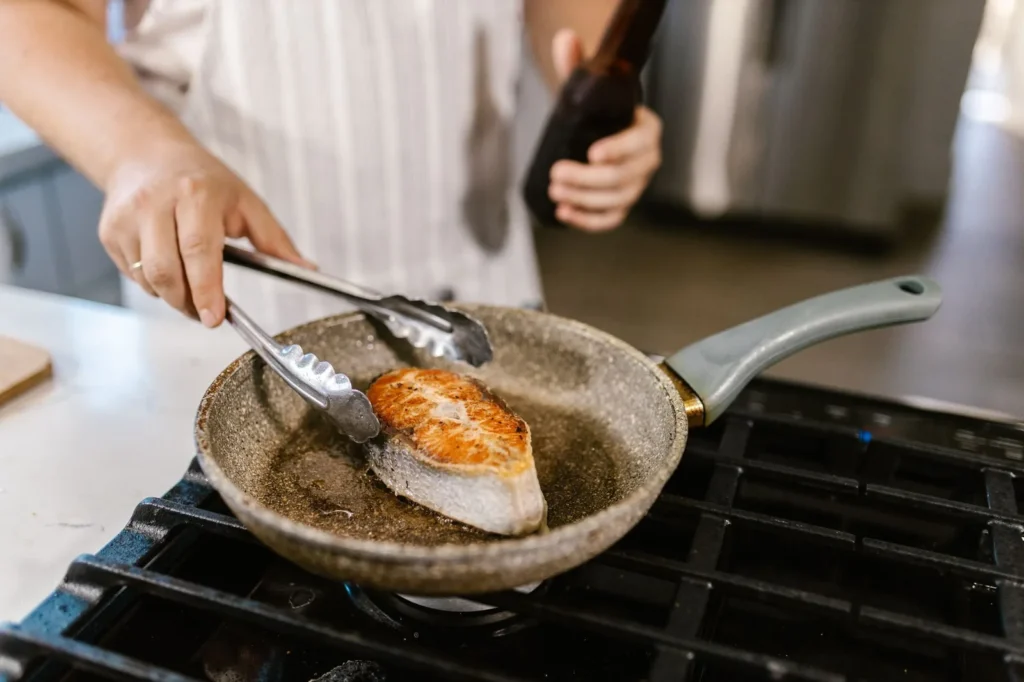
- Push potatoes to one side. Add green beans to the empty side, toss with 1 tbsp olive oil, and lay the salmon fillets in the remaining space brushed with the last tbsp oil.
- Return the pan to the oven for 12 to 14 minutes until salmon flakes under a fork and beans are golden and crisp-tender.
- Whisk Dijon mustard, red wine vinegar, and a pinch of salt to make the vinaigrette while the tray roasts.
- Arrange potatoes, beans, salmon, halved tomatoes, olives, and quartered eggs on plates. Drizzle with vinaigrette and serve immediately.
Pro Tips
Roast the potatoes before adding the salmon so they finish at the same moment; salmon cooks faster than dense root vegetables. For more on resting fish after heat, see resting proteins from Bon Appetit.
Use a rimmed sheet pan so the olive oil does not run off while the potatoes roast. A crowded pan steams the vegetables instead of browning them, so never crowd the pan.
Make the vinaigrette in a small jar with a lid and shake it; the emulsion holds better than a fork whisk for a few minutes. If you like a greek salad style side, the same dressing works on cucumbers too.
Buy center-cut salmon fillets of even thickness so they cook uniformly on the tray. Pair the meal with a shirazi salad if you want a second cold vegetable.
Common Mistakes to Avoid
Adding the eggs to the oven tray instead of boiling them leads to rubbery whites and uncertain yolks; keep them on the stove for control. The sheet pan salmon nicoise salad relies on that distinct soft egg center.
Skipping the initial potato roast means raw centers when the salmon is done; avoid opening the oven early once everything is together. Pat the salmon dry before brushing oil so the surface browns instead of steaming.
Using too much vinegar in the dressing makes the salad sharp and masks the salmon; stay at 1 tbsp red wine vinegar. A caesar dressing is not a swap here because it overwhelms the light vegetables.
Serving Suggestions
Plate the components separately in rows for a traditional Niçoise look, or toss gently for a rustic mix. A three bean salad alongside adds extra protein if you are feeding a larger table.
Serve with a glass of chilled white wine or sparkling water with lemon. The dish is best enjoyed warm with the vinaigrette still loose, not chilled solid.
Storage and Reheating
Keep cooked salmon and vegetables in an airtight container for up to 3 days in the fridge. Store eggs peeled and separate so they do not tint the potatoes.
Reheat salmon and potatoes in a 180°C / 350°F oven for 8 minutes until the fish reaches 63°C / 145°F internally. Do not leave the cooked tray out for more than 2 hours before refrigerating.
The vinaigrette keeps in a sealed jar for up to 1 week; shake before using on leftovers or a mediterranean pasta salad.
Recipe Variations
Sheet Pan Tuna Version
Replace salmon with two 5-oz cans of drained tuna packed in oil, added in the last 5 minutes of roasting. The result is closer to the original Niçoise and needs no careful fish timing. Expect a firmer, pantry-friendly meal with the same potatoes and beans.
Warm Spring Edition
Swap green beans for asparagus and add radishes halved in the last 10 minutes of the potato roast. The radishes soften and turn sweet, changing the flavor from summery to early-spring. The sheet pan salmon nicoise salad becomes lighter with a peppery edge.
Low-Oil Option
Cut the olive oil to 1 tbsp total and use a swordfish method of misting the tray with water to prevent stick. The vegetables brown less but the salmon stays clean-tasting. Reduce oven time by 2 minutes to avoid dryness.
Smoked Salmon Twist
Lay 4 oz of smoked salmon over the warm vegetables after roasting instead of raw fillets in the oven. You skip the fish roast step entirely and get a silky, salty contrast. The potatoes and beans still need the full 25–30 minutes to cook through.

Sheet Pan Salmon Nicoise Salad
Description
A sheet pan salmon nicoise salad moves the classic French composed salad onto one tray in the oven, giving you flaky salmon, tender potatoes, crisp green beans, and soft-boiled eggs without juggling several pots. A simple mustard vinaigrette ties the warm roasted components to cool olives and tomatoes for a complete meal with minimal cleanup.
Ingredients
Instructions
-
Boil the eggs
Place the 4 large eggs in a saucepan and cover with cold water by 1 inch. Bring to a medium-low heat simmer and cook for 9 minutes for a soft yolk, then transfer to ice water for 5 minutes and peel; the yolks should be set at the edge but still soft and jammy in the center.
-
Heat the oven
Heat the oven to 200°C / 400°F so it is fully preheated before the potatoes go in. A hot oven helps the potatoes brown at the edges rather than steam on the tray.
-
Roast potatoes first
Toss the halved baby potatoes with 1 tbsp olive oil, thyme, salt, and pepper on a large rimmed sheet pan. Roast the potatoes alone for 15 minutes until they begin to brown at the edges and a knife slides in with slight resistance, showing they are partially cooked but not raw inside.
-
Add beans and salmon
Push potatoes to one side of the pan, then add green beans to the empty side and toss with 1 tbsp olive oil. Lay the salmon fillets in the remaining space brushed with the last 1 tbsp oil so the surface browns instead of steaming.
-
Roast together
Return the pan to the oven for 12 to 14 minutes until salmon flakes under a fork and reaches an internal temperature of 63°C / 145°F and beans are golden and crisp-tender. The potatoes should be fully tender and the salmon opaque throughout when gently pressed.
-
Make vinaigrette
While the tray roasts, whisk Dijon mustard, red wine vinegar, and a pinch of salt to make the vinaigrette in under two minutes. The mixture should be smooth and lightly emulsified, ready to tie the warm and cool components together.
-
Arrange the plates
Arrange potatoes, beans, salmon, halved tomatoes, olives, and quartered peeled eggs on plates in rows or a rustic mix. Keep the components distinct so the textures and temperatures read clearly.
-
Drizzle and serve
Drizzle the vinaigrette over the arranged plates and serve immediately while the salmon and vegetables are still warm. The dressing should be loose, not chilled solid, to coat the warm components lightly.
Nutrition Facts
Servings 4
- Amount Per Serving
- Calories 480kcal
- % Daily Value *
- Total Fat 28g44%
- Saturated Fat 5g25%
- Cholesterol 215mg72%
- Sodium 620mg26%
- Total Carbohydrate 24g8%
- Dietary Fiber 5g20%
- Sugars 4g
- Protein 34g68%
* Percent Daily Values are based on a 2,000 calorie diet. Your daily value may be higher or lower depending on your calorie needs.
Note
- Storage: Keep cooked salmon and vegetables in an airtight container for up to 3 days in the fridge; store peeled eggs separate so they do not tint the potatoes, and refrigerate within 2 hours of cooking.
- Reheating: Reheat salmon and potatoes in a 180°C / 350°F oven for 8 minutes until the fish reaches 63°C / 145°F internally; do not reheat the same portion more than once.
- Pro tip: Roast potatoes before adding salmon so they finish together, and see our Mediterranean pasta salad for using leftover vinaigrette.
- Pan choice: Use a rimmed sheet pan so oil does not run off, and avoid crowding or the vegetables will steam instead of brown.
