

A great pasta with fresh tomato sauce comes down to ripe tomatoes and a short cooking window so the fruit stays bright instead of turning to mush. This version uses raw-leaning preparation with a quick warm toss so you taste the tomato, not just cooked sugar. You’ll get a weeknight dinner that uses one pot for the pasta and one pan for the sauce.
The method below keeps the skins optional and the juice intentional. We build the sauce while the noodles boil, then marry them off heat so the starch clings. It’s the kind of plate that tastes like late summer even if you cooked it on a Tuesday. Making this pasta with fresh tomato sauce at home is surprisingly straightforward once you know the key steps.
Why You’ll Love These Pasta With Fresh Tomato Sauce
- Ready in about 25 minutes from prep to plate with no special equipment.
- Uses peak-season tomatoes but works with decent supermarket ones year-round.
- Light enough for lunch yet sturdy enough to hold up to cheese and protein.
- One saucepan plus a pasta pot keeps cleanup short and manageable.
- The exact focus phrase pasta with fresh tomato sauce stays the star, not buried under cream.
Ingredients You’ll Need
- 400 g spaghetti (or linguine)
- 700 g ripe Roma tomatoes, cored and cut into 1 cm dice
- 3 tbsp extra-virgin olive oil
- 3 garlic cloves, thinly sliced
- 6 fresh basil leaves, torn
- 1 tsp fine sea salt, plus more for pasta water
- 1/4 tsp cracked black pepper
- 30 g grated Parmesan, for serving
Ingredient Substitutions
Roma tomatoes: Replace with 600 g cherry tomatoes halved if Romas are out of season. Cherry tomatoes carry more sweetness and less pulp, so the sauce turns lighter and slightly jammy. You’ll want to cook them 2 minutes longer to break the skins down. The pasta with fresh tomato sauce works well for weeknight cooking when time is limited.
Spaghetti: Use an equal weight of gluten-free rice noodles if you need a wheat-free plate. Rice noodles slip more than wheat, so sauce cling drops and you should reserve an extra 60 ml of pasta water. Expect a softer bite and a milder backbone. Storing leftover pasta with fresh tomato sauce correctly keeps it tasting good for days.
Extra-virgin olive oil: Swap for 2 tbsp butter plus 1 tbsp oil to round the sharp edge of raw garlic. Butter browns faster, so keep the pan at medium-low heat and watch for foam. The sauce gains a nutty note but loses some peppery bite.
Parmesan: Use 25 g nutritional yeast for a dairy-free finish with a similar savory hit. Nutritional yeast won’t melt, so sprinkle it at the table rather than in the pan. The plate reads drier but still salty and umami-forward.
Step-by-Step Instructions
- Bring 4 L water to a rolling boil in a large pot and add 1 tbsp salt. Drop in 400 g spaghetti and stir so strands separate, cooking to al dente per package time, usually 9–10 minutes.
- While pasta boils, warm 3 tbsp olive oil in a 28 cm skillet over medium-low heat. Add sliced garlic and cook 60–90 seconds until pale gold, not brown, which turns it bitter.
- Add 700 g diced Roma tomatoes, 1 tsp salt, and 1/4 tsp pepper to the skillet. Stir once and cook 5 minutes at medium heat until tomatoes release juice but hold shape.
- Reserve 120 ml pasta water, then drain spaghetti. Slide noodles into the skillet off heat and add torn basil with a splash of reserved water.
- Toss 60 seconds so starch and tomato juice form a loose gloss. The sauce should coat strands, not pool; add water 1 tbsp at a time if tight.
- Plate and top with 30 g Parmesan. Serve immediately while the basil stays bright and the oil stays fluid.
Pro Tips
Cut tomatoes to a uniform 1 cm dice so they break at the same rate and you avoid chunky-until-someone-gets-a-cold-center bites. Uniform size keeps the sauce even.
Save more pasta water than you think. Starch from wheat noodles tightens a fresh tomato sauce better than oil alone when the pan cools.
Read technique from quick weeknight sauces if you want to scale this without losing texture. Their pan-size notes help when doubling.
Tear basil instead of chopping; knife cuts bruise the leaf and darken it. Torn pieces stay green and release oil slower, keeping the top of the plate fresh.
Finish with a thread of raw olive oil at the table if tomatoes were bland. A late hit of good oil fixes flat fruit better than extra salt.
Common Mistakes to Avoid
Boiling the tomato sauce kills the fresh character. Keep it to a short simmer so the fruit stays structured and the acid stays bright rather than cooked-flat.
Adding cheese to a screaming-hot pan makes it clump and grease up. Pull the skillet off the burner before tossing in Parmesan so it melts into threads, not lumps.
Skipping salt in the pasta water leaves noodles tasting hollow against the acidic tomatoes. The sauce can’t fix under-seasoned starch, so salt the boil generously.
Serving Suggestions
Pair the bowl with green beans for a second tomato note without repeating the same texture. The beans add snap next to soft noodles.
Add a side of tzatziki sauce if you want a cool contrast on the table. The yogurt cuts the olive oil weight for guests who find tomato sauce rich.
For a fuller spread, serve with fresh bread to mop the loose juice. A crusty slice turns the last spoonful into a second small course.
Storage and Reheating
Refrigerate leftovers in an airtight container for up to 3 days. The tomato acid slows spoilage better than cream sauces, but basil darkens after day one.
Reheat in a skillet over medium-low heat with 1 tbsp water, tossing 2–3 minutes until steaming. Avoid the microwave if you can; it toughens the noodles and splits the oil.
This dish does not freeze well because raw-leaning tomatoes turn watery when thawed. Make a fresh batch instead of storing frozen portions for later.
Recipe Variations
Roasted Tomato Version
Use roasted cherry tomatoes in place of raw dice for a deeper, smoky sauce. Roast 600 g at 200°C for 20 minutes, then toss with the cooked pasta. Expect a concentrated sweetness and softer skin.
Protein Add-On
Stir in 150 g drained tuna from tuna pasta style near the end for a fuller plate. The fish adds salt, so cut added cheese by half. You get a lunch that holds until mid-afternoon.
Bean Boost
Fold in 200 g butter beans from butter beans with the noodles for extra body. The beans soak tomato juice and turn creamy at the edges. This shifts the meal from side-weight to main-weight.
Cold Summer Bowl
Skip the skillet warm step and toss drained pasta with raw tomatoes, oil, and basil cold. You get a pasta salad style plate that travels to picnics. Keep it under 4°C until serving for food safety.
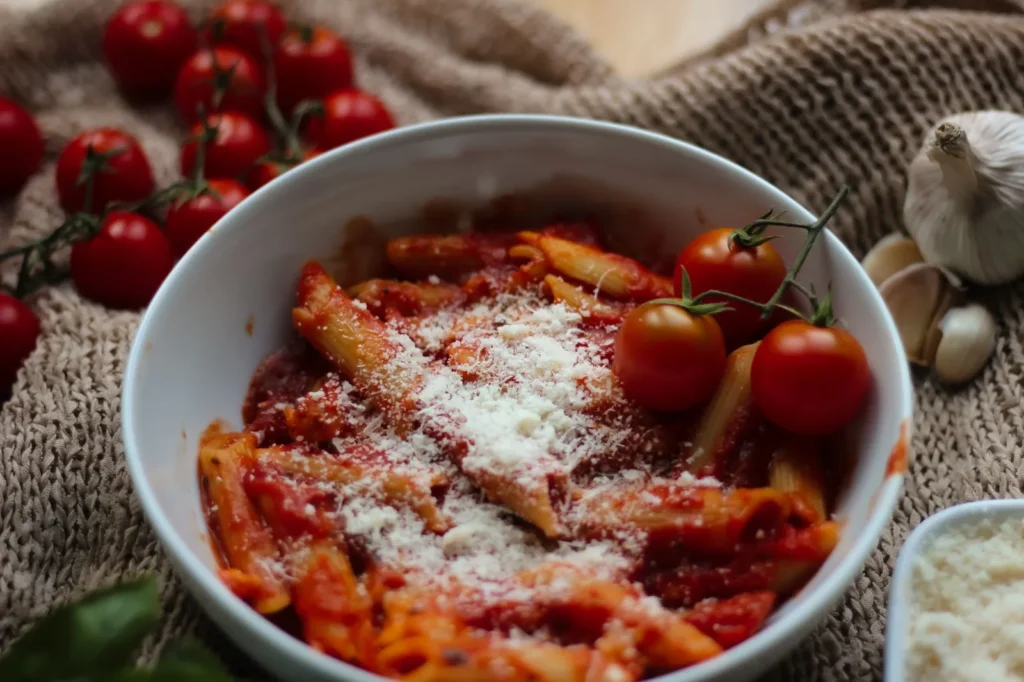

Pasta With Fresh Tomato Sauce
Description
A quick pasta tossed with ripe Roma tomatoes, garlic, and basil in a short warm pan step that keeps the fruit bright and structured. One pot and one skillet get you a late-summer-tasting dinner in about 25 minutes.
Ingredients
Instructions
-
Boil pasta water
Bring 4 L water to a rolling boil in a large pot over high heat and add 1 tbsp salt. The water should be vigorously bubbling across the whole surface before you add the noodles.
-
Cook spaghetti
Drop in 400 g spaghetti and stir so strands separate, cooking to al dente per package time, usually 9–10 minutes. The pasta should be tender but still firm at the center when bitten, not soft or mushy.
-
Warm oil and garlic
While pasta boils, warm 3 tbsp olive oil in a 28 cm skillet over medium-low heat. Add sliced garlic and cook 60–90 seconds until pale gold, not brown, which turns it bitter.
-
Cook tomatoes
Add 700 g diced Roma tomatoes, 1 tsp salt, and 1/4 tsp pepper to the skillet. Stir once and cook 5 minutes at medium heat until tomatoes release juice but hold shape, looking slumped yet still distinct rather than collapsed into mush.
-
Reserve and drain
Reserve 120 ml pasta water in a cup before draining the spaghetti. Drain the noodles in a colander so they are free of excess water but still hot.
-
Toss off heat
Slide noodles into the skillet off heat and add torn basil with a splash of reserved water. Toss 60 seconds so starch and tomato juice form a loose gloss that coats strands, not pools; add water 1 tbsp at a time if tight.
-
Plate and serve
Plate the pasta and top with 30 g Parmesan. Serve immediately while the basil stays bright and the oil stays fluid, not cooled and cloudy.
Nutrition Facts
Servings 4
- Amount Per Serving
- Calories 420kcal
- % Daily Value *
- Total Fat 14g22%
- Saturated Fat 3g15%
- Cholesterol 6mg2%
- Sodium 520mg22%
- Total Carbohydrate 62g21%
- Dietary Fiber 4g16%
- Sugars 7g
- Protein 14g29%
* Percent Daily Values are based on a 2,000 calorie diet. Your daily value may be higher or lower depending on your calorie needs.
Note
- Storage: Refrigerate leftovers in an airtight container within 2 hours of cooking for up to 3 days; basil darkens after day one.
- Reheating: Reheat in a skillet over medium-low heat with 1 tbsp water, tossing 2–3 minutes until steaming; avoid the microwave which toughens noodles.
- Pro tip: Read roasted tomato pasta if you want a deeper smoky sauce variation.
- Finish: Add a thread of raw olive oil at the table if tomatoes were bland to fix flat fruit better than extra salt.
