

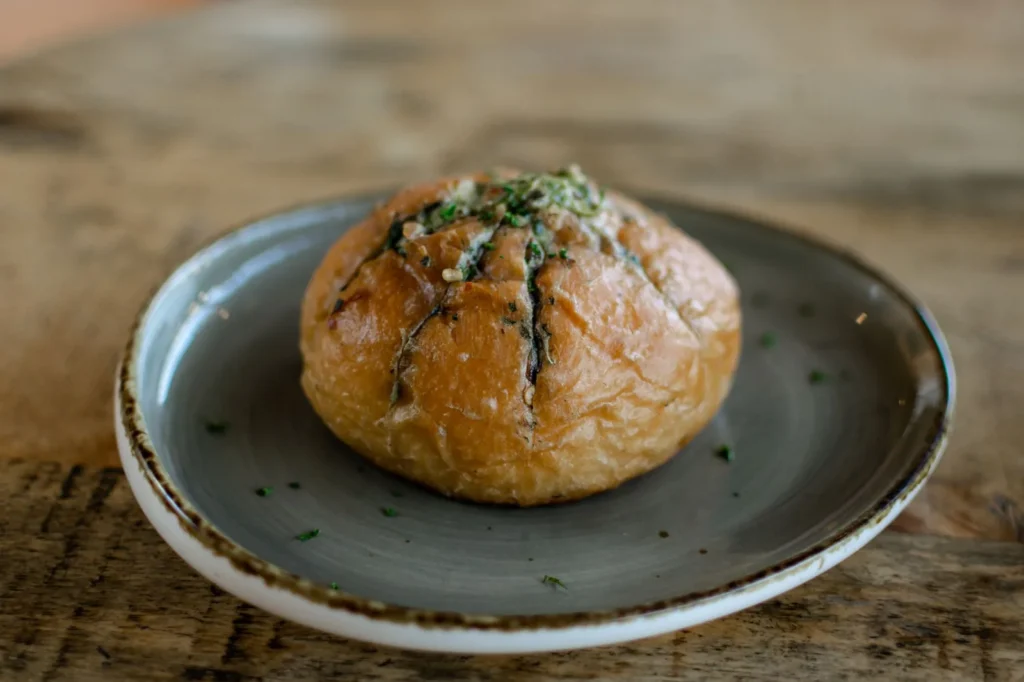
Rosemary dinner rolls with garlic butter are soft, pull-apart yeast rolls brushed with a savory garlic-herb topping that crisps slightly on the crust. This recipe uses a straightforward enriched dough that rises twice, so the crumb stays light instead of dense. You get a side bread that works with roast dinners, soups, or a cheese board without any special equipment.
The rosemary cuts through the butter richness with a piney, almost woodsy note, while the garlic stays mellow from a short melt rather than a fry. We use instant yeast so there’s no separate proofing step for the starter. The result is a roll you can bake on a weeknight if you plan the timing. Making this rosemary dinner rolls with garlic butter at home is surprisingly straightforward once you know the key steps.
Why You’ll Love These Rosemary Dinner Rolls With Garlic Butter
- Double rise gives a open, tender crumb instead of a bready lump
- Fresh rosemary stays aromatic without turning bitter during bake
- Garlic butter brush-on adds flavor after baking, not before
- One bowl for dough, one pan for baking, minimal cleanup
- Freezes well, so you can bake ahead for guests
Ingredients You’ll Need
- 500 g bread flour – higher protein builds structure for a tall roll
- 7 g instant yeast – no proofing needed before mixing
- 10 g fine salt – controls yeast and sharpens flavor
- 40 g white sugar – feeds yeast and lightly sweetens
- 300 ml whole milk, warmed to 38°C – hydrates and enriches
- 60 g unsalted butter, softened – adds tenderness to crumb
- 1 large egg – binds and aids browning
- 2 tbsp fresh rosemary, finely chopped – main herb note
- 80 g unsalted butter for topping – garlic butter base
- 3 garlic cloves, minced – topping flavor
- 1 tsp flaky salt – finish on baked rolls
Ingredient Substitutions
Bread flour: Replace with an equal weight of all-purpose flour if that’s what you keep on hand. All-purpose has less gluten protein, so the rolls will spread a bit more and rise about 10% less in height. The crumb stays soft but less chewy; bake at the same temperature and check doneness 3 minutes earlier. The rosemary dinner rolls with garlic butter works well for weeknight cooking when time is limited.





Whole milk: Use an equal volume of 2% milk or a unsweetened oat milk for a dairy-light version. Lower-fat milk gives a slightly less rich crumb and a paler crust, so brush the tops with a little butter before baking. Oat milk adds a faint sweetness; cut the sugar by 1 tsp to balance. Storing leftover rosemary dinner rolls with garlic butter correctly keeps it tasting good for days.
Fresh rosemary: Swap for 2 tsp dried rosemary, crushed, if fresh isn’t available. Dried herbs concentrate flavor, so use one-third the amount and mix into the flour to avoid clumps. Expect a stronger, drier herb note and less of the fresh pine aroma. For the best results with this rosemary dinner rolls with garlic butter, read through all the steps before starting.
Unsalted butter for topping: Replace with an equal weight of olive oil for a dairy-free brush. Olive oil won’t solidify on the cool roll, giving a softer surface and a fruitier taste; skip the flaky salt if your oil is robust. The garlic should still be warmed in the oil briefly to soften its bite.
White sugar: Use honey at 30 g instead of 40 g sugar for a floral sweetness. Honey draws more moisture, so the dough may need 1 extra tbsp flour; expect a deeper brown crust. The yeast activity speeds up slightly, so watch the first rise and don’t let it double past the mark.
Step-by-Step Instructions
- Mix 500 g bread flour, 7 g instant yeast, 10 g salt, and 40 g sugar in a bowl. Add 300 ml warm milk, 60 g softened butter, and 1 egg. Knead on medium-low heat off the stove using a stand mixer 8 minutes until smooth and tacky.
- Cover the bowl and let rise in a warm spot 25–30 minutes until doubled. Punch down and fold in 2 tbsp chopped rosemary until evenly spread.
- Divide dough into 12 pieces, roll each into a ball, and place in a buttered 23 cm square pan. Cover and rise again 25–30 minutes until touching.
- Heat oven to 180°C / 350°F. Bake rolls 25–30 minutes until golden and crispy on top and internal temp hits 90°C.
- Melt 80 g butter with 3 minced garlic cloves on medium-low heat for 2 minutes until fragrant, not browned. Brush over hot rolls.
- Sprinkle flaky salt across the tops and cool 10 minutes in the pan. Serve immediately or within 2 hours at room temp.
Pro Tips
Warm the milk with a thermometer; above 45°C it kills yeast and you’ll get a flat pan of dough. Aim for 38°C and you’ll see a steady first rise.
Chop rosemary with a sharp knife instead of tearing it, which bruises the leaves and turns them dark. Fine pieces distribute without bitter chunks.
Brush garlic butter the second the rolls leave the oven so it soaks the crust while warm. For technique detail on herb oils, see garlic infusions from Bon Appetit.
If your kitchen is cold, rise the pan in a turned-off oven with a bowl of hot water underneath. Stable warmth cuts the second rise time by about 10 minutes.
Common Mistakes to Avoid
Over-kneading past 10 minutes tightens the gluten so the roll springs back instead of stretching; stop when the dough passes a gentle pull test. A do not overmix rule applies once rosemary is added.
Skipping the second rise gives a tight crumb because the gluten hasn’t relaxed; always wait until the balls touch in the pan before baking.
Burning the garlic in the topping butter makes the whole batch bitter; keep it on medium-low heat and pull the pan at first scent. avoid opening the oven early so the crust sets properly.
Serving Suggestions
These rolls sit well next to lemon butter salmon where the herbs echo the fish. The soft crumb soaks pan juices without falling apart.
For a casual board, pair with spinach dip and cured meats. Split a roll and toast the cut side for extra crunch under the dip.
At brunch, serve with garlic knots on the side so guests compare the two butter styles. Both use the same brushing method but different shapes.
Storage and Reheating
Cool fully, then store in an airtight container in the fridge up to 3 days. Beyond that the crumb firms from starch retrogradation and the herb note fades.
Freeze baked rolls in a zip bag freeze for up to 2 months; thaw at room temp 1 hour. Reheat at 160°C for 8 minutes until the center reads 74°C if stuffed with dairy.
Don’t leave cooled rolls out more than 2 hours; the garlic butter is dairy and sits in the temperature risk zone otherwise. best enjoyed warm from a quick oven pass.
Recipe Variations
Cheese Crust Version
Add 40 g grated parmesan to the garlic butter in step 5 for a salty, browned top. The cheese crisps on the crust and adds a savory note that pairs with vodka pasta. Expect a firmer surface and deeper color.
Whole Wheat Swap
Replace 250 g of bread flour with whole wheat flour and add 2 tbsp milk to the dough. The roll gets a nuttier taste and denser bite; rise 5 minutes longer. It suits sheet pan sausage dinners.
Knot Shape
Roll each piece into a rope and tie a loose knot before the second rise for a garlic shrimp side. Bake 3 minutes less since knots expose more surface. The brush reaches every crevice.
Orange Zest Twist
Add 1 tsp orange zest to the dough with the rosemary for a citrus lift. The aroma stays subtle and cuts the butter weight; bake as written. It works with crispy salmon nicely.

Rosemary Dinner Rolls With Garlic Butter
Description
These rosemary dinner rolls are soft, pull-apart yeast rolls brushed with a savory garlic-herb butter that crisps slightly on the crust. The enriched dough rises twice for a light crumb and works as a side for roasts, soups, or a cheese board.
Ingredients
Instructions
-
Mix dry and wet ingredients
In a large mixing bowl, combine 500 g bread flour, 7 g instant yeast, 10 g fine salt, and 40 g white sugar. Add 300 ml warm milk (warmed to 38°C), 60 g softened butter, and 1 large egg to the bowl.
-
Knead the dough
Using a stand mixer with the dough hook on medium-low speed (motor off the stove), knead the mixture for 8 minutes until the dough is smooth and tacky to the touch. The dough should pull away from the sides but stick slightly to your finger when pressed.
-
First rise
Cover the bowl with a damp towel and let it rise in a warm spot for 25–30 minutes until the dough has visibly doubled in size. You will see the surface domed and a finger poke slowly springs back halfway when ready.
-
Add rosemary and shape
Punch down the dough to release gas, then fold in 2 tbsp chopped fresh rosemary until evenly spread throughout. Divide the dough into 12 pieces, roll each into a ball, and place them in a buttered 23 cm square pan spaced apart.
-
Second rise
Cover the pan and let the rolls rise again for 25–30 minutes in a warm spot until the dough balls are touching each other. This relaxed gluten gives a tender crumb; the pan should look full with no gaps between rolls.
-
Bake the rolls
Heat the oven to 180°C / 350°F and bake the rolls for 25–30 minutes until golden and crispy on top and the internal temperature hits 90°C. The tops should be deep golden and sound hollow when tapped.
-
Make garlic butter
In a small pan over medium-low heat, melt 80 g unsalted butter with 3 minced garlic cloves for 2 minutes until fragrant but not browned. Pull the pan at the first scent of garlic to avoid bitterness.
-
Brush and finish
Brush the garlic butter over the hot rolls the second they leave the oven so it soaks the warm crust. Sprinkle 1 tsp flaky salt across the tops and cool 10 minutes in the pan before serving within 2 hours at room temp.
Nutrition Facts
Servings 12
- Amount Per Serving
- Calories 280kcal
- % Daily Value *
- Total Fat 12g19%
- Saturated Fat 7g35%
- Cholesterol 45mg15%
- Sodium 420mg18%
- Total Carbohydrate 35g12%
- Dietary Fiber 2g8%
- Sugars 5g
- Protein 7g15%
* Percent Daily Values are based on a 2,000 calorie diet. Your daily value may be higher or lower depending on your calorie needs.
Note
- Storage: Cool fully, then store in an airtight container in the fridge up to 3 days; don't leave cooled rolls out more than 2 hours due to dairy garlic butter.
- Make ahead: Freeze baked rolls for up to 2 months and reheat at 160°C for 8 minutes; see vodka pasta for a paired dinner idea.
- Pro tip: Warm milk to 38°C with a thermometer since above 45°C kills yeast and yields a flat pan of dough.
- Reheat: Reheat refrigerated rolls at 160°C until steaming hot throughout and avoid reheating the same portion more than once.
