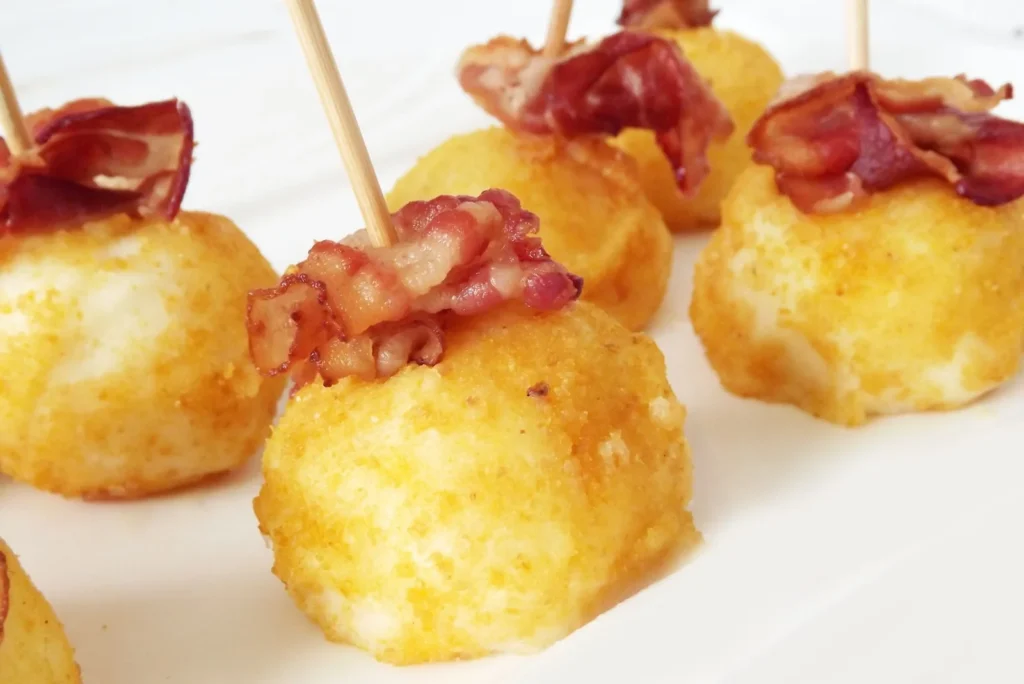
A reliable potato and cheese balls recipe gives you a crisp breaded shell around a soft mashed-potato exterior and a pocket of melted cheese in the middle. This version uses starchy potatoes and a two-step breading so the coating stays put while frying. You get a snack that holds its shape, reheats well, and works as an appetizer or lunchbox filler.
The method below keeps the potato mixture dry enough to roll, then chills it so the balls don't fall apart in the oil. We use a moderate oil temperature and a short fry window so the cheese warms through without leaking. Read the steps once before starting so the timing feels natural when you're at the stove. If you enjoyed this, our lactation balls is worth trying next. Making this potato and cheese balls at home is surprisingly straightforward once you know the key steps.
Why You'll Love These Potato And Cheese Balls
- Starchy potato base that rolls cleanly without added flour binder
- Double breading that stays attached through frying and reheating
- Cheese center that melts but doesn't burst if chilled first
- Freezer-friendly batch you can fry straight from frozen
Ingredients You'll Need
- 500 g russet potatoes, peeled and cut into 2 cm chunks
- 120 g cheddar cheese, cut into 1 cm cubes
- 1 large egg, beaten (for the binding wash)
- 60 g grated parmesan, mixed into the potato
- 80 g plain breadcrumbs, for the first coat
- 50 g panko breadcrumbs, for the final coat
- 2 tbsp chopped fresh chives
- 1 tsp salt
- 1/2 tsp black pepper
- 600 ml neutral oil, for frying
Ingredient Substitutions
Russet potatoes: Replace with an equal weight of Yukon Gold potatoes for a slightly waxier, buttery texture. Yukon Gold holds more moisture, so steam the chunks fully and let them dry 5 minutes after mashing to avoid a slack mixture. Expect a creamier bite and a less crisp shell unless you add 1 tbsp cornstarch to the mash. The potato and cheese balls works well for weeknight cooking when time is limited.
Cheddar cheese: Swap the cubes for an equal weight of mozzarella for a stringier, milder center. Mozarella releases more water as it melts, so keep the cubes small and chill the rolled balls 25–30 minutes before frying. The flavor is gentler and the leak risk is lower than with aged cheddar. Storing leftover potato and cheese balls correctly keeps it tasting good for days.
Panko breadcrumbs: Use an equal weight of crushed cornflakes for a thinner, crunchier final layer. Cornflakes brown faster than panko, so drop the oil to medium-low heat for the last minute of frying. The shell will sound sharper when bitten but won't protect against a long freeze as well. For the best results with this potato and cheese balls, read through all the steps before starting.
Neutral oil: Substitute with an equal volume of refined sunflower oil for a lighter aftertaste. Sunflower oil has a similar smoke point, so the fry temperature stays at 175°C without adjustment. Avoid olive oil here because its flavor turns bitter above 160°C.
Step-by-Step Instructions
- Boil the potato chunks in salted water over medium-low heat for 18–20 minutes until a fork slides through with no resistance. Drain and let them sit in the colander 5 minutes so surface steam escapes.
- Mash the potatoes in a wide bowl with the parmesan, chives, salt, and pepper until no lumps remain. Spread the mash on a plate to cool to room temperature, about 15 minutes, so it firms enough to handle.
- Roll the mash into 12 equal balls about 4 cm wide, pressing a cheddar cube into the center of each and sealing the potato around it completely. Place the shaped balls on a tray and chill 25–30 minutes so the cheese firms.
- Set up two bowls: one with beaten egg, one with mixed plain and panko breadcrumbs. Roll each ball in egg, then crumbs, pressing lightly so the coat sticks, and repeat the egg-and-crumb step for a double layer.
- Heat the oil in a 24 cm heavy pan to 175°C over medium-low heat, tested by a crumb that sizzles and browns in 20 seconds. Fry 4 balls at a time, turning with a slotted spoon, until golden and crispy on all sides, 3–4 minutes total.
- Lift the balls to a wire rack, not a paper towel, so the base stays crisp, and rest 2 minutes before serving. The cheese center will be hot, so break one open to check before offering to kids.
Pro Tips
Dry the mash well before rolling; a wet mix needs extra crumbs and still splits in the oil. Chill the shaped balls instead of rushing to fry, since cold cheese leaks less under heat.
Use a wire rack after frying so trapped steam doesn't soften the bottom crust. For a lighter version, see the air fryer technique and cut the oil to a light brush.
Keep the fry batches small so the oil temperature doesn't drop below 165°C, which makes the crumb greasy. A clip-on thermometer removes the guesswork and keeps the shell thin.
Freeze the double-coated balls on a tray, then bag them; fry from frozen at 170°C for 4–5 minutes. The potato scone method shows another way to use leftover mash.
Common Mistakes to Avoid
Skipping the chill step lets the cheese melt out before the shell sets, leaving a hole and a messy pan. Always rest the shaped balls 25–30 minutes in the fridge before breading.
Overcrowding the pan drops the oil temperature and the crumb soaks up fat instead of crisping. Fry in small batches and wait for the oil to recover between rounds.
Using waxy potatoes makes the mash too sticky to seal around the cheese, so the ball breaks on the first turn. Russet or a dry variety gives the right structure without extra flour.
Serving Suggestions
Plate the balls with a bowl of cream cheese dip and a squeeze of lemon to cut the richness. A simple cucumber salad alongside keeps the plate from feeling heavy.
For a party board, set them next to mac and cheese bites and pickled onions so guests get a cheese-forward spread. Serve immediately while the centers are fluid.
Storage and Reheating
Cooked balls keep in an airtight container in the fridge for up to 3 days. Reheat in a 200°C oven for 8 minutes until the center is steaming, not just warm at the edge.
Uncooked, breaded balls freeze for freeze for up to 2 months on a tray before bagging. Fry from frozen; don't thaw or the crumb slips. Never leave cooked food out beyond 2 hours at room temperature.
Recipe Variations
Spicy Version
Mix 1 tsp smoked paprika and 1/2 tsp cayenne into the mash before rolling. The shell picks up a red tint and the center warms with heat that builds after the cheese cools slightly. Serve with cool yogurt dip to balance it.
Herb Swap
Replace chives with 2 tbsp chopped dill and 1 tsp lemon zest mixed into the potato. The balls taste brighter and pair better with fish meals. The texture stays the same if you pat the herbs dry first.
Cheese Blend
Use half cheddar and half chevre cheese cubes for a tangy, softer middle. Goat cheese melts faster, so extend the chill to 40 minutes and fry 30 seconds less. The flavor is sharper and less stringy.
Air Fried Option
Brush the breaded balls with oil and air fry at 190°C for 12 minutes, turning once at the halfway mark. You'll lose some crunch versus deep fry but gain a cleaner finish. The marinade recipe page lists other air fryer times.
Bacon Wrapped
Before the final crumb, wrap each ball in a half strip of thin bacon and secure with a pick. Fry 30 seconds longer so the pork renders. The shell stays put but the outside reads smoky rather than neutral.