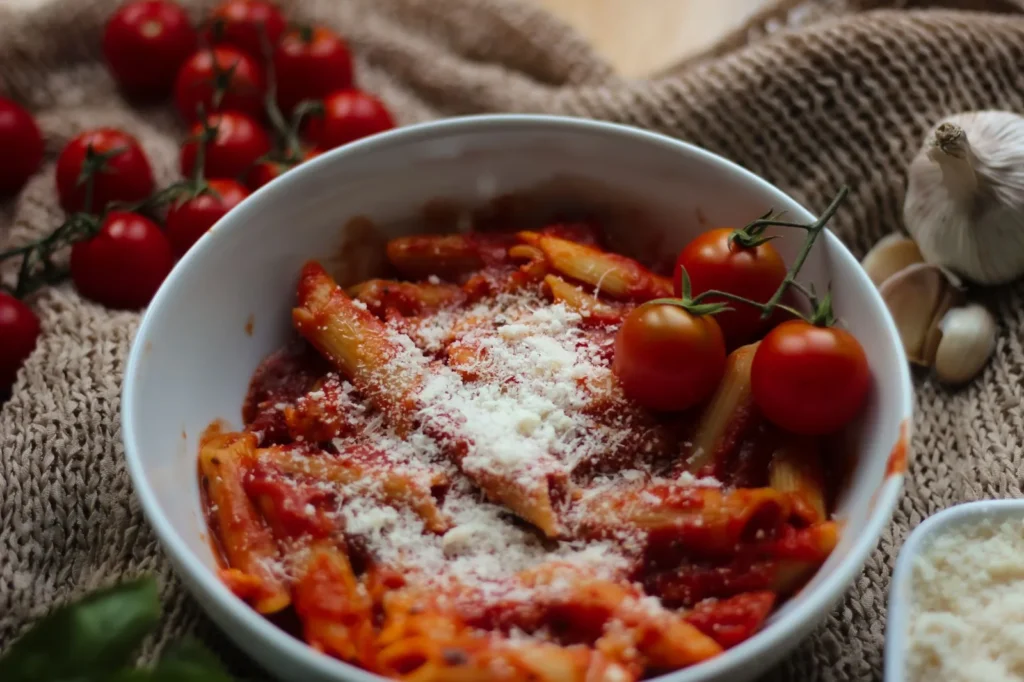
Penne with tomato and goat cheese sauce is the weeknight pasta I reach for when I want something creamy without standing over a béchamel. The tomatoes break down into a loose, savory base while the goat cheese melts in at the end for a tangy, silky finish. You get a restaurant-style plate from pantry and fridge staples in about 25 minutes.
The trick is timing: the pasta and sauce finish separately, then meet off the heat so the cheese stays smooth instead of turning grainy. This version uses crushed tomatoes, not a quick marinara, so the sauce stays light enough for the goat cheese to read clearly. If you like a penne puttanesca, think of this as the milder, dairy-forward cousin. Making this penne with tomato and goat cheese sauce at home is surprisingly straightforward once you know the key steps.
Why You'll Love These Penne With Tomato And Goat Cheese Sauce
- Ready in 25 minutes using one pot for sauce and one for pasta.
- Tangy goat cheese cuts the tomato sweetness without added cream.
- Holds up to substitutions when the fridge is sparse.
- Feeds four as a main or six as a side with salad.
Ingredients You'll Need
- 12 oz (340 g) penne pasta — standard semolina holds sauce better than thin shapes.
- 2 tbsp olive oil — extra-virgin adds fruitiness; regular works for cooking.
- 3 cloves garlic, minced — about 1 tbsp; controls the aromatic base.
- 1 can (28 oz / 800 g) crushed tomatoes — gives body without straining.
- 4 oz (113 g) fresh goat cheese, crumbled — the melting agent and tang source.
- 1/2 tsp salt, plus more for pasta water — seasons both components.
- 1/4 tsp black pepper — rounds the acidity.
- 2 tbsp chopped fresh basil — added at the end for brightness.
- 1/4 cup reserved pasta water — loosens the sauce if needed.
Ingredient Substitutions
Goat cheese: Replace the 4 oz fresh goat cheese with 4 oz cream cheese plus 1 tbsp lemon juice for a milder, less tangy sauce. Cream cheese is denser and needs medium-low heat to melt without splitting, so stir longer off the burner. The result is richer and sweeter, losing the signature tang but keeping the silky texture. The penne with tomato and goat cheese sauce works well for weeknight cooking when time is limited.
Crushed tomatoes: Use 2 cups peeled and diced fresh tomatoes simmered 10 minutes longer if out of canned. Fresh tomatoes release more water, so reduce the sauce 5 minutes more to thicken. Expect a brighter, less cooked flavor and slightly more seeds unless strained. Storing leftover penne with tomato and goat cheese sauce correctly keeps it tasting good for days.
Penne: Swap for rigatoni or fusilli in the same 12 oz weight; both trap sauce in ridges. Wider tubes need 1 minute more boil time, so check doneness early. The dish reads nearly identical but with a chunkier bite. For the best results with this penne with tomato and goat cheese sauce, read through all the steps before starting.
Basil: Substitute 2 tbsp chopped flat-leaf parsley if basil is wilted. Parsley is less sweet and more peppery, shifting the finish savory rather than floral. Add it at the same final step to keep color and avoid bitterness. If you enjoyed this, our halibut chimichurri sauce is worth trying next.
Step-by-Step Instructions
- Bring 3 quarts water to a boil in a 6-quart pot, add 1 tbsp salt, then the penne. Cook at a rolling boil for 11 minutes until al dente with a faint white core; drain, saving 1/4 cup water.
- Warm 2 tbsp olive oil in a 10-inch skillet over medium heat; add minced garlic and stir 45 seconds until fragrant, not browned.
- Pour in crushed tomatoes, 1/2 tsp salt, and pepper; simmer at medium-low heat for 12 minutes until thickened and bubbles slow.
- Add drained penne to the skillet and toss 1 minute to coat; remove from heat so the pan stops cooking the pasta.
- Crumble goat cheese over the top and stir 90 seconds until melted into a creamy, pink sauce with no white lumps.
- Stir in basil and splash pasta water if thick; serve immediately while glossy.
Pro Tips
Reserve pasta water before draining so you can loosen the sauce without diluting flavor. A colander setup near the sink saves the step of fishing water out later.
Add goat cheese off the heat to prevent the proteins from seizing into clumps. The residual warmth melts it smooth within two minutes of stirring.
Use crushed tomatoes rather than sauce for a cleaner tomato note that lets the cheese show. If you enjoy a tomato sauce side, the same can works there too.
Finish with basil after cooking to keep its color and avoid a stewed taste. For a chevre deeper flavor, age your cheese a few days in the fridge before use.
Common Mistakes to Avoid
Boiling the goat cheese in the sauce curdles it into gritty bits; always remove the pan from heat first. The fat separates when overheated, ruining the silkiness.
Undersalting pasta water makes the penne taste flat against the tangy sauce. Use 1 tbsp per 3 quarts so the noodles season from inside.
Using whole goat cheese logs straight from the fridge slows melting; crumble and temper 10 minutes on the counter. Cold cheese shocks the warm tomatoes and clumps.
Serving Suggestions
Plate in shallow bowls with extra basil and black pepper for a simple dinner. A tzatziki sauce on a side salad adds cool contrast to the warm pasta.
Pair with crusty bread to swipe the plate clean. For wine, a chilled Pinot Grigio matches the acidity without overwhelming the cheese.
Storage and Reheating
Refrigerate leftovers in an airtight container for up to 3 days; the dairy sauce shortens safe window versus oil-based pasta. Discard if the cheese smells sour beyond tangy.
Reheat on medium-low heat with 1 tbsp water, stirring 3 minutes until steaming. Avoid microwave high power that splits the sauce into oil pools.
Freezing is not advised; goat cheese separates when thawed and turns chalky. Make a fresh batch instead of defrosting for best texture.
Recipe Variations
Spicy Version
Add 1/2 tsp red pepper flakes with the garlic for a warming bite that lifts the tomato. The heat balances the cheese tang, and a walnut sauce swap on half the batch tests nutty contrast. Keep flakes modest so the goat cheese still reads.
Roasted Tomato Version
Roast 2 cups cherry tomatoes at 200°C / 400°F for 20 minutes, then crush into the skillet. The concentrated sweetness needs less simmer time, about 5 minutes, and adds smoky depth.
Protein Add-In
Stir in 1 cup shredded rotisserie chicken with the penne to make it heartier. The meat warms in 2 minutes and absorbs sauce without extra fat; scale salt down slightly.