

Transport your taste buds to the sun-drenched region of Liguria, Italy, with this exquisite recipe for Walnut Sauce – Salsa Di Noci. This traditional, creamy, and intensely flavorful sauce is a hidden gem of Italian cuisine, offering a rich, nutty alternative to pesto. Perfect for coating delicate pasta shapes like trofie or pansoti, or simply as a luxurious spread, Salsa di Noci is surprisingly easy to make and promises a gourmet experience with every bite.
Why You”ll Love This Walnut Sauce
You”ll adore this Walnut Sauce because it’s a revelation of flavor and texture. It’s incredibly creamy without any cream, relying instead on soaked bread and the natural richness of walnuts. The delicate balance of garlic, Parmesan, and fresh herbs creates a sophisticated profile that’s both comforting and elegant. It’s a vegetarian delight that comes together quickly, making it an ideal choice for a weeknight meal that feels special.
What Makes This Recipe Special
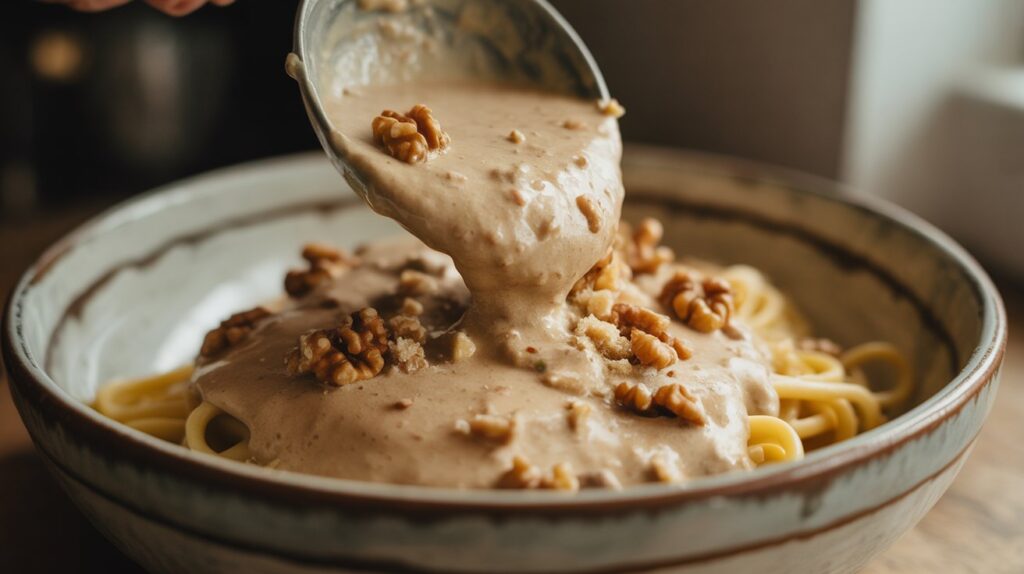
What makes this Salsa di Noci truly special is its authentic Ligurian heritage and the clever technique of using soaked bread to achieve its signature velvety texture. Unlike many modern sauces, it traditionally relies on a mortar and pestle (though a food processor works too!) to create a rustic yet refined consistency. The combination of fresh, high-quality walnuts with aromatic garlic, savory Parmesan, and bright olive oil results in a sauce that’s deeply satisfying and uniquely Italian.





Ingredients You”ll Need
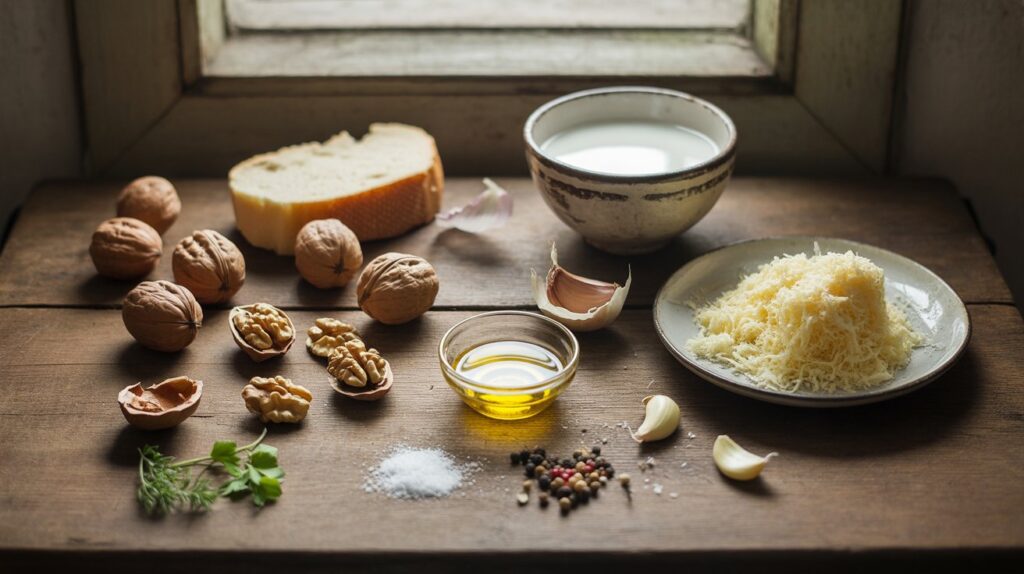
Simple, fresh ingredients are the heart of a great Salsa di Noci.
- Walnuts: Shelled, high-quality walnuts are the star. Blanching them can reduce bitterness.
- Stale Bread: A slice of day-old white bread, crusts removed, soaked in milk or water, provides creaminess.
- Milk: Whole milk for soaking the bread, adding richness.
- Garlic: A small clove, to add a subtle aromatic kick without overpowering.
- Parmesan Cheese: Freshly grated Parmigiano-Reggiano for salty, umami depth.
- Extra Virgin Olive Oil: A good quality, fruity olive oil is crucial for flavor and emulsification.
- Salt and Black Pepper: To season and enhance all the natural flavors.
- Fresh Marjoram or Parsley (optional): For a hint of fresh herbiness.
Pro-Tips for Success
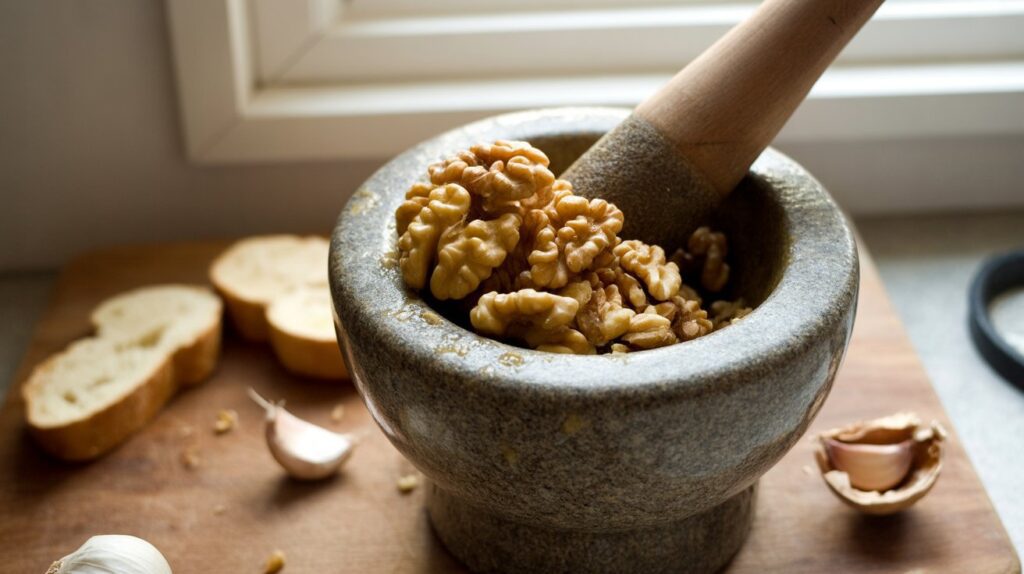
Achieve a perfectly creamy and flavorful Salsa di Noci with these expert tips:
- Blanch Walnuts (Optional but Recommended): For a smoother, less bitter sauce, blanch the walnuts in boiling water for 1-2 minutes, then drain and rub off the skins with a clean towel.
- Soak Bread Thoroughly: Ensure the bread is fully saturated with milk (or water) and then squeezed well to remove excess liquid. This is key for the sauce”s creamy texture.
- Use a Mortar and Pestle for Authenticity: While a food processor is quicker, a mortar and pestle creates a more traditional, slightly coarser texture and helps release the walnuts” oils for a richer flavor.
- Good Quality Olive Oil: Since olive oil is a prominent flavor, use the best extra virgin olive oil you have.
- Adjust Consistency with Pasta Water: If serving with pasta, reserve some of the starchy pasta water to thin the sauce to your desired consistency.
- Don”t Over-process: If using a food processor, pulse rather than continuously blend to avoid heating the walnuts too much, which can make the sauce oily or pasty.
Common Mistakes to Avoid
Steer clear of these common pitfalls for a flawless Walnut Sauce:
- Not Soaking the Bread: Skipping this step will result in a less creamy and potentially grainy sauce.
- Using Too Much Garlic: A little garlic goes a long way in this delicate sauce; too much can overpower the walnuts.
- Over-processing Walnuts: If blended too long, walnuts can release too much oil and turn the sauce into a paste rather than a creamy emulsion.
Flavor Variations
Experiment with these ideas to customize your Salsa di Noci:
- Herbaceous Boost: Add a few fresh basil leaves or a sprig of marjoram to the food processor along with the other ingredients.
- Lemon Zest Brightness: A tiny bit of lemon zest can add a lovely aromatic lift to the sauce.
- Nutty Alternatives: While walnuts are traditional, you could experiment with a mix of walnuts and pine nuts, or even blanched almonds.
- Vegan Version: Substitute the milk with a plant-based milk (like almond or oat milk) and replace Parmesan with nutritional yeast or a vegan Parmesan alternative.
What to Serve With Walnut Sauce – Salsa Di Noci
This versatile sauce is traditionally paired with:
- Pasta: Especially Ligurian pasta shapes like trofie, pansoti, or corzetti. Also excellent with tagliatelle or fettuccine.
- Gnocchi: The creamy sauce clings beautifully to soft potato gnocchi.
- Grilled Vegetables: Drizzle over grilled asparagus, zucchini, or bell peppers.
- Crostini or Bread: Serve as a spread for toasted bread or crostini for an elegant appetizer.
Storage and Reheating
Walnut Sauce is best enjoyed fresh. However, leftovers can be stored in an airtight container in the refrigerator for up to 3-4 days. To prevent discoloration, press a piece of plastic wrap directly onto the surface of the sauce before sealing. To reheat, gently warm over low heat, adding a splash of water or milk to loosen the consistency if needed. It can also be frozen for up to 1 month, though the texture may change slightly upon thawing.
View Full Recipe
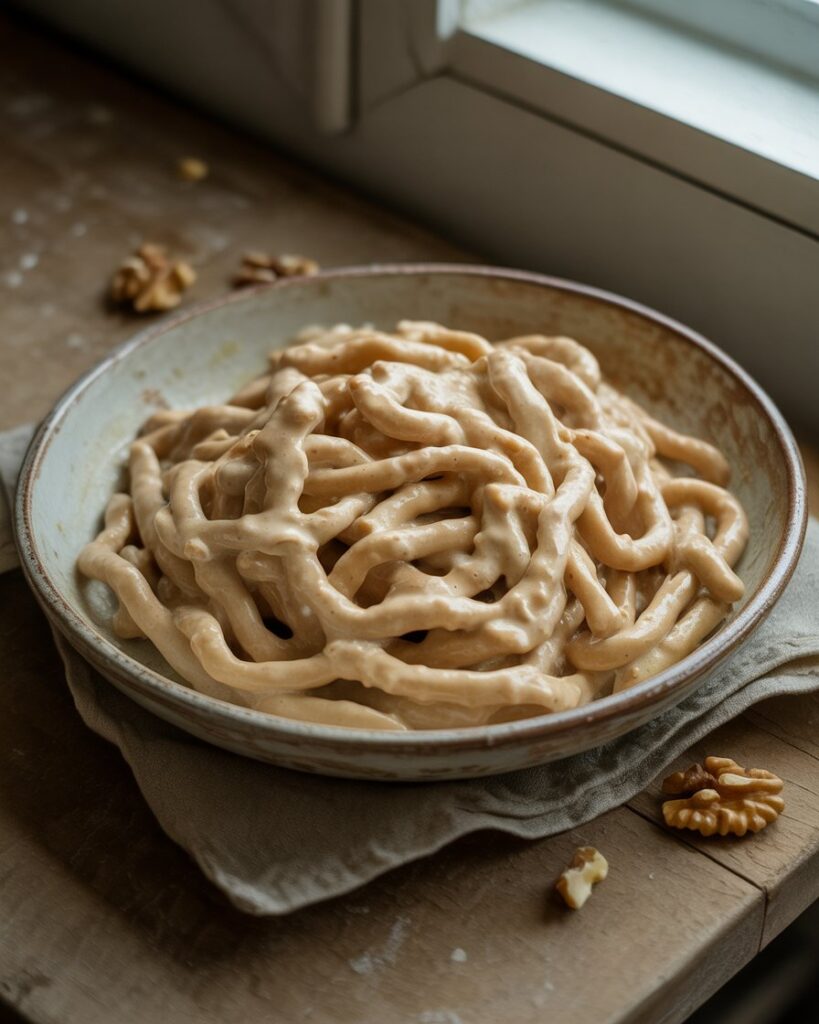

Walnut Sauce – Salsa Di Noci
Description
A traditional Italian Walnut Sauce (Salsa di Noci) from Liguria, offering a rich, creamy, and intensely flavorful alternative to pesto, perfect for pasta.
Ingredients
Instructions
-
Step 1 (0-5 min): Prepare Walnuts and Bread
(Optional: Blanch walnuts for 1-2 minutes in boiling water, drain, and rub off skins for a smoother, less bitter sauce.) Soak the stale bread in milk (or water) for a few minutes until softened. Squeeze out excess liquid.
-
Step 2 (5-10 min): Blend Ingredients
In a food processor (or mortar and pestle), combine the prepared walnuts, soaked bread, garlic, and Parmesan cheese. Pulse until a coarse paste forms.
-
Step 3 (10-15 min): Emulsify with Olive Oil
With the food processor running on low, slowly drizzle in the extra virgin olive oil until the sauce is creamy and well emulsified. If using a mortar and pestle, gradually add the olive oil while continuing to grind and mix.
-
Step 4 (15-20 min): Season and Serve
Season the sauce with salt and freshly ground black pepper to taste. Stir in chopped fresh marjoram or parsley, if using. If serving with pasta, thin the sauce with a tablespoon or two of reserved pasta water until desired consistency is reached. Serve immediately.
Nutrition Facts
Servings 4
- Amount Per Serving
- Calories 350kcal
- % Daily Value *
- Total Fat 30g47%
- Saturated Fat 4g20%
- Cholesterol 10mg4%
- Sodium 250mg11%
- Total Carbohydrate 15g5%
- Dietary Fiber 3g12%
- Sugars 2g
- Protein 8g16%
* Percent Daily Values are based on a 2,000 calorie diet. Your daily value may be higher or lower depending on your calorie needs.
Note
- Blanch Walnuts for Smoothness: Blanching and peeling walnuts reduces bitterness and creates a silkier sauce.
- Don"t Over-process: Pulse the ingredients to avoid making the sauce oily or pasty.
- Adjust Consistency: Use reserved pasta water to achieve your desired sauce consistency when serving with pasta.
