

An oven baked chuck roast turns a tough, well-exercised cut of beef into a fork-tender centerpiece with a deep brown crust. The secret is low, steady heat that breaks down connective tissue while the surface renders and crisps. This recipe gives you a reliable method with exact temperatures, timing cues, and seasoning ratios so the result is repeatable on a weeknight or Sunday.
Chuck comes from the shoulder, which means it carries more collagen than loin cuts. When you cook it slowly at 160°C / 325°F, that collagen converts to gelatin and the meat stays moist instead of drying out. You’ll end up with slices that hold together but pull apart with a fork, plus a pan fond you can turn into gravy. Making this oven baked chuck roast at home is surprisingly straightforward once you know the key steps.
This version skips searing on the stovetop and lets the oven do the browning, which keeps cleanup to one pan. The tradeoff is a slightly longer roast time, but the hands-on work is under ten minutes. The oven baked chuck roast works well for weeknight cooking when time is limited.
Why You’ll Love These Oven Baked Chuck Roast
- One pan from start to finish, so you wash a single roasting dish.
- Predictable doneness thanks to a fixed oven temp and weight-based time range.
- Strong beef flavor from a dry herb crust rather than a heavy liquid braise.
- Leftovers slice cold for sandwiches or reheat without turning stringy.
- Budget cut that eats like a pricier roast when cooked with this method.
Ingredients You’ll Need
- 1.8 kg / 4 lb boneless beef chuck roast, tied if loosely shaped
- 2 tbsp olive oil
- 2 tsp kosher salt
- 1 tsp coarse black pepper
- 1 tbsp dried thyme
- 1 tbsp dried rosemary, crushed
- 4 cloves garlic, minced
- 1 large yellow onion, cut into 2.5 cm wedges
- 2 carrots, peeled and cut into 5 cm chunks
- 1 cup low-sodium beef stock
Ingredient Substitutions
Olive oil: Replace with an equal amount of avocado oil if you want a higher smoke point for the initial browning. Avocado oil stays stable at 160°C / 325°F and won’t turn bitter the way some seed oils can. The crust will look the same but carry a cleaner, less grassy note. Storing leftover oven baked chuck roast correctly keeps it tasting good for days.
Dried thyme: Swap for 1 tbsp dried oregano if you prefer a sharper, almost lemony herb profile. Oregano browns faster than thyme, so check the surface at the 90-minute mark to avoid dark specks. The overall roast will read more Mediterranean than woodland.
Beef stock: Use 1 cup water plus 1 tsp soy sauce for a salty, umami-rich liquid when you’re out of stock. Soy sauce darkens the pan juices and adds glutamates that mimic meaty depth. You’ll lose some body, so reduce the final gravy by an extra 5 minutes.
Carrots: Substitute 2 parsnips, peeled and chunked the same size, for a sweeter root vegetable. Parsnips soften about 10 minutes sooner than carrots, so add them 20 minutes after the roast goes in. The sweetness balances the rosemary better than carrots do.
Step-by-Step Instructions
- Heat the oven to 160°C / 325°F and set a rack in the lower third so air moves around the pan. Pat the chuck dry with paper towels; surface moisture steams the meat instead of browning it.
- Rub the roast with olive oil, then coat all sides with salt, pepper, thyme, rosemary, and minced garlic. Use your hands to press the herbs into the fat cap so they don’t blow off in the oven fan.
- Place the onion wedges and carrot chunks in a 33 x 23 cm roasting pan, pour the beef stock around them, and set the roast on top of the vegetables. The liquid should not touch the sides of the meat above the halfway line.
- Roast uncovered for 2 hours 30 minutes for a 1.8 kg piece, until the center hits 71°C / 160°F on an instant-read thermometer. Juices should run clear and the top should be mahogany with crisp edges.
- Rest the roast on a board, tented with foil, for 20 minutes before slicing. The internal temperature will climb to 74°C / 165°F and the fibers will reabsorb the escaping liquid.
- Slice against the grain in 1 cm pieces and spoon the warm vegetables and pan juice over the top. If you want gravy, skim fat and simmer the liquid on medium-low heat for 8 minutes until thickened.
Pro Tips
Buy a roast with a visible fat cap about 1 cm thick; that layer bastes the meat as it renders and prevents the slow roasting from drying the surface. A too-lean piece needs a covering of foil for the last hour, which softens the crust you worked for.
Let the meat sit at room temperature for 30 minutes before it goes in the oven so the center doesn’t lag behind the exterior. A cold 1.8 kg roast can need an extra 25 minutes and yields a gray band near the edge.
Tie a loose roast with butcher twine in three loops so it holds a round shape and cooks evenly. Untied pieces have thin tails that overcook while the thick middle lags, giving you two textures instead of one.
Keep a thermometer probe in the center for the last hour so you pull it at exactly 71°C / 160°F. Guessing by time alone fails when your oven runs hot or the pan is glass instead of metal.
Common Mistakes to Avoid
Skipping the dry pat leaves a film of water that turns to steam and blocks browning. You’ll get a pale, boiled-looking roast instead of the crust this method promises, and the herbs slide off with the runoff.
Roasting at 190°C / 375°F or higher tightens the muscle fibers before collagen melts, leaving chewy bites. The french roast method uses a similar cut but a lower temp for the same reason.
Cutting immediately after pulling the pan loses a third of the juices onto the board. The porchetta roast suffers the same way, so always rest large cuts before slicing.
Serving Suggestions
Spoon the roast over twice baked potato halves to catch the pan juice with a creamy base. The starch balances the rosemary and gives you a full plate from one oven session.
Pair with baked artichoke hearts for a vegetable side that echoes the herbal crust without repeating the root notes. A squeeze of lemon on the artichokes cuts the beef’s richness.
Leftover slices make a strong sandwich on toasted sourdough with horseradish cream. Cold roast holds its shape better than a braised one, so it won’t shred when you press the bread.
Storage and Reheating
Refrigerate sliced or whole roast in an airtight container with the vegetables and juice for up to 4 days. Keep the liquid on the meat so it doesn’t oxidize and darken at the surface.
Freeze portions in freezer bags with the juice for freeze for up to 3 months. Thaw overnight in the fridge before reheating so the center warms before the outside toughens.
Reheat covered in a 150°C / 300°F oven until the beef reaches 74°C / 165°F internally, about 20 minutes for a thick slice. Microwave reheating works but dries the edges, so add a tablespoon of stock per portion.
Recipe Variations
Red Wine Version
Replace the beef stock with 3/4 cup red wine plus 1/4 cup water for a deeper, tannic background. The alcohol cooks off in the oven but leaves a dark reduction that pairs with the rosemary. Expect a slightly firmer vegetable from the wine’s acidity.
Smoked Paprika Crust
Drop the thyme and add 1 tbsp smoked paprika plus 1 tsp cumin to the rub for a barbecue-style note without a grill. The paprika can scorch by the 2-hour mark, so lay a loose foil tent for the final 30 minutes. The crust turns brick-red and smoky.
Mushroom Addition
Add 250 g quartered cremini mushrooms with the onions so they roast in the beef fat. Mushrooms release water and lengthen the braise by 15 minutes, but they build a savory layer under the meat. Use the portobello mushrooms technique if you want them as a separate side instead.
Pot Roast Style
Nest the roast in the stock with the vegetables fully submerged and cover the pan for the first two hours, then uncover to brown. This leans toward the pot roast texture but keeps the oven baked chuck roast name by finishing uncovered. The meat falls apart rather than slicing clean.
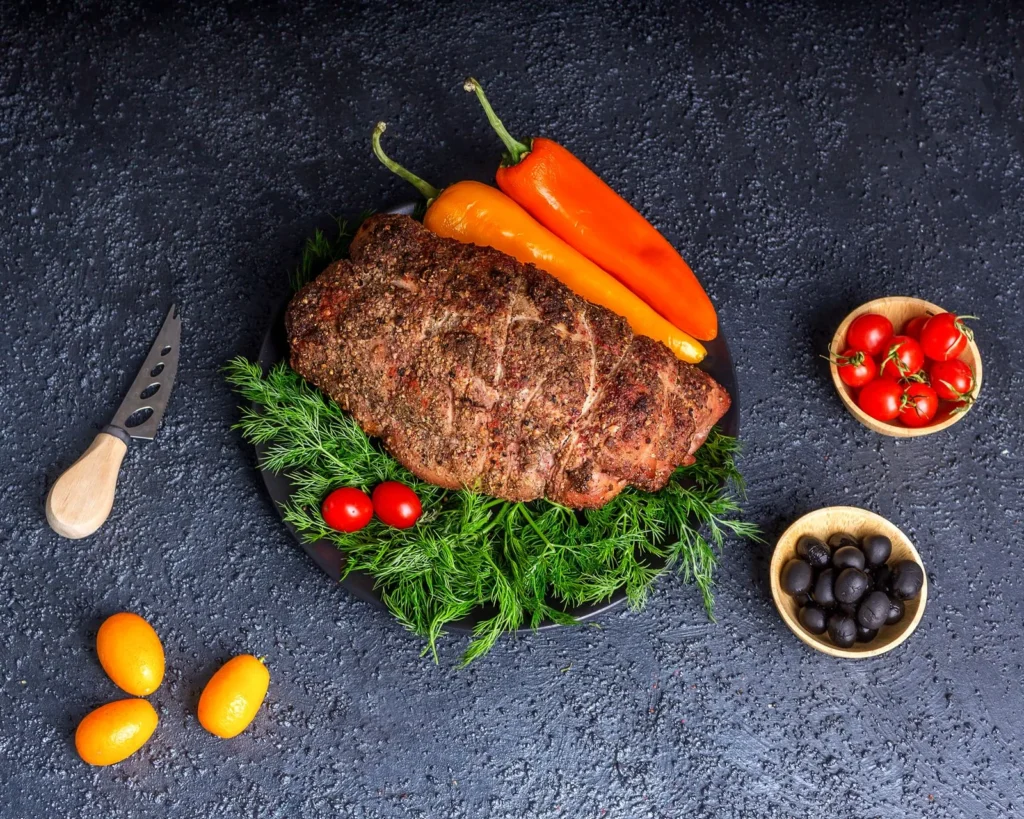

Oven Baked Chuck Roast
Description
An oven baked chuck roast turns a tough shoulder cut into a fork-tender centerpiece with a deep brown crust using low steady heat. This one-pan method skips stovetop searing and gives you predictable results with a dry herb rub and pan vegetables.
Ingredients
Instructions
-
Heat oven and rack
Heat the oven to 160°C / 325°F and set a rack in the lower third so air moves around the pan. This placement helps the roast brown evenly and prevents the bottom from steaming during the long cook.
-
Pat roast dry
Pat the chuck dry with paper towels; surface moisture steams the meat instead of browning it. A thoroughly dried surface is what lets the herb crust stick and the top turn mahogany in the oven.
-
Rub with herbs
Rub the roast with olive oil, then coat all sides with salt, pepper, thyme, rosemary, and minced garlic. Use your hands to press the herbs into the fat cap so they don't blow off in the oven fan during roasting.
-
Arrange vegetables
Place the onion wedges and carrot chunks in a 33 x 23 cm roasting pan, pour the beef stock around them, and set the roast on top of the vegetables. The liquid should not touch the sides of the meat above the halfway line so the crust can form.
-
Roast uncovered
Roast uncovered for 2 hours 30 minutes for a 1.8 kg piece, until the center hits 71°C / 160°F on an instant-read thermometer. Juices should run clear and the top should be mahogany with crisp edges, showing the collagen has turned to gelatin.
-
Rest the roast
Rest the roast on a board, tented with foil, for 20 minutes before slicing. The internal temperature will climb to 74°C / 165°F and the fibers will reabsorb the escaping liquid for a juicier slice.
-
Slice and serve
Slice against the grain in 1 cm pieces and spoon the warm vegetables and pan juice over the top. The slices should hold together but pull apart easily with a fork when served.
-
Make gravy optional
If you want gravy, skim fat and simmer the liquid on medium-low heat for 8 minutes until thickened. The liquid will reduce to a glossy coating that pours slowly off the spoon when ready.
Nutrition Facts
Servings 6
- Amount Per Serving
- Calories 520kcal
- % Daily Value *
- Total Fat 28g44%
- Saturated Fat 10g50%
- Cholesterol 130mg44%
- Sodium 720mg30%
- Total Carbohydrate 12g4%
- Dietary Fiber 3g12%
- Sugars 5g
- Protein 48g96%
* Percent Daily Values are based on a 2,000 calorie diet. Your daily value may be higher or lower depending on your calorie needs.
Note
- Storage: Refrigerate sliced or whole roast in an airtight container with the vegetables and juice within 2 hours of cooking for up to 4 days.
- Make ahead: Let the meat sit at room temperature for 30 minutes before it goes in the oven so the center doesn't lag; a cold roast can need an extra 25 minutes.
- Pro tip: Tie a loose roast with butcher twine in three loops so it holds a round shape and cooks evenly, as shown in our porchetta roast guide.
- Reheating: Reheat covered in a 150°C / 300°F oven until the beef reaches 74°C / 165°F internally; microwave only with a tablespoon of stock per portion to avoid dry edges.
