

A good lamb stew with saffron and tomatoes balances rich meat, floral saffron, and bright tomato acidity in a single pot. This version uses shoulder lamb cut into chunks so the collagen breaks down during the slow simmer. You get a thick, spoon-coating broth without any flour roux.
The saffron is bloomed in warm stock before it goes in, which pulls more color and aroma from the threads than dropping them in dry. Tomatoes add necessary acid so the lamb doesn’t taste flat after two hours of braising. It’s a practical weeknight-friendly braise if you prep the night before. Making this lamb stew with saffron and tomatoes at home is surprisingly straightforward once you know the key steps.
Why You’ll Love These Lamb Stew With Saffron And Tomatoes
- One pot, so you only wash a knife, a board, and a Dutch oven.
- Shoulder lamb stays tender and doesn’t dry out like leg can.
- Saffron gives a gold hue and honeyed smell without sweetening the stew.
- Leftovers thicken overnight and taste better on day two.
- Freezes cleanly for up to three months in a rigid container.
Ingredients You’ll Need
- 900 g lamb shoulder, cut into 3 cm chunks – fat cap left on for moisture.
- 2 tbsp olive oil – for browning without smoking.
- 1 large yellow onion, diced – builds the savory base.
- 4 garlic cloves, sliced – don’t mince or it burns.
- 2 tbsp tomato paste – concentrated umami before the liquids go in.
- 400 g chopped canned tomatoes – gives body and acid.
- 250 ml lamb or chicken stock, warm – the bloom medium for saffron.
- 1/4 tsp saffron threads – bloomed in the warm stock.
- 1 tsp ground cumin – earthy backbone.
- 1/2 tsp smoked paprika – mild depth, not heat.
- 2 bay leaves – pulled before serving.
- 1 tsp salt, plus more at the end – season in layers.
- 1/2 tsp black pepper – cracked, not fine.
- 2 carrots, cut into rounds – hold shape over long cook.
- Fresh parsley, 2 tbsp chopped – stirred in off heat.
Ingredient Substitutions
Lamb shoulder: Replace with 900 g beef chuck cut to the same 3 cm size for a similar collagen-rich braise. Beef reads slightly denser and needs about 15 minutes longer at the same heat to soften. The saffron and tomato profile stays intact, though the finished stew loses the distinct lamb gaminess. The lamb stew with saffron and tomatoes works well for weeknight cooking when time is limited.




Saffron threads: Use 1/2 tsp ground turmeric plus a pinch of marigold for color if saffron is unavailable. Turmeric is more bitter and lacks the honeyed note, so cut any added sweet vegetable like carrot by one-third. The broth will be more yellow than gold and the aroma flatter. Storing leftover lamb stew with saffron and tomatoes correctly keeps it tasting good for days.
Chopped canned tomatoes: Swap for 400 g recipes for cherry tomatoes halved and roasted first if you want lower moisture. Roasted cherries concentrate sugar and cut the canned tin note, but you’ll need to add 60 ml water to keep the stew from seizing. Expect a sweeter, less acidic finish. For the best results with this lamb stew with saffron and tomatoes, read through all the steps before starting.
Smoked paprika: Substitute 1/2 tsp sweet paprika plus a drop of liquid smoke if you have no smoked. The stew loses the campfire edge and reads softer; add the liquid smoke at the end so it doesn’t cook off. Skip this if serving to kids who dislike smoky flavors.
Step-by-Step Instructions
- Pat the lamb dry with paper towels and season with half the salt. Heat medium-high heat with olive oil in a 4.5 L Dutch oven. Brown the lamb in two batches, about 4 minutes per side, until each face is deep brown, then remove to a plate.
- Lower to medium heat and add onion to the rendered fat. Cook 5 minutes until translucent, then add garlic and tomato paste. Stir 2 minutes until the paste darkens to rust color and smells toasted.
- Pour in chopped tomatoes, cumin, smoked paprika, pepper, and bay leaves. Stir and scrape the browned bits off the bottom with a wooden spoon so they don’t burn during the long cook.
- Return lamb and any resting juice to the pot. Add warm stock with bloomed saffron and stir once. Bring to a gentle bubble then drop to low heat, lid cracked, for 90 minutes.
- Add carrots, submerge them, and continue at low heat for 35 minutes until carrots are tender but not mushy and lamb pulls apart with a fork.
- Discard bay leaves, stir in parsley and remaining salt to taste. Rest off heat 10 minutes so the broth tightens before you ladle.
Pro Tips
Brown the lamb in batches so the pan stays below steaming point; crowding drops the temperature and you get grey meat instead of a crust. A braising technique guide explains why a steady sear builds the base flavor.
Bloom saffron in the warm stock for at least 10 minutes before adding so the color spreads instead of leaving stray red threads. Use a spoon to crush the threads against the cup side.
Cut carrots thicker than the lamb so they don’t dissolve; 2 cm rounds survive the second cook better than half-moons. Add them only after the lamb is mostly tender.
Rest the finished stew off heat before serving so the fat rises and can be skimmed; this keeps the broth clear rather than greasy. A baked feta side pairs well on the same table.
Common Mistakes to Avoid
Adding cold stock shocks the pot and stalls the simmer, lengthening cook time by 20 minutes. Always warm the liquid or heat it in a separate small pan first.
Skipping the tomato paste toast step leaves a raw metallic taste that no amount of simmering fixes. Let it darken before the canned tomatoes go in.
Using lean lamb leg speeds drying; shoulder has the fat needed for a low heat braise. If you only have leg, drop cook time by 25 minutes and check early.
Serving Suggestions
Ladle over pasta with cherry tomatoes for a saucy supper, or keep it traditional with plain steamed rice. Crusty bread soaks the broth better than soft rolls.
A sharp lamb lollipop starter works if you’re building a lamb-themed dinner, though the stew alone is enough for most nights. Add a green salad to cut the richness.
Storage and Reheating
Cool the stew to room temperature within 2 hours then refrigerate in an airtight container for up to 4 days. The broth firms as the fat sets; skim before reheating.
Freeze in rigid containers for up to 3 months, leaving 2 cm headspace for expansion. Reheat on medium-low heat to an internal temperature of 74°C / 165°F for the lamb, stirring halfway so the bottom doesn’t catch.
Recipe Variations
White Bean Version
Stir in 400 g drained cannellini beans with the carrots for a thicker, starchier stew. The beans break down slightly and give body without tomato concentrate; cut stock by 50 ml. Expect a creamier mouthfeel and less sharp acid.
Pressure Cook Method
Use an instant pot style cook at high pressure for 35 minutes with a 10-minute release. The lamb tenderizes faster but the broth stays thinner, so reduce stock by 100 ml. Brown steps one and two still happen on sauté mode first.
Green Olive Addition
Add 80 g cracked green olives at the carrot stage for a briny counterpoint to the saffron. The olives hold shape and push the dish toward a Mediterranean olive bake flavor. Skip extra salt at the end since olives carry enough.
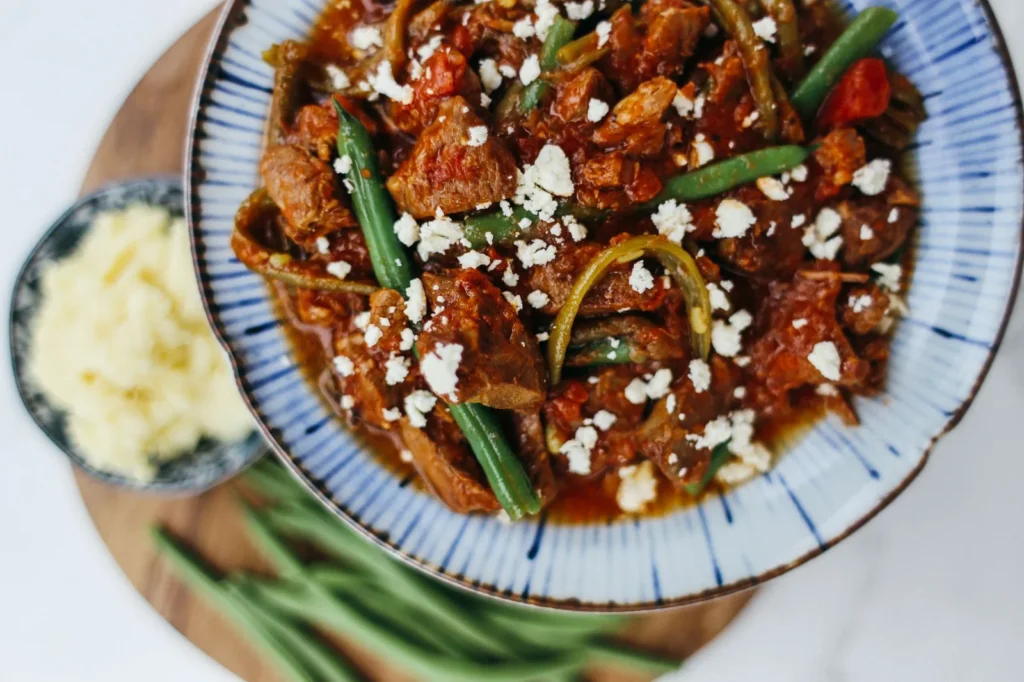

Lamb Stew With Saffron And Tomatoes
Description
A practical weeknight-friendly lamb shoulder stew simmered with bloomed saffron and chopped tomatoes for a gold-hued, spoon-coating broth. The slow braise breaks down collagen without flour, leaving tender lamb and bright acidity on day two.
Ingredients
Instructions
-
Season and brown lamb
Pat the 900 g lamb shoulder chunks dry with paper towels and season with half the 1 tsp salt. Heat 2 tbsp olive oil in a 4.5 L Dutch oven over medium-high heat and brown the lamb in two batches, about 4 minutes per side, until each face is deep brown and a crust forms; remove to a plate so the pan stays below steaming point.
-
Cook onion and paste
Lower the Dutch oven to medium heat and add the diced large yellow onion to the rendered fat. Cook 5 minutes until translucent, then add the 4 sliced garlic cloves and 2 tbsp tomato paste; stir 2 minutes until the paste darkens to a rust color and smells toasted.
-
Add tomatoes and spices
Pour in the 400 g chopped canned tomatoes, 1 tsp ground cumin, 1/2 tsp smoked paprika, 1/2 tsp cracked black pepper, and 2 bay leaves. Stir and scrape the browned bits off the bottom with a wooden spoon so they don't burn during the long cook.
-
Return lamb and stock
Return the lamb and any resting juice to the pot. Add the 250 ml warm stock with 1/4 tsp bloomed saffron and stir once to combine the gold-hued liquid through the stew.
-
Simmer lamb low heat
Bring the pot to a gentle bubble then drop to low heat with the lid cracked for 90 minutes. The lamb should soften as the collagen breaks down; check that it is mostly tender before the next step.
-
Add carrots and cook
Add the 2 carrots cut into rounds, submerge them, and continue at low heat for 35 minutes until carrots are tender but not mushy and lamb pulls apart easily with a fork. The internal temperature of the lamb should reach at least 63°C with a rest for safe doneness.
-
Finish with parsley
Discard the 2 bay leaves, stir in 2 tbsp chopped parsley and remaining salt to taste. The stew is now seasoned in layers and ready for resting.
-
Rest before serving
Rest the stew off heat for 10 minutes so the broth tightens and fat rises for skimming. Ladle once the broth has settled and is clear rather than greasy.
Nutrition Facts
Servings 4
- Amount Per Serving
- Calories 520kcal
- % Daily Value *
- Total Fat 34g53%
- Saturated Fat 13g65%
- Cholesterol 130mg44%
- Sodium 720mg30%
- Total Carbohydrate 14g5%
- Dietary Fiber 3g12%
- Sugars 6g
- Protein 38g76%
* Percent Daily Values are based on a 2,000 calorie diet. Your daily value may be higher or lower depending on your calorie needs.
Note
- Storage: Cool the stew to room temperature within 2 hours then refrigerate in an airtight container for up to 4 days; skim set fat before reheating.
- Make ahead: A baked feta side pairs well on the same table if you want a complementary dish.
- Pro tip: Bloom saffron in warm stock for at least 10 minutes and crush threads against the cup side so color spreads instead of leaving stray red threads.
- Reheating: Reheat on medium-low to an internal temperature of 74°C for the lamb, stirring halfway, and do not reheat the same portion more than once.
