

A good gyoza sauce recipe gives you the salty, tangy, and lightly sweet dip that turns pan-seared dumplings into a complete bite. This version uses pantry staples and comes together in about five minutes with no cooking required. You get a clear soy backbone, bright rice vinegar, and just enough heat to keep things interesting.
The ratio below leans slightly toward tangy because most gyoza fillings are already salty from the soy in the wrapper and meat. You can adjust after tasting, but the starting point is reliable for both pork and vegetable dumplings. Keep a small bowl next to the stove so you can dip while the skins are still hot and crisp. If you enjoyed this, our espagnole sauce step is worth trying next. Making this gyoza sauce at home is surprisingly straightforward once you know the key steps.
Why You’ll Love This Gyoza Sauce
- Mixes in one bowl with a spoon — no blender, no heat, no special tools.
- Uses six common ingredients you likely already keep in the kitchen.
- Balances salt, acid, and sweetness so it fits pork, chicken, or veg dumplings.
- Holds in the fridge for a week, so you can prep before a dumpling night.
- Scales cleanly — double or halve by weight without changing the ratio.
Ingredients You’ll Need
- 3 tbsp soy sauce (regular, not dark) — the salty base that seasons the dip.
- 2 tbsp rice vinegar — provides clean acidity that cuts the fat in fried dumplings.
- 1 tsp toasted sesame oil — adds nutty aroma; use toasted, not plain.
- 1 tsp granulated sugar — rounds the sharp edges of the vinegar and soy.
- 1 tsp chili oil (or up to 2 tsp) — brings slow heat and red color.
- 1 tsp finely grated fresh ginger — gives a sharp, clean bite beneath the salt.
- 1 clove garlic, grated — supports the ginger without overwhelming the dip.
- 1 tbsp water — loosens the sauce so it coats rather than pools.
Ingredient Substitutions
Soy sauce: Replace with an equal amount of tamari for a gluten-free version that tastes nearly identical. Tamari is slightly thicker and a bit less salty per tablespoon, so add a small pinch of salt if your batch tastes flat. The color stays dark brown and the dip still clings to dumpling skins the same way. The gyoza sauce works well for weeknight cooking when time is limited.



Rice vinegar: Use an equal amount of unseasoned white wine vinegar if rice vinegar is out. White wine vinegar is sharper and more acidic, so cut the quantity to 1.5 tbsp and add the missing half tablespoon as water. Expect a cleaner, less floral sour note that still balances the soy.
Chili oil: Swap for 0.5 tsp crushed red pepper flakes steeped in 1 tsp neutral oil for two minutes. The heat is drier and less rounded than chili oil, and you lose the red oil color in the bowl. This works when you want control over exactly how much pepper ends up in each bite.
Fresh ginger: Replace the grated knob with 0.5 tsp ground ginger if fresh is unavailable. Ground ginger spreads more evenly but lacks the fibrous bite and bright note of the fresh root. Use less than you think — ground spice sits stronger once the sauce rests.
Toasted sesame oil: Use an equal amount of peanut oil plus 0.25 tsp sesame seeds if you only have plain oil. You get the fat and mouthfeel but a weaker top-note aroma, so the seeds add back a little texture. The dip will taste lighter and less nutty overall. For another easy option, check out our strawberry sauce you.
Step-by-Step Instructions
- Measure 3 tbsp soy sauce, 2 tbsp rice vinegar, 1 tsp toasted sesame oil, 1 tsp sugar, and 1 tbsp water into a small bowl. Stir with a spoon over medium-low heat is not needed — room temperature is fine — until the sugar dissolves and the liquid looks clear, about 30 seconds.
- Grate 1 clove garlic and 1 tsp fresh ginger directly into the bowl using a microplane. Stir so the fine shreds spread through the liquid instead of clumping at the bottom.
- Add 1 tsp chili oil and stir once more. The oil should form thin red ribbons that slowly settle, not a separated layer on top.
- Taste a drop on a spoon. If it reads too sharp, add a few grains of sugar; if too salty, add 1 tsp water. The finished gyoza sauce recipe should taste bright first, then salty, then nutty.
- Let the bowl sit for 5 minutes before serving so the garlic and ginger soften. Serve at room temperature beside hot dumplings.
Pro Tips
Grate the garlic instead of mincing so it disappears into the liquid and won’t catch in your teeth mid-bite. A microplane leaves no chunks that can burn on a dumpling’s edge.
Rest the mixed sauce for five minutes before you judge the heat level. Chili oil opens up as it sits, so a sauce that tastes mild at first can read hotter after a short wait.
If you want a clearer dip, strain out the ginger and garlic after resting. You keep the flavor infusion but lose the sediment that some eaters dislike at the bottom of the bowl.
For a deeper aroma, warm the sesame oil alone in a pan over medium-low heat for 20 seconds before adding it. This wakes up the nut compounds without cooking the oil to a bitter point, a trick also shown by simple sauce guides.
Make a larger batch and store it in a sealed jar; the flavor stays stable for a week and saves you a step on busy dumpling nights. Shake once before each use because the sesame oil slowly rises.
Common Mistakes to Avoid
Using dark soy sauce instead of regular turns the dip thick and molasses-sweet, which hides the vinegar. Stick to thin soy sauce so the acid stays the front note.
Adding chili oil over high heat or cooking the sauce breaks the emulsion and dulls the raw garlic snap. This dip is meant uncooked, so keep it off the stove entirely.
Pouring in too much water to fix saltiness makes a weak, soup-like dip that slides off the dumpling. Add water one teaspoon at a time and taste between each.
Skipping the rest time leaves the ginger raw-tasting and harsh. Those 5 minutes let the shreds mellow into the soy so the bite feels round. You might also like our halibut chimichurri sauce.
Serving Suggestions
Set a small ramekin of the dip next to a plate of shrimp tacos for a salty contrast to the creamy topping. The vinegar cuts the richness of the mayo-based sauce well.
Use it as a drizzle over cold walnut sauce noodles if you want a sharper second layer. A few drops per bite keep the nutty base from feeling heavy.
Spoon a little over steamed bok choy as a quick side that matches a dumpling dinner. The soy and sesame coat the leaves better than straight salt would.
Storage and Reheating
Keep the sauce in an airtight container in the fridge for up to 7 days. The garlic stays safe because the acid and salt slow bacterial growth better than plain water would.
Do not leave the bowl out for more than 2 hours at room temperature during a meal. Pour leftovers back into the jar right after the dumplings are gone.
No reheating is needed or wanted — cold sauce on hot dumplings is the intended contrast. If the sesame oil solidifies slightly in a cold fridge, set the jar in warm water for one minute and shake.
Yes, this gyoza sauce recipe freezes for up to 2 months in a small freezer jar. Thaw overnight in the fridge and stir before use; the texture returns without separation. Pair this with our authentic greek tzatziki for more ideas.
Recipe Variations
Spicy Version
Raise the chili oil to 2 tsp and add 0.5 tsp crushed red pepper with the garlic. The dip turns noticeably red and the heat lingers instead of fading, which suits pork dumplings with mild filling.
Citrus Version
Replace 1 tbsp of the rice vinegar with fresh yuzu or lime juice for a fruit-edge sour note. The sauce smells brighter and pairs well with seafood gyoza rather than heavier meat ones.
Herb Version
Stir in 1 tsp finely sliced scallion green after resting for a fresh, onion-top note. The color stays light and the bite gets crunchier, though the dip loses clarity if you prefer it strained.
Miso Version
Whisk 1 tsp white miso into the soy before adding vinegar for a fermented depth and thicker body. Cut the sugar to 0.5 tsp since miso brings its own mild sweetness and salt.
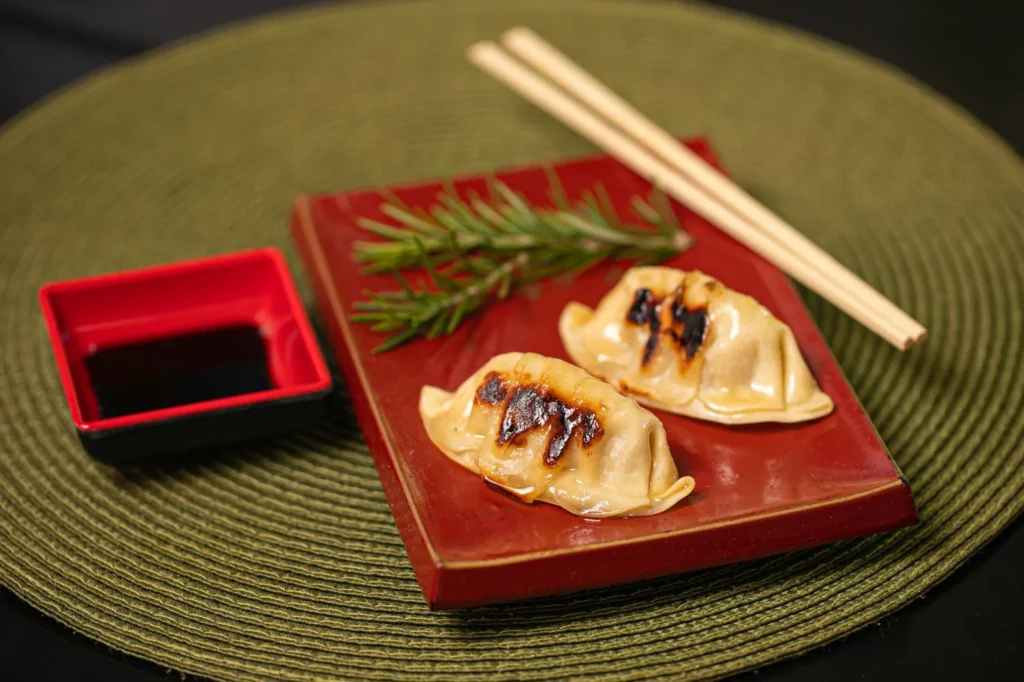

Gyoza Sauce
Description
A bright, salty, and lightly sweet gyoza sauce that mixes in one bowl with no heat required. It balances soy, rice vinegar, and a touch of chili to complement pork, chicken, or vegetable dumplings.
Ingredients
Instructions
-
Measure base liquids
Measure 3 tbsp soy sauce, 2 tbsp rice vinegar, 1 tsp toasted sesame oil, 1 tsp sugar, and 1 tbsp water into a small bowl. Stir with a spoon at room temperature for about 30 seconds until the sugar dissolves and the liquid looks clear with no grains at the bottom.
-
Grate aromatics in
Grate 1 clove garlic and 1 tsp fresh ginger directly into the bowl using a microplane. Stir so the fine shreds spread through the liquid instead of clumping at the bottom, giving a clean sharp bite beneath the salt.
-
Add chili oil
Add 1 tsp chili oil and stir once more. The oil should form thin red ribbons that slowly settle, not a separated layer on top, showing the emulsion is intact.
-
Taste and adjust
Taste a drop on a spoon to judge the balance. If it reads too sharp, add a few grains of sugar; if too salty, add 1 tsp water — the finished sauce should taste bright first, then salty, then nutty.
-
Rest before serving
Let the bowl sit for 5 minutes before serving so the garlic and ginger soften. Serve at room temperature beside hot dumplings for the intended contrast.
Nutrition Facts
Servings 4
- Amount Per Serving
- Calories 45kcal
- % Daily Value *
- Total Fat 3g5%
- Sodium 520mg22%
- Total Carbohydrate 3g1%
- Sugars 2g
- Protein 1g2%
* Percent Daily Values are based on a 2,000 calorie diet. Your daily value may be higher or lower depending on your calorie needs.
Note
- Storage: Keep in an airtight container in the fridge for up to 7 days; pour leftovers back into the jar right after the dumplings are gone.
- Make ahead: A larger batch saves a step on dumpling night — shake once before each use because sesame oil slowly rises.
- Pro tip: Rest the mixed sauce 5 minutes before judging heat, and pair it with our greek tzatziki for more sauce ideas.
- No reheating: Cold sauce on hot dumplings is the intended contrast, so do not warm the finished dip.
