

A good creme brulee recipe turns a handful of pantry staples into a dessert with a cold, silky vanilla custard under a thin sheet of shattered caramel. The contrast between the warm-cracked sugar top and the cool cream beneath is what makes the dish feel special without any complicated equipment. You’ll learn the water-bath method that keeps the custard from curdling and the torching step that builds the glassy crust.
This version uses a real vanilla bean and a slow bake so the texture stays smooth rather than rubbery. It scales easily for two ramekins or a full dinner party tray. If you want a reliable baseline before experimenting with flavors, our creme brulee guide covers the same technique with extra photos.
Why You’ll Love These Creme Brulee
- Five basic ingredients you likely already keep in the kitchen
- A make-ahead dessert that actually improves after a night in the fridge
- The caramel top is built seconds before serving, so it stays crisp
- Portion-controlled ramekins make plating and timing simple
Ingredients You’ll Need
- 2 cups heavy cream (480 ml) – the fat carries the vanilla and sets the custard soft
- 1 vanilla bean, split and scraped – gives visible seeds and a round aroma
- 5 large egg yolks – the sole thickener; whites make it spongy so leave them out
- ½ cup granulated sugar (100 g), plus 2 tbsp per ramekin for the top
- Pinch of fine salt – sharpens the dairy sweetness without tasting salty
Ingredient Substitutions
Heavy cream: Replace with an equal volume of half-and-half for a lighter custard. The lower fat means the set is softer and the vanilla reads thinner, so bake 5 minutes longer at the same temperature. Expect a looser spoonful that won’t hold a clean edge when torched. Making this creme brulee at home is surprisingly straightforward once you know the key steps.


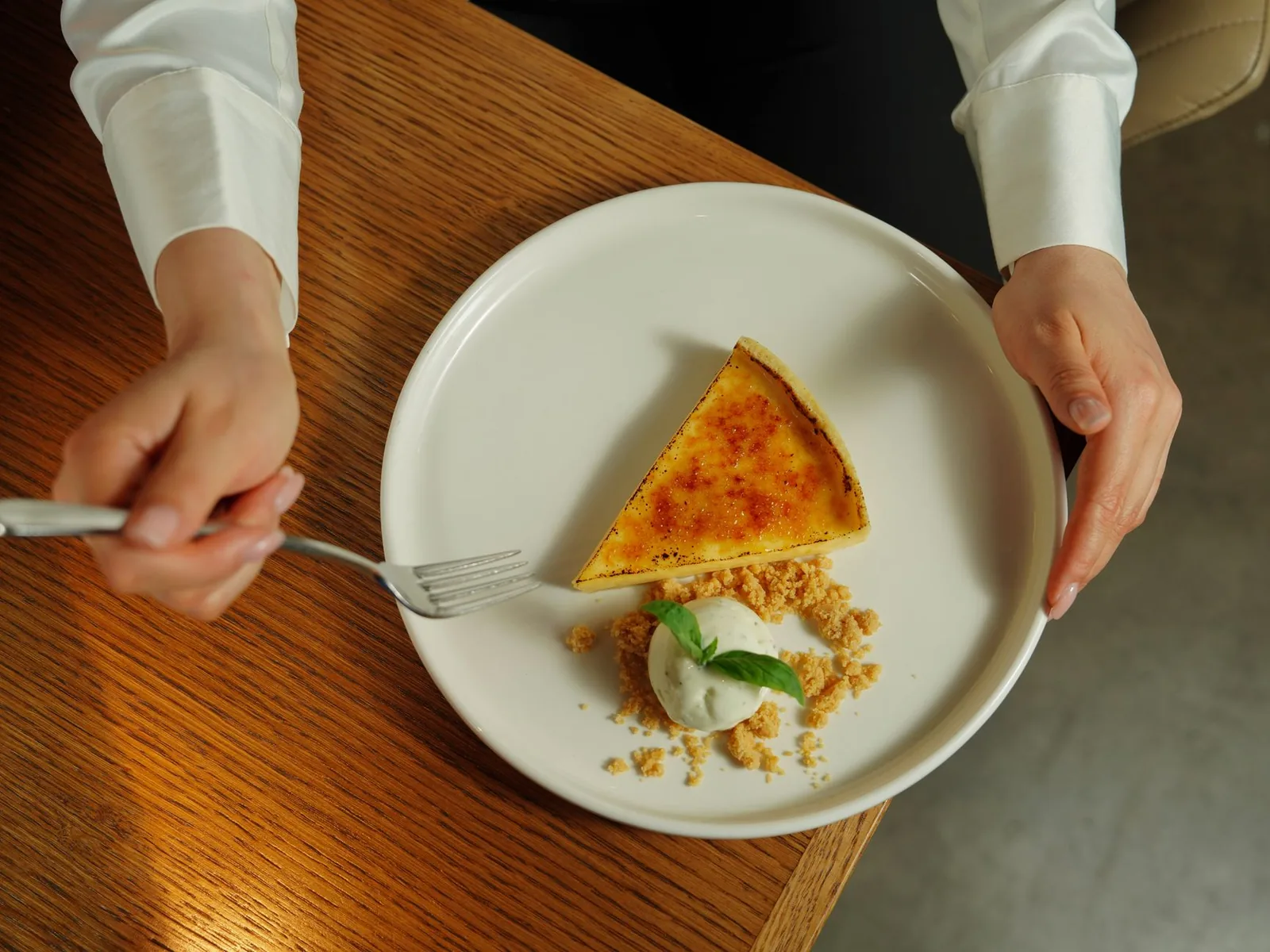


Vanilla bean: Use 2 tsp of pure vanilla extract instead of the pod and seeds. Extract disperses flavor without the speckled look, and you skip the scraping step. The aroma is slightly alcohol-sharp right after baking but mellows fully after the chill. The creme brulee works well for weeknight cooking when time is limited.
Egg yolks: Swap in 4 whole large eggs if yolks are unavailable, though the custard turns firmer and less rich. Whole eggs add water and protein that tighten the set, so pull the ramekins at the first sign of just set edges. The top will still caramelize, but the mouthfeel loses some of its creaminess.
Granulated sugar: Substitute superfine sugar for the custard portion to dissolve faster in the yolks. For the caramel top, turbinado works but needs medium-low heat longer under the torch to melt evenly. Turbinado leaves a coarser crack and a faint molasses note. If you enjoyed this, our basil pesto you is worth trying next.
Step-by-Step Instructions
- Heat the oven to 180°C / 350°F and set a kettle of water to boil for the bath.
- Warm the cream with the vanilla seeds and pod over medium-low heat until steam rises; do not boil. Let it sit 15 minutes off heat to infuse.
- Whisk the yolks, ½ cup sugar, and salt until pale, then stream the warm cream in slowly while whisking to temper the eggs.
- Strain the mix through a fine sieve into a pitcher, then pour into four 6-oz ramekins placed in a roasting pan.
- Add boiling water to the pan halfway up the ramekin sides, cover the pan loosely with foil, and bake 25–30 minutes until centers barely jiggle.
- Cool ramekins on a rack, then refrigerate up to 3 days uncovered until fully cold.
- Before serving, sprinkle 2 tbsp sugar on each top and torch in circles until golden and crispy, or broil 2 minutes watching closely.
Pro Tips
Strain the custard twice if you see any chalazae or vanilla fiber so the bake stays perfectly smooth. A fine mesh catches what a single pass misses.
Use a kitchen torch rather than a broiler when you can; the caramelizing technique is easier to control and won’t heat the cold custard underneath. Broilers vary wildly in output and can liquefy the cream.
Chill the ramekins a full 4 hours before torching so the sugar crack sits on a firm base. Warm custard weeps under the heat and turns the top sticky.
Rotate the ramekins once during the bake if your oven runs hot on one side. Even browning in the bath depends on steady ambient heat, not just the set time.
Common Mistakes to Avoid
Skipping the water bath bakes the edges before the center sets, giving a rubbery ring around a loose middle. The gentle heat transfer of the bath is what keeps the protein network fine.
Boiling the cream scalds the dairy and can cook the eggs when combined, leaving flecks of scrambled texture. Pull the pan the moment you see tiny bubbles at the rim.
Using too much sugar on top makes a thick sheet that shatters into shards instead of a thin crack. Two tablespoons per ramekin is enough for a clean break and balanced sweetness. For another easy option, check out our recipe dietary.
Serving Suggestions
Pair the custards with a spoonful of fresas con crema on the side for a cool fruit contrast. The strawberry acidity cuts the dairy weight nicely.
Set the ramekins on a chilled plate with a mint sprig and a plain biscuit for a restaurant-style finish. A dry cookie absorbs the last custard drops without competing for flavor.
For a wine pairing, a late-harvest Riesling echoes the caramel without overwhelming the vanilla. Keep pours small since the dessert is rich on its own.
Storage and Reheating
Uncovered custard keeps in the fridge up to 3 days before the top is added; cover with wrap after the first day to block fridge odors. Never leave finished custard at room temperature beyond 2 hours total.
The caramel top does not store well, so torch right before the plate goes out. If a topped ramekin sits, the sugar absorbs moisture and turns to syrup within an hour.
Freezing changes the grain, so skip the freezer for this creme brulee recipe. The ice crystals break the emulsion and leave a sandy mouthfeel after thaw. You might also like our cooking methods.
Recipe Variations
Citrus Version
Replace the vanilla pod with 2 strips of orange zest steeped in the cream. The oils give a bright note that pairs well with the dark caramel. Pull the zest before straining so no pith bitterness remains.
Tea Infused
Add 1 tbsp loose Earl Grey to the warm cream and steep 10 minutes longer before straining. The bergamot lifts the dairy and reads as floral rather than perfumed. Use a finer sieve since tea leaves are small.
Liqueur Top
Stir 1 tbsp Grand Marnier into the custard base after tempering for a boozy edge. The alcohol bakes off mostly but leaves a orange-blossom finish. Reduce the sugar top by 1 tsp to keep balance.
Espresso Swap
Dissolve 1 tsp instant espresso in the cream for a coffee custard that mirrors the caramel’s roast. The color darkens slightly and the aroma reads like a café dessert. Serve with a chocolate shard for contrast. Pair this with our vodka press for more ideas.


Creme Brulee
Description
A classic creme brulee with cold, silky vanilla custard beneath a thin sheet of shattered caramel. The water-bath bake keeps it smooth and the torched top adds a warm-cracked contrast.
Ingredients
Instructions
-
Heat oven and kettle
Heat the oven to 180°C / 350°F so it is fully preheated before the custard goes in. Set a kettle of water to boil for the bath that will surround the ramekins during baking.
-
Warm vanilla cream
Warm the cream with the vanilla seeds and pod over medium-low heat until steam rises; do not boil to avoid scalding the dairy. Let it sit 15 minutes off heat to infuse the vanilla aroma into the cream.
-
Whisk yolk mixture
Whisk the yolks, ½ cup sugar, and salt until pale and slightly thickened. Stream the warm cream in slowly while whisking to temper the eggs so they do not scramble when combined.
-
Strain and pour
Strain the mix through a fine sieve into a pitcher to remove any bits of vanilla fiber or chalazae. Pour into four 6-oz ramekins placed in a roasting pan for even handling.
-
Add bath and bake
Add boiling water to the pan halfway up the ramekin sides and cover the pan loosely with foil. Bake 25–30 minutes until centers barely jiggle like set gelatin when nudged, showing the custard is done without curdling.
-
Cool and refrigerate
Cool ramekins on a rack so the residual heat dissipates gently without weeping. Refrigerate up to 3 days uncovered until fully cold and firm before any torching step.
-
Sugar and torch top
Before serving, sprinkle 2 tbsp sugar on each top for a thin crack rather than thick shards. Torch in circles until golden and crispy, or broil 2 minutes watching closely so the caramel builds without liquefying the cold custard.
Nutrition Facts
Servings 4
- Amount Per Serving
- Calories 350kcal
- % Daily Value *
- Total Fat 30g47%
- Saturated Fat 18g90%
- Cholesterol 250mg84%
- Sodium 60mg3%
- Total Carbohydrate 22g8%
- Sugars 20g
- Protein 5g10%
* Percent Daily Values are based on a 2,000 calorie diet. Your daily value may be higher or lower depending on your calorie needs.
Note
- Storage: Uncovered custard keeps in the fridge up to 3 days before the top is added; cover with wrap after the first day to block odors, and never leave finished custard at room temperature beyond 2 hours.
- Make ahead: Chill ramekins a full 4 hours before torching so the sugar crack sits on a firm base and does not turn sticky.
- Pro tip: Use a kitchen torch rather than a broiler when you can for easier caramel control, and read our recipe dashboard for more technique ideas.
- Safety: Torch the sugar right before serving since a topped ramekin turns to syrup within an hour if it sits.
