

What to serve with sea bass comes down to balancing its mild, flaky flesh with sides that add acidity, texture, or gentle richness without covering up the fish. A simply cooked fillet needs companions that contrast its soft bite and lean profile. This guide lays out specific pairings, prep notes, and mistakes to avoid so your plate feels complete rather than random.
Sea bass takes well to high-heat roasting, pan-searing, and steaming because the meat stays moist and separates in large flakes. The right side should either cut through any oily notes with acid or soak up pan juices without turning mushy. You’ll get concrete options below, from quick greens to grain bases that hold a lemon-butter sauce. If you enjoyed this, our hot toddy non is worth trying next. Making this what to serve with sea bass at home is surprisingly straightforward once you know the key steps.
Why You’ll Love These What To Serve With Sea Bass
- Each side uses common ingredients and cooks in under 30 minutes alongside the fish.
- Acid-forward pairings keep the mild fillet from tasting flat or one-note.
- Grain and roasted vegetable options reuse the same oven temperature as the bass.
- Every suggestion works with pan-seared, baked, or steamed sea bass fillets.
Ingredients You’ll Need
- 4 sea bass fillets (about 150 g each), skin on or off
- 2 tbsp olive oil, for the fish and roasting pan
- 300 g baby potatoes, halved
- 200 g green beans, trimmed
- 1 lemon, zested and cut into wedges
- 150 g cherry tomatoes
- 180 g uncooked couscous
- 250 ml warm vegetable stock
- 2 cloves garlic, sliced
- 15 g fresh parsley, chopped
- 40 g butter
- 1 tsp flaky salt
- 1/2 tsp black pepper
Ingredient Substitutions
Baby potatoes: Replace with an equal weight of cubed sweet potato for a sweeter, softer side. Sweet potato cooks faster at the same roast temperature, so check doneness at 20 minutes instead of 25. Expect a more caramelized edge and a deeper orange plate contrast against the pale fish. The what to serve with sea bass works well for weeknight cooking when time is limited.





Couscous: Use an equal volume of quinoa if you want more protein and a chewier grain. Quinoa needs 15 minutes of simmering plus resting, unlike couscous which only steeps. The texture turns nuttier and holds dressing without clumping. Storing leftover what to serve with sea bass correctly keeps it tasting good for days.
Green beans: Swap for equal weight of asparagus spears for a thinner, snappier vegetable. Asparagus roasts in 10 minutes at the same heat, so add it later than beans would go in. The flavor is grassier and pairs closely with lemon. For the best results with this what to serve with sea bass, read through all the steps before starting.
Butter: Replace with an equal amount of olive oil plus 1 tsp nutritional yeast for a dairy-free finish. The sauce loses its silky mouthfeel but gains a faint savory note. Use medium-low heat to avoid burning the yeast. For another easy option, check out our lard bread authentic.
Step-by-Step Instructions
- Heat the oven to 200°C / 400°F and toss potatoes with 1 tbsp olive oil, salt, and pepper on a sheet pan. Roast 25 minutes until golden and crispy at the edges.
- Push potatoes to one side, add green beans and cherry tomatoes with the garlic, and drizzle remaining oil. Roast 12 minutes more until beans are bright and tomatoes soften.
- Meanwhile, pour warm stock over couscous in a bowl, cover, and rest 5 minutes, then fluff with a fork and stir in parsley.
- Pat sea bass dry and season with flaky salt. Sear skin-side down in a hot pan with butter on medium-high heat for 4 minutes until the skin is golden and crispy.
- Flip fillets, add lemon zest, and cook 2 minutes until flesh turns opaque and flakes under a fork.
- Plate bass over couscous and surround with potatoes and beans. Spoon pan butter over the top and serve immediately.
Pro Tips
Roast the vegetable side on the same tray as the fish only if your fillets are thick; thin ones overcook while potatoes finish. A separate tray keeps timing clean.
Rest cooked couscous for the full 5 minutes before fluffing so grains hydrate evenly instead of turning gummy at the center.
Use pan sauce technique to deglaze the fish pan with lemon juice after searing for a brighter finish.
Cut potato pieces to roughly the same size so they finish in one window instead of some golden and crispy while others stay raw inside.
Add a lillet spritz on the side if you want a light aperitif that matches the lemon notes.
Common Mistakes to Avoid
Overcrowding the roasting pan steams the beans instead of roasting them; never crowd the pan or they turn soggy and dull green.
Skipping the dry pat on bass lets the skin stick and tear; always blot with paper towel so the sear sets a golden and crispy layer.
Pouring cold stock on couscous shocks the grains and leaves a hard core; use warm vegetable stock for even steeping.
Adding asparagus at the potato start burns the tips; stagger roast timing so delicate vegetables join later.
Serving Suggestions
Spoon the lemon-butter pan sauce over couscous so the grain absorbs the fish drippings. A manhattan cocktail works if you prefer a spirit-forward pairing over wine.
Place sea bass on top of the vegetables rather than beside them so heat carries from the fillet into the beans. This keeps the plate warm at the table without a second oven pass.
For a lighter board, swap potatoes with a dole whip smoothie as a sweet close instead of a starch-heavy side.
Storage and Reheating
Keep cooked sea bass and sides in separate airtight containers; the fish holds up to 2 days and vegetables up to 3 days in the fridge. Never leave the cooked tray out beyond 2 hours.
Reheat bass gently in a 150°C / 300°F oven until the center reaches 63°C / 145°F so it stays flaky instead of rubbery. Microwave only the couscous with a splash of water to steam it loose.
Cooked potatoes re-crisp on a tray at 200°C / 400°F for 8 minutes; avoid the microwave which makes them mealy. Freezing the fillet is not advised as the flesh goes watery on thaw.
Recipe Variations
Mediterranean Plate
Replace green beans with roasted zucchini and add olives to the tomato tray. The salt from olives means cut the flaky salt by half. Expect a softer vegetable bite and a brinier sauce.
Spiced Citrus Version
Add 1 tsp cumin to the potato toss and use orange wedges instead of lemon on the fish. The roast time stays the same but the aroma turns warm. This pairs well with a steak marinade night if serving mixed proteins.
Low-Starch Option
Drop couscous and double the beans for a carb-light plate that still feels full. You lose the sauce-soaking grain so spoon more pan butter on the vegetables. The fillet stays the centerpiece with sharper acid contrast.
Herb-Heavy Swap
Use dill instead of parsley in the couscous and finish the bass with chopped dill. Dill turns the dish toward a Nordic profile without changing cook times. The flavor reads cleaner against the mild fish.

What To Serve With Sea Bass
Description
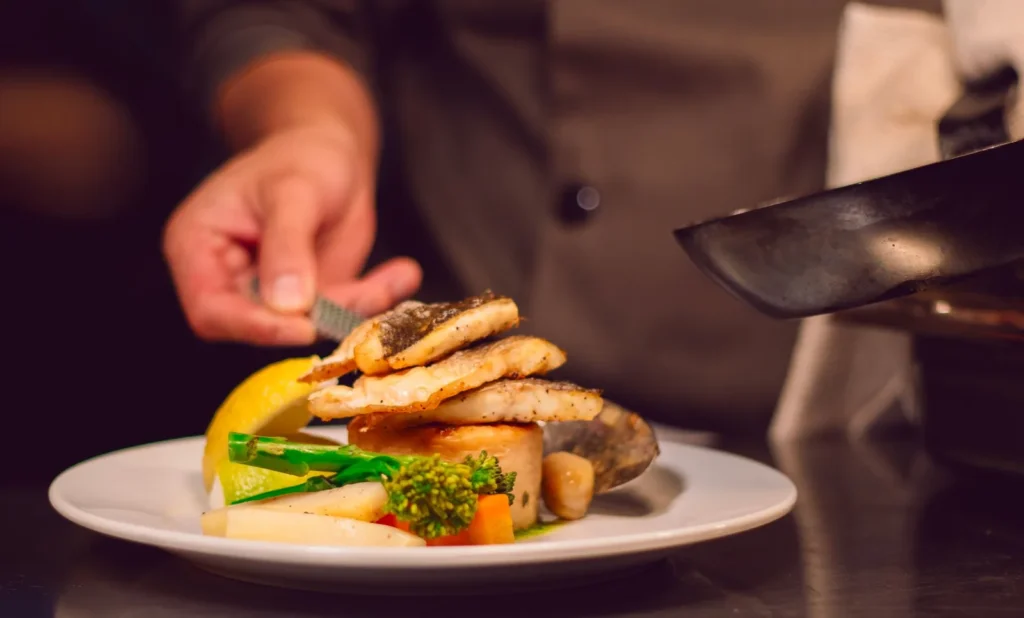
Pan-seared sea bass fillets are served over parsley couscous with roasted potatoes, green beans, and cherry tomatoes for a balanced plate. The lemon-butter pan sauce ties the mild, flaky fish and quick vegetable sides together in under 30 minutes.
Ingredients
Instructions
-
Heat oven and roast potatoes
Heat the oven to 200°C / 400°F and place a large sheet pan inside to preheat slightly. Toss the 300 g halved baby potatoes with 1 tbsp olive oil, 1 tsp flaky salt, and 1/2 tsp black pepper on the sheet pan. Roast for 25 minutes until the edges are golden and crisp and a knife slides in without resistance.
-
Add beans and tomatoes
Push the roasted potatoes to one side of the sheet pan to make room for the other vegetables. Add the 200 g trimmed green beans, 150 g cherry tomatoes, and 2 sliced garlic cloves, then drizzle with the remaining 1 tbsp olive oil. Roast 12 minutes more until beans are bright green and tomatoes have softened and started to collapse.
-
Prepare the couscous
While the vegetables roast, pour the 250 ml warm vegetable stock over the 180 g uncooked couscous in a medium bowl. Cover the bowl with a plate or lid and let it rest for 5 minutes so the grains hydrate evenly. Fluff with a fork and stir in the 15 g chopped fresh parsley until distributed.
-
Season the sea bass
Pat the 4 sea bass fillets dry with paper towels so the skin sears instead of steaming. Season both sides with the remaining flaky salt from the measured amount. Set the fillets aside while you heat the pan.
-
Sear bass skin-side down
Place a large heavy skillet over medium-high heat and add the 40 g butter with a splash of oil if needed. Lay the fillets skin-side down and sear for 4 minutes until the skin is golden and crisp and releases easily from the pan.
-
Flip and finish cooking
Flip the fillets gently with a spatula and add the zest of 1 lemon to the pan. Cook 2 minutes more until the flesh turns opaque and flakes under a fork and the internal temperature reaches 63°C / 145°F.
-
Plate the dish
Spoon the couscous onto four warm plates as a base and place a sea bass fillet on top of each portion. Surround with the roasted potatoes, green beans, and cherry tomatoes from the sheet pan. Keep the plate warm at the table by setting the fish over the vegetables.
-
Spoon pan sauce and serve
Pour the lemon-butter pan sauce from the skillet over the fish and couscous so the grain absorbs the drippings. Serve immediately with the lemon wedges on the side. Eat while the skin is still crisp and the vegetables are hot.
Nutrition Facts
Servings 4
- Amount Per Serving
- Calories 420kcal
- % Daily Value *
- Total Fat 18g28%
- Saturated Fat 7g35%
- Cholesterol 65mg22%
- Sodium 520mg22%
- Total Carbohydrate 40g14%
- Dietary Fiber 5g20%
- Sugars 6g
- Protein 26g52%
* Percent Daily Values are based on a 2,000 calorie diet. Your daily value may be higher or lower depending on your calorie needs.
Note
- Storage: Keep cooked sea bass and sides in separate airtight containers; the fish holds up to 2 days and vegetables up to 3 days in the fridge, and never leave the cooked tray out beyond 2 hours.
- Reheating: Reheat bass gently in a 150°C / 300°F oven until the center reaches 63°C / 145°F so it stays flaky, and re-crisp potatoes on a tray at 200°C for 8 minutes; microwave only the couscous with a splash of water.
- Pro tip: Rest cooked couscous for the full 5 minutes before fluffing so grains hydrate evenly instead of turning gummy at the center.
- Related: For a lighter board, our cauliflower rice swaps in well for the potatoes.
