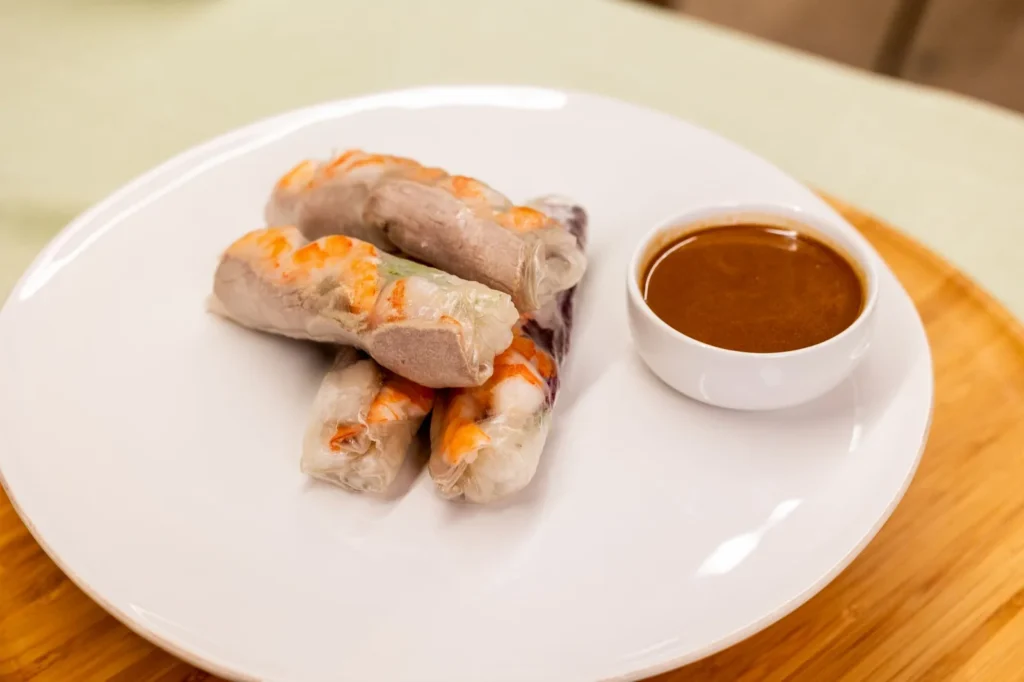

A vietnamese style summer roll is a cool, translucent rice-paper parcel filled with shrimp, rice noodles, crisp vegetables, and fresh herbs. Unlike fried spring rolls, it’s never cooked in oil, which keeps the texture light and the prep simple. This recipe walks through the exact soaking, layering, and rolling method so your rolls hold together instead of tearing.
You’ll get a make-ahead friendly appetizer or lunch that needs no stove time beyond boiling noodles. The flavor comes from the raw herbs and a salty-sweet dipping sauce rather than heavy seasoning. Once you learn the one-minute rice-paper soak, the rest is just arrangement. If you enjoyed this, our pork loin in is worth trying next. Making this vietnamese style summer roll at home is surprisingly straightforward once you know the key steps.
Why You’ll Love These Vietnamese Style Summer Roll
- They’re assembled raw, so the kitchen stays cool on hot days.
- Each roll packs shrimp, herbs, and noodles in a single neat bite.
- You control the filling, making them easy to adapt for picky eaters.
- They pair with a peanut or nuoc cham sauce for real depth.
- One batch yields ten rolls, enough for four as a light meal.
Ingredients You’ll Need
- 10 round rice paper sheets (22 cm / 8.5 in) – the dry wrappers that soften in water
- 200 g cooked shrimp, halved lengthwise – pre-boiled and chilled
- 100 g dried rice vermicelli – thin noodles that cook in 3 minutes
- 1 medium carrot, julienned – for crunch and color
- 1 small cucumber, seeded and cut into matchsticks – cools the roll
- 20 fresh mint leaves – gives the signature aroma
- 20 fresh cilantro sprigs – balances the shrimp
- 4 lettuce leaves, torn – adds a soft layer
- 2 tbsp fish sauce – base for the dip
- 1 tbsp lime juice – brightens the sauce
- 1 tsp sugar – rounds the saltiness
- 1 red chili, sliced – optional heat
Ingredient Substitutions
Rice vermicelli: Replace with an equal weight of cooked glass noodles if you want a slightly chewier bite. Glass noodles need only a 2-minute soak in hot water rather than a boil, so skip the stovetop step. The roll will feel more slippery and less fluffy, but it still holds its shape inside the paper. The vietnamese style summer roll works well for weeknight cooking when time is limited.
Shrimp: Use 200 g of poached chicken breast, sliced thin, for a land-based version. Chicken lacks the ocean sweetness, so add a pinch of salt to the filling. The texture turns firmer and the roll reads as a lunch item rather than a seafood bite. Storing leftover vietnamese style summer roll correctly keeps it tasting good for days.
Fish sauce: Swap with 2 tbsp soy sauce plus 1 tsp miso for a shellfish-free dip. Soy brings deeper umami but less funk, so the sauce tastes rounder and milder. You’ll lose the traditional Vietnamese edge but gain a version safe for fish allergies. For the best results with this vietnamese style summer roll, read through all the steps before starting.
Mint leaves: Substitute Thai basil if mint isn’t available, using the same 20-leaf count. Thai basil adds a licorice note that shifts the roll toward a different herb profile. The wrapper still smells fresh, just less cooling on the palate.
Step-by-Step Instructions
- Bring 1 liter of water to a boil and add the rice vermicelli. Cook on medium heat for 3 minutes, then drain and rinse under cold water until the strands feel separate and no longer sticky.
- Fill a wide shallow bowl with warm water around 40°C. Lay one rice paper sheet in the water for 30 seconds until it bends without cracking, then move it to a damp cutting board.
- Place a torn lettuce leaf on the lower third of the sheet. Add a small pile of noodles, three shrimp halves, carrot, cucumber, mint, and cilantro in a compact row.
- Fold the bottom edge up over the filling, tuck the sides in, and roll upward while keeping tension so the paper hugs the contents. The seam should sit underneath when placed on a plate.
- Stir fish sauce, lime juice, sugar, and chili in a small bowl until the sugar dissolves and the liquid looks clear with floating seeds. Taste and adjust salt with a few drops of water if sharp.
- Repeat with the remaining sheets, keeping finished rolls under a barely damp towel so the surfaces don’t dry to a stiff film. serve immediately or chill for up to 2 hours before the paper toughens.
Pro Tips
Keep your work surface wet with a spray bottle so the rice paper doesn’t glue to the board mid-roll. A stuck sheet tears the moment you lift it, wasting the filling.
Don’t overfill. A roll with more than two tablespoons of noodles plus vegetables splits at the top seam because the paper stretches past its limit. For a clean look, use a rice paper technique that keeps layers flat.
Chill the shrimp before assembly so they don’t warm the paper and make it slack. Cold shrimp also slice cleaner, showing the pink arc against the white noodles.
Slice rolls diagonally only at serving time; a cut made early lets the noodles dry and the seam loosen. A sharp knife pressed straight down avoids dragging the wrapper.
Common Mistakes to Avoid
Soaking the paper too long turns it to mush that tears on lift. Pull it from the water when it still has a faint stiffness—it finishes softening on the board.
Skipping the cold rinse on noodles leaves surface starch that clumps inside the roll. Rinsed noodles stay distinct, so each bite has separate threads instead of a paste.
Rolls left uncovered in air develop a brittle skin within 20 minutes. Always use a damp cloth, not a sealed container, which traps condensation and makes the paper slimy.
Serving Suggestions
Set the rolls beside a spring roll bowl for a shared table that mirrors the same flavors in a fork format. The bowl covers anyone who finds rolling tedious.
Add a plate of berry salad to close the meal with something sweet and crisp. The acid in the fruit lifts the salty dip residue.
For drinks, a coffee smoothie balances the herbs with roasted bitterness. Keep portions small since the roll itself is light.
Storage and Reheating
Finished rolls keep in the fridge in a single layer under damp paper for up to 2 days, though the paper firms by hour 12. They are not reheated; eat cold or at room temperature.
Unused soaked noodles store in an airtight container for up to 3 days with a drop of oil to prevent sticking. Raw vegetables hold separately for up to 4 days and assemble fresh when wanted.
Never leave assembled rolls out beyond 2 hours since the shrimp sits at room temperature. Discard any roll with a dried or cracked surface, as the seal has broken.
Recipe Variations
Tofu Version
Replace shrimp with 200 g firm tofu pressed and sliced into strips, then pan-seared on medium-low heat for 5 minutes per side. The roll becomes plant-based while keeping the herb crunch, and the dip stays unchanged.
Spicy Nuoc Cham
Add 2 tbsp of crushed pineapple to the dip and double the chili for a fruit-hot sauce. The sweetness cuts the heat, giving a brighter version that suits extra cucumber.
Avocado Addition
Lay half a sliced avocado on the lettuce before the noodles for a creamy layer. The fat softens the herbs’ edge and the roll feels more filling as a light meal rather than a starter.
Beef Slice Roll
Use 200 g of rare sirloin cut paper-thin instead of shrimp, seasoned with a dash of steak marinade. The meat must be sliced against the grain so each roll chews tender, not stringy.