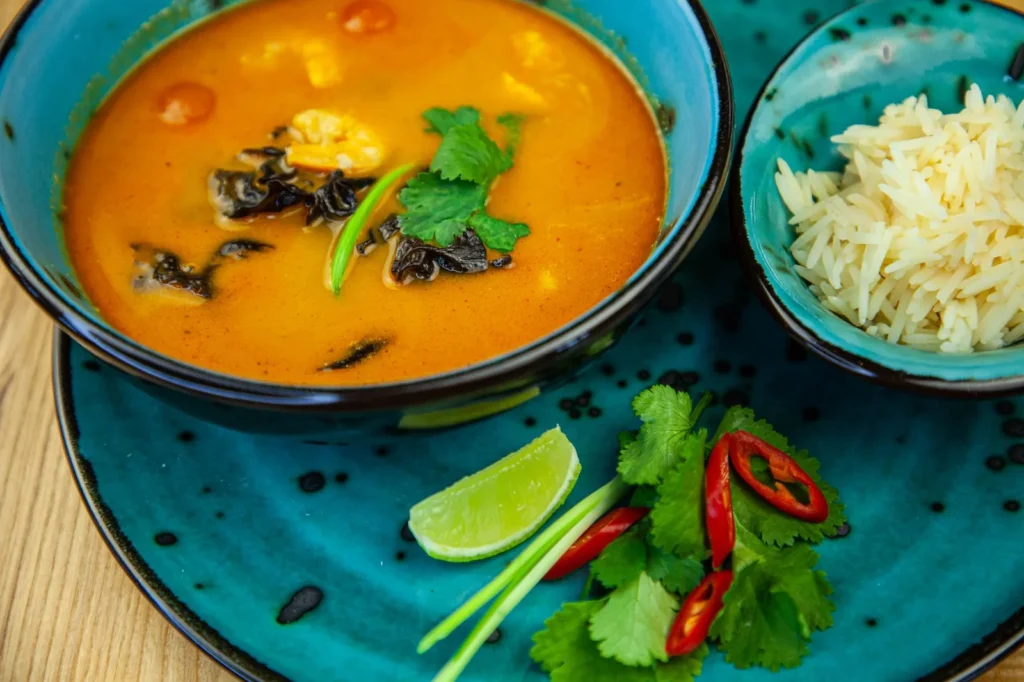
A thai coconut rice recipe turns plain jasmine rice into a fragrant, lightly sweet side that pairs with curries, grilled meats, and stir-fries. The method below uses full-fat coconut milk for body and a short steam-off-the-heat step so the grains stay separate instead of gluey. You get a reliable pot of rice without a rice cooker or any special equipment.
The balance here matters more than the length of the ingredient list. Too much liquid and the rice turns porridge-like; too little and the coconut flavor stays on the surface. This version lands at a 1:1.25 rice-to-liquid ratio by volume, which keeps the kernels tender with a faint bite at the center. Making this thai coconut rice at home is surprisingly straightforward once you know the key steps.
If you want a complete meal, build pad thai alongside and use the rice to soak up extra sauce. The two dishes share lime and cilantro notes without repeating the same texture. The thai coconut rice works well for weeknight cooking when time is limited.
Why You'll Love These Thai Coconut Rice
- One pot, no rinsing required beyond a quick cold-water swish, so cleanup stays minimal.
- Full-fat coconut milk gives a creamy mouthfeel without any dairy or butter.
- The rice holds its shape, making it ideal for scooping next to wet curries.
- It scales up cleanly for a crowd using the same timing and heat levels.
Ingredients You'll Need
- 1 cup jasmine rice (200 g), unrinsed or lightly rinsed to keep surface starch for slight creaminess
- 1 cup full-fat coconut milk (240 ml), shaken well before measuring
- 1/4 cup water (60 ml) to thin the coconut milk so the rice does not over-firm
- 1/2 teaspoon fine salt to season the liquid from the start
- 1 teaspoon granulated sugar to round the coconut's edge without making it dessert-like
- 1 fresh kaffir lime leaf, torn, for a citrusy top note (optional but recommended)
- 1 tablespoon toasted shredded coconut, for finishing crunch
Ingredient Substitutions
Jasmine rice: Replace with an equal volume of basmati rice for a longer, fluffier grain. Basmati carries less surface starch, so the finished pot will be drier and less clingy than jasmine. You may need to add 1 extra tablespoon of water because basmati absorbs slightly slower at the same heat. Storing leftover thai coconut rice correctly keeps it tasting good for days.
Full-fat coconut milk: Use an equal amount of light coconut milk to cut saturated fat. The rice will taste milder and the grains will separate more, losing the soft creaminess that defines the dish. Expect a 2 to 3 minute longer simmer to drive off the extra water in the lighter product.
Kaffir lime leaf: Swap the leaf for 2 strips of lime zest removed with a peeler. Zest gives a brighter, less floral note and should be pulled out before serving to avoid chewy bits. The rice will read more like a lime rice than a traditional Thai aromatic.
Granulated sugar: Replace with 1 teaspoon of honey stirred in after cooking to keep the same light sweetness. Honey adds a faint floral trace that pairs well with shrimp but can scorch if added to the hot pot. Cool the rice for 2 minutes before folding it in. If you enjoyed this, our no bake lemon is worth trying next.
Step-by-Step Instructions
- Combine 1 cup jasmine rice, 1 cup coconut milk, 1/4 cup water, 1/2 teaspoon salt, 1 teaspoon sugar, and 1 torn lime leaf in a 2-quart heavy saucepan. Set the pan on medium-low heat and stir twice to dissolve the sugar.
- Bring the mixture to a low simmer where you see small bubbles at the edge, not a rolling boil, about 4 minutes. Stir once more to prevent the rice from settling and scorching on the bottom.
- Cover the pan with a tight lid and drop the heat to low heat. Cook undisturbed for 12 minutes until the surface liquid is mostly absorbed and the rice mounds slightly when pressed with a spoon.
- Turn off the heat and keep the lid on for 10 minutes so the trapped steam finishes the grains. The rice should look plump with no dry white centers when you lift the lid.
- Fluff with a fork, discard the lime leaf, and top with 1 tablespoon toasted shredded coconut. cauliflower rice can be served beside for a lower-starch plate.
Pro Tips
Shake the coconut milk can hard before opening so the cream and water recombine; poured separately they brown unevenly and leave slick spots on the rice.
Rest the covered pot off heat for the full 10 minutes even if you are in a hurry, because the last bit of firmness resolves during steam, not active cooking.
Use a heavy pan rather than a thin one so the bottom heat stays even and the simmering technique does not scorch the sugar at the base.
Toast the shredded coconut in a dry skillet over medium-low heat for 2 minutes until pale gold, then cool before scattering so it stays crisp against the warm rice.
Common Mistakes to Avoid
Skipping the lid during the low-heat stage lets steam escape and the top layer stays crunchy while the bottom clumps; always use a snug cover.
Stirring during the off-heat rest breaks the delicate starch network and turns the pot gummy, so fluff only once after the timer ends.
Using light coconut milk at the same water ratio gives a watery result because the fat is missing; either add the extra tablespoon of water or expect a looser grain. For another easy option, check out our recipe tags.
Serving Suggestions
Spoon the rice next to a hot green curry so the sauce pools into the grains. A cilantro lime side adds a fresh contrast if you want more herbs on the plate.
Top with crushed peanuts and a lime wedge for a quick lunch bowl. The rice also works under grilled chicken where the mild sweetness offsets charred spices.
Storage and Reheating
Cool the rice to room temperature within 2 hours and store in an airtight container in the fridge for up to 4 days. Reheat in a covered bowl with 1 tablespoon water in the microwave until steaming, about 90 seconds, to restore moisture.
This thai coconut rice recipe freezes well for up to 2 months in a flat freezer bag. Thaw overnight in the fridge and reheat covered on medium-low heat with a splash of water. You might also like our blue cheese olive.
Recipe Variations
Ginger Version
Add 1 tablespoon grated fresh ginger with the rice at step one for a warm, spicy lift. The ginger softens during cooking and leaves a gentle heat that suits pork dishes.
Turmeric Version
Stir 1/4 teaspoon ground turmeric into the liquid for a gold hue and earthy note. The color deepens as it rests, so use less if you want a subtle tint rather than a bold yellow.
Pandan Version
Replace the lime leaf with 1 tied pandan leaf for a sweeter, grassy aroma common in Southeast Asian rice. Remove the leaf before fluffing; the rice will smell like a Thai dessert without the sugar increase.
Cardamom Version
Drop 3 cracked cardamom pods into the pot at step one and fish them out before serving. The spice adds a piney warmth that pairs with lamb and roasted vegetables.