

A good stove top beef stew gives you fork-tender beef and soft root vegetables in a savory broth without dragging out a slow cooker. This version builds flavor in one heavy pot, so you get a deep, concentrated sauce from the browned meat and a clean finish from fresh herbs. You’ll end up with a weeknight-friendly meal that reheats better on day two than on day one.
The method here keeps the beef from turning gray and chewy by searing it first, then simmering at a gentle bubble until the connective tissue relaxes. We use pantry basics, so there’s no specialty shopping required. If you like a thick, gravy-like stew, the flour step early on handles that without any roux separate from the pot. If you enjoyed this, our taco dip ground is worth trying next. Making this stove top beef stew at home is surprisingly straightforward once you know the key steps.
Why You’ll Love These Stove Top Beef Stew
- One pot from start to finish, so you only wash a single heavy pan.
- Chuck roast becomes tender in about 75 minutes of simmering, not hours.
- The broth thickens from a light flour coating, not cornstarch slurry at the end.
- Leftovers firm up into a gravy-like texture that’s even better reheated.
- You control the salt and herbs, so it fits most family tables without tweaks.
Ingredients You’ll Need
- 2 lbs beef chuck roast, cut into 1.5-inch cubes — marbled pieces break down into tender bites.
- 3 tbsp all-purpose flour — coats the beef and thickens the simmering broth.
- 2 tbsp olive oil — used for searing so the meat browns instead of steaming.
- 1 large yellow onion, diced — builds the sweet base flavor as it softens.
- 3 cloves garlic, minced — added after the onion to avoid bitter scorching.
- 4 cups low-sodium beef broth — keeps seasoning adjustable as the stew reduces.
- 1 lb Yukon gold potatoes, quartered — hold shape better than russets in long simmer.
- 3 large carrots, cut into 1-inch chunks — add earthy sweetness and color.
- 2 tbsp tomato paste — gives the broth a rounded, slightly acidic backbone.
- 1 tsp dried thyme — pairs with beef without overpowering the vegetables.
- 2 bay leaves — pulled before serving so no one bites a stiff leaf.
- 1 cup frozen peas — stirred in at the end for brightness and a soft pop.
- 1 tsp salt, plus more to finish — start low since broth varies in sodium.
- 1/2 tsp black pepper — cracked coarse for a little speckled heat.
Ingredient Substitutions
Beef chuck roast: Replace with an equal weight of beef brisket if chuck is unavailable. Brisket has a slightly tighter grain, so extend the simmer by about 15 minutes and cut across the muscle to keep bites tender. The flavor stays beefy, though the fat renders a bit differently and the broth may look glossier. The stove top beef stew works well for weeknight cooking when time is limited.





Yukon gold potatoes: Swap for an equal weight of red potatoes with the skin on for a firmer bite. Red potatoes hold their shape even longer, so they won’t break down if you simmer a few minutes past the mark. Expect a waxy texture rather than the creamy center Yukons give. Storing leftover stove top beef stew correctly keeps it tasting good for days.
Low-sodium beef broth: Use an equal amount of water plus 2 tsp beef bouillon granules if you have no broth. This raises the salt, so cut the added salt to 1/2 tsp and adjust at the end. The body will be a touch lighter, but the tomato paste and seared beef keep it from tasting flat. For the best results with this stove top beef stew, read through all the steps before starting.
Frozen peas: Substitute 1 cup diced green beans for a less sweet, crunchier finish. Add them with the carrots instead of at the end since they need longer to soften. The stew turns a shade darker and loses the bright green contrast.
Step-by-Step Instructions
- Toss the 2 lbs beef cubes with 3 tbsp flour, 1 tsp salt, and 1/2 tsp pepper until each piece is lightly coated. Set aside any loose flour in the bowl for later use.
- Heat 2 tbsp olive oil in a heavy 5-quart pot over medium-high heat until it shimmers. Sear the beef in two batches so the pot isn’t crowded, turning until golden and crispy on most sides, about 6 minutes per batch, then remove to a plate.
- Lower to medium-low heat and add the diced onion to the same pot. Cook, stirring, until soft and translucent, about 5 minutes, scraping the browned bits off the bottom.
- Stir in the minced garlic and 2 tbsp tomato paste, cooking for 1 minute until the paste darkens slightly and smells toasted.
- Return the beef and any plate juices to the pot, add 4 cups broth, 1 tsp thyme, and 2 bay leaves. Bring to a gentle boil, then reduce to low heat and simmer uncovered for 45 minutes, skimming foam if it rises.
- Add the quartered potatoes and carrot chunks, stir once, and continue simmering at low heat for 30 minutes until the beef pulls apart with a fork and vegetables are tender.
- Discard the bay leaves, stir in 1 cup frozen peas, and cook for 3 minutes until they’re bright and hot. Taste and add salt before serving.
Pro Tips
Sear in batches so the pan stays hot; a crowded pot steams the beef and you lose the browned crust that feeds the broth. For a deeper look at maillard reaction, the science side is worth a read before you rush this step.
Cut the chuck into even 1.5-inch cubes so they finish at the same time instead of some turning to mush while others stay tough. Pair the stew with beef hotpot night if you want a brothy对比 on the same week.
Keep the simmer at a bare ripple, not a rolling boil, or the beef fibers tighten and stay chewy even after an hour. Skim the gray foam in the first 20 minutes for a cleaner-tasting canned beef style backup later.
Stir in peas off the heat if you plan to hold the stew, since they go dull and soft if left in a hot pot. A short rest of 10 minutes before serving lets the broth settle around the meat.
Common Mistakes to Avoid
Adding all the beef at once drops the pan temperature and gives you pale, boiled meat instead of a sear. Cook in two shifts and keep the pieces spaced so the surface browns.
Using high heat for the full simmer makes the liquid reduce before the collagen breaks down, leaving tough cubes in a salty sauce. Stay at low heat once it comes to the first boil.
Forgetting to remove bay leaves leads to a bitter bite and a weird chewy surprise in the bowl. Fish them out with a spoon before the peas go in.
Serving Suggestions
Ladle the stew into wide bowls with a slice of toasted sourdough to soak the broth. For a lighter plate, serve it beside pasta with celery so the crunch offsets the soft beef.
A simple cucumber salad on the side cuts the richness if you’ve used brisket with more fat. Sprinkle chopped parsley right before serving for a clean, green note that lifts the brown tones.
Storage and Reheating
Cool the stew to room temperature within 2 hours, then store in an airtight container in the fridge for up to 4 days. The broth thickens as it chills, which is normal.
Reheat on the stovetop over medium-low heat until the beef reaches 165°F internally, about 8 minutes with a stir halfway. Freeze flat in freezer bags for up to 3 months and thaw overnight before reheating.
Recipe Variations
Guinness Version
Replace 1 cup of the beef broth with an equal amount of stout beer added after the tomato paste. Let it boil 2 minutes to cook off the alcohol, then proceed; the stew gains a malty, dark edge and deeper color.
Root Vegetable Swap
Add 1 cup diced parsnip and 1 cup cubed turnip with the potatoes for a sweeter, more earthy pot. These soften on the same timeline, so no time change is needed, just a slightly different sweetness.
Spicy Chipotle
Stir 1 tbsp chipotle in adobo with the garlic for a smoky heat that builds as it simmers. Use ground beef and pork mix only if you swap the chuck, but the chuck stays best here.
Mushroom Boost
Add 8 oz quartered cremini mushrooms with the onions so they brown and release umami. The broth gets a woodsy note and you can skip the peas if you want a darker, beef liver style richness elsewhere.

Stove Top Beef Stew
Description
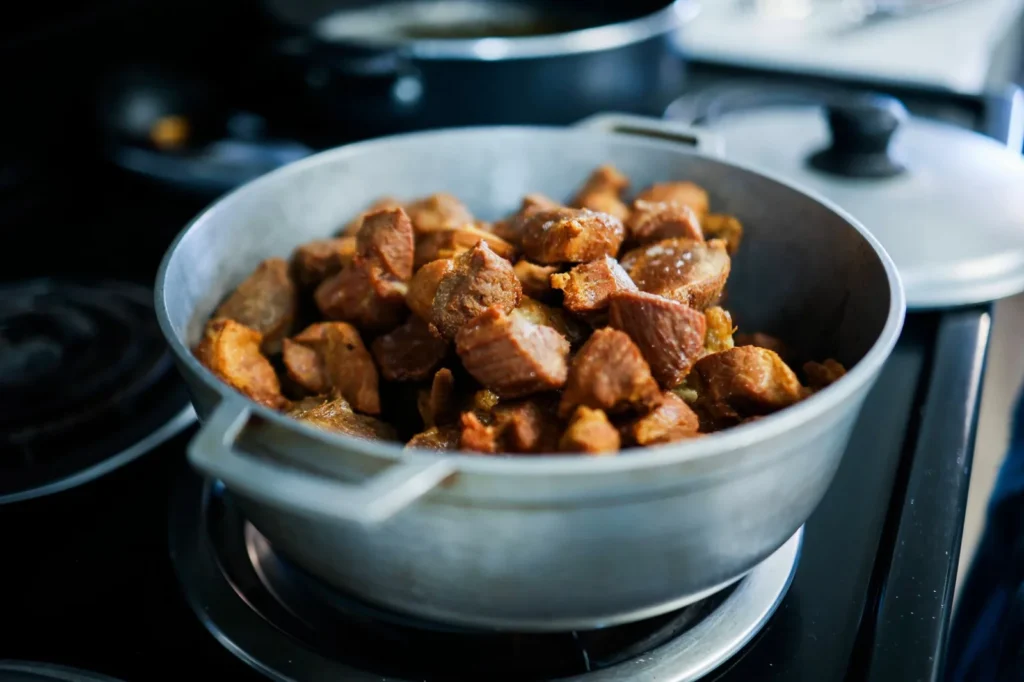
A weeknight-friendly stove top beef stew with seared chuck roast, Yukon gold potatoes, and carrots in a savory broth thickened by a light flour coating. Leftovers firm into a gravy-like texture that tastes even better reheated on day two.
Ingredients
Instructions
-
Coat beef with flour
Toss the 2 lbs beef cubes with 3 tbsp flour, 1 tsp salt, and 1/2 tsp pepper in a bowl until each piece is lightly coated. Set aside any loose flour left in the bowl for later use so you can thicken the broth as it simmers.
-
Sear beef in batches
Heat 2 tbsp olive oil in a heavy 5-quart pot over medium-high heat until it shimmers and looks thin like water. Sear the beef in two batches so the pot isn't crowded, turning until golden and crispy on most sides, about 6 minutes per batch, then remove to a plate — the surface should be browned and crusty, not gray or steamed.
-
Cook onion in pot
Lower the heat to medium-low and add the diced onion to the same pot with the leftover oil and browned bits. Cook, stirring, until soft and translucent, about 5 minutes, scraping the browned bits off the bottom so they dissolve into the base flavor.
-
Add garlic and paste
Stir in the minced garlic and 2 tbsp tomato paste, cooking for 1 minute until the paste darkens slightly and smells toasted. This step builds a rounded, slightly acidic backbone without letting the garlic scorch and turn bitter.
-
Simmer beef in broth
Return the beef and any plate juices to the pot, then add 4 cups broth, 1 tsp thyme, and 2 bay leaves. Bring to a gentle boil, then reduce to low heat and simmer uncovered for 45 minutes, skimming gray foam if it rises — the meat should start to relax but still need a fork to pull apart.
-
Add potatoes and carrots
Add the quartered potatoes and carrot chunks, stir once, and continue simmering at low heat for 30 minutes. The beef should pull apart with a fork and the vegetables be tender when pierced, showing the connective tissue has relaxed.
-
Finish with peas
Discard the bay leaves, stir in 1 cup frozen peas, and cook for 3 minutes until they are bright green and hot throughout. Taste and add more salt before serving so the seasoning matches your broth's sodium level.
-
Rest before serving
Let the stew rest off the heat for 10 minutes so the broth settles around the meat and thickens slightly. The beef should reach at least 63°C internal with a short rest for safe whole-cut doneness before ladling into bowls.
Nutrition Facts
Servings 4
- Amount Per Serving
- Calories 420kcal
- % Daily Value *
- Total Fat 18g28%
- Saturated Fat 5g25%
- Cholesterol 85mg29%
- Sodium 620mg26%
- Total Carbohydrate 32g11%
- Dietary Fiber 5g20%
- Sugars 7g
- Protein 34g68%
* Percent Daily Values are based on a 2,000 calorie diet. Your daily value may be higher or lower depending on your calorie needs.
Note
- Storage: Cool the stew to room temperature within 2 hours, then store in an airtight container in the fridge for up to 4 days; the broth thickens as it chills, which is normal.
- Reheating: Reheat on the stovetop over medium-low heat until the beef reaches 74°C internally, about 8 minutes with a stir halfway, and do not reheat the same portion more than once.
- Pro tip: Sear in batches so the pan stays hot; a crowded pot steams the beef and you lose the browned crust that feeds the broth, as explained in our taco dip ground follow-up.
- Rest: Let the stew sit 10 minutes before serving so the broth settles around the meat for the best texture.
