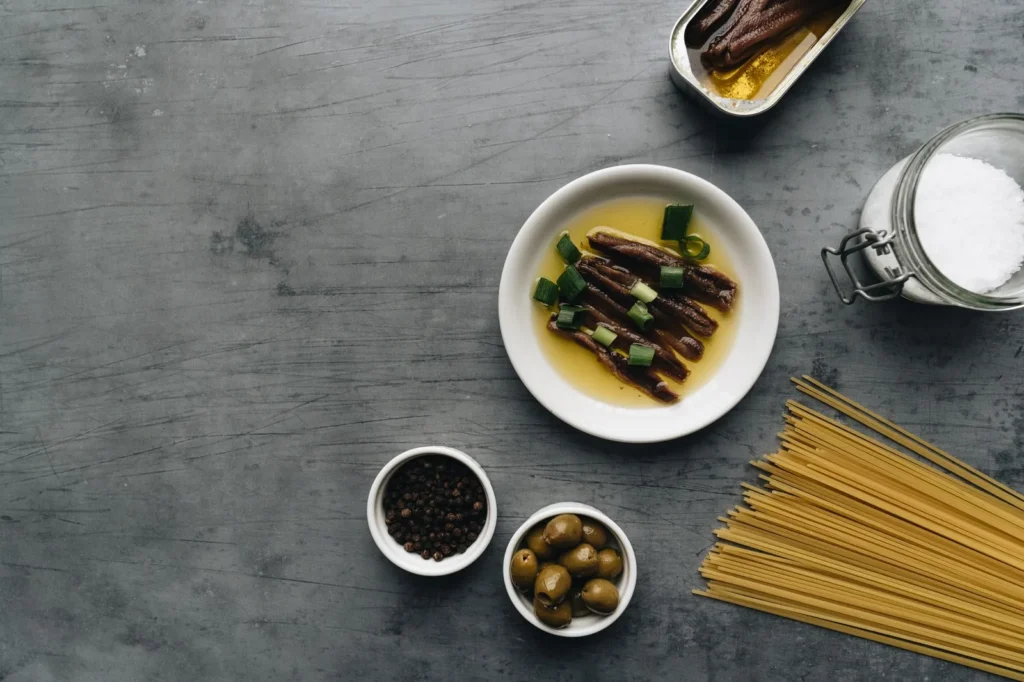
Spaghetti with anchovies is a classic Roman-style pasta that comes together in the time it takes to boil the noodles. The dish builds a savory sauce from olive oil, garlic, and cured anchovies that melt into the fat instead of staying as fillets. You get a salty, deeply savory bowl with very little effort and almost no dairy.
This version keeps the ingredient list short so the anchovy flavor stays clean rather than muddied by too many additions. It works as a fast weeknight dinner because there's no roux, no long simmer, and no cheese required unless you want it. The result is a glossy, peppery pasta with a texture closer to aglio e olio than a heavy tomato sauce. Making this spaghetti with anchovies at home is surprisingly straightforward once you know the key steps.
If you've only met anchovies as a pizza topping, this is the recipe that shows what they do best. They dissolve into the oil and season the whole pan the way salt and broth cubes wish they could. For more Italian noodle ideas, browse our cuisines page. The spaghetti with anchovies works well for weeknight cooking when time is limited.
Why You'll Love These Spaghetti With Anchovies
- Ready in about 20 minutes from cold pan to plate
- Uses pantry staples with no fresh herbs required
- Naturally dairy-free unless you add cheese at the end
- Strong umami flavor without using meat or stock
- Cheap to make for four people on a weeknight
Ingredients You'll Need
- 400g spaghetti — standard durum wheat works best for sauce grip
- 6 whole anchovy fillets in olive oil — drained, not rinsed
- 4 garlic cloves — thinly sliced so they cook fast and evenly
- 120ml extra-virgin olive oil — split between sauce and finishing
- 1 tsp chili flakes — adjust down if you dislike heat
- 1 tbsp salt for pasta water — anchors the noodle seasoning
- 2 tbsp chopped parsley — optional, for color and fresh bite
- 1 lemon — zest only, adds brightness against the salt
Ingredient Substitutions
Anchovy fillets: Replace with 2 tbsp anchovy paste for the same salty umami without fillet texture. Paste blends faster into the oil but gives a slightly sharper, less rounded flavor than whole fillets. You lose the visual of melted fillets, though the sauce color stays similar and cook time does not change. Storing leftover spaghetti with anchovies correctly keeps it tasting good for days.
Extra-virgin olive oil: Use a light olive oil if you want a more neutral base, about the same 120ml volume. Light oil won't add the peppery fruit notes of extra-virgin, so the dish reads cleaner and less grassy. Keep the heat at medium-low heat since lighter oils smoke sooner than virgin grades. For the best results with this spaghetti with anchovies, read through all the steps before starting.
Spaghetti: Swap to linguine or bucatini using the same 400g weight for a thicker bite. Bucatini holds more oil inside the tube, so the sauce feels richer per forkful. Cooking time shifts by 1–2 minutes, so watch the package window and test early.
Chili flakes: Use 1 tsp finely chopped fresh red chili if you want a brighter heat. Fresh chili adds moisture and a sharper sting than dried flakes, and it cooks in 30 seconds before the garlic to avoid raw bite. Reduce oil slightly if your chili releases a lot of water.
Parsley: Replace with 2 tbsp torn basil at the end for a sweeter finish. Basil wilts faster than parsley, so add it off heat to keep color. The flavor turns less peppery and more floral against the anchovy salt. If you enjoyed this, our california spaghetti salad is worth trying next.
Step-by-Step Instructions
- Bring 4 liters of water to a rolling boil and add 1 tbsp salt. Drop in 400g spaghetti and cook until just al dente, about 9 minutes, then reserve 100ml of the water and drain.
- Set a wide pan on medium-low heat with 80ml of the olive oil. Add sliced garlic and stir for 2 minutes until it turns pale gold, not brown.
- Add 6 anchovy fillets and 1 tsp chili flakes to the pan. Break the fillets with a spoon for 3 minutes until they dissolve into a loose paste with the oil.
- Add the drained spaghetti and toss hard for 2 minutes so the noodles coat in the anchovy oil. Splash in reserved pasta water a little at a time if it looks dry.
- Cut the heat and add the remaining 40ml olive oil, parsley, and lemon zest. Toss once more and serve immediately while the oil is still glossy.
Pro Tips
Slice the garlic as evenly as you can so no piece burns while another stays raw. A mandoline or just careful knife work keeps the cook even on medium-low heat.
Don't skip reserving pasta water because the starch helps the oil cling to the noodles. That cling is what separates a greasy bowl from a proper pasta technique result.
Zest the lemon right before adding it so the oils stay bright. Dried zest or pre-bottled versions taste dusty next to the sharp anchovy salt.
If your anchovies are very salty, cut the pasta water salt to 2 tsp instead of 1 tbsp. You can always add more at the table but you can't take it back from the boil.
Use a pan wide enough that the spaghetti lies flat-ish rather than piled. A 30cm skillet gives the noodles room to toss and heat through without steaming.
Common Mistakes to Avoid
Adding anchovies to hot oil before the garlic softens makes them fry and turn metallic. Always let the garlic go first so the fillets melt into a calm base.
Overcooking the garlic until brown brings a bitter note that ruins the clean salt of the dish. Pull it at pale gold and trust the carryover heat.
Rinsing the pasta under cold water after draining washes off the starch you need for the sauce. Keep it hot and starchy so the oil emulsifies instead of pooling.
Using too little oil makes the noodles clump since there's no tomato or cream to loosen them. Stay at the 120ml split or the bowl turns sticky rather than silky. For another easy option, check out our juliet romeo cocktail.
Serving Suggestions
Plate the pasta in warmed shallow bowls so the oil stays liquid at the edges. A spaghetti arrabbiata on the side gives a red-sauce contrast if you're feeding mixed tastes.
Add a simple green salad with lemon dressing to cut the salt. The acid balances the anchovy fat better than a creamy side would.
If you want bread, use plain toasted sourdough to mop the oil. Our sourdough discard bagels are too chewy for this light sauce and fight the texture.
For a drink, a peach lemonade keeps the meal alcohol-free and cuts salt with fruit acid.
Storage and Reheating
Keep leftovers in an airtight container in the fridge for up to 3 days. The oil will solidify when cold, which is normal for olive oil and not a sign of spoilage.
Reheat in a pan on medium-low heat with 1 tbsp water per portion, tossing until the oil melts and the noodles reach 74°C / 165°F inside. Don't microwave uncovered or the garlic turns sharp.
This dish does not freeze well because the oil separates and the noodles go soft on thaw. Make it fresh rather than batching for the freezer.
Don't leave cooked spaghetti sitting out for more than 2 hours since the oil and starch are a friendly home for bacteria at room temperature.
Recipe Variations
Spicy Calabrian Version
Add 1 tbsp Calabrian chili paste with the anchovies for a fruitier, deeper heat than flakes. The paste carries oil of its own, so drop the starting olive oil by 20ml. Expect a red-tinted sauce with a slow burn that builds after the bite.
Tomato Break Version
Stir in 200g crushed San Marzano tomatoes after the fillets melt and simmer 5 minutes before adding pasta. The acid rounds the salt and gives a saucier bowl closer to a puttanesca without capers. Use less pasta water since the tomato adds moisture.
Vegan-Style Umami Swap
Replace anchovies with 2 tbsp miso thinned in 2 tbsp warm water for a similar salty depth without fish. Miso doesn't melt like fillets, so whisk it in at the end off heat to avoid splitting. The flavor is sweeter and less sharp but still savory enough to carry the garlic.
Cheesy Roman Version
Finish with 40g grated Pecorino Romano at the table for a sharper note than Parmesan. The cheese clumps if added to the hot pan, so toss it in the bowl with a little pasta water. This turns the dairy-free base into a richer, more traditional Roman plate.
Garlic-Lemon Heavy Version
Double the garlic to 8 cloves and add 1 tbsp lemon juice with the zest for a brighter, less fish-forward bowl. The extra acid keeps the anchovy in the background rather than the lead. Good for people who are unsure about strong anchovy flavor.