

A salmon meuniere recipe is one of the fastest ways to get a restaurant-style fish dinner on the table using only a skillet, butter, and lemon. The method comes from the French “meunière” style, where fillets are dredged in flour and pan-fried, then finished with a browned butter and citrus sauce. You get a thin, crisp crust and a tender, flaky center without any oven or complicated equipment.
The version here keeps the steps tight so the whole dish comes together in about 15 minutes of active cooking. We use skin-on salmon for stability in the pan, but the sauce works the same with skinless fillets if you prefer. Pair it with a simple green vegetable or starch and you have a complete plate. Making this salmon meuniere at home is surprisingly straightforward once you know the key steps.
Unlike heavier cream sauces, the meunière finish stays light and sharp because the butter is cooked just to the nutty stage before the lemon goes in. That small detail is what separates a good salmon meuniere recipe from a greasy one. If you enjoyed this, our traditional baked garlic is worth trying next.





Why You’ll Love These Salmon Meuniere
- Ready in under 20 minutes from fridge to plate, which fits a weeknight schedule.
- Uses six basic ingredients you likely keep in the kitchen already.
- Delivers a crisp flour crust with a moist, flaky interior every time.
- The browned butter and lemon sauce needs no whisking or reduction.
- Works with skin-on or skinless fillets without changing the timing.
Ingredients You’ll Need
- 4 skin-on salmon fillets (about 150g each, 2.5cm thick) — even thickness helps them cook at the same rate.
- 1/3 cup all-purpose flour — gives the thin crust that catches the butter sauce.
- 1/2 tsp fine salt — seasons the flour coating directly.
- 1/4 tsp black pepper — adds mild heat to the crust.
- 4 tbsp unsalted butter, divided — 2 tbsp for frying, 2 tbsp for the sauce.
- 2 tbsp neutral oil (sunflower or grapeseed) — keeps the butter from burning during the sear.
- 1 small lemon, juiced (about 2 tbsp) — provides the acidic finish.
- 2 tbsp fresh parsley, chopped — added at the end for color and herb note.
Ingredient Substitutions
All-purpose flour: Replace with an equal weight of rice flour for a gluten-free coating that crisps slightly faster. Rice flour browns less than wheat, so watch the fillets closely and pull them at golden and crispy rather than waiting for deep color. The crust will feel a touch lighter and less bready, which suits thin fillets well. The salmon meuniere works well for weeknight cooking when time is limited.
Unsalted butter: Use 4 tbsp of ghee if you need a lactose-free fat with a similar mouthfeel. Ghee already carries a nutty note, so the sauce reaches the meunière profile quicker and you should add lemon 5 minutes sooner to avoid over-browning. Skip the browning step wait time since ghee is pre-clarified. Storing leftover salmon meuniere correctly keeps it tasting good for days.
Neutral oil: Swap with 2 tbsp of olive oil for a fruitier base note in the sear. Olive oil smokes near medium-low heat tolerance limits, so keep the pan just below that and expect a slightly darker crust edge. The flavor pairs well with the lemon but changes the neutral profile.
Fresh parsley: Replace with 2 tbsp of chopped fresh dill if you want a sharper, anise-like herb. Dill wilts faster than parsley, so stir it in off the heat and serve immediately to keep it from going dull. The sauce takes on a more Nordic character with this swap. For another easy option, check out our raspberry colada cocktail.
Step-by-Step Instructions
- Pat the salmon fillets dry with paper towels, then mix flour, salt, and pepper on a plate. Coat each fillet in the seasoned flour, shaking off the extra so the layer stays thin.
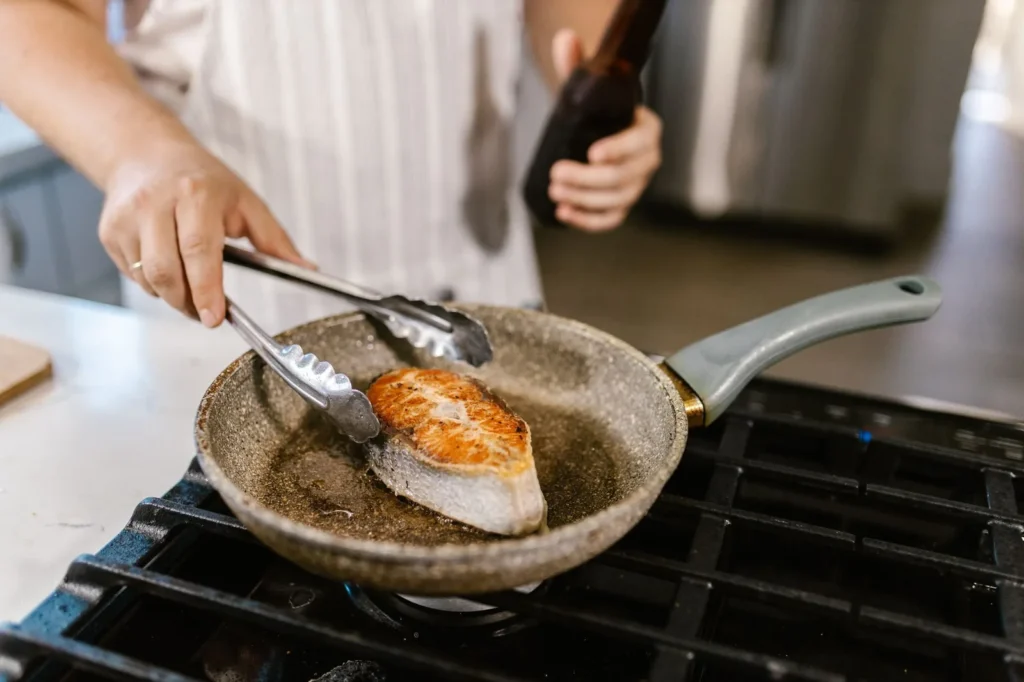
- Set a 30cm skillet on medium-low heat and add 2 tbsp oil with 2 tbsp butter. When the butter stops foaming, place fillets skin-side down and cook 5 minutes until the skin releases and the underside looks golden and crispy.
- Flip the fillets and cook the second side 3 minutes until the flesh turns opaque at the edges and flakes under light pressure. Move fillets to a warm plate.
- Wipe the pan, return it to medium-low heat, and add the remaining 2 tbsp butter. Let it melt and turn light brown with a nutty smell, about 2 minutes.
- Add lemon juice to the browned butter and swirl for 30 seconds until the sauce thickens slightly and stops spitting. Stir in parsley.
- Pour the sauce over the salmon and serve immediately while the crust is still crisp.
Pro Tips
Dry the fillets well before flouring; surface moisture steams the coating and you lose the crisp edge that defines the dish. A few extra paper-towel passes take 30 seconds and fix this.
Use a pan large enough that fillets sit flat without touching, since never crowd the pan keeps the oil temperature steady. If they overlap, the crust softens from trapped steam.
For the sauce, pull butter off heat the moment it smells nutty, because it goes from brown to burnt in under a minute. The brown butter technique relies on that short window.
Rest the cooked fillets on a warm plate for 2 minutes before saucing so the center finishes gently without drying. This small pause keeps the flesh from breaking apart when sauced.
Common Mistakes to Avoid
Using butter alone to fry causes scorching before the fish cooks, because milk solids burn low. The fix is the oil-butter mix listed in the steps, which raises the smoke point.
Over-coating with flour creates a pasty shell instead of a thin crust. Tap off excess after dredging so only a faint film remains on the flesh.
Pouring lemon into un-browned butter skips the meunière flavor entirely. Wait until the fat smells nutty and shows amber specks before adding acid. You might also like our recipe keys.
Serving Suggestions
Plate the fillets with lemon butter salmon style steamed beans on the side for a low-effort plate. The crisp crust holds up next to tender vegetables.
A scoop of mashed potato catches the pan sauce well, or try garlic butter salmon style rice if you want a neutral base. Keep portions simple so the fish stays the focus.
Storage and Reheating
Cooked fillets keep in an airtight container in the fridge for up to 3 days. The crust softens over time, which is normal for floured fish.
Reheat in a 180°C / 350°F oven for 8 minutes until the internal temperature reaches 63°C / 145°F. Avoid the microwave, which makes the coating rubbery.
Do not leave cooked salmon at room temperature beyond 2 hours or bacteria grow quickly. Freezing is not recommended because the sauce separates on thaw.
Recipe Variations
Almond Meunière
Add 3 tbsp sliced almonds to the butter during the browning step and stir until toasted. The nuts give a crunch that complements the soft flesh and add a mild bitter note to the sauce.
White Wine Version
Pour 2 tbsp dry white wine into the pan after browning butter and reduce 1 minute before lemon. The alcohol cooks off and leaves a sharper, drier finish than lemon alone.
Caper Addition
Stir 1 tbsp drained capers into the finished sauce for a salty pop that cuts the butter richness. Use this with skinless fillets if you want a brighter plate.
Herb Swap
Replace parsley with 2 tbsp tarragon for a French bistro note closer to baked parmesan salmon pairings. Tarragon softens when heated, so add it last.

Salmon Meuniere
Description
A fast restaurant-style fish dinner where skin-on salmon fillets are dredged in seasoned flour, pan-fried crisp, and finished with a nutty browned butter and lemon sauce. Ready in about 15 minutes of active cooking with just a skillet, no oven required.
Ingredients
Instructions
-
Dry and coat fillets
Pat the 4 skin-on salmon fillets dry with paper towels so the coating crisps instead of steaming. Mix the 1/3 cup all-purpose flour, 1/2 tsp fine salt, and 1/4 tsp black pepper on a plate, then coat each fillet in the seasoned flour and shake off the extra so only a thin film remains.
-
Heat oil and butter
Set a 30cm skillet on medium-low heat and add 2 tbsp neutral oil with 2 tbsp unsalted butter. Warm the pan until the butter stops foaming, which shows the water has cooked off and the sear can begin without scorching.
-
Sear skin-side down
Place the fillets skin-side down in the skillet and cook for 5 minutes until the skin releases easily and the underside looks golden and crispy. Keep the heat at medium-low so the oil-butter mix stays below the burn point while the fish cooks through.
-
Flip and cook second side
Flip the fillets and cook the second side for 3 minutes until the flesh turns opaque at the edges and flakes under light pressure. The center should reach 63°C / 145°F for safe fish doneness while staying moist.
-
Rest cooked fillets
Move the fillets to a warm plate and let them rest for 2 minutes before saucing. This short pause lets the center finish gently and keeps the flesh from breaking apart when the hot sauce goes on.
-
Brown the butter
Wipe the pan, return it to medium-low heat, and add the remaining 2 tbsp unsalted butter. Let it melt and turn light brown with a nutty smell, about 2 minutes, watching closely because it goes from brown to burnt in under a minute.
-
Add lemon and parsley
Add the 2 tbsp lemon juice to the browned butter and swirl for 30 seconds until the sauce thickens slightly and stops spitting. Stir in the 2 tbsp fresh parsley off the heat to keep the herb bright.
-
Sauce and serve
Pour the brown butter lemon sauce over the rested salmon and serve immediately while the crust is still crisp. Plate with a simple green vegetable or starch so the fish stays the focus of the meal.
Nutrition Facts
Servings 4
- Amount Per Serving
- Calories 350kcal
- % Daily Value *
- Total Fat 22g34%
- Saturated Fat 8g40%
- Cholesterol 75mg25%
- Sodium 320mg14%
- Total Carbohydrate 9g3%
- Dietary Fiber 1g4%
- Sugars 1g
- Protein 28g57%
* Percent Daily Values are based on a 2,000 calorie diet. Your daily value may be higher or lower depending on your calorie needs.
Note
- Storage: Keep cooked fillets in an airtight container in the fridge for up to 3 days; refrigerate within 2 hours of cooking to prevent bacteria growth.
- Reheating: Reheat in a 180°C / 350°F oven for 8 minutes until the internal temperature reaches 63°C / 145°F; avoid the microwave which makes the coating rubbery.
- Pro tip: Dry the fillets well before flouring and use a pan large enough that they sit flat without touching, or try our garlic butter salmon for a related crisp-skin method.
- Sauce timing: Pull the butter off heat the moment it smells nutty because it browns to burnt in under a minute, skipping the meunière flavor if missed.
