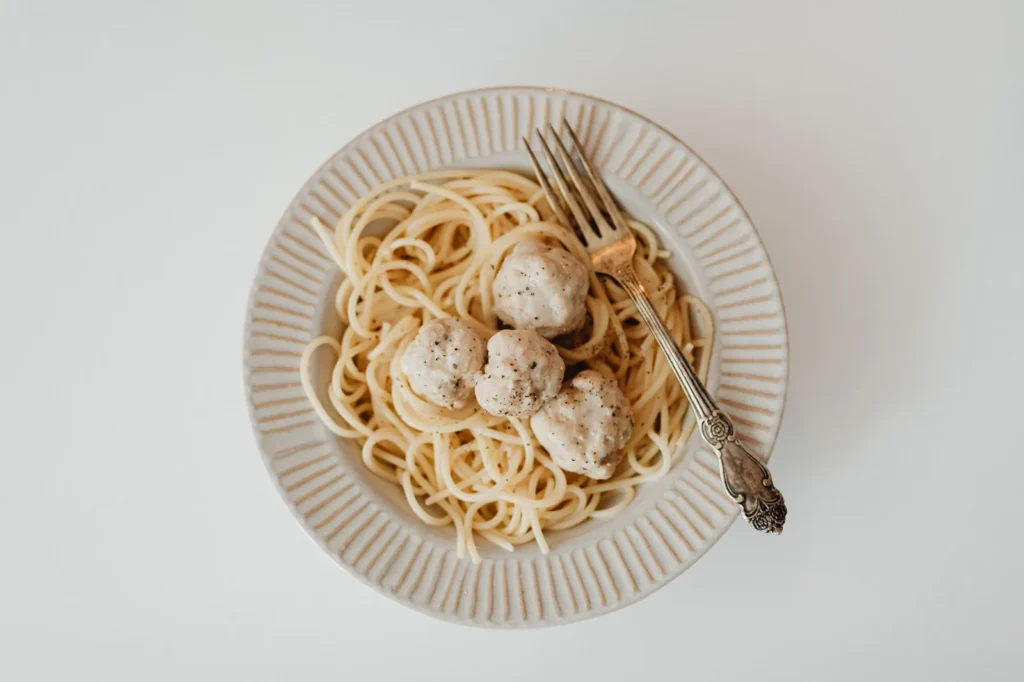
A good pesto chicken meatballs recipe should give you tender, juicy meatballs with a bright herbal note from basil and parmesan, without a lot of fuss. This version uses ground chicken, homemade or store-bought pesto, and a light breadcrumb binder so the texture stays soft rather than rubbery. You get a flexible dinner that works over pasta, rice, or on its own with a green salad.
The method here is baking, which keeps the meatballs upright and evenly cooked while you prep a side. Because chicken is lean, the pesto does double duty as flavor and moisture insurance. If you have never made chicken meatballs before, the steps below walk through the few spots where they can go dry or fall apart. If you enjoyed this, our basil pesto you is worth trying next. Making this pesto chicken meatballs at home is surprisingly straightforward once you know the key steps.
Why You'll Love These Pesto Chicken Meatballs
- Baked in one tray so you avoid standing at the stove turning them.
- Ground chicken stays light, unlike denser beef or pork mixes.
- Pesto carries the seasoning, so you barely need salt or herbs.
- They freeze well, which makes the meal prep easy for busy weeks.
Ingredients You'll Need
- 500g ground chicken (minimum 90% lean)
- 1/3 cup basil pesto, divided (store-bought or basil pesto)
- 1/3 cup panko breadcrumbs
- 1 large egg
- 1/4 cup grated parmesan
- 2 cloves garlic, minced
- 1 tbsp olive oil
- 1/4 tsp black pepper
Ingredient Substitutions
Ground chicken: Replace with an equal weight of ground turkey for a nearly identical texture and flavor. Turkey runs slightly drier, so add 1 extra tablespoon of pesto to the mix to keep the balls from tightening. Expect a milder taste and the same 20-minute bake time at 180°C / 350°F. The pesto chicken meatballs works well for weeknight cooking when time is limited.
Panko breadcrumbs: Swap with 1/4 cup almond flour for a lower-carb binder that still absorbs moisture. Almond flour gives a softer, more cake-like bite and browns less on the surface. You may need to chill the shaped balls for 10 minutes before baking so they hold shape. Storing leftover pesto chicken meatballs correctly keeps it tasting good for days.
Basil pesto: Use sun-dried tomato pesto in the same amount for a sweeter, tangier profile. The meatballs will look darker and taste less herbal but pair better with creamy polenta. Keep the parmesan, since the tomato version is less salty on its own. For the best results with this pesto chicken meatballs, read through all the steps before starting.
Parmesan: Substitute pecorino romano in equal volume for a sharper, saltier finish. Pecorino can make the mix stiffer, so wet your hands when rolling to prevent cracking. The bake time stays the same but watch for golden and crispy edges earlier. For another easy option, check out our elementor.
Step-by-Step Instructions
- Heat the oven to 180°C / 350°F and line a rimmed baking sheet with parchment. Brush the parchment with the olive oil so the bottoms release without sticking.
- Place ground chicken, 3 tablespoons pesto, panko, egg, parmesan, garlic, and pepper in a bowl. Mix with a fork just until combined — do not overmix or the protein tightens and the balls turn dense.
- Scoop level tablespoons of the mixture and roll between damp palms into 18 even balls. Space them an inch apart on the tray so heat circulates and they brown instead of steam.
- Bake on the middle rack for 18–20 minutes until the centers read 74°C on a thermometer and the tops are golden and crispy. Rest the tray 5 minutes before saucing.
- Warm the remaining pesto in a small pan over medium-low heat for 2 minutes, then roll the meatballs in it or spoon over. Chicken milanese fans can add lemon wedges on the side.
Pro Tips
Chill the formed balls for 10 minutes if your kitchen is warm; cold fat and protein hold a round shape in the oven. This small pause prevents flat bottoms and helps even browning.
Use a cookie scoop for uniform size so all meatballs finish at the same time. A 1-tablespoon scoop keeps them around 25g each and avoids undercooked centers in larger ones.
Spread the sauce after baking rather than before, since pesto can dry on the surface under direct heat. Tossing post-bake keeps the herbal oil glossy and clinging to the meat.
Read the safe poultry temperature guide if you are new to baking chicken; 74°C internal is the line for doneness. A thin instant-read thermometer removes the guesswork better than visual cues alone.
Common Mistakes to Avoid
Skipping the binder leads to crumbly balls that break when sauced. The egg and panko are what hold lean chicken together, so measure them even if the mix looks wet.
Overworking the meat is the main cause of tough texture in poultry meatballs. Stop mixing the moment the streaks disappear; a light hand gives a springy bite.
Crowding the tray traps steam and leaves pale, soggy sides. Never crowd the pan — use two sheets if needed so air moves around each piece.
Serving Suggestions
Set the meatballs over cooked linguine with a little pasta water to loosen the pesto into a silky coat. The starch helps the sauce cling better than oil alone.
For a low-starch plate, pair with eggplant rollatini and a cucumber salad to balance the richness. The cool vegetables cut the herbal oil nicely.
Slide them into a warmed pita with shredded lettuce and yogurt for a lunch wrap. The format works because the balls are small enough to eat without a knife.
Storage and Reheating
Refrigerate cooled meatballs in an airtight container for up to 3 days. Keep the pesto sauce separate if you plan to reheat more than once, since repeated heating dulls the basil.
Freeze plain baked balls on a tray, then transfer to a bag for freeze for up to 2 months. Reheat from frozen in a 180°C oven for 12 minutes until the center hits 74°C.
Do not leave cooked chicken at room temperature beyond 2 hours in a warm kitchen. Bacteria grow fast on poultry, so pack leftovers before you sit down for a long meal.
Recipe Variations
Spicy Version
Stir 1/2 teaspoon crushed red pepper into the meat mix and use a chili-basil pesto for the finish. The heat builds gradually and the parmesan keeps it from feeling sharp. Serve with apple cider cocktail to cool the palate.
Cheesy Center
Press a 1/2-inch cube of mozzarella into the middle of each ball before baking. The cheese melts into a soft pocket and adds a mild pull without changing the cook time. Expect a slightly longer rest so the center does not burn the tongue.
Gluten-Free Option
Replace panko with certified gluten-free oats ground fine, using the same 1/3 cup measure. The texture stays tender though the surface browns a shade lighter. Check that your pesto is gluten-free, since some jarred versions use wheat thickeners.