

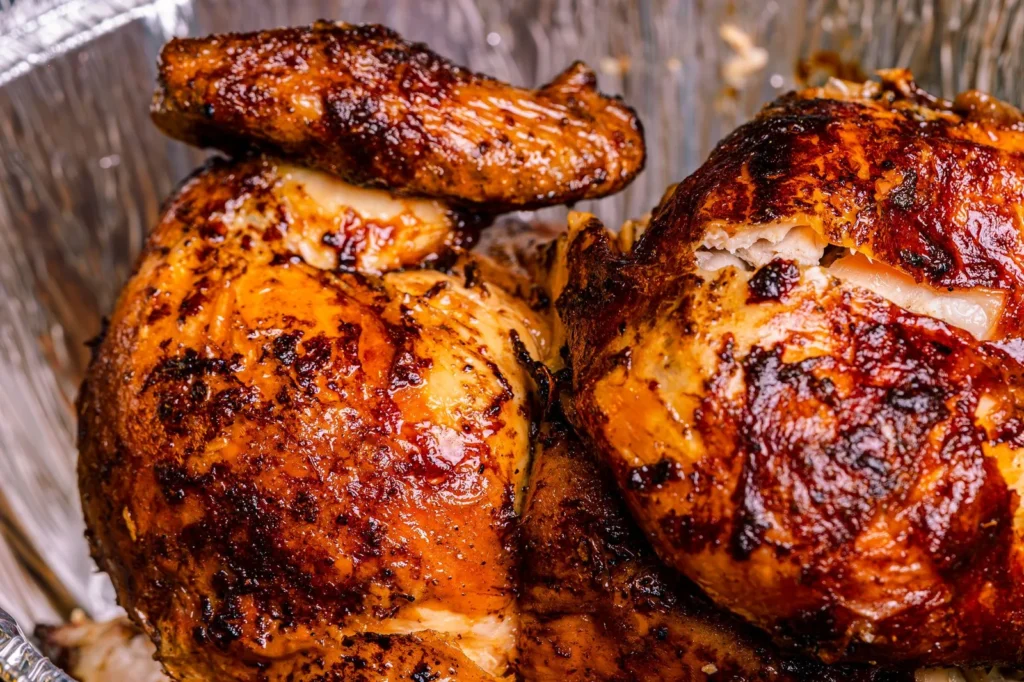
An oven barbecue chicken recipe gives you sticky, lacquered poultry with minimal effort and no grill required. The method relies on a low broil finish to caramelize the sauce while the meat stays tender from a steady bake. You get the backyard flavor of smoked ribs without stepping outside or tending coals.
This version uses bone-in thighs and drumsticks because the extra fat keeps the meat from drying during the sauce stage. A two-part sauce application builds layers of tang and smoke that a single brush can’t match. The result is a reliable dinner you can scale for four or eight people. If you enjoyed this, our snapper oven is worth trying next. Making this oven barbecue chicken at home is surprisingly straightforward once you know the key steps.
Why You’ll Love These Oven Barbecue Chicken
- Bone-in pieces stay juicy through the whole bake, unlike lean breast fillets that tighten up.
- The sauce thickens on the skin so you get a glossy coat instead of a watery pan juice.
- You control the sweetness and smoke by adjusting the brown sugar and paprika ratios.
- One sheet pan means cleanup is a quick soak, not a sink full of grill grates.
Ingredients You’ll Need
- 2.5 lbs bone-in chicken thighs and drumsticks (about 6 pieces), patted dry
- 3/4 cup ketchup (the tomato base carries acidity for the sauce)
- 1/4 cup packed brown sugar (adds the caramel note that browns under heat)
- 2 tbsp apple cider vinegar (cuts the sweetness and lifts the smoke)
- 1 tbsp smoked paprika (the core of the barbecue flavor without a smoker)
- 1 tsp garlic powder (even background savory note)
- 1 tsp onion powder (rounds the sharp edges of the vinegar)
- 1/2 tsp salt (draws surface moisture so skin crisps)
- 1/2 tsp black pepper (mild heat against the sugar)
- 1 tbsp olive oil (helps the rub adhere before saucing)
Ingredient Substitutions
Smoked paprika: Replace with 1 tbsp sweet paprika plus 1/2 tsp liquid smoke for a similar campfire edge. Liquid smoke is concentrated, so a little goes a long way and too much turns the sauce bitter. The color stays red but the aroma reads more like a kettle grill than a wood pit. The oven barbecue chicken works well for weeknight cooking when time is limited.





Brown sugar: Use an equal amount of honey if you want a softer, more floral top coat. Honey browns faster than sugar, so drop the broil time by 2 minutes to avoid burnt tips. The finished glaze will be shinier and a bit more clingy on the skin.
Apple cider vinegar: Swap for 2 tbsp fresh lemon juice to keep the same acid level with a citrus tilt. Lemon pushes the sauce brighter and slightly less round than vinegar. You may notice the glaze sets a touch thinner because lemon lacks the ferment depth of cider.
Chicken thighs and drumsticks: Use 2.5 lbs bone-in breast halves if you prefer white meat with the same cook method. Breast runs drier, so pull it at 165°F internal and brush sauce only in the last 8 minutes. Expect a leaner bite and less rendered fat in the pan. For another easy option, check out our baked caesar chicken.
Step-by-Step Instructions
- Heat the oven to 180°C / 350°F and line a rimmed sheet pan with parchment. Pat the chicken dry and rub with olive oil, salt, and pepper so the surface loses surface moisture.
- Mix ketchup, brown sugar, vinegar, smoked paprika, garlic powder, and onion powder in a bowl until the sugar dissolves and the sauce looks uniform red-brown.
- Place chicken skin-up with 1 inch between pieces and bake 25–30 minutes until the thickest part reads 150°F and skin starts to pull back at edges.
- Brush half the sauce over each piece, return to oven for 10 minutes so the glaze sets and the internal temp reaches 165°F.
- Switch oven to broil on medium-low heat position and broil 3–4 minutes until the sauce bubbles and edges look golden and crispy. Watch closely to prevent black spots.
- Rest the chicken 5 minutes on the pan before moving so the juices redistribute and the glaze stops sliding.
Pro Tips
Dry the skin with paper towels twice if it feels slick; wet skin steams instead of crisping under the sauce. A reliable meat thermometer removes the guesswork on bone-in cuts where timing varies by piece size.
Hold back half the sauce for a final brush at the table so the top stays glossy rather than baked dull. This also helps if someone wants extra tang without reheating.
Use a rimmed pan because the sauce drips and bubbles over flat edges. If you only have a shallow tray, drop a second sheet below to catch drips.
Let the mixed sauce sit 10 minutes before brushing so the paprika blooms and the sugar fully dissolves. You avoid grainy streaks on the skin that never smooth out in the oven.
Common Mistakes to Avoid
Saucing too early locks moisture under a candy shell and the chicken bakes pale underneath. Wait until the meat hits 150°F before the first brush to keep the bake even.
Broiling with the rack too high scorches sugar before the center warms through. Keep the pan on the middle slot and check at 2 minutes intervals.
Skipping the rest step lets the glaze slide off when you plate and the meat reads drier than it is. A short 5 minutes on the pan fixes both issues. You might also like our privacy policy.
Serving Suggestions
Plate the chicken with cucumber salad to cut the sweet glaze with cool crunch. The acid in the salad balances the smoke without another sauce.
For a cookout feel indoors, add tzatziki sauce on the side for dipping the crispy skin. It also cools the palate if you used extra paprika.
Round the plate with chicken goujons only if feeding a mixed group, but the oven barbecue chicken holds the main spot. Keep portions to two pieces per adult with one side.
Storage and Reheating
Cooled pieces keep in an airtight container in the fridge for up to 4 days and should not sit out beyond 2 hours total. The glaze thickens cold and loosens again with heat.
Freeze sauced pieces separated by paper for up to 2 months if you want a backup dinner. Thaw overnight in the fridge before reheating to keep the skin from steaming soggy.
Reheat in a 180°C / 350°F oven 12–15 minutes until the internal temperature returns to 165°F. Microwave reheating works but softens the crisp edges you built under the broiler.
Recipe Variations
Spicy Version
Add 1 tsp cayenne to the sauce with the paprika for a dry heat that builds after the sweet hits. Broil 1 minute less so the chili doesn’t scorch on the surface. The glaze turns deeper red and pairs well with plain rice.
Mustard Tang Swap
Replace 2 tbsp ketchup with dijon mustard to push a sharper, more savory coat. The sugar still browns but the vinegar note reads more like a Carolina dip. Expect a thicker film that needs a second brush to cover evenly.
Sheet Pan Meal
Add 1 lb halved potatoes to the pan at the first bake so they catch the rendered fat and sauce drips. Pull them when a fork slides in clean, about 25 minutes. The oven barbecue chicken and potatoes share one tray with no extra dish.
Boneless Quick Cut
Use 2.5 lbs boneless thighs and cut bake time to 18–20 minutes before saucing. The meat cooks faster and the glaze sets in one broil pass. Watch the broiler closely because thin pieces char quicker than bone-in.

Oven Barbecue Chicken
Description
This oven barbecue chicken gives you sticky, lacquered bone-in thighs and drumsticks with minimal effort and no grill required. A low broil finish caramelizes the sauce while a steady bake keeps the meat tender and juicy.
Ingredients
Instructions
-
Heat oven and prep pan
Heat the oven to 180°C / 350°F and line a rimmed sheet pan with parchment so the sauce drips stay contained. This setup catches bubbling glaze and makes cleanup a quick soak rather than a scrubbing job.
-
Dry and rub chicken
Pat the 2.5 lbs bone-in chicken thighs and drumsticks dry with paper towels and rub with 1 tbsp olive oil, 1/2 tsp salt, and 1/2 tsp black pepper so surface moisture is drawn out. The dry, oiled skin will crisp under the sauce instead of steaming during the bake.
-
Mix barbecue sauce
Mix 3/4 cup ketchup, 1/4 cup packed brown sugar, 2 tbsp apple cider vinegar, 1 tbsp smoked paprika, 1 tsp garlic powder, and 1 tsp onion powder in a bowl until the sugar dissolves and the sauce looks uniform red-brown. Let the mixed sauce sit 10 minutes before brushing so the paprika blooms and you avoid grainy streaks on the skin.
-
Bake chicken to 150°F
Place chicken skin-up with 1 inch between pieces on the prepared pan and bake at 180°C / 350°F for 25–30 minutes until the thickest part reads 150°F and skin starts to pull back at edges. Use a meat thermometer to confirm the temp because bone-in piece sizes vary the timing.
-
Brush sauce and bake
Brush half the sauce over each piece, return to oven for 10 minutes so the glaze sets and the internal temp reaches 165°F. The sauce should look adhered and slightly glossy, not watery, when the chicken is safely cooked through.
-
Broil to caramelize
Switch oven to broil on medium-low heat with the pan on the middle slot and broil 3–4 minutes until the sauce bubbles and edges look golden and crispy. Watch closely at 2-minute intervals to prevent black spots from scorched sugar before the center warms through.
-
Rest before serving
Rest the chicken 5 minutes on the pan before moving so the juices redistribute and the glaze stops sliding off when plated. Skipping this step reads drier than it is and lets the sticky coat slide to one side.
Nutrition Facts
Servings 4
- Amount Per Serving
- Calories 420kcal
- % Daily Value *
- Total Fat 22g34%
- Saturated Fat 6g30%
- Cholesterol 120mg40%
- Sodium 680mg29%
- Total Carbohydrate 24g8%
- Dietary Fiber 1g4%
- Sugars 20g
- Protein 30g60%
* Percent Daily Values are based on a 2,000 calorie diet. Your daily value may be higher or lower depending on your calorie needs.
Note
- Storage: Cooled pieces keep in an airtight container in the fridge for up to 4 days and should not sit out beyond 2 hours total; reheat in a 180°C oven 12–15 minutes until 165°F.
- Pro tip: Dry the skin with paper towels twice if slick, and hold back half the sauce for a final glossy brush at the table; see our grilled chicken thighs for another thigh method.
- Pan choice: Use a rimmed sheet pan because sauce drips and bubbles over flat edges; add a second sheet below if your tray is shallow.
- Rest: Always rest 5 minutes on the pan so juices redistribute and the glaze stays put when plated.
