

Gas cook top cleaning tips get stove surfaces free of burnt-on grease using items you already keep in the kitchen. A gas cooktop builds up oil film, splattered sauce, and carbon on the burner caps faster than most people expect, especially if you cook every day. This guide breaks down the exact process we use so the metal looks clean and the flames stay even.
You get a step-by-step method that protects the igniters and avoids the harsh fumes from oven cleaner. We cover what to disassemble, which soak works, and how to wipe without scratching the enamel. Follow the order below and the job takes about 25 minutes for a lightly used cooktop and under an hour for a badly neglected one. Making this gas cook top cleaning tips get stove at home is surprisingly straightforward once you know the key steps.
Why You’ll Love These Gas Cook Top Cleaning Tips Get Stove
- Uses baking soda and vinegar instead of caustic chemicals that damage burner coatings.
- Removes sticky residue from simmering sauces without scrubbing the enamel raw.
- Keeps the pilot holes clear so the flame stays blue and even across the cap.
- Teaches a weekly 5-minute wipe that prevents the heavy buildup in the first place.
- Works on cast iron grates and stamped steel burner heads without rust risk.
Ingredients You’ll Need
- 1 cup baking soda — the mild abrasive that lifts grease without scratching.
- 1 cup white vinegar — breaks down mineral spots and cuts the baking soda residue.
- 2 tablespoons liquid dish soap — cuts fresh oil film before it bakes on.
- 4 cups warm water — used for rinsing and the grate soak.
- 1 old toothbrush — reaches the small ports on the burner caps.
- 2 microfiber cloths — one for wiping, one for buffing dry.
- 1 plastic scraper — lifts crusted spills without gouging the surface.
Ingredient Substitutions
White vinegar: Replace with an equal amount of lemon juice if you prefer a less sharp smell. Lemon juice has weaker acid so let the soak sit 10 minutes longer on hard water spots. Expect a light citrus scent and slightly less aggressive action on baked carbon. The gas cook top cleaning tips get stove works well for weeknight cooking when time is limited.


Baking soda: Use a paste of cream of tartar and water at a 2-to-1 ratio if you are out of soda. Cream of tartar is finer and less chalky, so it needs a quicker wipe to avoid a filmy residue. The tradeoff is a higher cost and a milder lift on thick grease. Storing leftover gas cook top cleaning tips get stove correctly keeps it tasting good for days.
Liquid dish soap: Swap for a degreasing hand soap at the same 2-tablespoon measure for very oily tops. Hand soap often contains more solvent and cuts bacon grease faster but can leave a slippery film if not rinsed well. Rinse twice with warm water when using this swap. For the best results with this gas cook top cleaning tips get stove, read through all the steps before starting.
Microfiber cloths: Substitute old cotton t-shirts cut into squares if you have no microfiber. Cotton holds less fine dust and may leave lint on the enamel after buffing. Use a final pass with a paper towel to catch stray fibers.
Step-by-Step Instructions
- Turn off the gas supply at the valve and let the cooktop cool to room temperature. Remove the grates and burner caps by lifting straight up so you do not bend the igniter electrode.
- Fill a basin with 4 cups warm water and 2 tablespoons liquid dish soap. Soak the grates and caps for 20 minutes to loosen surface oil before any scrubbing.
- Make a paste of 1 cup baking soda and just enough water to form a spreadable mud. Coat the cooktop enamel with a quarter-inch layer using your fingers or a cloth.
- Spray 1 cup white vinegar over the soda paste and let it fizz for 5 minutes on medium-low heat level of patience — no stove needed, just wait at room temp. The reaction softens the crusted spots.
- Scrub the enamel with a damp microfiber cloth using small circles, then use the old toothbrush on the burner ports until they look clear. A plastic scraper lifts any remaining cooked-on spill without scratching.
- Rinse the grates and caps in clean warm water, dry with a cloth, and set them on a towel. Wipe the cooktop with a second vinegar-damp cloth and buff with the dry microfiber until golden and crisp shine returns.
- Drop the caps back onto the holders and place grates on top, then restore gas and test each burner for a steady blue flame.
Pro Tips
Never let spills bake on for days; a quick wipe with dish soap after cooking stops the hardened layer that needs a full soak. For stuck-on spots, a vinegar soak overnight on the caps beats scrubbing.
Use a toothbrush reserved only for the kitchen so old paste does not cross into food prep. Label it so no one grabs it for the bathroom.
Check the recipe courses if you plan to cook right after cleaning so you time the dry-down well.
Buff the enamel with a dry cloth at the end to prevent water spots that look like new stains. A spaghetti arrabbiata night is a good test of how clean your burner stays under sauce splatter.
Common Mistakes to Avoid
Using oven cleaner on the enamel is a frequent error because it strips the protective coating and leaves a cloudy finish. Stick to baking soda paste for the top and save heavy chemicals for the oven box only.
Skipping the grate soak leads to never crowd the pan style scrubbing that wastes time and scratches metal. A 20-minute warm soap bath does most of the work before the brush touches it.
Blocking the burner ports with paste stops the gas flow and gives a yellow weak flame. After cleaning, confirm each hole is open with the toothbrush and a quick test light.
Serving Suggestions
After the stove is clean, cook a chorizo and eggs breakfast to enjoy the even flame and easy wipe-up. Pair the meal with a side of italian salsa verde for a fresh contrast to the rich pan.
Keep a small caddy of cloth and spray by the stove so the next wipe is fast. A clean cooktop makes weeknight white sauce tuna pasta less of a cleanup dread.
Storage and Reheating
Store the dry toothbrush and plastic scraper in a under-sink bin so they stay separate from food tools. The baking soda paste can be kept in a sealed jar at room temp for up to 3 days before it dries out.
Used vinegar rinse water should be poured out after the job; do not keep it. If you cleaned after a pork belly ramen spill, wash the cloths in hot water before reuse to avoid grease transfer.
Recipe Variations
Weekly Light Wipe
Skip the soak and just spray vinegar on a damp cloth with a teaspoon of dish soap after each cook. This keeps the top presentable and cuts the deep clean to once a month. Expect less shine but far less effort midweek.
Heavy Grease Version
For tops under a fry station, double the baking soda and add a tablespoon of salt for more cut. Let the paste sit 15 minutes longer before scrubbing the fan hood edge. The salt adds grip but rinse well to avoid scratch.
Stainless Grate Method
If your grates are stainless rather than cast iron, run them through a dishwasher after the soak instead of hand dry. They come out spotless but may show hard water marks if not toweled. Use this only on stamped steel parts rated for the washer.
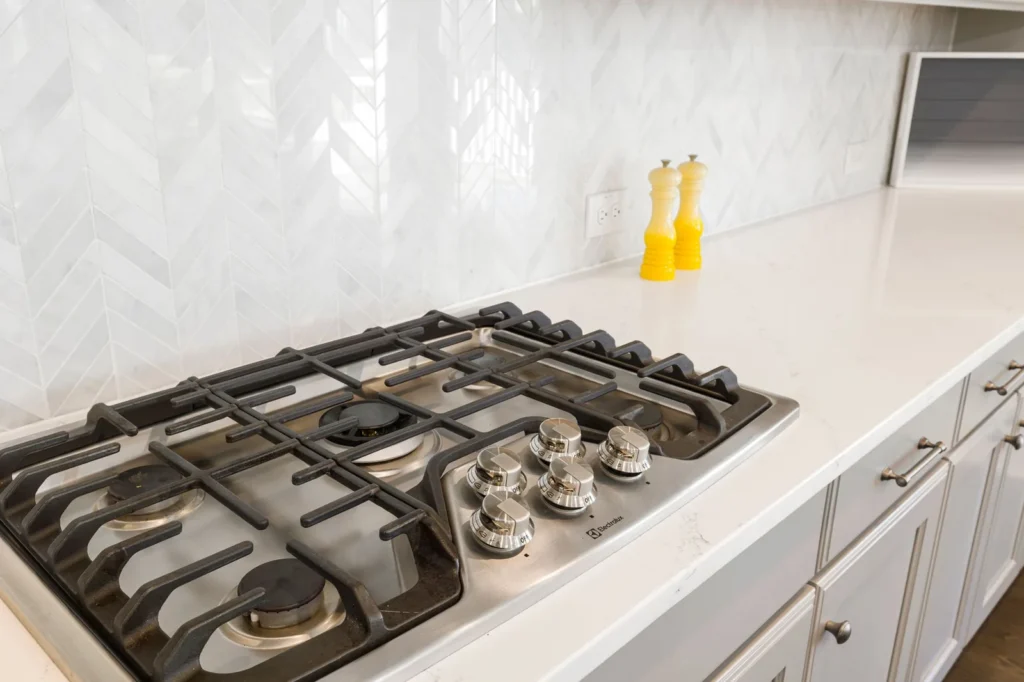

Gas Cook Top Cleaning Tips Get Stove
Description
This guide shows how to clean a gas cooktop using baking soda, vinegar, and dish soap to remove burnt-on grease without harsh chemicals. It protects igniters and burner coatings while keeping flames even and blue.
Ingredients
Instructions
-
Turn Off Gas and Cool
Turn off the gas supply at the valve and let the cooktop cool to room temperature before touching any parts. This prevents burns and avoids bending the igniter electrode when you remove components later.
-
Remove Grates and Caps
Remove the grates and burner caps by lifting straight up so you do not bend the igniter electrode underneath. Set them aside on a towel so they are ready for the soak step.
-
Prepare Soak Basin
Fill a basin with 4 cups warm water and 2 tablespoons liquid dish soap to create a grease-loosening bath. Place the grates and caps into the basin and soak for 20 minutes so surface oil softens before any scrubbing.
-
Make Baking Soda Paste
Make a paste of 1 cup baking soda and just enough water to form a spreadable mud with a quarter-inch thickness. Coat the cooktop enamel with this paste using your fingers or a cloth, covering all crusted areas evenly.
-
Spray Vinegar and Wait
Spray 1 cup white vinegar over the soda paste and let it fizz for 5 minutes at room temperature with no stove heat needed. The reaction softens the crusted spots so they wipe away with less effort.
-
Scrub Enamel and Ports
Scrub the enamel with a damp microfiber cloth using small circles until the surface looks clean and smooth. Then use the old toothbrush on the burner ports until they look clear, and lift any remaining cooked-on spill with the plastic scraper without scratching the enamel.
-
Rinse and Dry Parts
Rinse the grates and caps in clean warm water until all soap and paste are gone, then dry with a cloth and set them on a towel. This prevents rust and keeps the metal ready to reinstall on the cooktop.
-
Wipe and Buff Cooktop
Wipe the cooktop with a second vinegar-damp cloth to remove residue, then buff with the dry microfiber until a golden crisp shine returns. The enamel should look clear with no water spots or film when you are done.
-
Reinstall and Test Flame
Drop the caps back onto the holders and place grates on top, then restore gas and test each burner for a steady blue flame. Confirm every port is open so the flame stays even and does not burn yellow or weak.
Note
- Storage: Store the dry toothbrush and plastic scraper in an under-sink bin separate from food tools after use.
- Weekly tip: Do a light wipe with vinegar and dish soap after cooking to cut deep cleans to monthly, and check penne puttanesca for a sauce-heavy test meal.
- Pro tip: Buff the enamel with a dry cloth at the end to prevent water spots that look like new stains.
- Cloth care: Wash cloths in hot water before reuse if used after a greasy spill to avoid transfer.
