

A garlic parmesan pasta with chicken is the kind of weeknight dinner that solves the what’s-for-dinner problem without a long ingredient list or special equipment. You get tender pan-seared chicken, a silky parmesan sauce, and pasta that soaks up every bit of garlic flavor. This version is built for a single skillet and one pot of boiling water, so cleanup stays small.
The sauce relies on rendered chicken fat, butter, and freshly grated parmesan to build body without flour or heavy cream. That keeps the dish lighter than typical restaurant Alfredo while still feeling rich. You control the thickness by how much pasta water you add at the end. If you enjoyed this, our traditional baked garlic is worth trying next. Making this garlic parmesan pasta with chicken at home is surprisingly straightforward once you know the key steps.
Why You’ll Love These Garlic Parmesan Pasta With Chicken
- Ready in about 30 minutes from raw chicken to plated dinner.
- Uses one skillet for the chicken and sauce, plus one pasta pot.
- Fresh parmesan gives a salty, nutty finish that powdery cheese can’t match.
- Flexible with pasta shape and easy to scale for four people.
- Kid-friendly texture with no spicy heat unless you add it.
Ingredients You’ll Need
- 12 oz (340 g) boneless skinless chicken breasts, cut into 1-inch strips
- 10 oz (280 g) linguine or fettuccine
- 3 tbsp olive oil, divided
- 2 tbsp unsalted butter
- 5 cloves garlic, minced
- 1/2 cup dry white wine (or chicken broth)
- 1 cup reserved pasta water
- 1 cup freshly grated parmesan (about 3 oz / 85 g)
- 1/2 tsp salt, plus more for pasta water
- 1/4 tsp black pepper
- 2 tbsp chopped parsley
Ingredient Substitutions
Chicken breasts: Replace with an equal weight of boneless skinless chicken thighs for a juicier result. Thighs carry more fat, so they stay tender at medium heat and won’t dry out if pulled a minute late. Expect a slightly deeper chicken flavor and a bit more rendered fat in the pan, which you can spoon off before the sauce. The garlic parmesan pasta with chicken works well for weeknight cooking when time is limited.





Dry white wine: Use an equal volume of low-sodium chicken broth if you avoid alcohol. Broth loses the acidic brightness wine brings, so add 1 tsp lemon juice to keep the sauce from tasting flat. The sauce will be a touch sweeter and less sharp at the back of the tongue. Storing leftover garlic parmesan pasta with chicken correctly keeps it tasting good for days.
Linguine: Swap for 10 oz penne or rigatoni if that’s what’s in the pantry. Short tubes trap sauce inside, so you may need 2 extra tbsp pasta water to loosen the coat. Cooking time stays the same, but stir more often to prevent sticking on the curved edges. For the best results with this garlic parmesan pasta with chicken, read through all the steps before starting.
Fresh parmesan: Use an equal weight of grana padano if parmesan is pricey. Grana padano is milder and less crystalline, melting a little smoother but with less punch. You may want an extra tbsp to hit the same salty note. For another easy option, check out our traditional baked garlic.
Step-by-Step Instructions
- Bring 3 quarts of water to a boil and add 1 tbsp salt. Cook linguine until just al dente, about 9 minutes, then drain reserving 1 cup water.
- Heat 1 tbsp olive oil in a 12-inch skillet over medium-high heat. Lay chicken strips in a single layer and sear 3 minutes per side until golden and crispy at the edges and opaque throughout. Remove to a plate.
- Lower heat to medium-low heat and add remaining 2 tbsp oil plus butter. When butter foams, add garlic and stir 45 seconds until fragrant but not browned.
- Pour in white wine, raise to medium heat, and scrape the browned bits for 2 minutes until liquid reduces by half.
- Add cooked pasta and 1/2 cup pasta water. Toss on medium-low heat for 2 minutes until noodles glisten and sauce starts to cling.
- Turn off heat, stir in parmesan, salt, and pepper until melted and creamy. Add chicken and any juices, toss, and top with parsley. shrimp pasta makes a good seafood switch later.
Pro Tips
Grate parmesan on the fine side of a box grater right before use so it melts into a smooth coat instead of clumping. Pre-grated tub cheese contains cellulose that resists melting and leaves a grainy sauce.
Reserve pasta water before draining and add it a splash at a time; the starch tightens the sauce as it cools, so a wetter mix at the pan reads better on the plate. sauteing garlic slowly prevents the bitter edge that ruins cream sauces.
Rest the seared chicken on a plate for 2 minutes before returning it so juices redistribute and don’t water down the pasta. Cutting too early leaks moisture into the skillet.
Scale the garlic up to 7 cloves if you love a strong note; the wine mellows raw sharpness but won’t hide weak amounts. Pair with garlic knots for a themed meal.
Common Mistakes to Avoid
Overcrowding the skillet steams the chicken instead of searing it, leaving pale, rubbery strips. Cook in two batches if the pan looks full and keep medium-high heat steady.
Adding parmesan over live flame makes it seize into strings as the fat breaks. Kill the heat first, then fold the cheese through off the burner for a uniform cream.
Skipping the pasta water and using plain tap water gives a thin, salty sauce that slides off noodles. The reserved water’s starch is what binds butter and cheese to the pasta. You might also like our honey garlic chicken.
Serving Suggestions
Plate the pasta in shallow bowls with chicken fanned on top and a final pinch of parmesan. A side of mediterranean salad adds crunch and cuts the richness.
For wine, a chilled pinot grigio repeats the sauce’s acid. If you want a vegetable, roast broccoli at 200°C / 400°F while the pasta boils so both finish together.
Storage and Reheating
Cool the pasta within 2 hours and store in an airtight container up to 3 days. The sauce thickens cold, so reheating needs a splash of water.
Warm in a skillet over medium-low heat with 2 tbsp water, tossing until the chicken reaches 74°C / 165°F inside. Microwave in 30-second bursts if needed, but stir between each to avoid hot spots.
Freezing changes the texture of the parmesan sauce, making it oily, so this dish is best fresh or refrigerated. If you freeze, thaw overnight and reheat gently with added broth.
Recipe Variations
Spicy Version
Add 1/2 tsp red pepper flakes with the garlic and use 1 diced jalapeño for more bite. The heat balances the butter and makes the parmesan pop without changing cook time.
Broth-Based Light Option
Skip wine and butter, use 2 tbsp oil and 1 cup broth with the pasta water for a thinner, lower-fat coat. You lose some silkiness but keep the garlic-parmesan profile; cherry tomatoes add moisture.
Salmon Swap
Replace chicken with 12 oz salmon cubes seared 3 minutes per side; see garlic salmon for timing. Salmon flakes into the sauce and brings omega-3s with a softer bite.
One-Pan Baked
Combine par-cooked pasta, sauce base, and raw chicken in a dish, bake at 180°C / 350°F for 25–30 minutes. This suits meal prep and uses baked chicken technique for hands-off cooking.
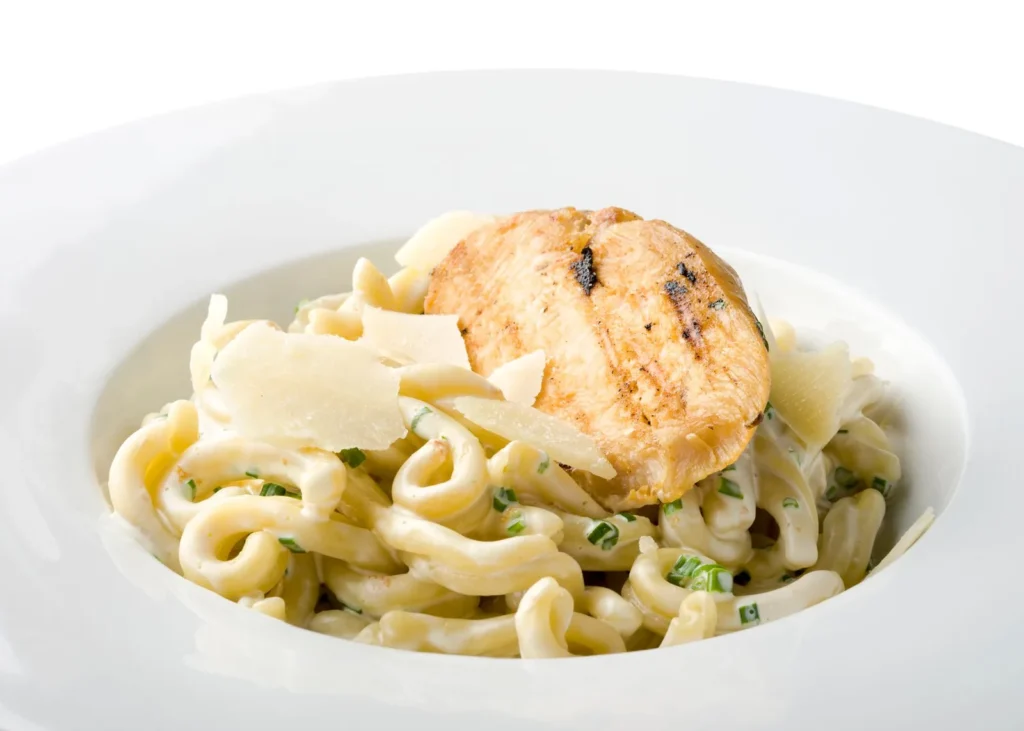

Garlic Parmesan Pasta With Chicken
Description
A garlic parmesan pasta with chicken is a quick weeknight dinner featuring tender pan-seared chicken and a silky parmesan sauce built from rendered chicken fat, butter, and freshly grated cheese without flour or heavy cream. It uses one skillet and one pasta pot, keeping cleanup small while delivering rich flavor in about 30 minutes.
Ingredients
Instructions
-
Boil pasta water
Bring 3 quarts of water to a rolling boil in a large pot over high heat. Add 1 tablespoon salt to season the water before adding the pasta.
-
Cook linguine al dente
Add the 10 oz linguine to the boiling water and cook until just al dente, about 9 minutes, with a slight bite in the center. Drain the pasta and reserve 1 cup pasta water before setting the noodles aside.
-
Sear chicken strips
Heat 1 tablespoon olive oil in a 12-inch skillet over medium-high heat. Lay the chicken strips in a single layer and sear 3 minutes per side until golden and crispy at the edges and opaque throughout, reaching an internal temperature of 74°C / 165°F; remove to a plate.
-
Cook garlic in fat
Lower the heat to medium-low and add the remaining 2 tablespoons olive oil plus 2 tablespoons butter. When the butter foams, add the 5 cloves minced garlic and stir for 45 seconds until fragrant but not browned.
-
Deglaze with wine
Pour in the 1/2 cup dry white wine and raise heat to medium. Scrape the browned bits from the skillet for 2 minutes until the liquid reduces by half and the pan is loosened.
-
Toss pasta with water
Add the cooked pasta and 1/2 cup pasta water to the skillet. Toss on medium-low heat for 2 minutes until the noodles glisten and the sauce starts to cling to each strand.
-
Add cheese and season
Turn off the heat and stir in the 1 cup parmesan, 1/2 teaspoon salt, and 1/4 teaspoon pepper until melted and creamy. The residual heat should form a smooth coat without the cheese seizing.
-
Return chicken and serve
Add the seared chicken and any resting juices back to the skillet and toss to combine. Top with 2 tablespoons chopped parsley and plate the pasta in shallow bowls with chicken fanned on top.
Nutrition Facts
Servings 4
- Amount Per Serving
- Calories 520kcal
- % Daily Value *
- Total Fat 22g34%
- Saturated Fat 9g45%
- Cholesterol 85mg29%
- Sodium 620mg26%
- Total Carbohydrate 45g15%
- Dietary Fiber 2g8%
- Sugars 2g
- Protein 35g70%
* Percent Daily Values are based on a 2,000 calorie diet. Your daily value may be higher or lower depending on your calorie needs.
Note
- Storage: Cool the pasta within 2 hours and store in an airtight container up to 3 days; the sauce thickens cold so reheat with a splash of water.
- Reheating: Warm in a skillet over medium-low heat with 2 tbsp water, tossing until the chicken reaches 74°C / 165°F inside; microwave in 30-second bursts if needed.
- Pro tip: Grate parmesan on the fine side of a box grater right before use so it melts smoothly, and rest seared chicken 2 minutes before returning it; pair with garlic knots for a themed meal.
- Make ahead: Reserve pasta water before draining and add a splash at a time to keep the sauce bound as it cools.
