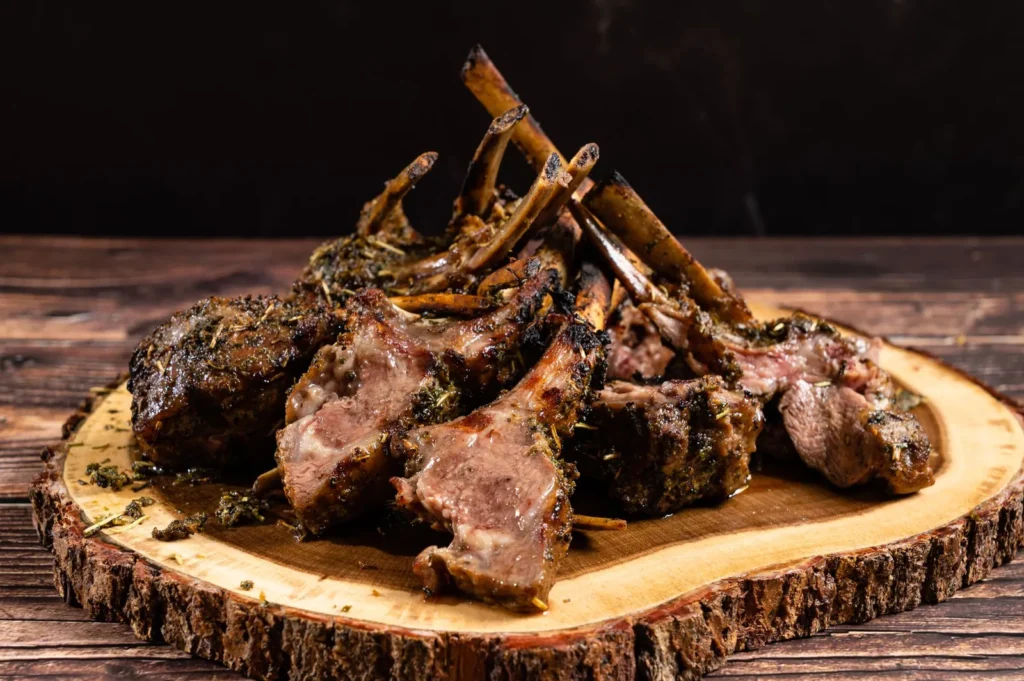
An easter lamb recipe for sunday dinner should feel special without trapping you in the kitchen all afternoon. This version uses a bone-in leg of lamb with a garlic-herb crust that forms a savory bark while the center stays rosy and tender. You get a centerpiece that feeds eight people from one roasting pan and needs only a few sides to round out the table.
The method leans on a two-stage roast: a hot sear to set the exterior, then a lower finish that lets the meat cook evenly. A short rest before carving keeps the juices in the slices instead of on the cutting board. If you pair it with lamb lollipop as a starter, you build a cohesive menu around one protein. Making this easter lamb recipe for sunday dinner at home is surprisingly straightforward once you know the key steps.
Why You'll Love These Easter Lamb Recipe For Sunday Dinner
- One pan handles the whole roast, so cleanup stays minimal after a big meal.
- The herb paste uses pantry staples and fresh rosemary you can swap with what grows nearby.
- A bone-in leg costs less per serving than individual chops but still looks like a holiday centerpiece.
- You can coat the lamb the night before, which spreads the work across two days.
Ingredients You'll Need
- 1 bone-in leg of lamb (about 2.4 kg / 5 lb), trimmed of excess fat
- 4 tbsp olive oil
- 6 garlic cloves, minced
- 3 tbsp fresh rosemary, finely chopped
- 2 tbsp fresh thyme leaves
- 2 tbsp Dijon mustard
- 1 tbsp coarse sea salt
- 2 tsp cracked black pepper
- 1 tbsp lemon zest
- 1 cup low-sodium chicken stock
Ingredient Substitutions
Olive oil: Replace with an equal amount of avocado oil if you need a more neutral flavor. Avocado oil has a higher smoke point, so the initial sear can run slightly hotter without bitterness. The crust will be a touch lighter in color but the texture stays the same. The easter lamb recipe for sunday dinner works well for weeknight cooking when time is limited.
Fresh rosemary: Use 1 tbsp dried rosemary for the 3 tbsp fresh called for here. Dried herbs concentrate faster, so rub the paste in 10 minutes before roasting rather than the night before to avoid a resinous taste. Expect a firmer, less bright aromatic note. Storing leftover easter lamb recipe for sunday dinner correctly keeps it tasting good for days.
Dijon mustard: Swap with whole-grain mustard using the same 2 tbsp measure. The seeds add small bursts of tang and a speckled look on the crust. The roast may brown a half shade darker because of the sugar in some grainy mustards. For the best results with this easter lamb recipe for sunday dinner, read through all the steps before starting.
Chicken stock: Replace the cup of stock with vegetable stock if you want a pork-free base. The pan juices will taste cleaner and slightly sweeter, with less body. Reduce the final simmer by 2 minutes so the gravy still coats a spoon. If you enjoyed this, our hamachi collar is worth trying next.
Step-by-Step Instructions
- Pat the lamb dry with paper towels, then place it in a roasting pan fat-side up. Mix olive oil, garlic, rosemary, thyme, mustard, salt, pepper, and lemon zest into a paste.
- Rub the paste over the entire leg, working it into slits if your butcher left any. Cover and refrigerate up to 24 hours for deeper flavor, or proceed if short on time.
- Heat the oven to 220°C / 425°F. Roast the lamb uncovered for 20 minutes to brown the exterior and seal the surface.
- Lower the oven to 160°C / 320°F and pour the chicken stock into the pan bottom. Continue roasting until a probe reads 55°C / 130°F at the thickest part for medium-rare.
- Transfer the lamb to a board and tent with foil. Rest 20 minutes so the fibers relax and the juices redistribute before carving.
- Skim fat from the pan juices, then simmer on medium heat for 5 minutes until slightly reduced. Slice the lamb against the grain and spoon juice over each plate.
Pro Tips
Bring the lamb to room temperature for 45 minutes before it goes in the oven so the center does not lag behind the exterior. Cold meat needs a longer roast and risks a gray band near the surface.
Score the fat in a shallow crosshatch with a sharp knife to help the paste reach the meat and to render the cap evenly. Keep cuts 1 cm deep so you do not hit the lean tissue underneath.
Use a leave-in probe thermometer rather than timing alone because leg shape varies from one animal to the next. A guide from roasting basics shows how carryover heat lifts the temperature by about 5°F after removal.
Save the pan drippings instead of discarding them; they make a quick gravy with no extra butter. A 2-minute simmer concentrates the flavor without reducing the volume too far.
Common Mistakes to Avoid
Skipping the rest period leads to dry slices because the juices run out on the board. Always rest the roast 20 minutes under loose foil before you carve.
Roasting at one high temperature the whole way burns the mustard crust before the center cooks. The two-stage heat keeps the outside golden and crispy while the interior stays rosy.
Carving with the grain makes the meat seem tough even when cooked right. Slice across the muscle fibers so each piece shortens the strands and feels tender. For another easy option, check out our basil pesto you.
Serving Suggestions
Roasted potatoes cooked in the same oven absorb the lamb aroma and save you a burner. A fettuccine alfredo on the side suits guests who want a richer plate.
Add a sharp green like blanched asparagus with lemon to cut the fat. A pasta alla vodka also works if you want a make-ahead starch that reheats cleanly.
Storage and Reheating
Wrap leftover slices in an airtight container and refrigerate for up to 4 days. The bone and pan juice can be frozen separately for up to 3 months to build a later stew.
Reheat carved lamb in a 150°C / 300°F oven with a splash of stock until the center reaches 74°C / 165°F. Microwaving plain slices tightens the protein and should be a last resort.
Cooked lamb should not sit out for more than 2 hours before chilling. Split a large rest into smaller containers so the heat leaves the meat faster and safely. You might also like our yellow curry vegan.
Recipe Variations
Garlic-Crust Lollipop Style
Cut the leg into individual lamb lollipop chops before coating, then roast at the high heat only for 15 minutes. You get a finger-friendly version where the crust crisps on all sides and the center stays pink.
Red Wine Braise
After the sear, add 1 cup red wine and drop the oven to 150°C / 300°F for 2 hours. The meat yields to a spoon and the sauce gains a deep tannic note that pairs with root vegetables.
Mint Mustard Coat
Swap the rosemary and thyme for 4 tbsp chopped mint and keep the mustard base. The profile turns brighter and more traditional for spring, with a green and fresh crust that matches pea sides.
Low-Sodium Version
Drop the added salt to 1 tsp and use a no-salt stock to control the level for sensitive guests. Compensate with an extra 1 tbsp lemon zest so the flavor stays lifted without the sodium load.