

A christmas prime rib recipe for dinner is the kind of centerpiece that handles a holiday table without requiring you to babysit the oven all evening. You get a deeply beefy roast with a rosy interior and a well-browned crust, cooked to a predictable doneness using a low-then-hot method. This version keeps the seasoning simple so the meat’s flavor leads, and it scales cleanly from a four-pound roast to a larger cut for a full guest list.
The approach here uses an initial rest at room temperature, a slow roast at 120°C / 250°F, then a high-heat finish to set the exterior. That two-stage heat avoids the gray band you see when prime rib is rushed at high temperature. You’ll also find practical notes on carving, resting, and reheating so the slices stay warm and juicy. If you enjoyed this, our default kit is worth trying next. Making this christmas prime rib recipe for dinner at home is surprisingly straightforward once you know the key steps.
Why You’ll Love These Christmas Prime Rib Recipe For Dinner
- Predictable medium-rare from edge to center using a low roast and sear finish.
- Minimal active work: season, roast, rest, carve — no basting or flipping.
- Feeds a crowd with roughly one rib per two to three guests.
- Leftovers reheat cleanly for next-day sandwiches or hash.
- Pair it with our grandma pizza for a casual next-night meal.
Ingredients You’ll Need
- 1 bone-in prime rib roast (4 pounds / about 2 ribs) — ask the butcher to cut the chine bone off and tie the roast.
- 2 tablespoons kosher salt — draws moisture to the surface for a better crust.
- 1 tablespoon coarse black pepper — adds bite without overpowering the beef.
- 3 cloves garlic, minced — raw garlic warms into a mild aromatic during the slow roast.
- 2 tablespoons olive oil — helps the rub adhere and promotes browning.
- 1 tablespoon fresh rosemary, chopped — woodsy note that suits rich beef.
- 1 tablespoon fresh thyme, chopped — keeps the herb profile from leaning too piney.
Ingredient Substitutions
Olive oil: Replace with an equal amount of melted beef tallow for a deeper, meatier crust. Tallow has a higher smoke point than olive oil, so the high-heat finish can run a touch longer without scorching. Expect a slightly glossier surface and a more pronounced beef aroma in the rendered juices. The christmas prime rib recipe for dinner works well for weeknight cooking when time is limited.
Fresh rosemary: Use 1 teaspoon dried rosemary instead of the tablespoon of fresh, crushed fine before adding. Dried herbs concentrate flavor and can turn bitter if used at the same volume as fresh, so the reduced amount keeps the crust balanced. The texture is less leafy but the woodsy note remains clear through the long roast. Storing leftover christmas prime rib recipe for dinner correctly keeps it tasting good for days.
Kosher salt: Swap for an equal weight of fine sea salt if that’s what you keep on hand. Fine salt dissolves faster and spreads more evenly, which means you should season no more than 2 hours before roasting to avoid drawing out too much liquid. The crust will taste identical but form a bit quicker under heat. For the best results with this christmas prime rib recipe for dinner, read through all the steps before starting.
Garlic: Replace the 3 raw cloves with 1 teaspoon garlic powder mixed into the oil. Powder avoids the risk of burnt raw garlic on the surface during the high-heat step, though you lose the slow mellowing of fresh cloves. The overall savory level stays close, with a rounder rather than sharp garlic note. For another easy option, check out our margherita pizza.
Step-by-Step Instructions
- Remove the roast from the fridge and let it sit at room temperature for 2 hours so the center isn’t cold when it hits the oven. Pat the surface dry with paper towels; moisture on the outside steams instead of browning.
- Heat the oven to 120°C / 250°F and set a rack in the lower third. Place the roast bone-side down on a rimmed sheet pan lined with foil for easier cleanup.
- Stir salt, pepper, garlic, olive oil, rosemary, and thyme into a paste. Rub it over all exposed surfaces, then tie any loose spots if the butcher didn’t fully secure the roast.
- Roast until the thickest part reads 48°C / 118°F on an instant-read thermometer, about 3 hours for a 4-pound roast. The outside will look pale, not browned — that’s expected at this stage.
- Raise the oven to 230°C / 450°F and roast 15 minutes more, until the crust is deeply browned and the center reaches 52°C / 125°F. Pull it the moment the thermometer hits that mark.
- Rest the roast on a cutting board, loosely tented with foil, for 30 minutes. The temperature will climb to about 54°C / 130°F for medium-rare while juices redistribute.
- Cut the strings, stand the roast upright, and slice between the bones if attached, then carve across the grain into 1/2-inch pieces. Serve the slices with the rested pan juices poured over.
Pro Tips
Season the roast the night before and leave it uncovered in the fridge if you want a drier surface and firmer crust. The air exposure forms a light pellicle that browns faster during the high-heat finish.
Use a leave-in probe thermometer rather than opening the oven to check. Every door opening drops the oven temperature and extends the slow-roast window by several minutes.
For carryover math, remember the center gains roughly 2 to 3 degrees while resting, so pull the roast a few degrees under your target. This single habit prevents the most common overcooked prime rib.
Read more on resting and carryover from Serious Eats if you want the thermal details behind the method. Their testing shows how roast size changes the final rise.
Slice only what you plan to serve and keep the unsliced portion whole. A whole roast holds heat far longer than separated slices on a platter.
Common Mistakes to Avoid
Skipping the room-temperature rest means the outer layers overcook before the center warms, leaving a wide gray band. Set a timer for the 2 hours before you plan to start the oven.
Roasting at high heat the entire time pushes the exterior past brown into bitter while the middle stays cool. The low stage exists to move heat gently through the roast’s thickness.
Carving immediately after pulling the roast loses a third of the juices onto the board. The 30 minutes rest is not optional if you want slices that aren’t dry.
Using table salt at the same volume as kosher salt over-salts because the grains are denser. If you only have fine salt, cut the amount roughly in half by volume. You might also like our navigation.
Serving Suggestions
Plate the slices with a sharp mustard or horseradish cream to cut the fat. A bright puttanesca sauce on the side works if you want a tangy contrast rather than a creamy one.
Roasted potatoes cooked in the drained pan drippings pick up the herb and beef notes. Steam a green vegetable like asparagus to keep the plate from feeling too rich.
For wine, a high-acid red such as Cabernet Franc balances the marbled meat. Open it 30 minutes before carving so the tannins soften.
Storage and Reheating
Wrap unsliced leftovers in foil and refrigerate up to 4 days in an airtight container. Sliced meat dries faster, so store it with a spoon of pan juice over the top.
To reheat, set the oven to 120°C / 250°F and warm the wrapped roast until the center hits 54°C / 130°F, about 20 minutes for a half roast. Reheated prime rib should reach the same safe warm temperature throughout before serving.
The roast freezes well for up to 2 months if wrapped tight against air. Thaw overnight in the fridge, then use the low oven method above rather than a microwave, which toughens the slices.
Recipe Variations
Peppercorn Crust
Add 1 tablespoon cracked mixed peppercorns to the rub and press them into the surface before roasting. The extra pepper blooms under heat for a sharper bite and a speckled crust. Expect a more aggressive flavor that pairs well with a sweet oat bite dessert afterward.
Red Wine Finish
Deglaze the pan with 1/2 cup red wine after the roast comes out, simmering 5 minutes to a loose sauce. Spoon it over the slices for a softer, wine-forward note. The acidity lifts the fat without needing extra salt.
Smoked Version
Smoke the roast at 110°C / 225°F for 2 hours on oak before the oven finish, then proceed to the high-heat step. You get a pink smoke ring and a campfire edge beneath the herb rub. Total cook time stretches by roughly an hour depending on your smoker.
Herb Butter Top
Before the high-heat stage, dot 2 tablespoons softened butter over the roast so it melts into the cracks. The surface browns a shade darker and carries a richer mouthfeel. Use this when you want a more restaurant-style sheen on the slices.
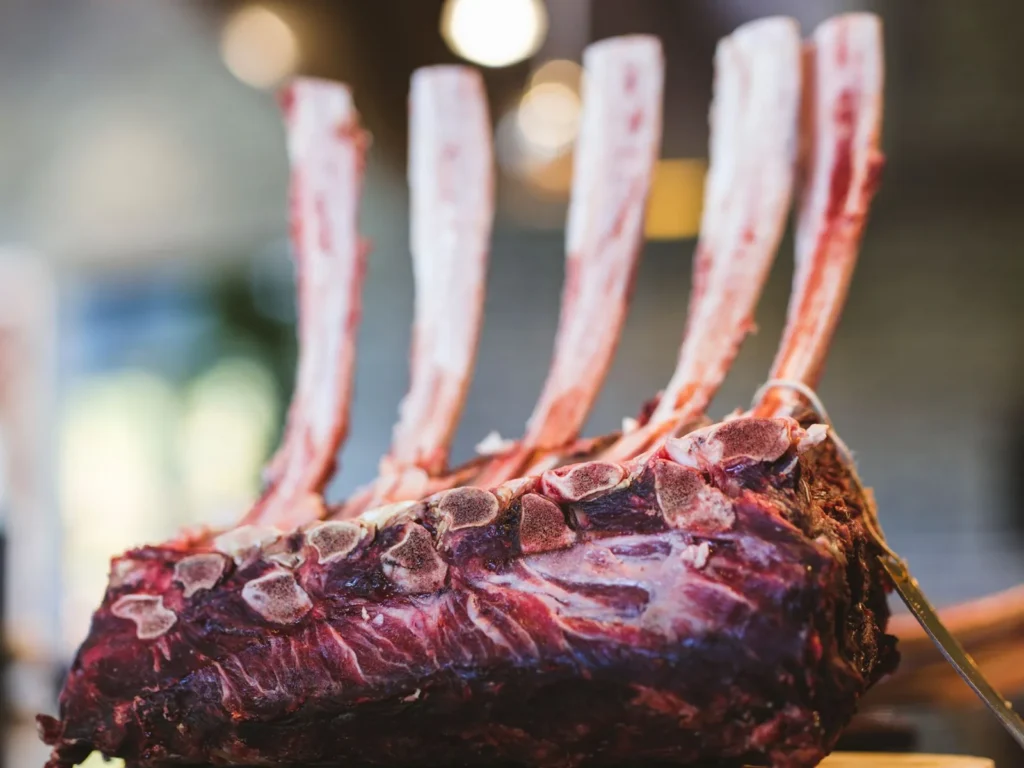

christmas prime rib recipe for dinner
Description
A Christmas prime rib recipe for dinner that uses a low-then-hot roasting method to deliver a rosy medium-rare interior with a deeply browned crust. Simple herb-and-garlic seasoning lets the beef lead, and it scales cleanly from a small roast to a crowd-sized cut.
Ingredients
Instructions
-
Room temperature rest
Remove the roast from the fridge and let it sit at room temperature for 2 hours so the center isn't cold when it hits the oven. This prevents a wide gray band by allowing the meat to warm evenly before cooking begins.
-
Pat surface dry
Pat the surface dry with paper towels; moisture on the outside steams instead of browning. A dry surface is essential for the crust to form properly during the high-heat finish.
-
Heat oven and prep pan
Heat the oven to 120°C / 250°F and set a rack in the lower third. Place the roast bone-side down on a rimmed sheet pan lined with foil for easier cleanup.
-
Make herb rub
Stir salt, pepper, garlic, olive oil, rosemary, and thyme into a paste in a small bowl. The paste should be evenly combined and spreadable so it coats the meat without clumping.
-
Season the roast
Rub the paste over all exposed surfaces of the roast, then tie any loose spots if the butcher didn't fully secure it. The seasoning should cover the entire exterior so the crust flavors stay consistent from end to end.
-
Slow roast stage
Roast at 120°C / 250°F until the thickest part reads 48°C / 118°F on an instant-read thermometer, about 3 hours for a 4-pound roast. The outside will look pale, not browned — that's expected at this stage and means the heat moved gently through the thickness.
-
High-heat finish
Raise the oven to 230°C / 450°F and roast 15 minutes more, until the crust is deeply browned and the center reaches 52°C / 125°F. Pull it the moment the thermometer hits that mark to avoid overcooking the exterior.
-
Rest the roast
Rest the roast on a cutting board, loosely tented with foil, for 30 minutes. The temperature will climb to about 54°C / 130°F for medium-rare while juices redistribute, and the safe whole-cut beef minimum of 63°C is exceeded after rest in practice though target is medium-rare.
-
Carve and serve
Cut the strings, stand the roast upright, and slice between the bones if attached, then carve across the grain into 1/2-inch pieces. Serve the slices with the rested pan juices poured over for extra moisture and flavor.
Nutrition Facts
Servings 6
- Amount Per Serving
- Calories 650kcal
- % Daily Value *
- Total Fat 52g80%
- Saturated Fat 21g105%
- Cholesterol 140mg47%
- Sodium 900mg38%
- Total Carbohydrate 2g1%
- Dietary Fiber 1g4%
- Protein 42g84%
* Percent Daily Values are based on a 2,000 calorie diet. Your daily value may be higher or lower depending on your calorie needs.
Note
- Storage: Wrap unsliced leftovers in foil and refrigerate up to 4 days in an airtight container; sliced meat should be stored with a spoon of pan juice over the top to avoid drying.
- Make ahead: Season the night before and leave uncovered in the fridge to build a pellicle that browns faster, as noted in our recipe keys guide.
- Pro tip: Use a leave-in probe thermometer and pull the roast a few degrees under target since carryover adds 2-3 degrees while resting.
- Reheating: Warm wrapped roast at 120°C / 250°F until center hits 54°C / 130°F, about 20 minutes for a half roast, and reheat only once.
