

A chicken and rice dog food recipe is one of the most reliable homemade meals you can make for a dog that needs gentle, plain food. It combines lean protein with easily digested starch so the stomach isn’t working overtime. You get a clean, controllable bowl where you know every ingredient that went in.
This version is built for dogs, not people, so there’s no salt, onion, or garlic in it. The method keeps the chicken tender and the rice soft enough for sensitive digestion. You can scale it up for a few days of meals or make a small batch for one sick pup.
We’ll walk through exact amounts, substitutions, and storage so the chicken and rice dog food recipe stays safe and consistent every time you cook it. If you enjoyed this, our chicken parmigiana is worth trying next.



Why You’ll Love These Chicken And Rice Dog Food
- Uses three grocery ingredients with no additives or preservatives
- Soft texture suits puppies, seniors, and recovering dogs
- Cooks in one pot so cleanup stays minimal
- Costs far less than vet-recommended canned diets per serving
- Freezes into portions so you always have a backup meal
Ingredients You’ll Need
- 1 lb boneless skinless chicken breasts, diced into 1/2-inch pieces
- 1 cup white long-grain rice, rinsed until water runs clear
- 4 cups water, divided
- 1 tbsp olive oil (optional, for healthy fats)
The chicken breasts supply lean protein without the fat that aggravates digestion. Rinsed rice drops surface starch so the finished bowl isn’t gummy. Four cups of water covers the rice at the right ratio for a soft, fluffy result rather than a paste.
Ingredient Substitutions
Chicken breasts: Replace with an equal weight of boneless skinless chicken thighs for more fat and richer taste. Thighs stay moist under longer simmering but add calories, so cut portion size for overweight dogs. Cook to the same internal doneness and shred finely before serving.
White long-grain rice: Swap for an equal volume of cauliflower rice if you need a lower-carb bowl for a diabetic dog. Cauliflower softens in 6 to 8 minutes instead of 18, so add it after the chicken is cooked. Expect a looser, more vegetable-forward texture and a milder bite.
Olive oil: Use an equal amount of plain unsweetened applesauce for dogs avoiding added fats during recovery. Applesauce adds moisture and a little natural sugar but no oil, keeping the meal very lean. Skip it entirely if your vet advised a fat-free diet during illness.
Water: Replace up to 2 cups with low-sodium plain chicken broth free of onion and garlic for palatability. Broth boosts scent so a reluctant eater shows more interest at meal time. Watch the portion because broth adds sodium even when labeled low-sodium.
Step-by-Step Instructions
- Place the diced chicken in a 4-quart pot over medium-low heat with no oil. Stir for 5 minutes until the outside turns opaque and any released liquid starts to simmer.
- Pour in 3 cups of water and raise to medium heat. Bring to a gentle boil where you see small bubbles breaking the surface, about 4 minutes.
- Stir in the rinsed rice so it’s fully submerged. Lower to medium-low heat, cover, and cook 18 minutes until the grains are tender and the liquid is absorbed.
- If using olive oil, drizzle it over the rested mix and fold through. Let stand off heat 5 minutes so the texture settles and the temperature drops to safe handling range.
- Shred the chicken with a fork against the grain until no chunks wider than 1/4 inch remain. Cool to room temperature before portioning into dog bowls.
Pro Tips
Rinse rice until the water runs clear so surface starch doesn’t turn the bowl into a gluey mass that’s hard for a dog to lap up. braising technique at a low simmer keeps chicken fibers from seizing tight and turning rubbery.
Dice chicken small before cooking so it finishes in the same time as the rice and you avoid undercooked centers. A meat thermometer should read 165°F in the thickest piece before you move on.
Cool the batch on a wide tray instead of in the pot so steam escapes and bacteria don’t multiply in a warm closed environment. Divide into daily servings so you only reheat what gets eaten.
Freeze a tester portion first to confirm your dog tolerates the recipe before you cook a large batch. This chicken and rice dog food recipe is bland by design, so a rejected batch stays a cheap lesson rather than a wasted freezer load.
Common Mistakes to Avoid
Adding salt, onion, or garlic is the most dangerous error because those items harm canine red blood cells and kidneys. Keep the pot strictly free of human seasonings even if the plain smell seems bland to you.
Overcooking rice until it collapses into porridge removes the gentle bulk that helps firm stools. Pull it at 18 minutes and let stand so grains stay distinct and easy to digest.
Feeding the mix hot causes mouth burns and skipped meals. Always cool to room temperature and test a spoonful on your wrist before filling the dog bowl. For another easy option, check out our lime cilantro cauliflower.
Serving Suggestions
Serve a quarter of the batch for a 20 lb dog as a full meal during a stomach upset, split across two sittings. Pair with a small spoon of plain canned pumpkin if your vet approves extra fiber for firming loose stools.
For a topper on regular kibble, use a third of a cup over the normal portion so the dog still gets balanced nutrients from the base food. You can also mix with crispy chicken leftovers only if those were cooked without breading or salt.
Transition back to normal diet over three days by swapping one third of the homemade bowl for regular food each meal. This chicken and rice dog food recipe works as a bridge, not a permanent sole diet unless your vet directs otherwise.
Storage and Reheating
Refrigerate cooled portions in an airtight container for up to 3 days and discard anything left out more than 2 hours. Label the container with the cook date so older batches get used first.
Freeze individual servings for up to 2 months in zip bags laid flat for quick thawing. Reheat in a microwave to an internal temperature of 165°F and stir so no cold pocket remains in the center.
Do not reheat the same portion more than once because repeated cooling and warming grows bacteria fast. Thaw overnight in the fridge rather than on the counter to keep the meat safe. You might also like our caesar chicken bake.
Recipe Variations
Turkey Swap
Replace chicken with an equal weight of ground turkey and cook at medium heat for 10 minutes, breaking it apart as it loses pink. The result is slightly richer and works well for dogs with a chicken sensitivity confirmed by a vet.
Veggie Boost
Add 1/2 cup finely chopped carrot in step two with the water for extra beta-carotene and a soft sweet note. Carrots need the full rice cook time to soften enough for easy chewing by small dogs.
Brown Rice Version
Use brown rice instead of white and extend covered cook time to 35 minutes with an extra cup of water. The chewier grain adds fiber but isn’t ideal during acute diarrhea when white rice is the safer choice.
Fish Alternative
Swap chicken for 1 lb white fish fillet, added in the last 8 minutes of simmer so it flakes without falling apart. This chicken and rice dog food recipe becomes a fish and rice bowl lower in saturated fat for long-term sensitive stomachs. Pair this with our chicken pizzaiola for more ideas.

chicken and rice dog food recipe
Description
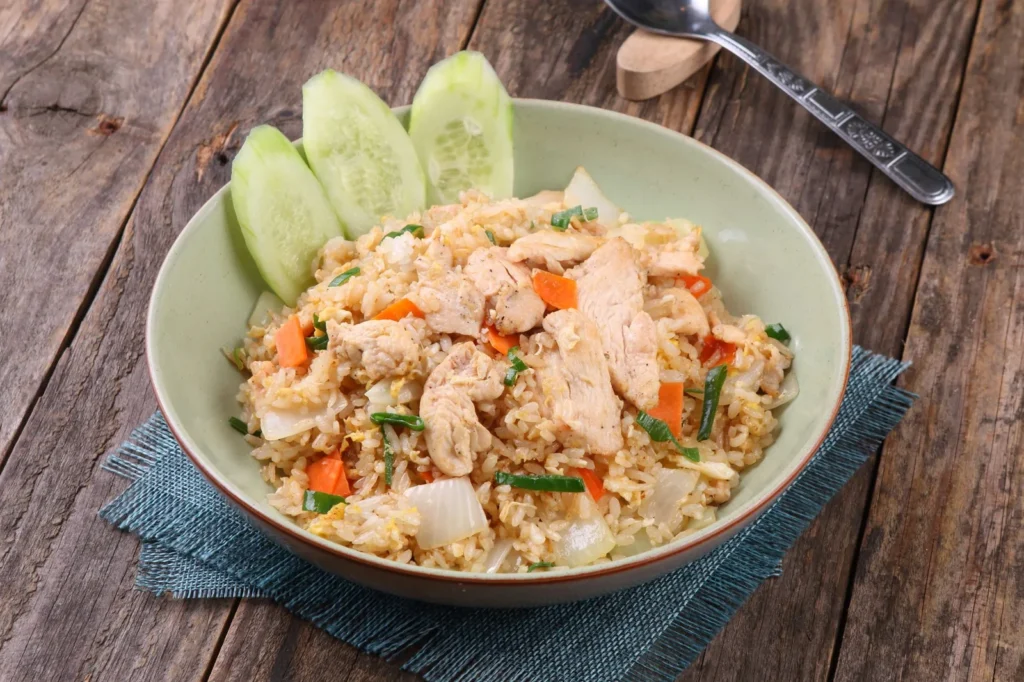
A chicken and rice dog food recipe made with lean protein and easily digested starch for dogs needing plain, gentle food. No salt, onion, or garlic — just three simple grocery ingredients cooked in one pot.
Ingredients
Instructions
-
Cook chicken without oil
Place the diced chicken in a 4-quart pot over medium-low heat with no oil. Stir for 5 minutes until the outside turns opaque and any released liquid starts to simmer, showing the meat is beginning to cook through.
-
Add water and boil
Pour in 3 cups of water and raise to medium heat. Bring to a gentle boil where you see small bubbles breaking the surface, about 4 minutes, ensuring the liquid is hot enough to cook the rice.
-
Stir in rice and simmer
Stir in the rinsed rice so it's fully submerged in the pot. Lower to medium-low heat, cover, and cook 18 minutes until the grains are tender and the liquid is absorbed, with distinct soft grains not a paste.
-
Add olive oil optional
If using olive oil, drizzle it over the rested mix and fold through to add healthy fats. This step is optional and should only be done if your dog tolerates added fat during recovery.
-
Rest off heat
Let the pot stand off heat for 5 minutes so the texture settles and the temperature drops to safe handling range. You should see the mixture slightly firm up and steam subside before handling.
-
Shred chicken finely
Shred the chicken with a fork against the grain until no chunks wider than 1/4 inch remain. Use a meat thermometer to confirm the thickest piece read 165°F (74°C) before this step to ensure safe doneness.
-
Cool to room temp
Cool the batch to room temperature before portioning into dog bowls to avoid mouth burns. Test a spoonful on your wrist to confirm it is not hot before filling the dog bowl.
Nutrition Facts
Servings 4
- Amount Per Serving
- Calories 300kcal
- % Daily Value *
- Total Fat 8g13%
- Saturated Fat 2g10%
- Cholesterol 65mg22%
- Sodium 60mg3%
- Total Carbohydrate 30g10%
- Dietary Fiber 1g4%
- Protein 28g57%
* Percent Daily Values are based on a 2,000 calorie diet. Your daily value may be higher or lower depending on your calorie needs.
Note
- Storage: Refrigerate cooled portions in an airtight container for up to 3 days and discard anything left out more than 2 hours.
- Reheating: Reheat in a microwave to an internal temperature of 165°F (74°C) and stir so no cold pocket remains; do not reheat the same portion more than once.
- Pro tip: Cool the batch on a wide tray instead of in the pot so steam escapes and bacteria don't multiply; for another easy meal try caesar chicken bake.
- Food safety: Keep the pot strictly free of salt, onion, or garlic as those harm canine red blood cells and kidneys.
