

A buttermilk french toast recipe turns ordinary bread into slices with a tender middle and a lightly crisp edge, thanks to the acidity in the buttermilk. The tang cuts through the sweetness of syrup and keeps the custard from tasting flat. You get a breakfast that feels different from the standard milk-and-egg version without any extra effort.
The method below uses thick-cut bread and a short soak so the slices cook through without falling apart. We cover the right pan temperature, how to tell when the crust is ready, and what to do if your first batch browns too fast. By the end you’ll have a reliable base you can flavor in several ways. If you enjoyed this, our french gimlet is worth trying next. Making this buttermilk french toast at home is surprisingly straightforward once you know the key steps.
Why You’ll Love These Buttermilk French Toast
- Thick slices stay moist inside while the surface browns to a golden and crispy finish.
- The buttermilk adds a mild tang that balances maple syrup better than plain milk.
- You can make the custard the night before and cook in the morning.
- It uses pantry staples and one bowl, so cleanup stays small.
Ingredients You’ll Need
- 6 slices thick-cut brioche or challah (about 3/4 inch each)
- 1 cup cultured buttermilk
- 3 large eggs
- 2 tablespoons granulated sugar
- 1 teaspoon vanilla extract
- 1/2 teaspoon ground cinnamon
- 1/4 teaspoon fine salt
- 2 tablespoons unsalted butter, for the pan
The bread needs to be sturdy enough to hold the custard; thin sandwich bread turns to mush. Buttermilk is the acidic dairy that gives the dish its name and its flavor. The buttermilk french toast works well for weeknight cooking when time is limited.




Ingredient Substitutions
Cultured buttermilk: Replace with 1 cup plain yogurt thinned with 1/4 cup water for a similar tang and thickness. Yogurt is denser, so the thinned version keeps the custard pourable and prevents the bread from getting heavy. Expect a slightly stronger sour note and a softer crust. Storing leftover buttermilk french toast correctly keeps it tasting good for days.
Brioche or challah: Use 6 slices of day-old French loaf cut 3/4 inch thick if you don’t have enriched bread. Lean bread absorbs faster, so cut the soak time to about 20 seconds per side to avoid soggy centers. The result is a chewier bite with less sweetness from the crumb.
Unsalted butter: Swap for 2 tablespoons of neutral oil if you need a dairy-free pan fat. Oil reaches a higher smoke point, so watch the pan and keep it at medium-low heat to avoid bitter edges. The surface will be less rich but still browns well.
Granulated sugar: Use 2 tablespoons of maple syrup in the custard instead of dry sugar for a deeper flavor. Liquid sweetener thins the mix slightly, so add it last and whisk fully before dipping. The toasts will caramelize a touch faster, so check the pan early. For another easy option, check out our french roast.
Step-by-Step Instructions
- Whisk the buttermilk, eggs, sugar, vanilla, cinnamon, and salt in a shallow bowl until smooth. Let the mix sit for 5 minutes so the cinnamon disperses.
- Heat a 10-inch nonstick skillet over medium-low heat and add 1 tablespoon of the butter.
- Dip one bread slice into the custard for about 30 seconds per side, letting excess drip off. Place it in the pan without crowding.
- Cook until the underside is golden and crispy, about 2 to 3 minutes, then flip and cook the second side to the same color.
- Move the finished slice to a warm plate and repeat with the rest, adding butter as needed. Serve immediately for the best texture.
Pro Tips
Stale bread works better than fresh because it soaks up custard without collapsing; leave sliced loaves out overnight uncovered if you can. For even cooking, keep the skillet at medium-low heat rather than rushing with high temperature. A wire rack under the finished slices stops the bottoms from steaming soft. Read more on pan control from cast iron basics if you use that type of pan. If you like a plainer base, our homemade french toast uses milk instead of buttermilk.
Common Mistakes to Avoid
Soaking the bread too long makes it break apart in the pan; do not overmix the custard and keep dips short. Crowding the skillet drops the temperature and leads to pale, greasy slices, so never crowd the pan. Using high heat browns the outside before the center sets, leaving a raw egg taste inside.
Serving Suggestions
Warm maple syrup and a dusting of powdered sugar are the standard finish, but sliced strawberries add acidity that matches the custard. For a savory turn, skip the cinnamon and serve with bechamel sauce and chives. A side of garlic prawns makes the plate a brunch centerpiece rather than just a sweet dish.
Storage and Reheating
Cooked slices keep in an airtight container in the fridge for up to 3 days. Reheat in a 180°C / 350°F oven for 8 minutes to bring back some crispness. You can freeze cooled toasts for freeze for up to 2 months and toast from frozen. Don’t leave cooked french toast out for more than 2 hours.
Recipe Variations
Orange Zest Version
Add 1 teaspoon grated orange zest to the custard before dipping the bread. The citrus brightens the buttermilk tang and pairs well with berry toppings. Expect a lighter aromatic note and the same cook time.
Cocoa Dust Version
Whisk 1 tablespoon unsweetened cocoa into the dry spices for a chocolate-tinged slice. The cocoa slightly dries the custard, so add 1 extra tablespoon of buttermilk if it looks thick. Kids often prefer this with a thin syrup drizzle.
Savory Herb Version
Drop the sugar and cinnamon, then add 1 tablespoon chopped parsley and 1/4 teaspoon black pepper. Cook as written and serve with scotch eggs on the side for a full savory plate. The herbs give a fresh note that cuts the richness of the egg dip.
Spiced Apple Version
Top the cooking slices with 2 tablespoons finely diced apple and a pinch of nutmeg in the last minute. The fruit softens and adds moisture, so watch the flip to keep it in place. This turns the buttermilk french toast recipe into a fall-style breakfast without changing the custard base.

Buttermilk French Toast
Description
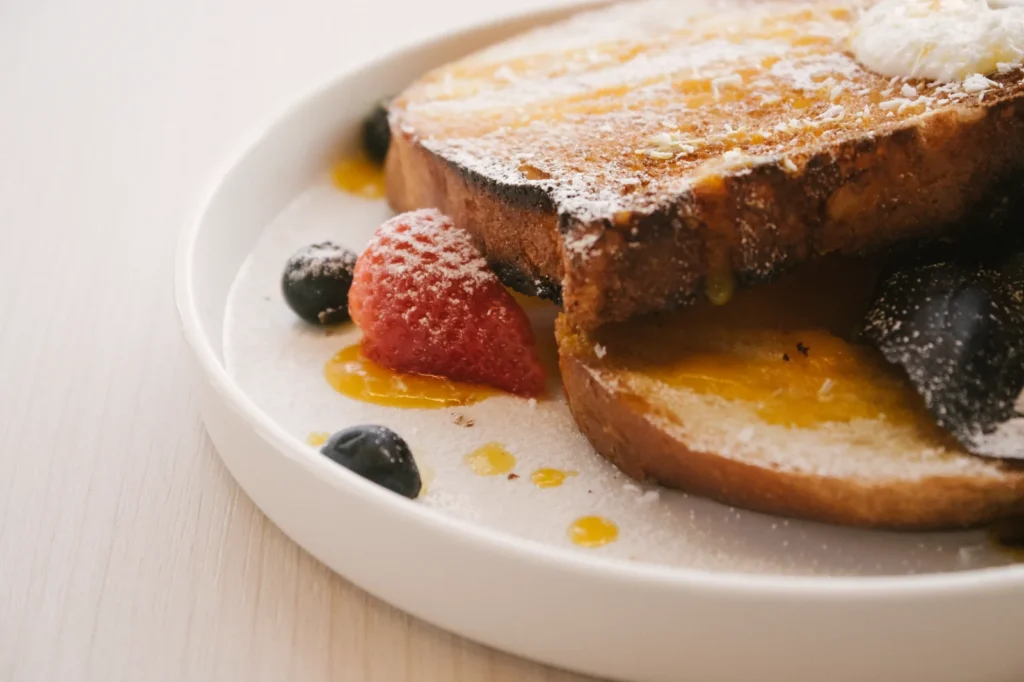
Buttermilk French toast uses thick-cut brioche or challah soaked briefly in a tangy custard for a tender middle and crisp edge. The acidity balances syrup and keeps the flavor from tasting flat, all with one bowl and pantry staples.
Ingredients
Instructions
-
Whisk custard mixture
Whisk the buttermilk, eggs, sugar, vanilla, cinnamon, and salt in a shallow bowl until the mixture is completely smooth with no streaks of egg. Let the mix sit for 5 minutes so the cinnamon disperses evenly and the custard thickens slightly before you begin dipping.
-
Heat skillet with butter
Heat a 10-inch nonstick skillet over medium-low heat and add 1 tablespoon of the butter so it melts and coats the pan without browning. The pan is ready when the butter stops foaming and looks glossy, showing a steady gentle warmth for even cooking.
-
Dip bread slice
Dip one bread slice into the custard for about 30 seconds per side, letting the excess drip off back into the bowl so the slice is coated but not saturated. Use thick-cut bread and keep the dip short so the slice stays intact and does not fall apart in the pan.
-
Place in pan
Place the dipped slice in the pan without crowding, leaving space around it for heat to circulate and the surface to crisp. If the skillet is full the temperature drops and you get pale, greasy slices instead of a golden crust.
-
Cook first side
Cook until the underside is golden and crispy, about 2 to 3 minutes, watching for the edges to firm and the bottom to lift easily with a spatula. Medium-low heat ensures the crust colors while the center sets without a raw egg taste.
-
Flip and cook second
Flip the slice and cook the second side to the same golden color, about another 2 to 3 minutes, until both faces are crisp and the middle feels springy not wet. Move the finished slice to a warm plate and repeat with the rest, adding butter as needed to keep the pan lubricated.
-
Serve immediately
Serve the slices immediately for the best texture while the outside is still crisp and the inside is tender. If holding, set a wire rack under the finished slices so the bottoms do not steam soft before eating.
Nutrition Facts
Servings 4
- Amount Per Serving
- Calories 350kcal
- % Daily Value *
- Total Fat 15g24%
- Saturated Fat 8g40%
- Cholesterol 160mg54%
- Sodium 400mg17%
- Total Carbohydrate 40g14%
- Dietary Fiber 2g8%
- Sugars 12g
- Protein 12g24%
* Percent Daily Values are based on a 2,000 calorie diet. Your daily value may be higher or lower depending on your calorie needs.
Note
- Storage: Keep cooked slices in an airtight container in the fridge for up to 3 days, and refrigerate within 2 hours of cooking to stay safe.
- Reheating: Reheat in a 180°C / 350°F oven for 8 minutes until hot throughout; do not reheat the same portion more than once.
- Make ahead: Stale bread works better, so leave sliced loaves out overnight uncovered, and you can prep custard ahead as noted in our french roast rhythm.
- Pro tip: Use a wire rack under finished slices so bottoms stay crisp instead of steaming soft.
