

The best weeknight dinner I keep coming back to is balsamic maple glazed salmon because it hits the table in under half an hour with a sticky, sweet-tart coating that caramelizes under the broiler. You get a tender, flaky fillet with a lacquered top that tastes far more involved than the effort it takes. This version uses a measured glaze so the balance stays tangy, not cloying, and the salmon cooks evenly without drying out.
A good glaze needs both acid and sugar to form a shell without burning, and the balsamic gives depth while the maple keeps things mellow. You’ll learn the exact broil timing and resting step that stops the fish from falling apart on the plate. If you like easy seafood, our lemon butter salmon is another fast option. Making this balsamic maple glazed salmon at home is surprisingly straightforward once you know the key steps.
Why You’ll Love These Balsamic Maple Glazed Salmon
- Ready in about 25 minutes from fridge to plate with one pan
- Sweet-tangy glaze that browns without turning bitter
- Works for solo dinners or a four-person spread
- Uses pantry staples you likely already own
- Flaky center with a firm, lacquered surface
Ingredients You’ll Need
- 4 salmon fillets (about 6 oz each, skin-on), patted dry
- 3 tbsp pure maple syrup (not pancake syrup)
- 2 tbsp balsamic vinegar
- 1 tbsp soy sauce
- 1 tsp Dijon mustard
- 1 clove garlic, minced
- 1 tbsp olive oil
- 1/4 tsp black pepper
- Pinch of salt
Ingredient Substitutions
Maple syrup: Replace with an equal amount of honey if you want a floral note instead of maple’s woodsy sweetness. Honey browns faster under heat, so drop the broil time by about 1 minute to avoid a scorched top. The glaze will be slightly thicker and less tangy but still coats the fillets well. The balsamic maple glazed salmon works well for weeknight cooking when time is limited.
Balsamic vinegar: Use 1 tbsp red wine vinegar plus 1 tsp brown sugar for a sharper, lighter glaze. Red wine vinegar lacks the grape must body of balsamic, so the finished shell is thinner and more acidic. You’ll lose some of the dark lacquer color but keep the tangy contrast. Storing leftover balsamic maple glazed salmon correctly keeps it tasting good for days.
Soy sauce: Swap with an equal amount of tamari for a gluten-free version with nearly identical salt and umami. Tamari is a touch sweeter and less sharp, so the glaze may need an extra pinch of salt. The color and texture stay the same through baking.
Dijon mustard: Replace with 1 tsp whole-grain mustard for a coarser bite and visible seeds. Whole-grain mustard loosens the glaze slightly and adds texture against the soft fish. It won’t emulsify as smoothly but the flavor stays balanced. If you enjoyed this, our baked salmon lemon is worth trying next.
Step-by-Step Instructions
- Heat the oven to 180°C / 350°F and line a sheet pan with parchment. Pat the salmon dry so the glaze adheres instead of sliding off.
- Whisk maple syrup, balsamic, soy, Dijon, garlic, olive oil, pepper, and salt in a small bowl until smooth and slightly thickened.
- Place fillets skin-down on the pan and brush half the glaze over the tops. Let them sit 5 minutes while the oven finishes heating.
- Bake 12 minutes until the flesh turns opaque at the edges but still looks raw in the center.
- Switch the oven to broil on medium-high heat and brush the remaining glaze on. Broil 3 minutes until the tops are golden and sticky.
- Rest the fillets 2 minutes off heat so the flakes set, then slide a spatula between skin and flesh to serve.
Pro Tips
Dry the fillets thoroughly with paper towels before glazing; surface moisture steams the fish and prevents the shell from forming. A dry surface also helps the broiler caramelize the sugars instead of just warming them.
Broil with the rack in the top third so the glaze blisters without overcooking the center. If your broiler runs hot, keep the door cracked per the manual to control the heat.
Use a silicone brush for even coating and reserve half the glaze for the end so the top stays glossy rather than baked flat.
Buy fillets of equal thickness so they finish together; mixed sizes mean one is dry while another is underdone. Aim for 1 to 1.25 inches at the thickest point.
Common Mistakes to Avoid
Skipping the rest step makes the salmon crumble when plated because the proteins are still tightening. A short 2 minutes off heat lets the flakes hold their shape.
Glazing before baking instead of splitting it means the sugar burns by the time the center cooks. Apply half early and half under the broiler for a clean lacquer.
Using pancake syrup instead of pure maple adds fake vanilla and water that won’t reduce to a shell. The result is a watery puddle, not balsamic maple glazed salmon with bite. For another easy option, check out our traditional baked garlic.
Serving Suggestions
Plate the fillets over steamed rice with a side of brussels sprouts for a matching tangy note. The crucifers crisp while roasting and cut the glaze’s sweetness.
A simple cucumber salad keeps the meal light and adds crunch against the soft fish. For a bread option, warm a baguette and use it to scrape up the pan glaze.
If you want another fish prep, our garlic butter salmon pairs the same sides with a richer profile.
Storage and Reheating
Refrigerate leftovers in an airtight container for up to 3 days and keep them away from the counter longer than 2 hours. Cooked salmon sits in the danger zone fast at room temperature.
Reheat in a 150°C / 300°F oven for 8 minutes until the center reaches 63°C / 145°F, the safe internal temperature for seafood. Avoid the microwave if you can; it toughens the flakes.
This dish does not freeze well because the glaze weeps and the texture goes chalky, so plan to eat it fresh or refrigerated. If you must freeze, wrap tight and use within 1 month, then thaw overnight before reheating.
Recipe Variations
Spicy Version
Add 1/2 tsp crushed red pepper to the glaze before brushing for a warm finish that contrasts the maple. Broil as written; the heat concentrates slightly as the sugar reduces. Serve with extra pepper on top if you like more bite.
Citrus Version
Replace the soy sauce with 1 tbsp orange juice and add 1 tsp zest for a brighter, less salty coat. The glaze is thinner, so broil 1 minute longer to set. The fillets taste lighter and more spring-like.
Sheet Pan Meal
Roast 2 cups of green beans alongside the fish for the last 12 minutes so they absorb the drips. The beans soften and char at the tips while the salmon stays center-stage. It’s a full dinner on one pan with no extra cleanup.
Glazed Salmon Bowls
Flake the rested fillets over quinoa with avocado and a drizzle of reserved glaze for a lunch bowl. The grains soak the sweet-tart liquid and the avocado adds cream. Our garlic parmesan salmon works the same way with a different base.
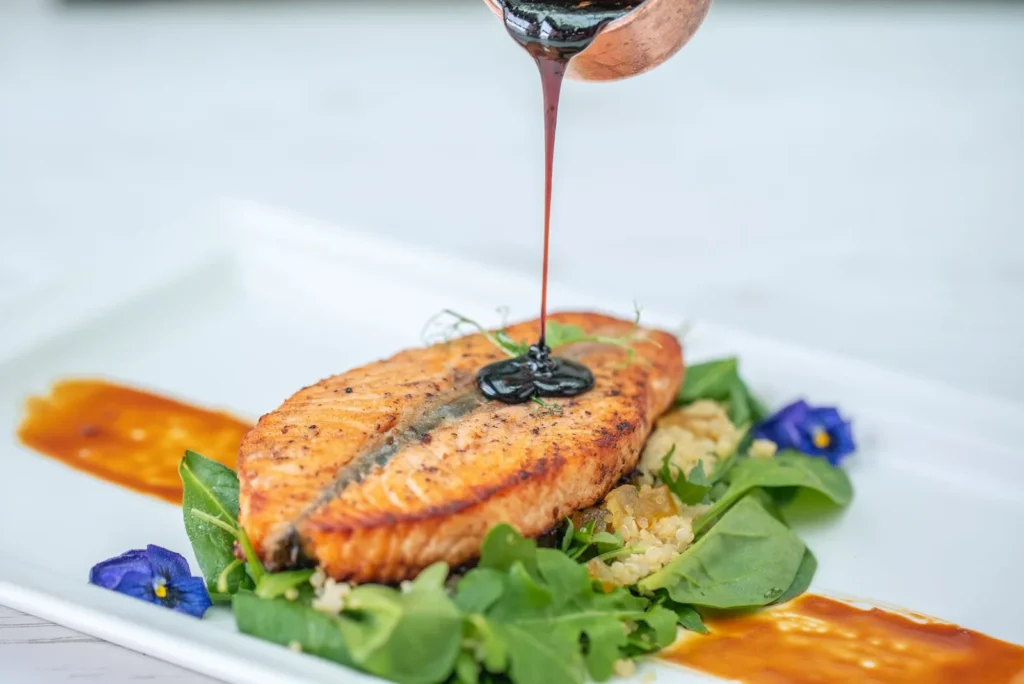

Balsamic Maple Glazed Salmon
Description
This balsamic maple glazed salmon is a fast weeknight dinner with a lacquered, sweet-tangy coating that caramelizes under the broiler. Tender, flaky fillets hit the table in under half an hour using pantry staples.
Ingredients
Instructions
-
Heat oven and prep pan
Heat the oven to 180°C / 350°F and line a sheet pan with parchment. Pat the salmon dry with paper towels so the glaze adheres instead of sliding off the fillets.
-
Whisk the glaze
Whisk maple syrup, balsamic, soy, Dijon, garlic, olive oil, pepper, and salt in a small bowl until smooth and slightly thickened. This measured glaze balances acid and sugar so it forms a shell without burning.
-
Glaze and rest fillets
Place fillets skin-down on the pan and brush half the glaze over the tops. Let them sit 5 minutes while the oven finishes heating so the surface absorbs the coating.
-
Bake the salmon
Bake at 180°C / 350°F for 12 minutes until the flesh turns opaque at the edges but still looks raw in the center. Use equal-thickness fillets about 1 to 1.25 inches so they finish together without drying.
-
Broil with glaze
Switch the oven to broil on medium-high heat with the rack in the top third and brush the remaining glaze on. Broil for 3 minutes until the tops are golden and sticky with a lacquered surface.
-
Rest before serving
Rest the fillets 2 minutes off heat so the flakes set and the proteins stop tightening. Slide a spatula between skin and flesh to serve without crumbling the fish.
Nutrition Facts
Servings 4
- Amount Per Serving
- Calories 350kcal
- % Daily Value *
- Total Fat 18g28%
- Saturated Fat 3g15%
- Cholesterol 75mg25%
- Sodium 350mg15%
- Total Carbohydrate 12g4%
- Sugars 10g
- Protein 34g68%
* Percent Daily Values are based on a 2,000 calorie diet. Your daily value may be higher or lower depending on your calorie needs.
Note
- Storage: Refrigerate leftovers in an airtight container within 2 hours and keep for up to 3 days; reheat in a 150°C / 300°F oven for 8 minutes until the center reaches 63°C / 145°F.
- Pro tip: Dry fillets thoroughly before glazing so the broiler caramelizes the sugars instead of steaming the fish; try our garlic parmesan salmon for another easy prep.
- Glaze split: Apply half the glaze before baking and half under the broiler to avoid burning the sugar and keep a clean lacquer.
- Rest step: Do not skip the 2-minute rest off heat or the salmon will crumble when plated.
