

A bacon and mushroom pasta is the kind of weeknight dinner that delivers restaurant texture without the fuss. You get salty, crisp bacon rendered down into its own fat, meaty mushrooms that soak up that flavor, and a cream sauce that clings to every strand of pasta. This version is built for a single skillet and one pot of boiling water, so cleanup stays light.
The balance here matters more than the ingredient count. Bacon gives you rendered fat and salt; mushrooms give you savory depth and a soft bite; pasta water gives you the starch needed to tighten the sauce. Cook the bacon first, then the mushrooms in that fat, and you skip the step of adding butter or oil later. Making this bacon and mushroom pasta at home is surprisingly straightforward once you know the key steps.
You’ll end up with a dish that tastes richer than the effort suggests. The whole thing comes together in about 25 minutes from cold pan to plate, which is why it earns a regular spot in a practical dinner rotation. If you enjoyed this, our black truffle pasta is worth trying next. The bacon and mushroom pasta works well for weeknight cooking when time is limited.





Why You’ll Love These Bacon And Mushroom Pasta
- One skillet for the sauce keeps dishes to a minimum and builds flavor from bacon fat.
- Ready in about 25 minutes, so it fits a real weeknight window after work.
- Crisp bacon and soft mushrooms give you two distinct textures in every bite.
- The cream sauce uses pasta water, so it coats the noodles instead of pooling.
- It scales easily for two or four by halving or doubling the same ratios.
Ingredients You’ll Need
- 200 g (7 oz) bacon, cut into 1 cm strips — provides fat and salt for the base.
- 250 g (9 oz) cremini mushrooms, sliced 5 mm thick — hold shape and add earthy notes.
- 300 g (10.5 oz) linguine or spaghetti — absorbs sauce without going slack.
- 1 small yellow onion, finely diced (about 100 g) — softens and sweetens the fat.
- 3 cloves garlic, minced — added late to avoid bitterness.
- 200 ml (3/4 cup plus 1 tbsp) heavy cream — gives body and silkiness.
- 60 ml (1/4 cup) dry white wine — deglazes and lifts the pan drippings.
- 40 g (1/2 cup) grated parmesan — thickens and seasons the sauce.
- 1 tbsp olive oil — prevents bacon from sticking at the start.
- 1/2 tsp black pepper — added at the end to keep it bright.
- 1.2 L (5 cups) water for pasta, plus 1 tbsp salt — cooks and seasons noodles.
Ingredient Substitutions
Bacon: Replace with 200 g of pancetta cubes for a milder, less smoky cure. Pancetta renders less fat, so add 1 tbsp olive oil at the start to keep the mushrooms from drying. Expect a cleaner pork note and slightly less salt, so taste before adding pepper at the end. Storing leftover bacon and mushroom pasta correctly keeps it tasting good for days.
Cremini mushrooms: Use 250 g of white button mushrooms if cremini are unavailable. They release more water and brown slower, so cook them 2 minutes longer on medium heat before adding wine. The flavor is lighter but the texture stays similar. For the best results with this bacon and mushroom pasta, read through all the steps before starting.
Heavy cream: Swap for 180 ml evaporated milk plus 1 tbsp cornstarch whisked in. The sauce will be thinner and less rich, and it should not boil hard or it may split. Lower the heat to medium-low heat once added.
Dry white wine: Use 60 ml chicken stock if you avoid alcohol. You lose the acidic lift, so add 1 tsp lemon juice with the cream to keep the sauce from tasting flat. No change to cook time is needed.
Parmesan: Replace with 35 g pecorino romano for a sharper, saltier finish. Pecorino clumps if added to very hot liquid, so pull the pan off heat first and stir slowly. The sauce gets a tangier edge than with parmesan.
Step-by-Step Instructions
- Bring 1.2 L water with 1 tbsp salt to a boil in a large pot. Add 300 g linguine and cook 9 minutes until bendy but not soft; reserve 120 ml pasta water, then drain.
- Set a 30 cm skillet on medium heat with 1 tbsp olive oil. Add 200 g bacon strips and render 6–8 minutes until golden and crispy; move bacon to a plate, leave the fat.
- Add 100 g onion to the bacon fat and cook 3 minutes on medium heat until translucent. Add 250 g mushrooms and cook 5 minutes until golden edges form and water evaporates.
- Pour in 60 ml white wine and scrape the pan with a wooden spoon; simmer 2 minutes until the liquid drops by half. Add 3 cloves garlic and stir 30 seconds until fragrant.
- Lower to medium-low heat and add 200 ml cream; warm 2 minutes without boiling. Stir in 40 g parmesan until smooth and slightly thickened.
- Add drained pasta and toss with tongs for 2 minutes, splashing in reserved water as needed for a glossy coat. Fold in bacon and 1/2 tsp pepper, then serve immediately.
Pro Tips
Cut bacon to a uniform 1 cm width so it crisps evenly instead of some pieces burning while others stay limp. A ragged chop leads to uneven rendering and greasy bites.
Don’t rinse the pasta after draining; the surface starch helps the cream sauce grab hold. A light toss with the reserved water does the tightening for you.
Slice mushrooms no thinner than 5 mm or they shrink to nothing and lose their chew. Thick slices give you the soft-but-present bite that contrasts the bacon.
Keep the cream off a hard boil or it can separate and turn grainy. For a deeper read on gentle sauce work, see cream sauce techniques from a trusted source.
Finish with pepper off the heat so its scent stays sharp rather than cooked flat. The small detail changes the whole aroma at the table.
Common Mistakes to Avoid
Crowding the skillet with mushrooms steams them instead of browning. Cook in the bacon fat with space between pieces, or do two batches if your pan is under 28 cm.
Adding garlic with the onion lets it burn by the time the mushrooms finish. Garlic goes in after the wine step when the heat is lower and the fat is already flavored.
Skipping pasta water leaves the sauce too thick to coat. That starchy liquid is what turns cream plus cheese into a clinging emulsion rather than a puddle.
Pouring all the reserved water at once can loosen the sauce beyond recovery. Add a splash at a time and toss until the noodles look glossy, not soupy.
Serving Suggestions
Plate the pasta in shallow bowls so the sauce pools slightly at the rim. A side of arugula salad cuts the richness with bitter greens and lemon.
For a wine pairing, a chilled unoaked white works because the bacon fat weighs down a red. If you want a fuller pasta spread, our vodka pasta makes a good second option.
Top each bowl with extra parmesan and a few cracked peppercorns. Warm crusty bread on the side helps catch any sauce left behind.
Storage and Reheating
Cool the pasta to room temperature within 2 hours, then store in an airtight container for up to 3 days. The cream sauce firms in the fridge but loosens with gentle heat.
Reheat in a skillet on medium-low heat with 1 tbsp water, stirring until the pork reaches 74°C / 165°F internally. Microwave reheating works but can dry the bacon, so cover and use 50% power.
This dish does not freeze well because the cream sauce separates on thaw. Make a fresh batch instead of storing beyond the fridge window for best texture.
Recipe Variations
Spicy Version
Add 1 tsp red pepper flakes with the garlic and use sharp pecorino instead of parmesan. The heat sits in the fat and gives a slow burn that matches the smoky bacon without overwhelming the mushrooms.
Tomato Twist
Stir in 150 g chopped canned tomatoes after the wine reduces, then add cream. You get a pink sauce with a brighter acid note; pair it with our cherry tomato pasta for a similar profile.
Smoky Mushroom Swap
Use oyster mushrooms roasted first, then folded in, for a smokier, stringier bite. The texture shifts from dense to tender, and the bacon fat ties the two together.
Light Cream Option
Replace half the cream with reserved pasta water and skip parmesan’s full amount. The sauce is thinner and less heavy; a squeeze of lemon at the end keeps it from tasting flat, as with our lemon pasta.
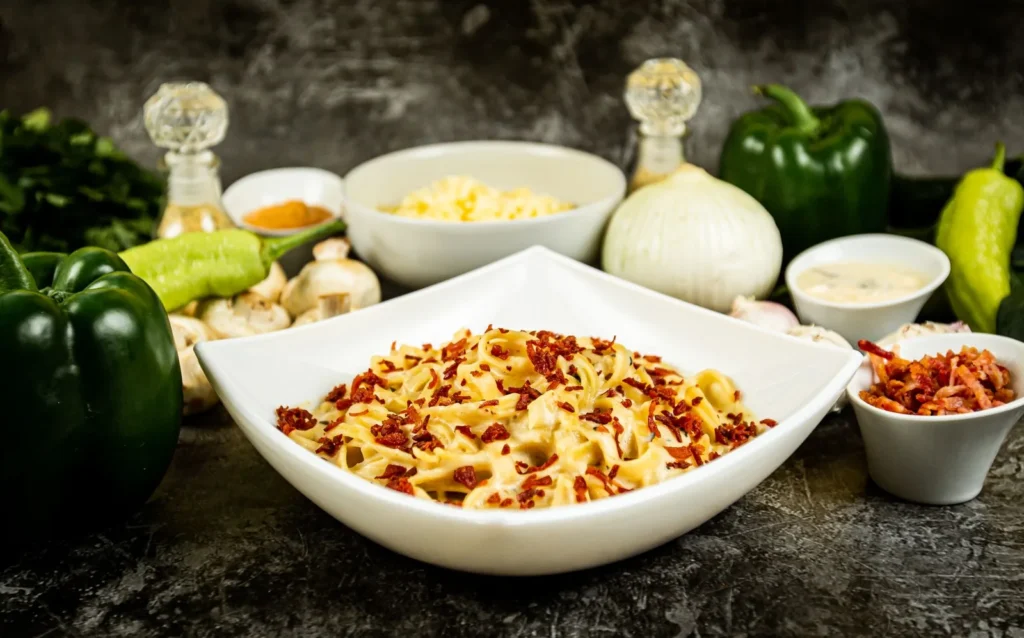

Bacon And Mushroom Pasta
Description
A single-skillet bacon and mushroom pasta with a creamy parmesan sauce that clings to linguine, built from rendered bacon fat and pasta water for rich flavor with minimal cleanup. It comes together in about 25 minutes, making it a practical weeknight dinner with crisp bacon and soft mushrooms in every bite.
Ingredients
Instructions
-
Boil pasta
Bring 1.2 L water with 1 tbsp salt to a boil in a large pot over high heat. Add 300 g linguine and cook for 9 minutes until bendy but not soft, then reserve 120 ml pasta water and drain the rest. Do not rinse the pasta, as the surface starch helps the cream sauce grab hold later.
-
Render bacon
Set a 30 cm skillet on medium heat with 1 tbsp olive oil to prevent sticking. Add 200 g bacon strips and render for 6–8 minutes until golden and crispy, then move the bacon to a plate and leave the fat in the pan. Cut bacon to a uniform 1 cm width so it crisps evenly instead of some pieces burning while others stay limp.
-
Cook onion
Add 100 g diced onion to the bacon fat in the same skillet over medium heat. Cook for 3 minutes until translucent and softened, stirring occasionally so it does not brown. The onion softens and sweetens the rendered fat as the base of the sauce.
-
Brown mushrooms
Add 250 g sliced mushrooms to the skillet with the onion and cook for 5 minutes over medium heat. Cook until golden edges form and the released water has evaporated, giving the mushrooms a soft-but-present bite. Avoid crowding the pan or they will steam instead of brown.
-
Deglaze with wine
Pour in 60 ml white wine and scrape the pan bottom with a wooden spoon to lift the drippings. Simmer for 2 minutes until the liquid drops by half and the pan is mostly dry. This step deglazes and lifts the savory flavor from the bacon fat.
-
Add garlic
Add 3 cloves minced garlic to the skillet and stir for 30 seconds over the lowered heat. Cook only until fragrant to avoid bitterness, since garlic goes in after the wine step when the heat is lower. The fat is already flavored and ready to carry the garlic aroma.
-
Make cream sauce
Lower the heat to medium-low and add 200 ml cream, warming it for 2 minutes without boiling. Stir in 40 g parmesan until smooth and slightly thickened, keeping the cream off a hard boil so it does not separate and turn grainy. The sauce should coat a spoon with a silky texture.
-
Toss pasta
Add the drained pasta to the skillet and toss with tongs for 2 minutes over medium-low heat. Splash in reserved pasta water as needed for a glossy coat that clings to the noodles rather than pooling. Add the water a splash at a time so the sauce does not loosen beyond recovery.
-
Fold and serve
Fold the crispy bacon and 1/2 tsp pepper into the pasta off the heat to keep the pepper scent sharp. Serve immediately in shallow bowls so the sauce pools slightly at the rim. The dish is ready when the pork reaches 74°C / 165°F internally and the pasta looks glossy.
Nutrition Facts
Servings 4
- Amount Per Serving
- Calories 620kcal
- % Daily Value *
- Total Fat 38g59%
- Saturated Fat 18g90%
- Cholesterol 95mg32%
- Sodium 1100mg46%
- Total Carbohydrate 45g15%
- Dietary Fiber 3g12%
- Sugars 4g
- Protein 24g48%
* Percent Daily Values are based on a 2,000 calorie diet. Your daily value may be higher or lower depending on your calorie needs.
Note
- Storage: Cool the pasta to room temperature within 2 hours, then store in an airtight container for up to 3 days in the fridge.
- Reheating: Reheat in a skillet on medium-low with 1 tbsp water, stirring until the pork reaches 74°C / 165°F internally; do not reheat the same portion more than once.
- Pro tip: Don't rinse the pasta after draining so the starch helps the sauce grab hold; a light toss with reserved water does the tightening.
- Variation: For a lighter sauce, our creamy lemon pasta uses a similar technique with a citrus edge.
