

A warm lobster rolls recipe gives you tender lobster meat dressed in melted butter instead of the cold mayo style most people expect. The heat keeps the meat soft and lets the sweet shellfish flavor come through without distraction. You get a rich, diner-style sandwich that tastes like a coastal Maine shack on a busy afternoon.
This version uses a quick butter poach and a hard sear on the bun so the outside stays crisp while the inside stays pillowy. We keep the seasoning minimal so the lobster leads. The method is forgiving, and the ingredient list is short enough to shop for in one trip. Making this warm lobster rolls at home is surprisingly straightforward once you know the key steps.
You’ll learn the exact pan temperature, the right bun type, and how to avoid rubbery meat. By the end you’ll have a repeatable plan for focaccia night or a seafood cookout without guessing. The warm lobster rolls works well for weeknight cooking when time is limited.
Why You’ll Love These Warm Lobster Rolls
- Butter-poached meat stays soft and never turns chewy from overheating.
- Split-top buns toast to a golden and crispy edge that holds the filling.
- The whole dish comes together in 20 minutes once lobster is prepped.
- You control the salt and richness better than most restaurant versions.
- It scales easily for two or a small party without new technique.
Ingredients You’ll Need
- 1 lb cooked lobster meat, tail and claw, cut into 1-inch pieces — pre-cooked saves time and avoids overcook risk.
- 4 top-split brioche buns — the flat sides sear evenly and cradle the meat.
- 4 tbsp unsalted butter, divided — used for poaching and bun toasting.
- 1 tbsp lemon juice, fresh — brightens the butter without adding acid sharpness.
- 2 tbsp chopped chives — mild onion note that doesn’t fight the shellfish.
- 1/4 tsp fine sea salt — seasons the poach bath evenly.
- 1/8 tsp white pepper — gentle heat, no dark specks in the butter.
- 1 tsp neutral oil — prevents the butter from burning on the bun.
Ingredient Substitutions
Top-split brioche buns: Replace with equal-count split-top potato buns if brioche is unavailable. Potato buns brown faster and taste slightly less sweet, so drop the sear time by 30 seconds per side. They still hold the filling but feel a bit denser against the soft lobster. Storing leftover warm lobster rolls correctly keeps it tasting good for days.
Unsalted butter: Use 4 tbsp ghee for a lactose-free option with the same fat content. Ghee has a higher smoke point, so you can toast the bun at medium heat without scorching. The flavor is nuttier and the meat coating stays glossy but less creamy. For the best results with this warm lobster rolls, read through all the steps before starting.
Cooked lobster meat: Swap with 1 lb cooked langoustine tail meat for a smaller, sweeter bite. Langoustine releases more moisture, so pat it dry before the poach to keep the butter from separating. Expect a finer texture and a shorter 2 minutes warm time.
Chives: Substitute 2 tbsp finely chopped scallion greens for a sharper allium note. Scallion adds crunch and a faint bite that contrasts the soft meat. Use only the green part to avoid the harsh white bulb flavor near the butter. If you enjoyed this, our home is worth trying next.
Step-by-Step Instructions
- Heat 2 tbsp butter in a small skillet over medium-low heat until it foams but does not brown, about 2 minutes.
- Add lobster pieces, salt, and white pepper; stir gently for 3 minutes until the meat is warmed through and opaque at the center.
- Remove skillet from heat and stir in lemon juice and chives so the acid stays bright rather than cooking off.
- Heat the remaining 2 tbsp butter and 1 tsp oil in a separate pan over medium heat for 1 minute until shimmering.
- Place buns cut-side down and press lightly; sear 2 minutes until the flat sides are golden and crispy.
- Fill each bun with lobster using a slotted spoon, leaving butter behind to avoid a soggy base, then serve immediately.
Pro Tips
Keep the poach at medium-low heat so the protein fibers stay relaxed and the meat reads tender, not bouncy. A higher flame tightens the muscle and pushes out moisture fast.
Use a slotted spoon when filling the buns so excess butter stays in the pan and the bread stays structured. Pooled fat at the bottom makes the roll fall apart by the last bite.
Buy lobster already cooked if you can — it removes the guesswork of doneness and shortens active time to under ten minutes. You can read more on shellfish handling from Simply Recipes for safe prep.
Toast the buns in a nonstick pan rather than a dry griddle so the butter penetrates the crumb and crisps the surface at once. Dry heat alone yields a pale, stiff edge.
Common Mistakes to Avoid
Overheating the lobster turns sweet meat into a rubber band; pull it from heat the moment it’s opaque. Residual warmth finishes the center without further tightening.
Skipping the oil in the bun pan lets milk solids burn before the bread browns, leaving a bitter coat. The neutral oil lifts the smoke point of the butter mix.
Filling buns straight from the fridge makes the butter seize and the roll cold in the middle. Let toasted buns sit 1 minute off heat before loading so the warmth spreads. For another easy option, check out our contact.
Serving Suggestions
Pair the rolls with a sharp non-alcoholic toddy if you want a warm contrast on a cold evening. The citrus in the drink echoes the lemon in the meat.
Add a side of cinnamon rolls only if you’re building a brunch board, since the sugar balance offsets the savory bun well.
Plate on a focaccia board with lemon wedges so guests squeeze fresh juice at the table. The extra acid wakes up the butter.
Storage and Reheating
Refrigerate leftover lobster meat in an airtight container for up to 3 days without the bun to keep textures separate. The bun goes stale in the fridge and won’t re-crisp well.
Reheat the meat in a skillet with 1 tbsp butter over medium-low heat until it reaches 60°C / 140°F internal, about 3 minutes. That temperature is safe for pre-cooked shellfish and keeps it from drying.
Do not leave assembled rolls at room temperature beyond 2 hours since the butter and seafood spoil quickly. Toss any unrefrigerated portion after that window.
Recipe Variations
Garlic Butter Version
Add 1 minced garlic clove to the poach butter and cook 1 minute before the lobster goes in. The aroma deepens and the meat picks up a savory edge that pairs with a pinch of parsley. Expect a stronger nose and a slightly darker butter.
Spicy Warm Rolls
Stir 1/2 tsp cayenne into the butter with the salt for a clean heat that builds after the bite. Keep the sear time the same so the bun doesn’t burn under the spice. The chives still cool the finish.
Connecticut Style Swap
Replace lemon and chives with 1 tsp tarragon and a splash of white wine in the poach for a herbal, boozy note. Reduce the wine 1 minute before adding lobster so the alcohol cooks off. The result is lighter and more aromatic than the plain butter version.
Rolls With Bacon
Layer 2 strips cooked crisp bacon inside each toasted bun under the lobster for smoke and crunch. The salt rises, so cut the added salt in the poach by half. The texture contrast makes the martini pairing optional.

Warm Lobster Rolls
Description
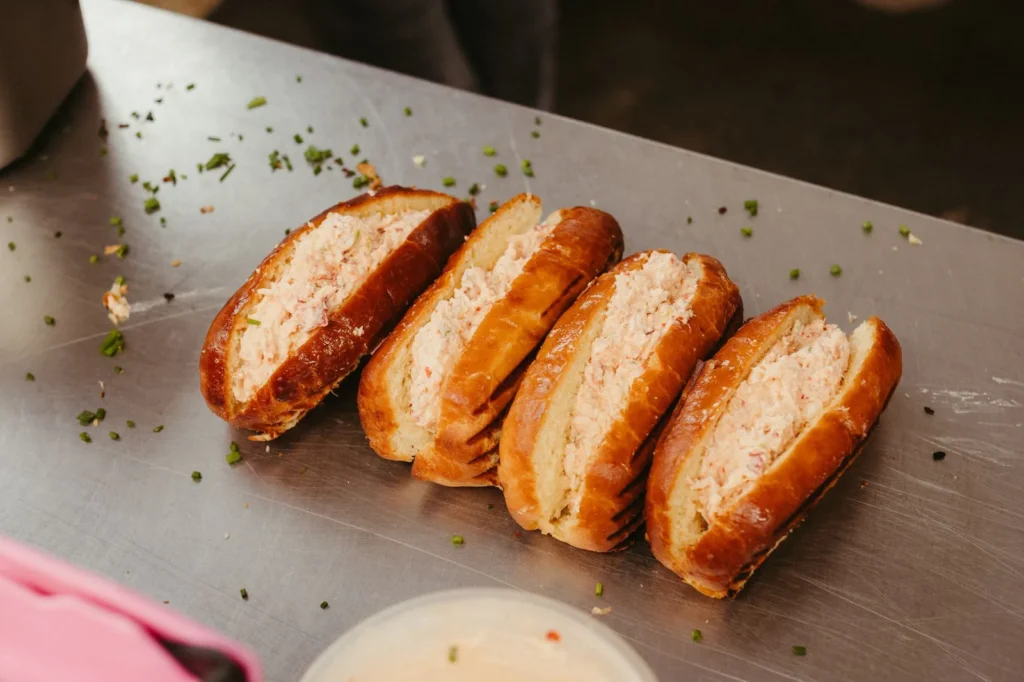
Warm lobster rolls feature tender lobster meat dressed in melted butter with a quick butter poach and a hard sear on split-top brioche buns. The result is a rich, diner-style sandwich with crisp edges and a pillowy interior that lets the sweet shellfish flavor shine.
Ingredients
Instructions
-
Melt butter for poach
Heat 2 tbsp butter in a small skillet over medium-low heat until it foams but does not brown, about 2 minutes. The butter should look lightly frothy and shiny with no browned milk solids at the edges.
-
Warm lobster in butter
Add lobster pieces, salt, and white pepper; stir gently for 3 minutes until the meat is warmed through and opaque at the center. Pull the skillet from heat the moment the lobster turns opaque to avoid rubbery texture.
-
Add lemon and chives
Remove skillet from heat and stir in lemon juice and chives so the acid stays bright rather than cooking off. The mixture should smell fresh and look glossy with green flecks throughout the butter.
-
Heat bun toasting fat
Heat the remaining 2 tbsp butter and 1 tsp oil in a separate pan over medium heat for 1 minute until shimmering. The oil lifts the smoke point so the butter mixture will not scorch before the bread browns.
-
Sear the buns
Place buns cut-side down and press lightly; sear 2 minutes until the flat sides are golden and crispy. The bun edges should be deep gold and rigid while the interior stays soft and pillowy.
-
Fill and serve rolls
Fill each bun with lobster using a slotted spoon, leaving butter behind to avoid a soggy base, then serve immediately. Let toasted buns sit 1 minute off heat before loading so the warmth spreads and the roll is not cold in the middle.
Nutrition Facts
Servings 4
- Amount Per Serving
- Calories 380kcal
- % Daily Value *
- Total Fat 18g28%
- Saturated Fat 10g50%
- Cholesterol 120mg40%
- Sodium 520mg22%
- Total Carbohydrate 30g10%
- Dietary Fiber 1g4%
- Sugars 5g
- Protein 25g50%
* Percent Daily Values are based on a 2,000 calorie diet. Your daily value may be higher or lower depending on your calorie needs.
Note
- Storage: Refrigerate leftover lobster meat in an airtight container for up to 3 days without the bun; the bun goes stale in the fridge and won't re-crisp well.
- Reheating: Reheat meat in a skillet with 1 tbsp butter over medium-low until it reaches 60°C / 140°F internal, about 3 minutes, and do not reheat the same portion twice.
- Pro tip: Use a slotted spoon when filling so excess butter stays in the pan and the bread stays structured; for a brunch board idea see cinnamon rolls to offset the savory bun.
- Food safety: Do not leave assembled rolls at room temperature beyond 2 hours since the butter and seafood spoil quickly; toss any unrefrigerated portion after that window.
