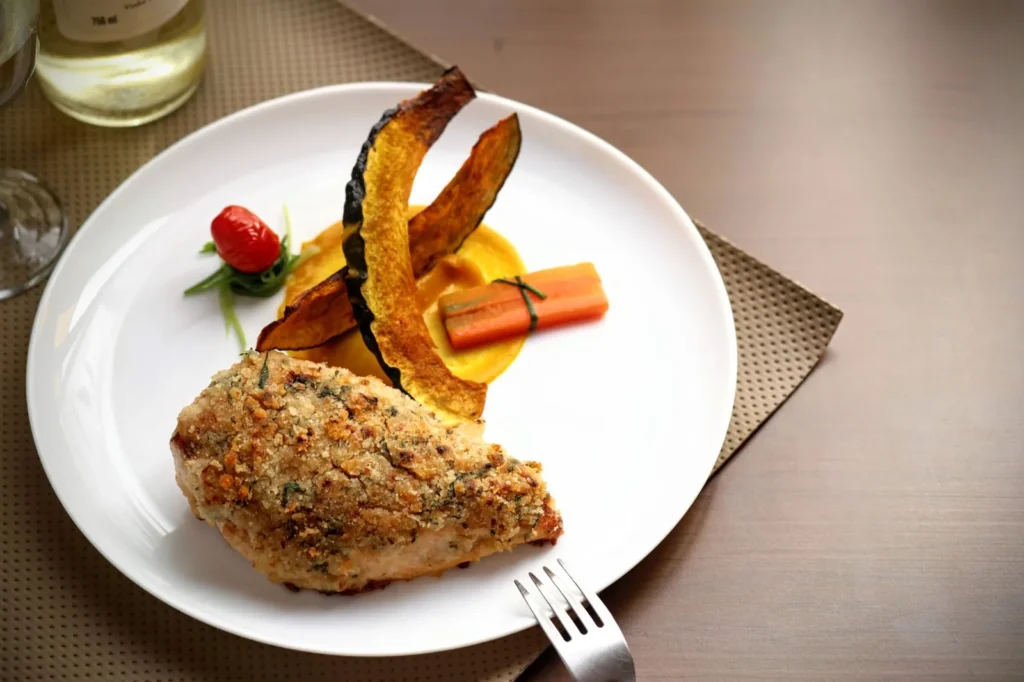
The white wine herb roasted chicken you're about to make relies on a dry white wine and a handful of fresh herbs to keep the meat moist while the skin crisps. This is a whole-bird roast built for a relaxed dinner where the oven does most of the work. You get a bird with lacquered, brittle skin and a pan sauce you'll want to spoon over everything on the plate.
Aromatic herbs like thyme and rosemary sit under and over the skin so the flavor reaches the meat, not just the surface. The wine steams the cavity and mixes with chicken drippings to form a light, savory sauce. It's the kind of roast you can prep in 15 minutes and then leave alone for an hour. If you enjoyed this, our roasted lemonade copycat is worth trying next. Making this white wine herb roasted chicken at home is surprisingly straightforward once you know the key steps.
Why You'll Love These Herb Roasted Chicken
- Dry white wine keeps the breast meat from drying out during a long roast.
- Fresh thyme and rosemary give a piney, lemony aroma without heavy spices.
- One roasting pan means you build the sauce in the same dish you cook in.
- Crisp skin forms from rendered fat and a short rest before carving.
- Leftovers hold up well for sandwiches and quick reheats later in the week.
Ingredients You'll Need
- 1 whole chicken (about 1.8 kg / 4 lb), giblets removed
- 2 tbsp olive oil
- 1 tbsp kosher salt
- 1 tsp black pepper, cracked
- 1 lemon, halved
- 6 sprigs fresh thyme
- 4 sprigs fresh rosemary
- 8 garlic cloves, peeled and lightly smashed
- 1 cup dry white wine (such as Sauvignon Blanc)
- 2 tbsp unsalted butter, softened
- 1 small yellow onion, quartered
Ingredient Substitutions
Dry white wine: Replace the 1 cup with an equal amount of dry vermouth or a light chicken stock if you avoid alcohol. Vermouth keeps a similar acidity and herbal edge, while stock yields a milder, less sharp sauce. With stock, reduce the salt slightly since boxed broths often contain sodium, and expect a lighter color in the pan drippings. The white wine herb roasted chicken works well for weeknight cooking when time is limited.
Fresh thyme: Use 2 tsp dried thyme for the 6 sprigs if fresh isn't available. Dried herbs concentrate faster and can turn bitter if burned, so tuck them under the skin rather than on top. The aroma is less bright but still clearly herbal, and the texture won't add the small woody stems you get from fresh sprigs. Storing leftover white wine herb roasted chicken correctly keeps it tasting good for days.
Unsalted butter: Swap the 2 tbsp for the same amount of olive oil if you need a dairy-free version. Butter helps the skin brown through milk solids, so oil alone gives a slightly less deep color but equally crisp result. You lose the rounded, slightly nutty finish butter leaves on the skin. For the best results with this white wine herb roasted chicken, read through all the steps before starting.
Yellow onion: Use 1 leek, white part only and cut into chunks, for a sweeter, more delicate base. Leek softens faster than onion and adds a mild allium note to the sauce. Watch it during roasting since it can break down sooner and darken if the pan runs dry.
Step-by-Step Instructions
- Heat the oven to 200°C / 400°F and set a rack in the lower third. Pat the chicken dry with paper towels so the skin can crisp instead of steam.
- Rub the outside with olive oil, then season the cavity and surface with kosher salt and black pepper. Place 3 thyme sprigs, 2 rosemary sprigs, the lemon halves, and half the garlic inside the cavity.
- Spread the onion and remaining garlic across a roasting pan. Set the chicken breast-side up on a rack above the vegetables so heat circulates under the bird.
- Slide the pan into the oven and roast for 20 minutes, then lower the heat to 180°C / 350°F. Paint the skin with softened butter using a brush.
- Pour the white wine into the pan around the rack, not over the skin. Continue roasting 50–60 minutes until the thigh reads 74°C / 165°F and the skin looks golden and crisp.
- Rest the chicken on a board for 15 minutes before carving so the juices redistribute. Tilt the pan and skim fat, then simmer the drippings 5 minutes on medium heat to thicken the sauce.
Pro Tips
Dry the bird in the fridge uncovered for a few hours before roasting if you have time; cold dry skin renders faster than room-temp damp skin. A reliable meat thermometer removes the guesswork since color alone won't tell you the thigh is safe.
Keep the wine away from the skin during the pour or it will soften the crisp layer you worked for. Add it to the pan base so it becomes steam and sauce, not a wash on the surface.
Carve with a sharp serrated knife and start at the thigh joint to avoid tearing the breast. A clean cut keeps the presentation tidy and the meat slices hold their juices better.
Save the carcass for stock later the same day; it makes a stronger broth than a packaged base. If you roast the garlic mashed potatoes alongside, use the pan sauce as their topping.
Common Mistakes to Avoid
Skipping the dry pat leaves moisture on the skin that turns to steam in the oven. Always blot the bird so the fat can render and the surface can harden.
Opening the oven every 10 minutes drops the temperature and slows browning. Check once near the end with a thermometer instead of repeated door openings.
Pouring wine directly on the breast washes off butter and oil, leading to pale, floppy skin. Pour to the side and let the heat do the lifting.
Carving right out of the oven lets the juices run onto the board instead of staying in the meat. Rest the chicken before you slice, even if it's tempting to cut early.
Serving Suggestions
Spoon the warm pan sauce over the carved meat and a side of roasted tomato pasta for a wine-friendly plate. The acidity in the tomatoes matches the lemon and herbs in the bird.
Add a simple green salad with a sharp vinaigrette to cut the richness of the skin. If you want a heartier spread, the sheet pan quesadillas make a good next-day use for leftovers.
Roasted root vegetables cooked in the same pan base pick up the herb and wine notes. Serve the chicken with mashed potatoes if you prefer a softer side than pasta.
Storage and Reheating
Wrap cooled meat in an airtight container and refrigerate for up to 4 days. Keep the sauce separate so the skin stays firmer until you reheat.
Reheat carved pieces in a 180°C / 350°F oven until the center hits 74°C / 165°F, about 15 minutes. Microwaving works but softens the skin, so use the oven for best texture.
The cooked chicken freezes for up to 3 months in a sealed bag with most air pressed out. Thaw overnight in the fridge before reheating to keep the fibers from tightening.
Don't leave the roasted bird at room temperature for more than 2 hours total. Carcass and drippings should be cooled and stored the same day you cook.
Recipe Variations
Citrus Swap
Replace the lemon with 1 orange, halved, and add 2 bay leaves to the cavity. The orange gives a softer sweetness and the bay adds a mild tea-like note. Expect a lighter, fruit-forward sauce that pairs well with roasted lemonade as a drink.
White Wine Herb Roasted Chicken Thighs
Use 8 bone-in thighs instead of a whole bird and roast at 190°C / 375°F for 40 minutes. The smaller pieces crisp faster and the wine reduces quicker, so check the sauce near the end. This cut gives more skin per serving if that's the part you like most.
Mushroom Addition
Add 250 g quartered cremini mushrooms to the pan with the onion. They soak up the wine and chicken fat and give a earthy, savory base. The oyster mushroom recipe uses a similar roast method if you want a vegetable-only version.
Low-Sodium Version
Cut the kosher salt to 1.5 tsp and use a low-sodium stock for half the wine. The herbs and lemon carry the flavor so the dish doesn't taste flat. You keep the same roast times but the pan sauce will be less concentrated.