
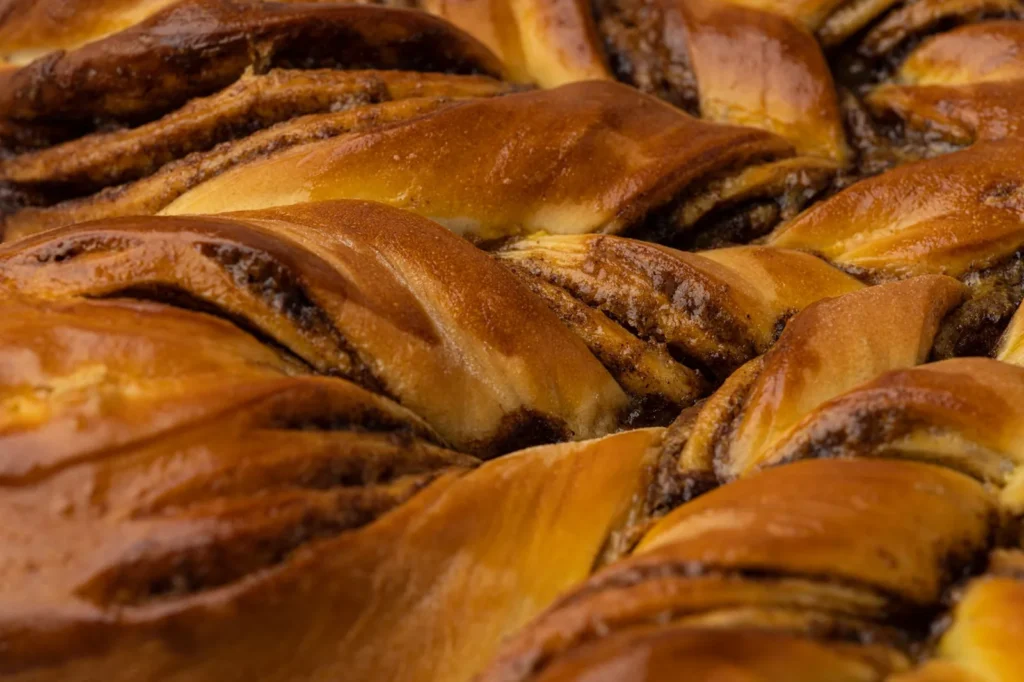
A soft and buttery prune starbread is a pull-apart enriched loaf shaped like a star, with layers of tender dough and a dark, jammy prune filling. The dough uses milk, butter, and egg for a close, plush crumb that pulls apart in clean strands. You get a dessert or brunch bread that looks elaborate but relies on a straightforward laminated-cut method rather than complicated pastry work.
Prunes are boiled briefly and blended so the filling stays moist instead of drying into a stiff paste during baking. The star shape comes from stacking cut dough strips and twisting them, which opens the layers so the filling shows at the edges. This specific recipe scales the sugar down so the prune flavor reads as fruity rather than candy-sweet. If you enjoyed this, our beef hotpot soft is worth trying next. Making this soft and buttery prune starbread at home is surprisingly straightforward once you know the key steps.
Unsalted butter: Replace with an equal weight of a baking margarine or coconut oil for a dairy-free loaf. Coconut oil sets firmer at room temperature, so the crumb will feel slightly more waxy and less creamy than with dairy butter. You lose the milky note but keep the soft structure if the fat is added at the same softened stage. The soft and buttery prune starbread works well for weeknight cooking when time is limited.
Whole milk: Use an equal volume of unsweetened oat milk if you need a non-dairy version. Oat milk has less protein than dairy, so the gluten network will be a touch weaker and the loaf a little less tall. Add the liquid at the same warm temperature so the yeast activates at the same rate. Storing leftover soft and buttery prune starbread correctly keeps it tasting good for days.
Bread flour: Swap for an equal weight of all-purpose flour if that is what you keep on hand. All-purpose has lower protein, giving a softer but less chewy bite and a slightly flatter star. The filling ratio stays the same, though the layers may spread more during the twist.
Pitted prunes: Use an equal weight of dried figs if prunes are unavailable. Figs are milder and lighter in color, so the filling will look tan rather than deep brown and taste less tangy. Simmer them the same way; they break down a bit faster, so check the blend at 6 minutes instead of 8. For another easy option, check out our register.
Keep the prune filling no hotter than lukewarm before layering or it will melt the butter in the dough and make the layers slip. A cooler fill keeps the star defined through baking.
Roll each dough circle evenly to the same 28 cm size so the twists line up and bake at the same rate. Uneven circles leave some points thin and overbaked while others stay doughy.
Rest the shaped loaf on the parchment you will bake on so you never drag it and deflate the rise. Sliding a set starbread can compress the layers before they set.
Learn a reliable enriched dough method from enriched bread basics if you are new to butter-added kneading. The same soft-dough principles apply here.
For a glossy top, brush a second time with melted butter at minute 15 of baking. This builds color without making the crust hard.
Adding butter too early prevents gluten from forming and leaves a slack dough that will not hold the twist. Wait until the base dough is smooth before incorporating fat.
Overfilling the layers makes the starbread burst and leak during the rise. Use only one-third of the prune mix between each of the three gaps, not a heavy spread.
Skipping the second rise yields a tight crumb and short points. The loaf should look visibly puffy before it goes into the oven or the twist will stay shut. You might also like our courses.
Serve the warm loaf with a cup of black coffee or try it next to our cinnamon rolls for a brunch spread with two soft breads. The prune starbread pairs well with unsweetened yogurt to cut the fruit sweetness.
Cut along the twisted points so each guest gets a filled strip. A light dusting of powdered sugar after cooling keeps the surface dry for up to 3 days on the counter in a sealed tin.
For a dessert plate, add a spoon of tomato side only if you want a savory contrast; most serve it alone as a sweet break.
Store leftover soft and buttery prune starbread in an airtight container at room temperature for up to 3 days. Refrigeration dries enriched dough, so avoid the fridge unless your kitchen is above 28°C.
To reheat, warm a slice at 180°C / 350°F for 6 minutes until the inside is steamy. The loaf contains no meat, so a safe warm center is reached at 60°C internal.
You can freeze the unbaked shaped loaf for freeze for up to 2 months; thaw overnight in the fridge then rise before baking. Baked leftovers freeze less well because the prune layer weeps on thaw. Pair this with our italian salsa verde for more ideas.
Replace the lemon zest with 2 tsp orange zest and add 1 tbsp orange juice to the prune simmer. The filling turns brighter and slightly less tangy, with a citrus note that suits winter brunch.
Stir 40 g finely chopped toasted walnuts into the cooled prune filling before layering. The nuts add crunch against the soft dough but shorten the up to 3 days shelf life to 2 days due to oil rancidity risk.
Make half the dough and use two circles instead of four for a 8-point mini star. Bake at the same 180°C / 350°F but check at 16 minutes since the thinner stack cooks faster.
Add 1 tsp ground cardamom to the dry dough mix for a warm spiced crumb. The spice pairs with prune without masking it, and the loaf still pulls apart with the same golden and crispy points.
Hi, I’m Anna — a wellness enthusiast, recipe creator, and founder of Cook Recipe. I love making healthy, easy, and feel-good meals that inspire others to live happier, more balanced lives. When I’m not in the kitchen, you’ll find me exploring new places or flowing through a yoga session! 🌿

