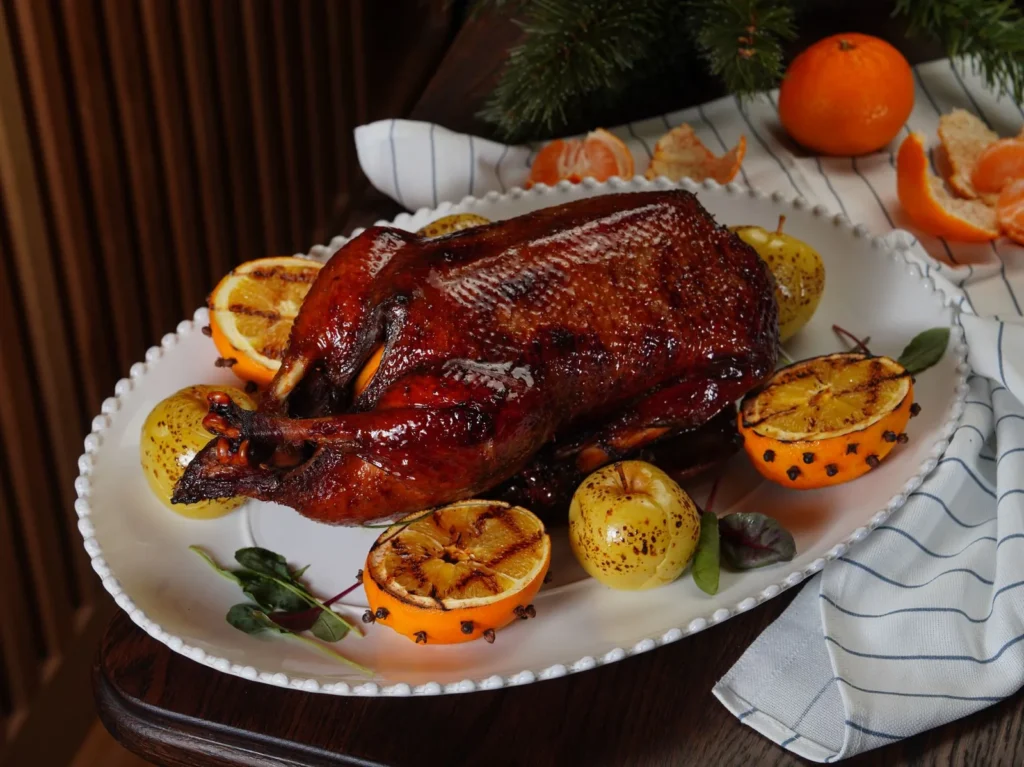
A slow cooked whole duck gives you rendered fat, crisp skin, and meat that pulls apart with a fork, all from one hands-off session in the crock. This method uses low heat over several hours so the connective tissue breaks down while the bird stays moist. You get a centerpiece that looks impressive but asks little from you once it's in the pot.
The approach works because duck carries a lot of subcutaneous fat that needs time to melt and baste the meat. A short high-heat finish at the end tightens the skin so it shatters instead of chewing. Pair the bird with a sharp fruit sauce and you've got a balanced plate without extra pans. If you enjoyed this, our pasta e lenticchie is worth trying next. Making this slow cooked whole duck at home is surprisingly straightforward once you know the key steps.
Why You'll Love These Slow Cooked Whole Duck
- Hands-off cooking that frees your oven for sides
- Rendered fat you can save for roasted potatoes
- Crisp skin from a quick broil after the long cook
- Meat that stays juicy even if you slice late
- One pot to clean, no trussing or flipping required
Ingredients You'll Need
- 1 whole duck (about 5 lb / 2.3 kg), giblets removed
- 2 tbsp kosher salt
- 1 tbsp brown sugar
- 1 tsp ground black pepper
- 1 tbsp five-spice powder
- 1 orange, quartered
- 4 garlic cloves, smashed
- 3 scallions, cut into 2-inch pieces
- 1 cup low-sodium chicken broth
- 2 tbsp soy sauce
Ingredient Substitutions
Five-spice powder: Replace the 1 tbsp with an equal amount of ground cinnamon plus 1 tsp ground ginger if you don't keep the blend. The flavor turns warmer and less complex, with a sweeter note that suits the orange. You'll lose the subtle licorice edge, so add a pinch of fennel seed if you have it. The slow cooked whole duck works well for weeknight cooking when time is limited.
Orange: Use 1 quartered apple or pear instead of the orange for a milder fruit base. The cavity steam will be less acidic, so the skin crisps a touch slower under the broiler. Expect a softer, rounder aroma with no citrus brightness. Storing leftover slow cooked whole duck correctly keeps it tasting good for days.
Soy sauce: Swap the 2 tbsp for 1 tbsp tamari plus 1 tbsp water for a gluten-free liquid seasoning. The salt level stays close, though tamari reads slightly richer and less sharp. No change to cook time is needed. For the best results with this slow cooked whole duck, read through all the steps before starting.
Chicken broth: Use 1 cup dry cider in place of broth for a fruit-forward braise. The acidity helps cut the fat, but the pot will reduce to a darker glaze. Keep the heat the same and check the broth level at the 4-hour mark. For another easy option, check out our fettuccine alfredo you.
Step-by-Step Instructions
- Pat the duck dry with paper towels, then prick the skin all over with a skewer, avoiding the meat. Place it breast-up in a 6-quart slow cooker.
- Mix salt, brown sugar, pepper, and five-spice in a bowl, then rub the blend inside the cavity and over the skin. Stuff the cavity with orange, garlic, and scallions.
- Pour broth and soy sauce around the duck, not over the skin. Cover and cook on low heat for 6 hours until the legs move freely and the thickest part reads 165°F.
- Lift the duck to a rimmed sheet pan, breast up, and pour the pot liquid into a fat separator. Broil at 500°F for 8 minutes until the skin is golden and crisp.
- Rest the duck 15 minutes before carving so the juices redistribute. Skim fat from the saved liquid and spoon it over the slices.
Pro Tips
Dry the bird uncovered in the fridge for 12 hours before cooking to pull moisture from the skin. A dry surface renders faster and crisps in less broiler time.
Save the rendered fat in a jar; it keeps in the fridge for up to 3 months and fries potatoes better than oil. Strain it through a paper filter once cool.
Use a fat separator so the broil step doesn't steam the skin with leftover liquid. Wet skin will never crisp no matter how long it sits under heat.
For even rendering, rotate the sheet pan once at the 4-minute mark under the broiler. This avoids hot-spot browning on one side of the breast.
Read the slow cooker basics if your model runs hot, since some units hit 200°F on low and shorten the window.
Common Mistakes to Avoid
Skipping the skin pricks lets fat pool under the surface and blocks crispness. Pierce every inch with a skewer so the layer can drain as it melts.
Pouring seasoned liquid over the skin instead of around it washes off the rub and steams the bird. Always add braising liquid to the pot floor, never the top.
Carving too soon loses a quarter of the juices to the board. Rest the duck the full 15 minutes before you slice.
Broiling with the cavity fruit still inside keeps steam trapped against the skin. Remove the aromatics before the high-heat finish for a dry, crisp surface.
Serving Suggestions
Slice the breast and leg, then plate over cornbread to catch the juices. The crumb soaks the fat without turning soggy for 10 minutes.
Add a sharp mustard glaze on the side to cut the richness. A teaspoon per portion balances the fat with heat.
Pair with roasted beets or a bitter green salad so the plate doesn't read only as meat. Acid and crunch keep the lard bread from feeling heavy.
Storage and Reheating
Wrap cooled meat in an airtight container and refrigerate for up to 4 days. The fat layer on top protects the slices from drying.
Freeze carved portions for up to 2 months in a vacuum bag with a spoon of rendered fat. Thaw overnight in the fridge before reheating.
Reheat in a 350°F oven until the center hits 165°F, about 20 minutes covered then 5 minutes uncovered. Never leave cooked duck out beyond 2 hours.
Recipe Variations
Citrus-Spice Version
Add 1 tsp grated lemon zest and 1 star anise to the cavity with the orange. The peel brightens the fat and the anise deepens the spice without extra salt. Expect a lighter, perfumed finish.
Smoked Version
Rub 1 tbsp smoked paprika into the skin before the slow cooker step. The low braise carries the smoke through the meat for a backyard flavor. Keep the broil time the same.
Wine-Braised Version
Replace the broth with 1 cup dry white wine plus 1 tbsp vinegar. The alcohol cooks off and leaves a tart backbone that slices clean. Use pot roast timing as a reference for liquid reduction.
Herb Version
Stuff the cavity with 4 sprigs thyme and 2 bay leaves instead of scallions. The herbs infuse the meat as it renders for a savory, woodsy note. Pull the leaves before carving.