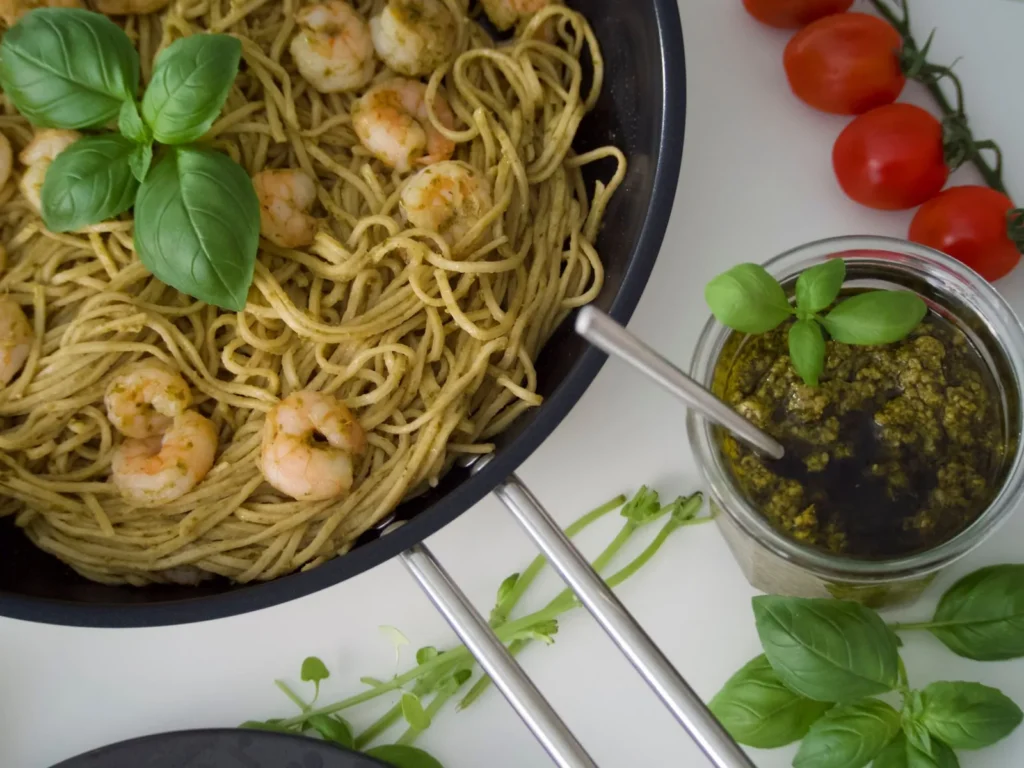
Shrimp with pesto is a fast skillet dinner that brings together sweet seared shrimp and a bright, herb-packed basil sauce in about 20 minutes. The dish works because the fat in the pesto coats each shrimp, locking in moisture while the pan builds a light glaze from the residual oil and shrimp juices. You get a meal that tastes like it took far longer than it did, with minimal cleanup and flexible serving options.
This version keeps the shrimp from turning rubbery by cooking them in a single layer over steady heat and pulling them the moment they turn opaque. The pesto goes in off the heat so the basil stays green instead of dulling from direct high temperature. Serve it over pasta, zucchini ribbons, or crusty bread and you have a complete plate. If you enjoyed this, our basil pesto you is worth trying next. Making this shrimp with pesto at home is surprisingly straightforward once you know the key steps.
Why You'll Love These Shrimp With Pesto
- Ready in 20 minutes from raw shrimp to plated dinner, which fits a weeknight without stress.
- Only one pan to wash since the sauce is stirred in after the shrimp leave the heat.
- Naturally high in protein and low in carbs if you skip the pasta and use greens.
- Uses store-bought or homemade pesto, so you control the salt and herb level.
- Works as a main over grains or as a topping for shrimp tacos night.
Ingredients You'll Need
- 1 pound large raw shrimp, peeled and deveined, tails optional
- 1/2 cup basil pesto, homemade or quality store-bought
- 2 tablespoons olive oil
- 3 cloves garlic, minced
- 1/4 teaspoon salt
- 1/8 teaspoon black pepper
- 1 tablespoon lemon juice
- 8 ounces cooked linguine or your preferred pasta
- 2 tablespoons grated parmesan
- 1 tablespoon pine nuts, toasted
Ingredient Substitutions
Basil pesto: Replace with an equal amount of sun-dried tomato pesto for a deeper, tangier profile. The tomato version has less fresh herb bite but more umami from the dried tomatoes, so cut the salt in the shrimp step by half. Expect a darker red sauce and a slightly thicker coat on the pasta. The shrimp with pesto works well for weeknight cooking when time is limited.
Olive oil: Use 2 tablespoons of avocado oil instead of olive oil for a neutral flavor and higher smoke point. Avocado oil lets you sear the shrimp a touch hotter without bitter notes, though you lose the grassy edge of olive oil. The texture stays the same but the background taste is cleaner. Storing leftover shrimp with pesto correctly keeps it tasting good for days.
Linguine: Swap the 8 ounces of linguine for 3 cups of spiralized zucchini to make the plate low-carb. Zucchini releases water as it warms, so add it after the pesto and only toss for 1 minute to avoid a soggy result. The dish becomes lighter and the shrimp stand out more.
Parmesan: Substitute 2 tablespoons of nutritional yeast for the parmesan if you need a dairy-free finish. Nutritional yeast gives a savory, cheesy note without melting into strings, and it keeps the plate vegan when paired with a dairy-free pesto. The top will look flecked rather than glossy.
Step-by-Step Instructions
- Pat the 1 pound of shrimp dry with paper towels and season with the 1/4 teaspoon salt and 1/8 teaspoon black pepper. Dry shrimp sear instead of steaming, which gives you a better surface color.
- Warm 2 tablespoons olive oil in a 12-inch skillet over medium-high heat until it shimmers, about 30 seconds. Add the shrimp in a single layer and cook 2 minutes without moving them so the bottoms turn pink with light browning.
- Add the 3 minced garlic cloves and stir; cook 1 minute until fragrant but not browned. Flip the shrimp and cook 1 minute more until they are opaque and just firm, then remove the pan from the heat.
- Stir in the 1/2 cup pesto and 1 tablespoon lemon juice off the heat, coating the shrimp. The residual warmth loosens the sauce without cooking the basil, keeping it green.
- Add the 8 ounces cooked linguine to the skillet and toss to combine, or plate the pasta first and spoon the shrimp on top. Finish with 2 tablespoons parmesan and 1 tablespoon toasted pine nuts.
Pro Tips
Buy shrimp that are already peeled and deveined if you are short on time, but check for leftover shell bits along the back before cooking. A quick rinse and pat dry prevents grit in the finished plate.
Toast the pine nuts in a dry pan over medium-low heat for 3 minutes until golden, then cool before scattering. Raw pine nuts taste waxy and dull the topping against the bright pesto.
If your pesto is thick from the fridge, loosen it with a teaspoon of the pasta cooking water before adding to the shrimp. This helps it cling to the linguine instead of clumping at the bottom of the skillet.
For a deeper sear, see the pan searing guidance on heat control before you start. A properly preheated pan is the difference between rubbery and snappy shrimp.
Common Mistakes to Avoid
Crowding the skillet makes the shrimp release water and boil instead of sear. Cook in two batches if your pan is under 12 inches so each piece touches hot metal.
Adding pesto over live heat dulls the basil to an olive-brown color and can make the sauce bitter. Always pull the pan off the burner before stirring it in, as noted in the steps above.
Overcooking past opaque-and-firm turns shrimp from tender to chewy in under a minute. Watch the curve: a loose C-shape means done, a tight O-shape means it went too far.
Serving Suggestions
Spoon the shrimp over the linguine as written, or pair with garlic butter shrimp skewers on the side for a seafood plate. A simple green salad with lemon dressing balances the rich pesto.
For a low-carb board, serve the shrimp with summer vegetables roasted alongside. The pesto also works as a spread on toasted sourdough if you want an open-faced lunch.
Top with extra parmesan and a lemon wedge so each person can brighten the plate. Shrimp with pesto holds its texture better when sauced right before eating rather than sitting sauced for an hour.
Storage and Reheating
Refrigerate leftovers in an airtight container for up to 3 days, keeping the shrimp and pasta together so the pesto stays distributed. Do not leave the cooked dish out for more than 2 hours at room temperature.
Reheat in a skillet over low heat with a splash of water, stirring until the shrimp reach 165°F internally. Avoid the microwave if you can, since it tightens the shrimp proteins and makes them tough.
The dish does not freeze well because pesto separates and the shrimp turn mealy after thawing. Make a fresh batch instead of freezing, which takes less than the defrost time anyway.
Recipe Variations
Spicy Version
Add 1/2 teaspoon red pepper flakes with the garlic in step 3 for a warm bite that cuts the pesto richness. Use a hot homemade pesto with chili oil if you want the heat woven through the sauce. The shrimp stay sweet underneath the spice and pair well with plain rice.
Chorizo Mix
Brown 4 ounces of sliced chorizo before the shrimp and use the rendered fat instead of part of the olive oil. The chorizo shrimp style adds smoky depth, so reduce the salt and add lemon at the end to lift it. Expect a darker pan glaze and a more filling plate.
Grilled Option
Thread the seasoned shrimp on skewers and grill over medium-high heat for 2 minutes per side, then toss with pesto off the grill. This adds light char lines and a smoky note the skillet cannot match. Serve over fresh basil pesto pasta for a summer version.
Creamy Twist
Stir 2 tablespoons of heavy cream into the pesto off the heat for a softer, restaurant-style sauce that coats the linguine thickly. The cream tones down the garlic sharpness and makes the plate feel richer. Use low heat only if you must warm it, since cream can break if boiled.