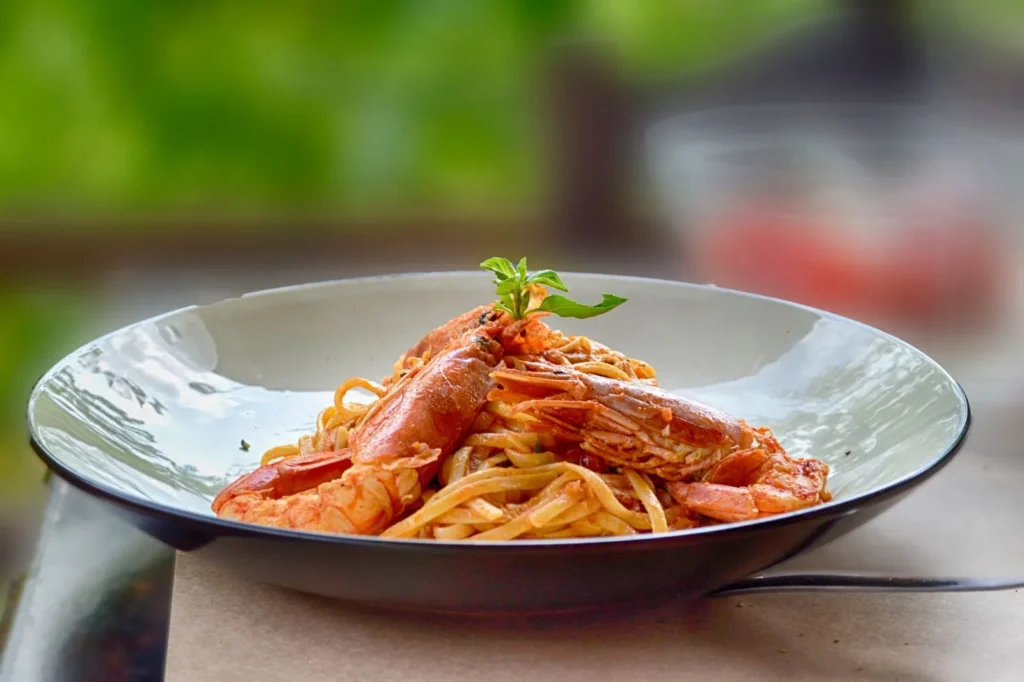
Shrimp marinara with spaghetti is a weeknight Italian dinner that brings tender shellfish and a garlicky tomato sauce together over a bed of pasta. The dish cooks in about 30 minutes from start to finish, which makes it realistic on a busy evening when you still want something that tastes like a real meal. You get a balanced plate of lean protein, slow-simmered tomatoes, and carbohydrates without standing at the stove for hours.
The sauce here is built from canned crushed tomatoes, so you don't need peak-season fresh tomatoes to get a deep red base. Shrimp cook in just a few minutes, so the key is adding them at the end so they stay springy rather than turning rubbery. If you like, pair the plate with a side of caprese flatbread for a light starter. Making this shrimp marinara with spaghetti at home is surprisingly straightforward once you know the key steps.
Why You'll Love These Shrimp Marinara With Spaghetti
- Ready in 30 minutes using mostly pantry and freezer staples
- One saucepan plus one pasta pot keeps cleanup short
- Light enough for warm months but comforting in cold ones
- Scales easily from two servings to a family of four
- Uses affordable shell-on or peeled shrimp with equal success
Ingredients You'll Need
- 12 oz spaghetti
- 1 lb large shrimp, peeled and deveined
- 2 tbsp olive oil
- 4 cloves garlic, minced
- 1/2 tsp red pepper flakes
- 28 oz canned crushed tomatoes
- 1/2 cup dry white wine
- 1 tsp salt, divided
- 2 tbsp chopped fresh parsley
- 1 tbsp lemon juice
Ingredient Substitutions
Dry white wine: Replace the 1/2 cup wine with an equal amount of chicken broth plus 1 tsp of white wine vinegar. The broth keeps the sauce from tasting flat while the vinegar returns a little acidity that wine normally provides. You'll lose some of the fruity notes, so add the lemon juice at the end as written to keep the brightness. The shrimp marinara with spaghetti works well for weeknight cooking when time is limited.
Crushed tomatoes: Use 28 oz of whole peeled tomatoes that you break up with a spoon if crushed aren't on hand. Whole tomatoes give a slightly chunkier sauce and need about 5 extra minutes of simmering to break down. The flavor is close, though you should crush them well so the shrimp sit in a sauce rather than float on tomato pieces. Storing leftover shrimp marinara with spaghetti correctly keeps it tasting good for days.
Spaghetti: Swap in linguine or fettuccine using the same 12 oz weight for a wider noodle. These shapes hold the same sauce volume but feel heavier per bite, so cook them to the same al dente window noted on the package. Avoid short pasta like penne if you want the classic long-strand presentation. For the best results with this shrimp marinara with spaghetti, read through all the steps before starting.
Large shrimp: Use 1 lb of medium shrimp and cut the final simmer to 2 minutes since they are smaller and overcook faster. You'll get more pieces per bite, which some people prefer for even sauce coverage. Keep an eye on the curl — they are done when they form a loose C rather than a tight O. If you enjoyed this, our california spaghetti salad is worth trying next.
Step-by-Step Instructions
- Bring a large pot of water to a boil and add 1/2 tsp salt. Cook 12 oz spaghetti until al dente, about 9–11 minutes, then drain and set aside.
- Heat 2 tbsp olive oil in a wide saucepan over medium-low heat. Add 4 minced garlic cloves and 1/2 tsp red pepper flakes, stirring for 1 minute until fragrant but not browned.
- Pour in 1/2 cup dry white wine and raise to medium heat. Simmer 3 minutes until the liquid reduces by half and the sharp alcohol smell is gone.
- Add 28 oz crushed tomatoes and 1/2 tsp salt. Lower to medium-low heat and simmer 10 minutes until the sauce thickens and turns deep red.
- Add 1 lb shrimp in a single layer and cook 3 minutes per side over medium heat until they turn pink and form a loose C shape.
- Stir in drained spaghetti, 2 tbsp parsley, and 1 tbsp lemon juice. Toss 1 minute over low heat so the noodles coat evenly, then serve immediately.
Pro Tips
Pat the shrimp dry with paper towels before they hit the pan so they sear instead of steaming in their own liquid. A wet shrimp lowers the pan temperature and gives you a gray surface rather than a clean pink one.
Reserve 1/2 cup of pasta water before draining in case the sauce tightens as it rests. A splash loosens the coating without diluting flavor the way plain water would.
Build the garlic slowly over medium-low heat as gentle aromatic cooking keeps it sweet instead of bitter. Burnt garlic spreads a harsh note through the whole sauce that no amount of sugar fixes.
Devein the shrimp even if the package says pre-cleaned, since a missed vein adds a gritty bite. A small paring knife dragged along the back removes it in seconds.
Common Mistakes to Avoid
Adding shrimp too early is the most common error, because they keep cooking in hot sauce and turn tough. Wait until the tomatoes are fully simmered, then give them only the short time listed.
Overcooking the pasta before it meets the sauce leaves you with mushy noodles after the final toss. Pull the spaghetti at al dente, since it picks up heat and softens during the last minute in the pan.
Skipping the wine reduction step leaves a raw alcohol edge in the finished dish. Those 3 minutes of simmering burn off the harsh notes and concentrate the fruitiness that balances the tomatoes. For another easy option, check out our california spaghetti salad.
Serving Suggestions
Top each bowl with extra parsley and a light drizzle of olive oil for a restaurant-style finish. A wedge of lemon on the side lets anyone sharpen the plate to taste.
Serve with arrabbiata sauce pasta as a second option if you're feeding someone who wants extra heat. Crusty bread on the side soaks up the remaining tomato sauce without waste.
Storage and Reheating
Place leftovers in an airtight container and refrigerate for up to 3 days. Cooked shrimp and tomato sauce hold safely within that window if chilled within 2 hours of cooking.
Reheat in a skillet over medium-low heat until the shrimp reach 165°F internally and the sauce steams. Avoid the microwave if you can, since it hotspots the seafood and makes the texture chewy.
This dish does not freeze well because the shrimp turn mealy after a freeze-thaw cycle. The sauce alone can be frozen for up to 2 months, then fresh shrimp added at reheating.
Recipe Variations
Spicy Version
Double the red pepper flakes to 1 tsp and add 1/4 tsp cayenne with the garlic. The heat sits in the background and builds per bite rather than overwhelming the tomato sweetness. Serve with extra lemon to cut the burn if needed.
Chorizo Add-In
Brown 4 oz sliced chorizo before the garlic for a smoky pork base, then continue with the recipe as written. The oil from the sausage flavors the tomatoes, so cut the olive oil to 1 tbsp. Try this alongside shrimp tapas for a themed dinner.
Brothy Style
Add 1 cup of seafood stock with the tomatoes and skip reducing as far for a soupier result. This version works well with a shorter pasta or even ladled over toasted bread. It changes the plate from a coated noodle dish to a spoonable bowl.
Garlic Butter Shrimp
Replace the olive oil and tomato base with 3 tbsp butter and double the garlic for a white-sauce spin, using garlic butter shrimp as a flavor reference. The result is richer and lacks the red acidity, so add the lemon juice to keep it from feeling heavy.