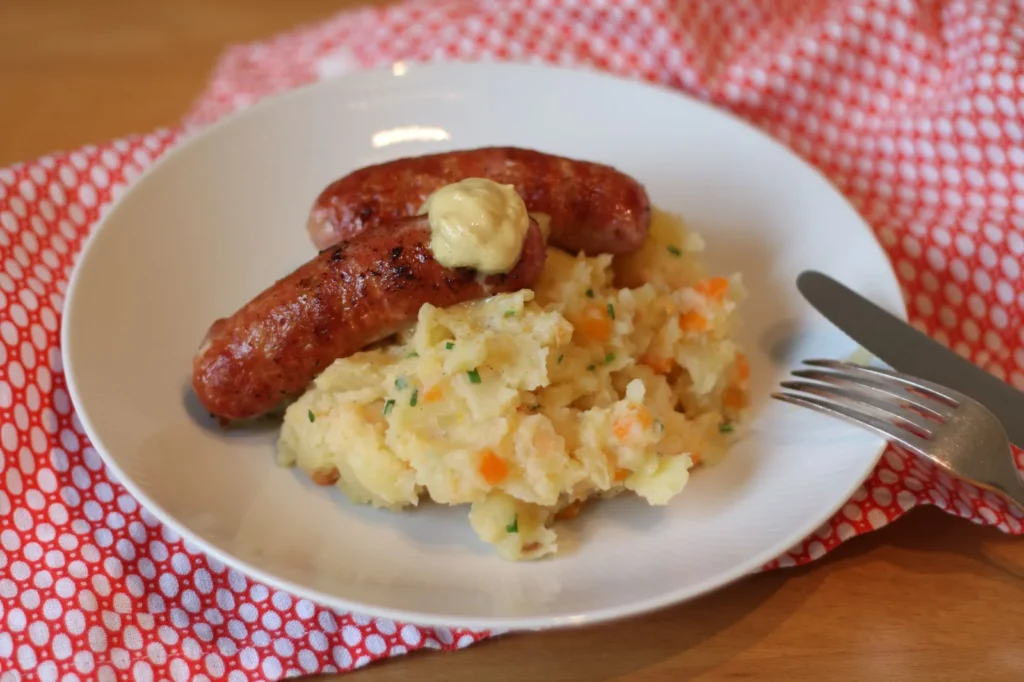
The sausage potato leek dijon mustard hash recipe below is a single-skillet meal built for a hearty breakfast or relaxed dinner. It pairs browned sausage with soft leeks and crisp potato cubes, then ties everything together with a sharp dijon finish. You get a balanced plate of protein, starch, and allium sweetness without juggling several pans.
A good hash depends on patience at the stove more than fancy technique. The potatoes need room to brown, the leeks need to soften without burning, and the mustard goes in late so its tang stays bright. This version keeps the steps plain and the result reliable for a weeknight cook. If you enjoyed this, our potato gnocchi is worth trying next. Making this sausage potato leek dijon mustard hash at home is surprisingly straightforward once you know the key steps.
Why You'll Love These Sausage Potato Leek Dijon Mustard Hash
- One pan means fewer dishes and a built-in sauce from the rendered fat.
- Leeks add a mild sweetness that balances the salty sausage and sharp mustard.
- Potatoes crisp on the outside while staying tender in the center.
- Works as breakfast with eggs or as a standalone dinner with bread.
Ingredients You'll Need
- 450 g (1 lb) pork breakfast sausage, casings removed
- 700 g (about 3 medium) Yukon Gold potatoes, cut into 1.5 cm cubes
- 2 medium leeks, white and light green parts, sliced thin
- 2 tbsp dijon mustard
- 2 tbsp olive oil
- 1/2 tsp salt
- 1/4 tsp black pepper
- 1/4 cup water
Ingredient Substitutions
Pork breakfast sausage: Replace with an equal weight of chicken sausage for a lighter, less fatty version. Chicken sausage renders less fat, so add 1 extra tbsp of olive oil at the start to brown the potatoes properly. Expect a milder flavor and slightly less crisp edges on the meat. The sausage potato leek dijon mustard hash works well for weeknight cooking when time is limited.
Yukon Gold potatoes: Use an equal weight of red potatoes if that is what you have. Red potatoes hold their shape better and stay waxy, giving a denser bite rather than a fluffy center. You may need to extend the covered cook time by 2 minutes to soften the cubes through. Storing leftover sausage potato leek dijon mustard hash correctly keeps it tasting good for days.
Leeks: Swap with 1 large sweet onion, thinly sliced, for a stronger, more pungent base. Onions brown faster than leeks, so lower the heat to medium-low heat during the soften step to avoid scorching. The finished hash will taste sharper and less delicate. For the best results with this sausage potato leek dijon mustard hash, read through all the steps before starting.
Dijon mustard: Use 1 tbsp whole-grain mustard plus 1 tbsp water if you want visible seeds and a lighter punch. Whole-grain mustard is less smooth, so stir it with the water first to coat the hash evenly. The flavor is earthier and slightly less acidic than straight dijon.
Step-by-Step Instructions
- Heat 1 tbsp olive oil in a 30 cm (12 inch) skillet over medium heat. Add the sausage and break it with a spoon until it is browned and no pink remains, about 6–8 minutes. Move it to a plate, leaving the fat in the pan.
- Add the remaining 1 tbsp olive oil to the pan. Place the potato cubes in a single layer and cook undisturbed for 4 minutes to start a crust. Stir, then continue at medium heat for 5 minutes until lightly golden.
- Pour in 1/4 cup water, cover the skillet, and lower to medium-low heat. Steam 6–8 minutes until a knife slides into a cube with no resistance. Uncover and let excess moisture cook off for 2 minutes.
- Add the sliced leeks, salt, and pepper. Cook at medium heat for 4–5 minutes, stirring often, until the leeks are soft and bright but not browned.
- Return the sausage to the pan. Push the dijon mustard through the mixture until every piece is coated and the pan looks glossy, about 1 minute over medium-low heat. Serve immediately.
Pro Tips
Cut the potatoes to a uniform 1.5 cm size so they finish cooking at the same time. A mix of big and small cubes leaves you with burnt edges on the small ones before the large ones soften.
Dry the leeks well after washing. Trapped grit and water steam the vegetable instead of letting it soften cleanly in the fat, and grit ruins the texture of the finished hash.
Let the pan sit uncovered for the final 2 minutes before adding mustard. This drives off steam so the dijon clings instead of turning into a loose puddle at the bottom of the skillet.
For a deeper crust, press the potatoes flat with a spatula after the first 4 minutes and leave them alone. You can read more about pan contact browning at The Kitchn for technique detail.
Common Mistakes to Avoid
Crowding the pan with all the potatoes at once stops browning and gives you steamed cubes. Cook in two batches if your skillet is under 30 cm so the pieces actually crisp.
Adding dijon too early exposes it to high heat that dulls its sharpness and can make the sauce bitter. Keep it for the last minute with the heat lowered.
Skipping the covered steam step leaves raw centers inside golden potato shells. The short water steam is what makes the inside tender without over-browning the outside.
Serving Suggestions
Top each portion with a fried egg for a breakfast plate where the yolk sauces the hash. A side of potato scones adds a soft bread element that soaks up the mustard coating.
For dinner, serve with crusty bread and a simple green salad. The sausage and peppers make a good companion dish if you are feeding more people from one menu.
Storage and Reheating
Cool the hash to room temperature within 2 hours, then store in an airtight container in the fridge for up to 3 days. Reheat in a skillet over medium heat until the center reaches 74°C / 165°F for food safety with the sausage. This dish does not freeze well because the leeks turn mushy on thaw.
Recipe Variations
Spicy Version
Stir 1/2 tsp crushed red pepper into the sausage as it browns. The heat builds through the fat and lifts the dijon tang without covering the leek sweetness. Serve with a cooling spoon of plain yogurt if the burn runs high.
Smoky Rib Style
Replace the breakfast sausage with smoked sausage and add 1 tsp paprika with the leeks. The mustard ribs technique inspired this swap for a backyard flavor indoors. Expect a darker, smokier pan sauce.
Leek Risotto Side
Spoon the hash next to leek risotto instead of eating it alone for a double leek dinner. Keep the potato cubes slightly larger so they read as distinct from the rice. The two textures make the plate feel composed rather than heavy.
Twice-Baked Pair
Plate the hash with twice baked potato halves for a potato-forward spread. Lower the salt in the hash by 1/4 tsp since the side brings its own cheese and butter. This works best as a brunch board for four people.