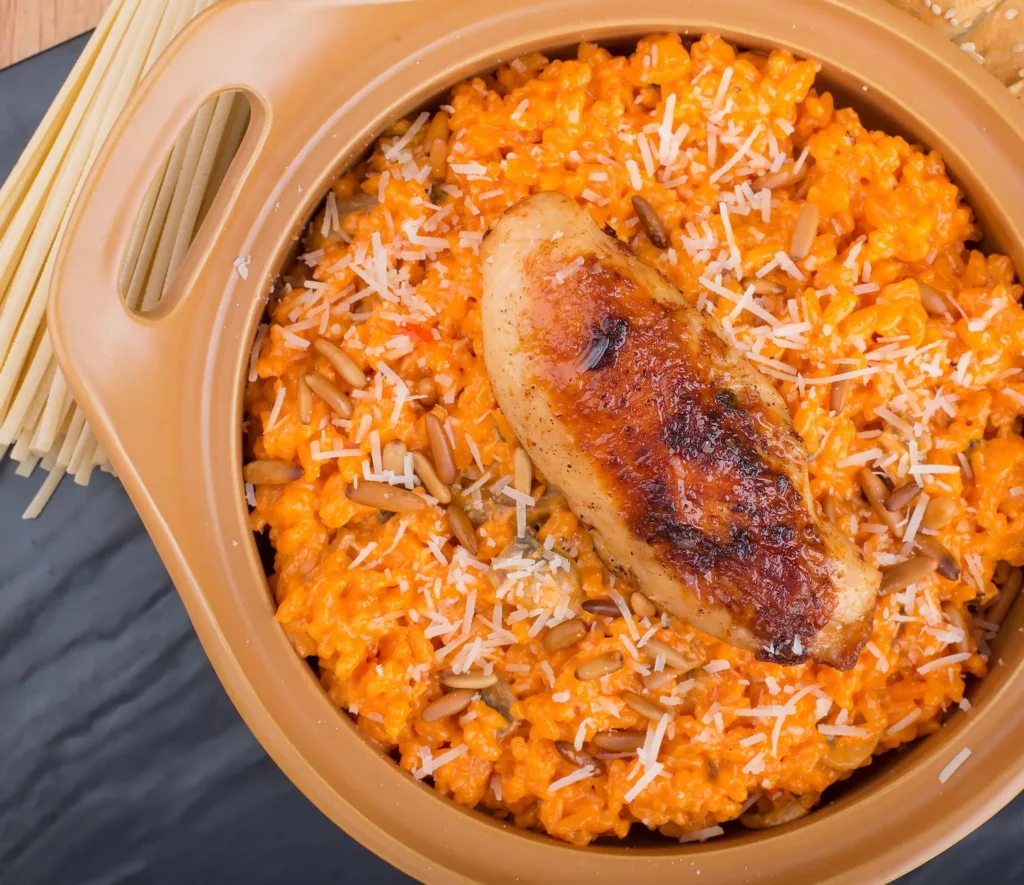
Rosemary chicken with parmesan orzo is a one-skillet dinner where seared chicken thighs sit over creamy, cheese-coated rice-shaped pasta. The rosemary gives the chicken a piney, woodsy note while the orzo cooks in the same pan to soak up the rendered fat and stock. You get a complete hot meal with minimal cleanup and a texture contrast between crisp chicken skin and soft pasta.
This version uses bone-in chicken for deeper flavor and finishes the orzo on the stovetop so it stays al dente instead of mushy. It's built for a weeknight but reads like a sit-down meal. If you like chicken parmigiana, the parmesan theme here will feel familiar. Making this rosemary chicken with parmesan orzo at home is surprisingly straightforward once you know the key steps.
Why You'll Love These Rosemary Chicken With Parmesan Orzo
- One pan means fewer dishes and the pasta picks up the chicken drippings.
- Fresh rosemary holds up to high heat and doesn't turn bitter like delicate herbs.
- Orzo cooks faster than long pasta and gives a risotto-like feel without constant stirring.
- Bone-in thighs stay juicy while the skin crisps, unlike lean breast that dries out.
- Leftovers reheat into a packed lunch that still tastes like dinner, not cafeteria food.
Ingredients You'll Need
- 4 bone-in, skin-on chicken thighs (about 1.5 lb / 680 g) — skin crisps and bones add flavor
- 2 tbsp olive oil — for searing without smoking
- 3 garlic cloves, minced — raw aromatic base
- 1 tbsp fresh rosemary, finely chopped — woodsy herb, stripped from stems
- 1 cup orzo pasta (200 g) — rice-shaped wheat pasta
- 2.5 cups chicken stock (600 ml) — cooks the orzo and builds sauce
- 0.75 cup grated parmesan (75 g) — fine grate melts smoothly
- 0.5 tsp salt — divided across chicken and pasta
- 0.25 tsp black pepper — coarse grind
- 1 tbsp lemon juice — added at end to cut richness
Ingredient Substitutions
Olive oil: Replace with an equal amount of avocado oil if you need a higher smoke point for searing. Avocado oil stays stable at medium-high heat and won't turn acrid the way extra-virgin can. The flavor is more neutral, so the rosemary carries more of the aroma. The rosemary chicken with parmesan orzo works well for weeknight cooking when time is limited.
Bone-in chicken thighs: Swap for 4 boneless skinless thighs to cut cook time by about 5 minutes. You lose the crisp skin layer and some rendered fat, so add 1 tsp butter when toasting the orzo. The meat cooks through faster but dries quicker if left unattended. Storing leftover rosemary chicken with parmesan orzo correctly keeps it tasting good for days.
Chicken stock: Use vegetable stock in equal volume for a lighter base that still cooks the orzo. Vegetable stock lacks gelatin, so the finished sauce is thinner and less glossy. Compensate with 2 extra tbsp parmesan for body. For the best results with this rosemary chicken with parmesan orzo, read through all the steps before starting.
Orzo pasta: Replace with pearled farro at a 1:1 ratio for a chewier, nuttier grain. Farro needs 25–30 minutes simmer versus 9 for orzo, so add stock in stages. The dish becomes heavier and less creamy but holds up better as leftovers. If you enjoyed this, our chicken marengo step is worth trying next.
Step-by-Step Instructions
- Pat chicken thighs dry and season both sides with half the salt and all the pepper. Heat medium-high heat with olive oil in a 12-inch skillet until the oil shimmers.
- Place chicken skin-side down and sear 6 minutes without moving until the skin is golden and crispy. Flip and cook 4 minutes, then remove to a plate.
- Lower to medium-low heat and add garlic and rosemary, stirring 30 seconds until fragrant but not browned.
- Add orzo and toast 2 minutes, stirring, until edges turn translucent and it smells nutty.
- Pour in chicken stock and remaining salt, scrape the pan bottom, and nestle chicken back skin-up. Simmer 9 minutes until orzo is tender and chicken hits 165°F at the bone.
- Stir in parmesan and lemon juice off heat until the sauce tightens. serve immediately while the cheese is silky.
Pro Tips
Dry the chicken skin thoroughly with paper towels before searing so it releases from the pan instead of tearing. Moisture is the enemy of crisp rendering and leads to steamed meat.
Toast the orzo in the chicken fat before adding stock to build a nutty base flavor that plain boiling misses. This step takes 2 minutes and changes the whole dish.
Grate parmesan from a block rather than using pre-shredded coatings that contain cellulose. Block cheese melts into a smooth sauce instead of clumping. See knife skills for faster prep.
Rest the seared chicken on a warm plate while the orzo finishes so the juices redistribute. Cutting too early spills moisture onto the board instead of staying in the meat.
Common Mistakes to Avoid
Crowding the skillet while searing causes the chicken to steam and the skin stays pale and soft. Use a 12-inch pan or cook in batches if needed.
Adding parmesan over high heat makes it seize into strings instead of a creamy coat. Pull the pan off the burner before stirring it in.
Skipping the lemon juice leaves the dish feeling heavy after the cheese and oil. The acid tightens the sauce and brightens the rosemary.
Serving Suggestions
Plate the chicken thigh on top of a scoop of orzo with a wedge of lemon on the side. A simple eggplant rollatini works as a vegetable-forward starter before this rich main.
Pour a glass of moscato sangria to balance the herbs and cheese. The fruit notes cut the fat without overwhelming the rosemary.
Storage and Reheating
Cool the dish within 2 hours and store in an airtight container up to up to 3 days in the fridge. The orzo thickens as it chills because the starch continues to absorb liquid.
Reheat in a covered skillet with 2 tbsp water over medium-low heat until the chicken reaches 165°F internally. Microwave reheating works but softens the skin past recovery.
Freezing is not advised because the cooked orzo turns grainy after thawing. The cheese sauce also separates under freeze cycles.
Recipe Variations
Lemon Pepper Version
Add 1 tsp lemon zest with the rosemary and double the lemon juice at the end. The result is brighter and more acidic, pairing well with a green side salad.
Caesar Chicken Twist
Swap rosemary for 2 tbsp caesar dressing mixed into the stock for a caesar chicken flavor profile. The orzo picks up anchovy and garlic notes without extra steps.
Sheet Pan Method
Roast the chicken at 180°C / 350°F separately and boil orzo on the stove, then combine with parmesan. This suits batch cooking and avoids skillet splatter. You lose some rendered-fat absorption in the pasta.
Milanese Style
Use chicken milanese cutlets seared plain, then serve over the orzo instead of thighs. The crisp breading adds crunch but won't crisp again after sitting on warm pasta.