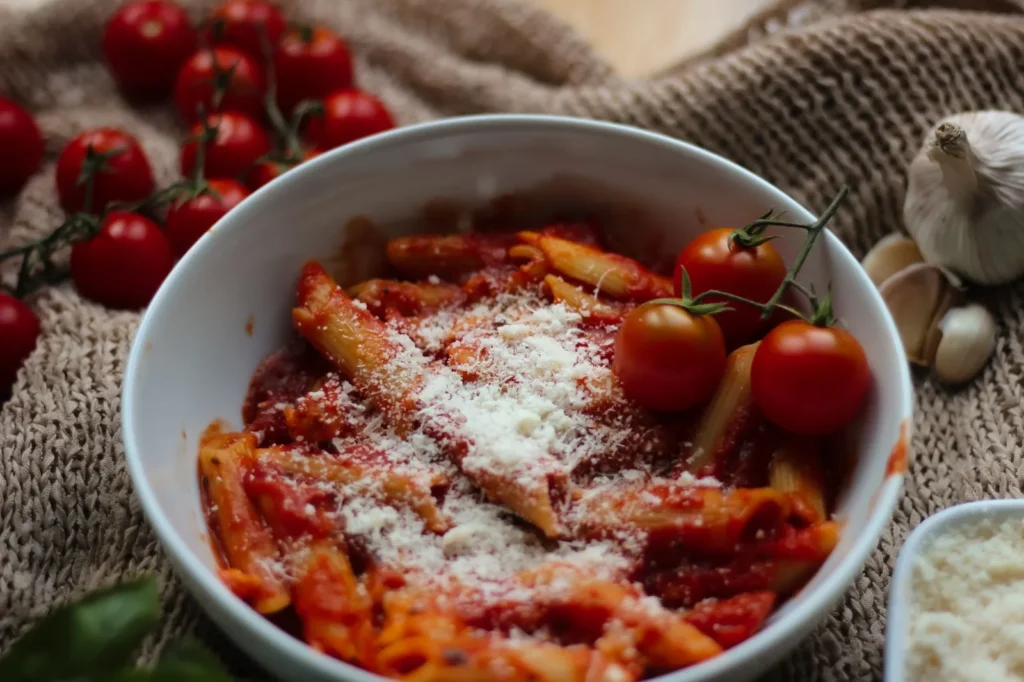
The roasted asparagus and garlic penne pasta you'll find below is a weeknight-friendly Italian-style dinner built around two simple roasting techniques that concentrate flavor without any cream or heavy sauce. You get penne cooked to a firm bite, tossed with asparagus that's browned at the tips and a mashed roasted garlic that coats every strand. This is a practical recipe with exact temperatures and timing so the result is repeatable.
What makes the dish work is the contrast between the grassy snap of asparagus and the mellow, almost nutty sweetness that garlic develops in the oven. Because the vegetables roast while the pasta boils, the whole thing comes together in about 30 minutes with one sheet pan and one pot. You end up with a clean, savory plate that isn't weighed down by cheese or butter unless you choose to add them. Making this roasted asparagus and garlic penne pasta at home is surprisingly straightforward once you know the key steps.
If you already keep penne, asparagus, and a head of garlic in the kitchen, you have most of what you need. The method scales easily for four people and leaves almost no fussy sauce work. Below you'll see exactly how to roast the garlic so it doesn't burn and how to time the pasta so nothing sits and turns slack. The roasted asparagus and garlic penne pasta works well for weeknight cooking when time is limited.
Why You'll Love These Roasted Asparagus And Garlic Penne Pasta
- Roasting the garlic at 200°C / 400°F removes its raw bite and turns it into a soft, spreadable paste.
- Asparagus gets a golden and crispy tip while staying tender at the base, instead of steaming into mush.
- The dish uses one roasting pan and one pasta pot, so cleanup stays minimal on a busy night.
- It's built from pantry staples plus one vegetable, so no special shopping trip is required.
- You control the fat level: the base sauce is olive oil, and cheese is optional at the table.
Ingredients You'll Need
- 300 g penne pasta – standard semolina shape holds the light oil coating better than thin strands.
- 1 bunch asparagus (about 400 g), woody ends snapped off – look for firm stalks with tight tips.
- 1 whole head garlic – roasted whole so the cloves soften and sweeten.
- 4 tbsp extra-virgin olive oil, divided – 2 tbsp for roasting, 2 tbsp for the toss.
- 1/2 tsp fine salt, plus more for the pasta water – draws moisture and seasons the vegetables.
- 1/4 tsp cracked black pepper – adds a mild heat to balance the sweet garlic.
- 30 g grated parmesan, optional – stirred in at the end for a salty, savory finish.
- 1 tbsp lemon juice, optional – brightens the oil coating and cuts the richness.
Ingredient Substitutions
Extra-virgin olive oil: Replace with an equal amount of avocado oil if you want a more neutral taste and a higher smoke point. Avocado oil won't add the peppery note of olive oil, so the finished roasted asparagus and garlic penne pasta tastes cleaner and slightly less fruity. The roasting temperature stays the same, but the final toss will look glossier and less green-tinged.
Penne pasta: Use an equal weight of rigatoni if penne isn't available, since the wider tube also catches the garlic paste. Rigatoni needs about 1 minute longer to reach the same firm bite because of its thicker wall. Keep the boil water well salted so the larger shape seasons through.
Asparagus: Swap in 400 g of green beans, trimmed, for a similar snap and roasting time. Green beans brown less at the tip and stay crunchier, so the dish loses some of the soft roasted flavor but gains a brighter color. Spread them in a single layer or they'll steam instead of roast.
Parmesan: Use 25 g of nutritional yeast for a dairy-free version with a comparable salty, cheesy note. Nutritional yeast doesn't melt, so the coating stays slightly grainy rather than creamy. Add it with the lemon juice so it sticks to the oil on the pasta.
Step-by-Step Instructions
- Heat the oven to 200°C / 400°F. Slice the top off the garlic head, place it on a square of foil, drizzle with 1 tbsp olive oil, and wrap it closed. Roast for 25–30 minutes until the cloves feel soft when pressed.
- While the garlic roasts, toss the asparagus with 1 tbsp olive oil, salt, and pepper on a sheet pan. Spread in one layer so the stalks brown instead of steaming.
- Bring 3 liters of water to a rolling boil, add 1 tbsp salt, then the penne. Cook for 10–11 minutes until al dente with a firm center, then drain, reserving 1/2 cup of the water.
- Add the asparagus to the oven with the garlic for the last 12 minutes of roasting, until the tips are golden and crispy and the stalks bend but don't snap.
- Squeeze the soft garlic from its skin into a large bowl, mash with a fork, and whisk in the remaining 2 tbsp olive oil to form a loose paste.
- Add the drained penne to the bowl with the garlic paste and toss, adding splashes of reserved pasta water until the coating looks glossy, not dry.
- Fold in the roasted asparagus, then the parmesan and lemon juice if using. Taste and add salt before serve immediately while warm.
Pro Tips
Roast the garlic in the foil packet exactly as written so the cloves steam in their own moisture and don't dry out. For a deeper look at gentle heat control, see the slow roasting guide from Simply Recipes.
Cut asparagus stalks thicker than 1 cm in half lengthwise so they roast at the same rate as thinner ones. Pair the plate with roasted cherry tomato pasta if you want a second vegetable-forward noodle dish.
Save the pasta water before draining, since its starch is what turns the garlic oil into a sauce. A penne puttanesca uses the same trick with a tomato base if you want to compare.
Don't skip the lemon juice if you're omitting cheese, because the acid keeps the oil from feeling heavy. The lemon garlic shrimp pasta shows the same brightening move with seafood.
Common Mistakes to Avoid
Crowding the sheet pan is the main reason asparagus steams instead of roasting, so use a pan with space between stalks. If the pan is full, split the batch or the tips won't brown.
Overcooking the penne before the vegetables finish means a soft, gluey noodle by the time you toss. Drain it at a firm bite since it keeps cooking from the warm garlic paste.
Adding cold roasted garlic straight from the fridge makes the oil seize and the coating clump. Use the cloves warm, or mash them with a little hot pasta water first.
Serving Suggestions
Plate the pasta in shallow bowls so the asparagus lies on top rather than getting buried. A garlic knots on the side works because it repeats the roasted garlic note without adding a heavy sauce.
For a fuller table, add a simple green salad dressed with the same lemon juice and oil used in the pasta. The pasta salad makes a cold contrast if you're serving a group.
Storage and Reheating
Keep leftovers in an airtight container in the fridge for up to 3 days. The asparagus softens a little but the garlic oil keeps the noodles from sticking.
Reheat in a skillet over medium-low heat with a splash of water until steaming, about 4 minutes, since the microwave makes the asparagus limp. This roasted asparagus and garlic penne pasta doesn't freeze well because the asparagus turns watery when thawed.
Recipe Variations
Shrimp Addition
Add 250 g peeled shrimp to the sheet pan with the asparagus for the last 6 minutes of roasting. The shrimp pick up the garlic oil and turn opaque and firm. You get a fuller protein plate that still uses the same roasting pan and timing.
Spicy Version
Stir 1/2 tsp chili flakes into the garlic paste before tossing the penne. The heat sits in the oil and coats every strand evenly. This version pairs well with the prawn pil pil if you like garlic-forward heat.
Cheesy Bake
Transfer the tossed pasta to a baking dish, top with 50 g extra parmesan, and broil for 5 minutes until bubbly. The top crisps while the inside stays tender. It changes the dish from a quick toss to a fitted bake, so plan an extra 10 minutes.
Vegan Swap
Omit parmesan and use nutritional yeast as noted in substitutions, then finish with toasted pine nuts for texture. The result is dairy-free but still savory from the roasted garlic. A pasta with celery gives another vegan noodle option.