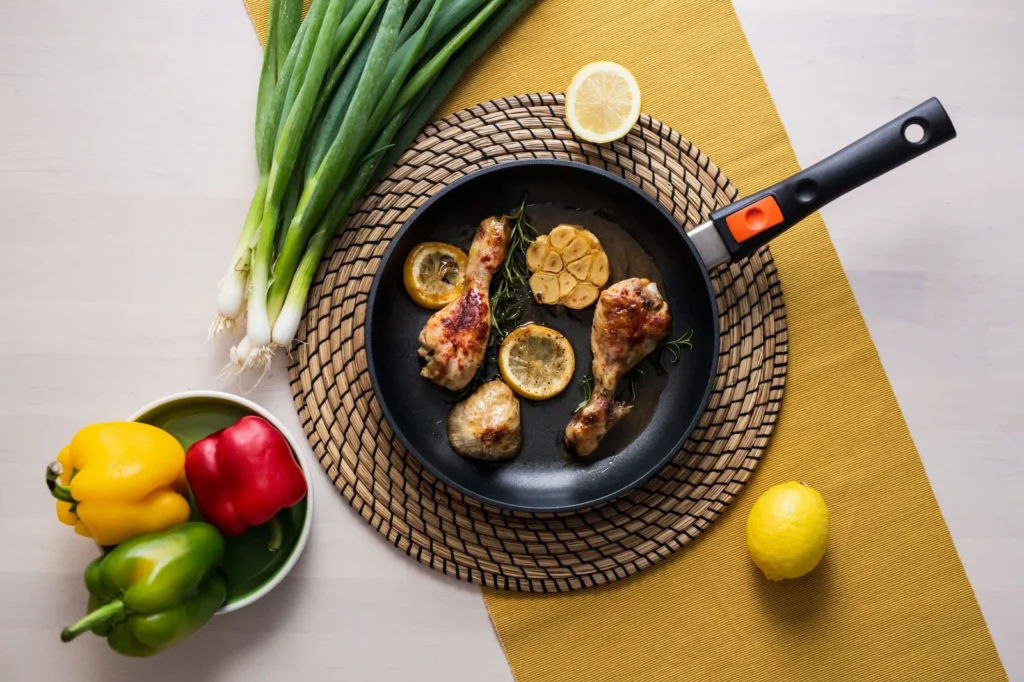
Pan roasted chicken with lemon juice is a straightforward skillet dinner that gives you crisp skin and a bright, acidic pan sauce without any oven time. The method relies on steady stovetop heat, a heavy pan, and fresh lemon to cut through the rendered fat. You get a complete protein-forward meal from one burner in about 35 minutes.
The appeal is in the contrast: the chicken skin turns golden and crispy while the meat stays juicy, and the lemon juice deglazes the browned bits into a sauce you'll want to spoon over everything. It's a flexible base that pairs with almost any vegetable or grain you already have. This version keeps the ingredient list short so the lemon stays the star. If you enjoyed this, our lemon chicken is worth trying next. Making this pan roasted chicken with lemon juice at home is surprisingly straightforward once you know the key steps.
Why You'll Love These Pan Roasted Chicken With Lemon Juice
- One pan means fewer dishes and a built-in sauce from the browned bits.
- Fresh lemon juice keeps the flavor clean rather than heavy or creamy.
- Boneless thighs cook in under 15 minutes once the pan is hot.
- The recipe scales easily from two portions to six with the same steps.
- Leftovers reheat well and work cold over salad the next day.
Ingredients You'll Need
- 4 boneless, skin-on chicken thighs (about 700 g) — skin-on gives the crisp texture; bone-in adds 5 minutes to cook time
- 2 tablespoons olive oil — neutral enough to let lemon lead
- 1/2 teaspoon fine salt — seasons the skin before searing
- 1/4 teaspoon black pepper — fresh cracked holds up better under heat
- 3 cloves garlic, smashed — left whole so it softens without burning
- 1/4 cup fresh lemon juice (about 2 lemons) — bottled lacks the oils from the zest
- 1 tablespoon lemon zest — adds aromatic lift the juice alone misses
- 2 tablespoons unsalted butter — finishes the sauce with shine
- 1 teaspoon fresh thyme leaves — optional but balances the acid
Ingredient Substitutions
Olive oil: Replace with an equal amount of avocado oil if you need a higher smoke point. Avocado oil stays stable at medium-high heat longer than olive oil, so the skin crisps without a burnt note. The flavor is more neutral, so add an extra pinch of salt to compensate. The pan roasted chicken with lemon juice works well for weeknight cooking when time is limited.
Boneless skin-on thighs: Use boneless skinless thighs if that's what you have, but expect less crispness. Skinless pieces brown in 5 minutes per side and dry faster, so drop the heat to medium and check the center earlier. You'll lose the rendered fat that builds the sauce, so add 1 tablespoon butter at the start.
Fresh thyme: Swap for 1/2 teaspoon dried oregano if thyme isn't available. Dried oregano is more pungent, so use less and add it with the garlic to wake it up in the oil. The sauce takes a Mediterranean turn rather than a light herbal one.
Unsalted butter: Use 2 tablespoons olive oil instead for a dairy-free finish. The sauce will be thinner and less glossy, and you lose the round mouthfeel butter gives the lemon. Compensate with an extra 1/2 teaspoon lemon zest for aroma.
Step-by-Step Instructions
- Pat the chicken thighs dry with paper towels and season the skin side with salt and pepper. Dry skin is what allows the fat to render instead of steam, so don't skip this step.
- Set a 12-inch stainless or cast-iron skillet on medium-low heat and add the olive oil. Warm the oil for 1 minute until it shimmers but doesn't smoke.
- Place the thighs skin-side down and press lightly with a spatula. Cook 8 to 10 minutes without moving them until the skin is golden and crispy and releases on its own.
- Flip the thighs, add the smashed garlic to the oil around them, and cook 5 minutes more until the thickest part reads 165°F / 74°C. Move garlic if it browns too fast.
- Pour in the lemon juice and zest, scraping the browned bits with a wooden spoon. The liquid should bubble and reduce by half in 2 minutes.
- Add the butter and thyme, tilt the pan, and spoon the sauce over the chicken for 1 minute. Serve immediately while the skin still has crunch.
Pro Tips
Start the pan on medium-low heat rather than high; a slow render gives crisp skin and avoids a raw center under burnt edges.
Rest the seared chicken on a wire rack instead of a plate so the skin stays crisp while you finish the sauce.
Use a meat thermometer to confirm 165°F / 74°C in the thickest part before adding lemon, since acid won't cook it further.
Zest the lemons before juicing; once squeezed, the peel is harder to grip and you lose the aromatic oils.
Save the pan sauce by spooning it over lemon pasta if you make one as a side.
Common Mistakes to Avoid
Crowding the pan lowers the temperature and steams the skin instead of crisping it. Never crowd the pan; cook in batches if needed.
Adding lemon juice too early curdles the sauce and stops browning. Wait until the chicken is fully seared and flipped before deglazing.
Skipping the dry-pat step leaves moisture on the skin that turns to steam. Always towel the thighs right before they hit the oil.
Using bottled lemon juice flattens the flavor because it lacks fresh oils. The sauce tastes sharp rather than bright when the zest is missing too.
Serving Suggestions
Spoon the chicken and sauce over sheet pan veggies to catch the lemon butter. The bitter greens stand up to the acid.
A simple bowl of couscous or rice absorbs the pan sauce without competing. Keep the side plain so the lemon leads.
For a lighter plate, slice the thighs and lay them on spring roll bowl greens with the warm sauce as dressing.
Storage and Reheating
Refrigerate the cooled chicken in an airtight container for up to 3 days. Keep the sauce in the same container so the meat stays moist.
Reheat in a skillet on medium-low heat until the center reaches 165°F / 74°C, about 4 minutes per side. The skin won't fully re-crisp but stays tender.
Freeze portions for up to 2 months in a sealed bag with the sauce. Thaw overnight in the fridge before reheating to keep the texture even.
Yes, this freezes well for up to 2 months if you include the sauce to prevent dry spots.
Recipe Variations
Garlic Heavy Version
Double the smashed garlic and add 1 teaspoon minced raw garlic to the finished sauce. The pan roasted chicken with lemon juice takes a sharper edge that pairs with crusty bread. Expect a more pungent sauce that mellows after 5 minutes of resting.
Sheet Pan Method
Move the seared thighs to a tray and roast at 180°C / 350°F for 12 minutes with lemon slices. This builds a different texture — softer skin, deeper roasted lemon. Use this when you're already oven-bound for sheet pan quesadillas.
White Wine Swap
Replace half the lemon juice with dry white wine for a rounder sauce. Deglaze with wine first, reduce 2 minutes, then add lemon. The acidity softens and the sauce gains a faint fruit note that works with vodka pasta.
Herb Forward Option
Add 1 tablespoon chopped rosemary with the thyme for a piney profile. Rosemary holds up to long heat, so include it at the garlic step. The pan roasted chicken with lemon juice reads more rustic and pairs with roasted potatoes.