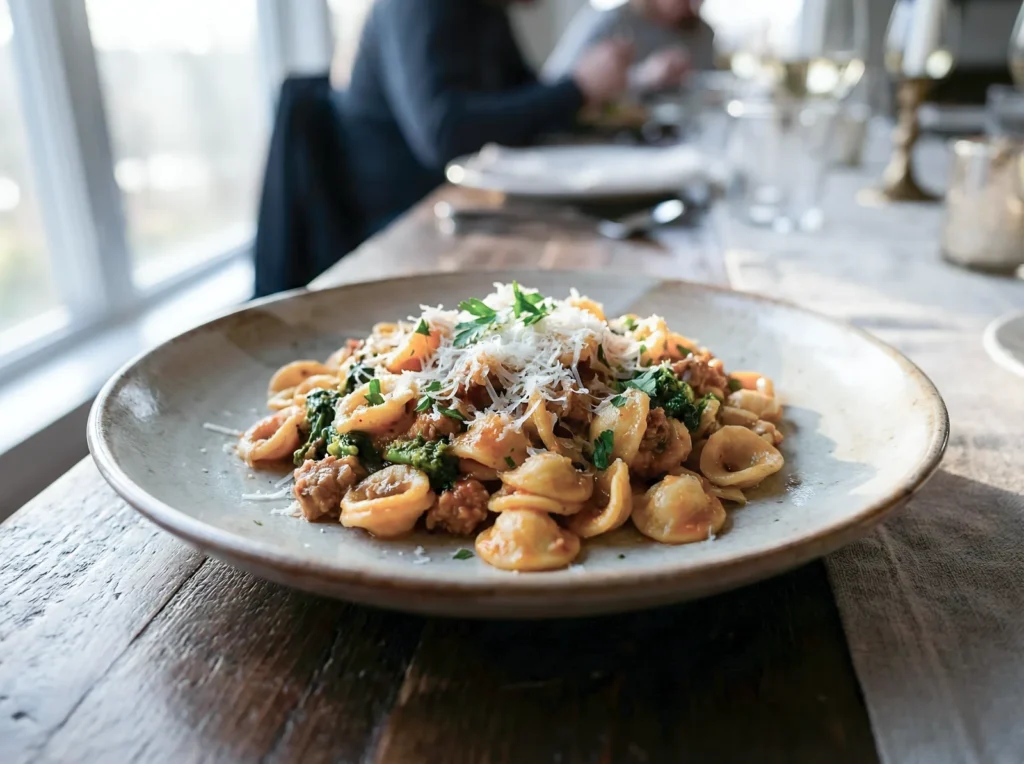
Orecchiette with sausage and broccoli is a weeknight Italian pasta that comes together in one pan with minimal cleanup. The little ear-shaped pasta catches the rendered sausage fat and broccoli bits, so every bite tastes seasoned. This version keeps the broccoli crisp and the sausage browned, not boiled into grayness. Pair this with our elementor for more ideas.
You get a balanced plate of carbs, greens, and protein without juggling three pots. The sauce is just pasta water, olive oil, garlic, and parmesan, which means the ingredients do the work. It's the kind of dish you can scale up for four people or down for two without changing the method. If you enjoyed this, our default kit is worth trying next. Making this orecchiette with sausage and broccoli at home is surprisingly straightforward once you know the key steps.
Why You'll Love These Orecchiette With Sausage And Broccoli
- One pan after the pasta boils, so you wash a single skillet and a pot
- Broccoli stays green and snappy because it's added late and steamed briefly
- Sausage gives enough fat that you don't need a heavy cream sauce
- Ready in about 30 minutes from cold fridge to served plates
- Leftovers reheat without turning to mush if you follow the storage steps
Ingredients You'll Need
- 12 oz orecchiette pasta
- 1 lb Italian pork sausage, casings removed
- 3 cups broccoli florets, cut to 1-inch pieces
- 3 tbsp extra-virgin olive oil
- 4 garlic cloves, thinly sliced
- 1/2 tsp crushed red pepper flakes
- 3/4 cup grated parmesan, plus more for serving
- 1 tsp salt for pasta water, plus 1/4 tsp for finishing
- 1/2 cup reserved pasta cooking water
- 2 tbsp lemon juice, from about half a lemon
Ingredient Substitutions
Italian pork sausage: Replace with 1 lb of mild turkey sausage using the same remove-from-casing step. Turkey renders less fat, so add 1 tbsp olive oil when browning to avoid sticking and keep the pan from drying. Expect a lighter flavor and slightly less crisp edges, but the broccoli and garlic still carry the dish. The orecchiette with sausage and broccoli works well for weeknight cooking when time is limited.
Orecchiette pasta: Swap with 12 oz of small shells or cavatelli if you can't find orecchiette. Shells hold sauce inside the same way the ears do, though they cook 1 to 2 minutes faster, so check doneness early. The texture is close enough that the sausage and broccoli distribution stays even. Storing leftover orecchiette with sausage and broccoli correctly keeps it tasting good for days.
Parmesan: Use 3/4 cup of pecorino romano for a sharper, saltier finish. Pecorino clumps faster in warm liquid, so stir it off heat and add the pasta water slowly. The dish turns more tangy and less nutty than with parmesan. For the best results with this orecchiette with sausage and broccoli, read through all the steps before starting.
Broccoli florets: Substitute 3 cups of broccolini cut into 2-inch stalks for a sweeter, more stem-forward bite. Broccolini needs 1 extra minute of steam time to soften the stalks. For a complementary side, our Italian broccoli works as a starter.
Step-by-Step Instructions
- Bring 4 quarts of water to a rolling boil and add 1 tsp salt. Cook 12 oz orecchiette for 9 minutes, then add 3 cups broccoli and boil both for 3 minutes until pasta is al dente and broccoli is bright green. Scoop out 1/2 cup pasta water before draining.
- Set a 12-inch skillet on medium heat and add 3 tbsp olive oil. Crumble 1 lb sausage into the pan and cook 8 minutes, breaking it with a spoon, until pieces are brown and crisp at the edges and no pink remains.
- Push sausage to one side, lower to medium-low heat, and add 4 sliced garlic cloves and 1/2 tsp red pepper flakes. Stir 1 minute until garlic is pale gold and fragrant, not browned or bitter.
- Add drained pasta and broccoli to the skillet with 1/4 tsp salt. Pour in 1/2 cup pasta water and toss 2 minutes on medium heat until the liquid turns into a light glossy coat.
- Remove from heat, add 3/4 cup parmesan and 2 tbsp lemon juice, and toss until cheese melts into the coating. The pasta should look shiny with no loose water pooling at the bottom.
- Divide into bowls and top with extra parmesan. Serve immediately while the broccoli keeps its snap.
Pro Tips
Cut broccoli to a uniform 1-inch size so it finishes in the same 3-minute window as the pasta. If some pieces are twice as big, they'll be raw while the small ones go soft.
Brown the sausage without stirring for the first 3 minutes so the bottom crisps, then break it up. Constant stirring steams the meat instead of searing it and you lose the fond that flavors the oil.
Reserve pasta water before you drain, not after. The starch in that water is what turns olive oil and cheese into a sauce that clings instead of sliding off.
Read technique detail on pasta cooking if you want the science behind starch-thickened emulsions. Their breakdowns explain why a dry pan fails the same way every time.
Common Mistakes to Avoid
Overcooking broccoli with the pasta from the start turns it olive-green and mushy. Add it only for the final 3 minutes so it stays firm and sweet.
Using pre-grated parmesan from a canister leaves a grainy coat because it contains cellulose. Block parmesan grated fresh melts into a smooth layer.
Cooking garlic on high heat burns it in under a minute, making the whole skillet bitter. Keep it at medium-low heat and pull the pan the moment it turns gold. For another easy option, check out our elementor.
Serving Suggestions
Plate the pasta in wide shallow bowls so the broccoli sits on top instead of sinking. A wedge of lemon on the side lets people brighten their own portion.
Pair with a simple green salad dressed in oil and vinegar to cut the sausage richness. For a lighter starter, our avocado smoothie isn't traditional but works as a cool opener.
Crusty bread on the side soaks up the last of the oil and cheese. Don't serve it with a heavy cream soup or the meal gets too fatty.
Storage and Reheating
Cool the pasta to room temperature within 2 hours, then store in an airtight container in the fridge for up to 4 days. The broccoli softens a little each day but stays edible.
Reheat in a skillet on medium-low heat with 1 tbsp water per portion, tossing until the sausage reaches 165°F internally. Microwave reheating works but dries the edges, so cover with a damp paper towel.
This dish freezes poorly because the broccoli goes watery, so skip the freezer. If you must, freeze only the sausage and pasta mix without broccoli and add fresh when reheating. You might also like our navigation.
Recipe Variations
Spicy Version
Use hot Italian sausage and double the red pepper flakes to 1 tsp. The heat builds as the fat renders, so taste before adding the final parmesan. You get a pork-forward plate with a steady burn rather than a sharp one.
White Wine Version
After browning sausage, add 1/4 cup dry white wine and scrape the pan before the garlic step. Let it reduce 2 minutes so the alcohol cooks off and leaves a faint tartness. The sauce gets a lighter, more restaurant-style edge.
Broccolini Swap
Replace broccoli with 3 cups broccolini cut to 2-inch lengths and steam 4 minutes with the pasta. The stalks stay crunchier and taste sweeter than standard florets. Our Italian broccoli method applies the same timing logic.
Cheesy Bake
Transfer the finished skillet to a 400°F oven with 1/2 cup mozzarella on top for 8 minutes until bubbly. You trade the crisp broccoli for a browned cheese lid and a softer bite. Use an oven-safe pan or a baking dish to avoid melting a plastic handle.