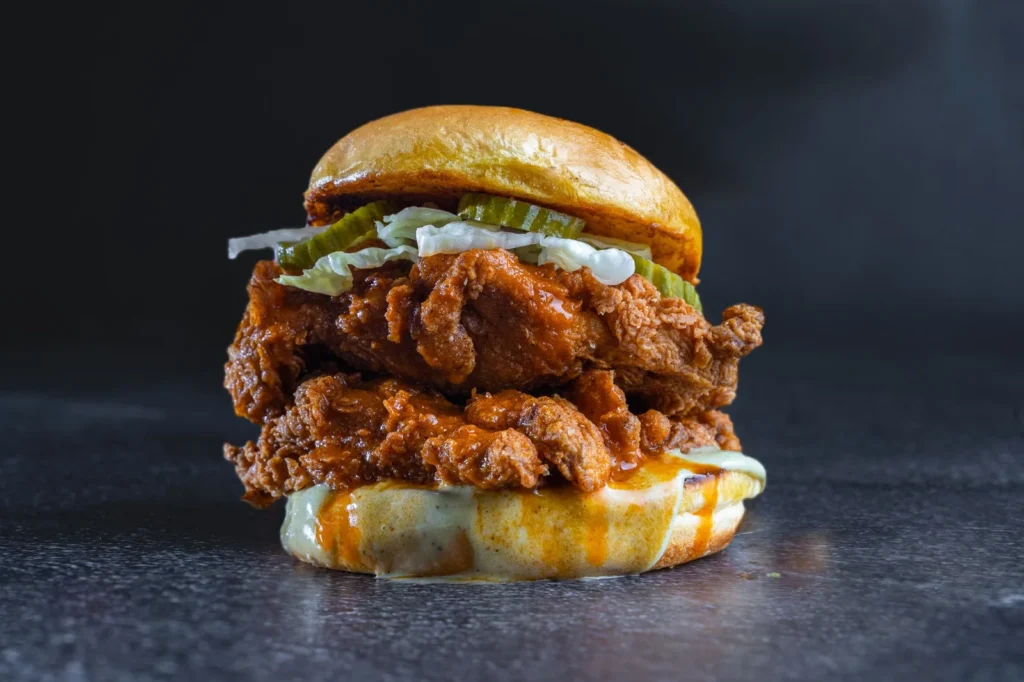
A nashville hot chicken sandwich brings together a buttermilk-brined chicken thigh, a crackling flour crust, and a cayenne oil glaze that sits right at the edge of painful and addictive. This version uses boneless skinless thighs so the meat stays juicy under the heat, and a soft brioche bun that soaks up the oil without falling apart. You get a sandwich with real structure: crunch, heat, acid from pickles, and a little sweetness from the bread.
The heat here is applied after frying as a glaze, not baked into the dredge, which keeps the crust crisp instead of soggy. That single change is why this recipe works better than most home attempts that dust cayenne into the flour and lose it to the fryer. We're building a sandwich you can actually hold and eat, not a puddle of spicy breading. If you enjoyed this, our hot toddy non is worth trying next. Making this nashville hot chicken sandwich at home is surprisingly straightforward once you know the key steps.
Why You'll Love These Nashville Hot Chicken Sandwich
- Thigh meat stays moist under high heat instead of drying out like breast often does.
- The cayenne glaze is brushed on after frying, so the crust stays audibly crisp.
- You control the spice level by scaling the oil glaze, not the dredge.
- Total active time is under 40 minutes once the brine is done.
- It uses standard pantry spices and one special oil step.
Ingredients You'll Need
- 4 boneless skinless chicken thighs (about 700g), trimmed of excess fat
- 240ml buttermilk
- 15ml hot sauce (Frank's or similar cayenne-based)
- 200g all-purpose flour
- 30g cornstarch
- 10g fine salt, divided
- 6g black pepper, divided
- 8g garlic powder
- 8g onion powder
- 4g paprika
- 1.2L neutral oil (canola or peanut) for frying
- 60ml frying oil reserved after cook
- 25g cayenne pepper
- 25g light brown sugar
- 4 brioche buns, split
- 60g dill pickle chips
- 20g salted butter, softened
Ingredient Substitutions
Buttermilk: Replace with 240ml whole milk plus 15ml lemon juice, rested 10 minutes. The acid tenderizes the meat the same way but the flavor is milder and slightly tangier. You may need to add 1 minute to the brine time for equal effect, and the crust will brown a touch lighter. The nashville hot chicken sandwich works well for weeknight cooking when time is limited.
Boneless skinless chicken thighs: Swap for bone-in thighs with the bone removed, or use 600g chicken breast cut to even 2cm slabs. Breast cooks faster and risks drying, so drop fry time by about 90 seconds per side and check the center early. The sandwich will be leaner with less rich mouthfeel. Storing leftover nashville hot chicken sandwich correctly keeps it tasting good for days.
Brioche buns: Use potato rolls or soft milk bread buns if brioche isn't available. Both hold the glaze without tearing, though potato rolls are slightly denser and less sweet. Avoid crusty artisan rolls that crack under pressure and push filling out the sides. For the best results with this nashville hot chicken sandwich, read through all the steps before starting.
Cayenne pepper: Replace with an equal weight of Korean gochugaru for a fruitier, less sharp heat. The glaze turns deep red-orange and sticks a bit more due to the flakes. Keep the sugar the same to balance the slower burn.
Neutral oil: Use lard or shortening for a more savory fry note if you don't need a plant-based oil. Lard sets firmer at room temp, so the glaze will thicken faster and need reheating before brushing. The crust gets a slightly more golden tone. For another easy option, check out our baked caesar chicken.
Step-by-Step Instructions
- Whisk buttermilk, hot sauce, and 5g salt in a bowl. Submerge chicken thighs, cover, and refrigerate at least 4 hours or overnight for deeper seasoning.
- Mix flour, cornstarch, remaining 5g salt, 4g black pepper, garlic powder, onion powder, and paprika in a wide dish. Set a wire rack over a sheet pan nearby.
- Remove one thigh from brine, let excess drip, then press into dredge on both sides until fully coated. Rest on the rack 5 minutes so the coating adheres during frying.
- Heat neutral oil in a 30cm heavy pot to 175°C / 350°F over medium-high heat, using a thermometer to hold the band.
- Fry two thighs at a time, turning once, until the crust is golden and crispy and the center hits 74°C / 165°F, about 6 minutes per side. Never crowd the pan or the oil drops below 160°C.
- Rest fried thighs on a clean rack 3 minutes. Reserve 60ml of the fry oil from the pot, still hot, in a small heatproof bowl.
- Stir cayenne, brown sugar, remaining 2g black pepper, and the hot reserved oil into a thin glaze. Brush evenly over both sides of each thigh until the surface looks wet and red.
- Butter split brioche and toast on medium-low heat in a dry skillet 90 seconds until edges turn light brown. Build sandwiches with bun, pickles, glazed thigh, more pickles, top bun.
Pro Tips
Rest the dredged thighs on a rack before frying so the coating hydrates and grips; skipping this step causes bare spots in the crust. For a deeper look at simple frying techniques, the method of resting coated protein applies across many recipes.
Use a clip-on thermometer and keep oil between 165–180°C; a drop below 160°C steams the breading instead of crisping it. Fry in small batches to protect that range.
Brush the glaze while the chicken is still warm so the oil carries the cayenne into every crevice. Cold thighs cause the glaze to bead and slide off.
Toast the buns in butter on medium-low heat rather than a toaster, which keeps them flexible enough to wrap the thigh without cracking at the hinge.
Common Mistakes to Avoid
Adding cayenne to the dredge instead of the post-fry glaze wastes the heat in the oil and produces a pale, uneven burn. Keep the spice in the glaze where it stays visible and sharp.
Overcrowding the pot drops the temperature fast and leads to greasy coating. Fry two thighs max in a 30cm pot and let oil recover to 175°C between batches.
Skipping the thermometer and guessing doneness risks undercooked poultry. Always confirm 74°C / 165°F at the thickest part before glazing.
Serving Suggestions
Pair the sandwich with grilled chicken thighs as a milder plate option for guests who avoid heat. A cold coleslaw with vinegar dressing cuts the capsaicin and resets the palate between bites.
Serve with a cold sweet tea or lemonade; the sugar slows the burn better than plain water. Add extra pickle chips on the side for a sharper counterpoint.
Storage and Reheating
Store cooled sandwiches in an airtight container in the fridge for up to 3 days; keep the glazed thigh separate from the bun if possible to protect the crust. Reheat the thigh in a 200°C / 400°F oven 12 minutes until the internal temperature reaches 74°C / 165°F again. The bun can be warmed in the same oven for the final 2 minutes. Freezing the cooked thigh works for up to 2 months, but the glaze loses some bite after thawing.
Recipe Variations
Extra Hot Version
Double the cayenne in the glaze and add 5g of ghost pepper powder to the oil for a sharper, longer burn. Brush a thinner layer so the crust still reads through, and warn eaters before serving. The color deepens to a dark brick red.
Oven-Fried Option
Coat thighs as written, then bake on a rack at 220°C / 430°F for 25–30 minutes, flipping once, until 74°C / 165°F. Brush with the stove-top glaze after baking. The crust is less shatter-crisp but the heat profile stays close.
Chicken Breast Build
Use 600g chicken breast cut to even slabs and reduce fry time by 90 seconds per side. The meat is leaner and firmer, so brine overnight to keep it from toughening. This version pairs well with chicken milanese sides like lemon wedges.
Sandwich Slider Set
Cut each glazed thigh into two pieces and use 8 mini potato rolls for a party tray. Keep grilled cheese off the same plate to avoid flavor clash. Serve with extra glaze in a small bowl for dipping.
Blackened Twist
Skip the cayenne glaze and instead coat the fried thigh with a blackened chicken spice rub after frying for a smoky profile. The sandwich loses the wet shine but gains a drier, pepper-heavy crust that holds longer at room temp.