
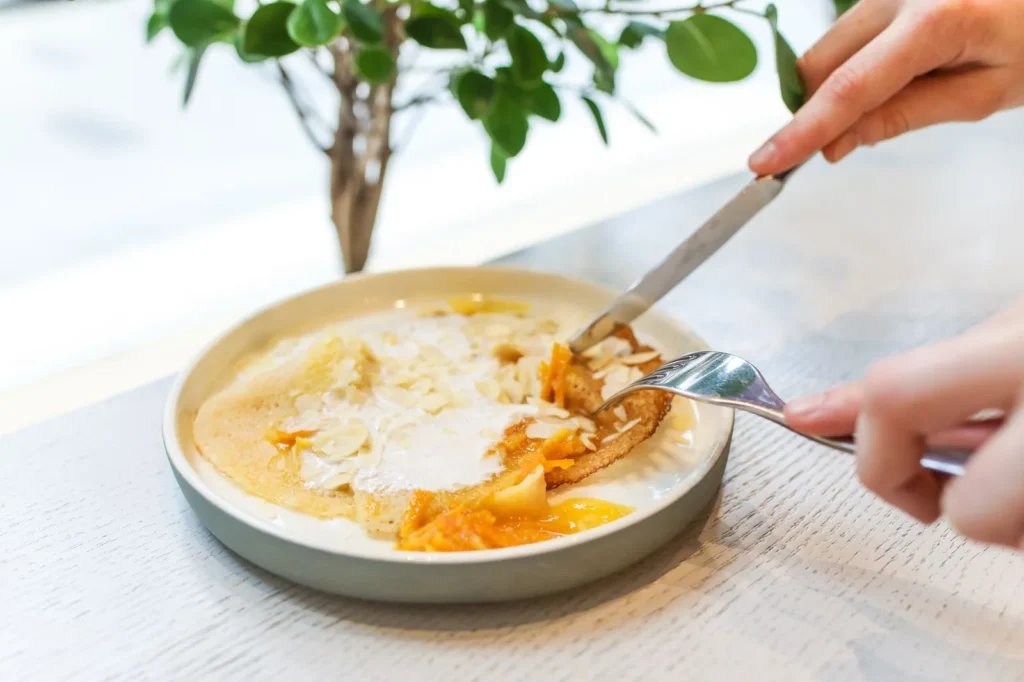
A mango pancake recipe should give you soft, golden pancakes with real fruit sweetness in every bite. This version uses ripe mango folded into the batter so the flavor carries through instead of sitting on top as a garnish. You get a tender crumb, a light citrus note from the mango, and a breakfast that feels like a treat without needing a mixer or special pan.
The method here keeps the batter relaxed so the pancakes stay fluffy rather than chewy. We rest the mix briefly, cook on steady heat, and slice the mango small enough to distribute evenly. If you enjoy fruit-forward morning bakes, our cinnamon focaccia is another relaxed option worth a look. Making this mango pancake at home is surprisingly straightforward once you know the key steps.
Whole milk: Replace with an equal volume of oat milk for a dairy-free version. Oat milk is slightly thinner and sweeter, so the crumb will be a touch more delicate and the browning a little slower. You may need medium-low heat to avoid pale centers, and the flavor loses some dairy roundness. The mango pancake works well for weeknight cooking when time is limited.
All-purpose flour: Swap with an equal weight of whole wheat flour for a nuttier taste. Whole wheat drinks more liquid, so add 1–2 tbsp extra milk to keep the batter pourable. Expect a denser bite and darker surface, which suits a hearty breakfast but not a delicate dessert plate. Storing leftover mango pancake correctly keeps it tasting good for days.
Large egg: Use 1 tbsp ground flaxseed mixed with 3 tbsp water as a vegan binder. The pancakes will be slightly less springy and more fragile when flipped. Cook them a little smaller so they turn without breaking, and add 30 seconds per side. For the best results with this mango pancake, read through all the steps before starting.
Melted butter: Replace with 2 tbsp neutral oil for a lighter fat. Oil keeps the surface soft rather than crisp at the edges. You lose the toasty note but gain a cleaner mango focus, and the pan needs less wiping between rounds. If you enjoyed this, our ciambotta is worth trying next.
Dice the mango to roughly 1/4 inch so pieces cook through without sinking. Larger chunks make the pancake tip and cook unevenly, while smaller bits disappear into the crumb.
Rest the batter for 5 minutes minimum even if you are in a rush; the pancakes rise higher and tear less on the flip. This step is where most flat results come from being skipped.
Use a nonstick pan technique with a paper wipe of butter rather than a pour, so the base browns without greasy pooling. A thin film gives color without weighing the crumb.
Keep finished pancakes in a 90°C / 200°F oven loosely covered while you cook the batch. This holds them soft instead of letting the tops dry and curl.
Overmixing the batter builds gluten and yields chewy, tight pancakes. Stop stirring the moment the streaks of flour fade, even if small lumps remain in the bowl.
Cooking on high heat browns the outside before the center sets, leaving a doughy core. Hold the pan at medium-low heat and watch the bubble pattern as your cue.
Using underripe mango adds sour, hard bits that resist softening. Choose fruit that yields to gentle thumb pressure and smells sweet at the stem end. For another easy option, check out our creme brulee authentic.
Plate the stack with a few fresh mango cubes and a light dust of powdered sugar for a dessert-style finish. A dollop of plain yogurt cuts the sweetness and adds a cool contrast.
For a fuller breakfast, pair with mini egg cookies on the side if you want a treat plate. The salt in the cookies balances the fruit nicely.
These also sit well next to eggplant rollatini for a sweet-savory brunch when you want more than one dish on the table.
Cooled pancakes keep in an airtight container in the fridge for up to 3 days. Layer them with parchment so they don't stick, and don't leave them out beyond 2 hours after cooking.
To freeze, stack with paper between and seal; they hold for freeze for up to 2 months. Reheat from frozen in a toaster on low or a 160°C / 325°F oven for 8 minutes until steaming through.
Microwave reheating works for single cakes at 30-second bursts, but the surface softens rather than stays lightly crisp. Use the oven when you want the original texture back. You might also like our garlic butter baked.
Replace the milk with an equal amount of coconut milk and add 2 tbsp shredded coconut to the dry mix. The result is a fuller tropical note and a slightly denser, more fragrant pancake that pairs with lime zest.
Add 1/2 tsp ground cardamom and 1/4 tsp cinnamon to the flour before mixing. The warm spices shift the fruit toward a chai-like profile and deepen the color slightly without changing cook time.
Swap whole milk for buttermilk and reduce baking powder to 1.5 tsp plus 1/4 tsp baking soda. You get a tangier crumb and taller rise, with a softer bite that suits a brunch spread.
Purée half the mango and add it to the wet mix, keeping the other half diced. The batter turns golden and the flavor intensifies; cook a little longer per side since the extra moisture slows setting.
Hi, I’m Anna — a wellness enthusiast, recipe creator, and founder of Cook Recipe. I love making healthy, easy, and feel-good meals that inspire others to live happier, more balanced lives. When I’m not in the kitchen, you’ll find me exploring new places or flowing through a yoga session! 🌿

