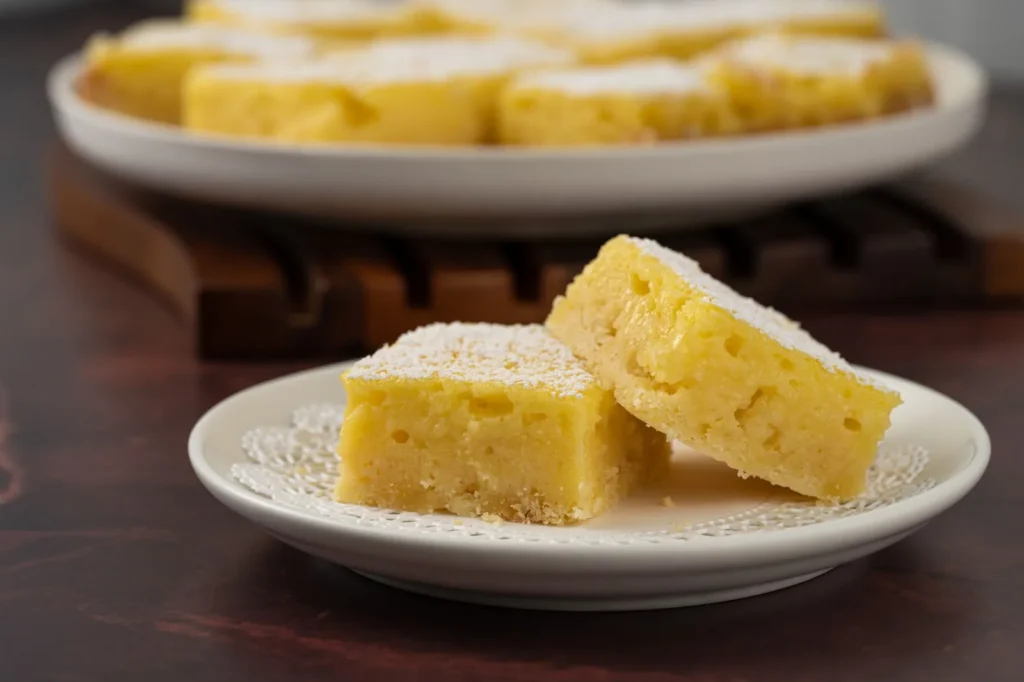
Lemon bars with graham cracker crust are a reliable dessert when you want something bright and sweet without fussing over pastry dough. The graham base bakes into a firm, sandy layer that holds the citrus filling without going soggy. You get a clean slice, a balanced sweet-tart bite, and a recipe that scales well for a party pan.
This version uses a straightforward custard-style lemon layer poured over a pressed crumb base. The contrast between the toasted crumbs and the smooth, set filling is what makes the bar work. Below you'll find exact weights, real substitution tradeoffs, and the cues that tell you the bars are done rather than guessed. Making this lemon bars with graham cracker crust at home is surprisingly straightforward once you know the key steps.
Why You'll Love These Lemon Bars With Graham Cracker Crust
- A pressed crumb base that stays crisp under a wet filling
- Tangy lemon layer that sets firm enough to cut clean
- One bowl for the topping and one pan for the base
- Freezes well, so you can bake ahead for events
- Uses pantry staples with no special equipment
Ingredients You'll Need
- 200 g graham crackers (about 14 full sheets), crushed fine
- 115 g unsalted butter, melted
- 50 g granulated sugar, for the crust
- 4 large eggs (about 200 g without shells)
- 200 g granulated sugar, for the filling
- 80 ml fresh lemon juice (about 3 medium lemons)
- 2 tbsp lemon zest (from those same lemons)
- 60 g all-purpose flour
- 1/4 tsp salt
- 2 tbsp powdered sugar, for finishing
Ingredient Substitutions
Graham crackers: Replace with 200 g of digestive biscuits crushed to the same fine crumb for a slightly maltier base. Digestive biscuits hold butter the same way, so the press-and-bake step does not change. Expect a deeper brown color and a less sweet crust, which pairs well with the tart topping. The lemon bars with graham cracker crust works well for weeknight cooking when time is limited.
Unsalted butter: Use 115 g of coconut oil, melted, for a dairy-free base that still binds the crumbs. Coconut oil sets harder when cold, so the crust will feel firmer straight from the fridge. The flavor picks up a faint coconut note that sits in the background behind the lemon. Storing leftover lemon bars with graham cracker crust correctly keeps it tasting good for days.
All-purpose flour: Swap with 60 g of fine almond flour to lower the gluten and add a soft bite. Almond flour absorbs less liquid, so the filling may look looser at the 20-minute mark but will still set with the eggs. The baked top will be a touch more delicate and less shiny than the wheat version.
Fresh lemon juice: Use 80 ml of bottled single-strength lemon juice if you're out of fruit, keeping the zest for aroma. Bottled juice is steadier in acid level, so the set is predictable, though the flavor is flatter. Add the zest from one lemon even with bottled juice to bring back some of the oils lost in processing.
Step-by-Step Instructions
- Heat the oven to 180°C / 350°F and line a 23 cm square pan with parchment, leaving an overhang on two sides.
- Mix the crushed graham crackers, 50 g sugar, and melted butter until the crumbs clump when pressed. Put it in the pan and press flat with a measuring cup.
- Bake the base on medium-low heat indirect (center rack) for 10 minutes until it looks dry at the edges and smells toasted.
- Whisk the eggs and 200 g sugar until smooth, then add lemon juice, zest, flour, and salt. Whisk just until no streaks remain, do not overmix.
- Pour the filling over the warm crust and return the pan to the oven for 25–30 minutes until the center barely jiggles when shaken.
- Cool on a rack for 1 hour, then chill at least 2 hours until just set edges and firm through. Dust with powdered sugar and cut into 16 squares.
Pro Tips
Press the crumb base hard with the base of a glass so it bakes into a solid sheet instead of a loose layer. A thin, uneven base lets the filling leak and gives you crumbly corners.
Warm the filling ingredients to room temperature before whisking so the butter in the crust doesn't seize when the liquid hits it. Cold eggs straight from the fridge can slow the set and add bake time.
For a cleaner cut, use a hot knife wiped between slices; the chilled layer releases instead of tearing. This matters most if you dust with sugar after cutting rather than before.
Read the citrus dessert tips from Minimalist Baker if you want to scale the zest without making the bars bitter. The pith is where the sharpness lives, so zest only the colored part.
Common Mistakes to Avoid
Skipping the parchment overhang makes the chilled block hard to lift; you'll dig at the corners and crack the top. Always leave two sides long enough to grab.
Pulling the pan at the first sign of browning gives you a wobbly center that weeps when cut. Wait until the whole surface looks matte and only the middle trembles slightly.
Adding extra lemon juice for more tang throws off the egg-to-liquid ratio and the bars won't firm. If you want more sour, cut the sugar by 20 g, not the flour or eggs.
Serving Suggestions
Cut the cold bars into small squares and set them on a tray with the lemon blueberry bread for a mixed citrus dessert board. The crumb base and the loaf's soft crumb cover different textures in one spread.
Pair a square with aperol spritz for a light afternoon option where the bitter orange cuts the sweet topping. Keep the bars chilled until the last ten minutes so the filling stays firm on the plate.
Storage and Reheating
Keep the cut bars in an airtight container in the fridge for up to 3 days, with parchment between layers so the tops don't stick. The crumb stays crisp for the first two days, then softens from the chill.
You can freeze the uncut block for freeze for up to 2 months wrapped tight in foil and a bag. Thaw overnight in the fridge, then dust and slice; the texture returns close to fresh.
These bars are best cold, so reheating isn't needed; if you prefer them room temp, leave a few out for 20 minutes. Don't leave the pan on the counter above 2 hours total before chilling.
Recipe Variations
Lemon Coconut Version
Stir 30 g of shredded coconut into the crumb base before pressing for a chewier bottom. The coconut toasts during the first bake and adds a mild sweetness that balances the sour topping. Expect a slightly softer base that still cuts clean when chilled.
Thin Party Bars
Use a 33 cm x 23 cm pan and drop the bake time to 18–22 minutes for a thinner square that serves more people. The filling layer will be about half as thick, so watch the jiggle closely. These are easier to pass on a platter as one-bite pieces.
Mild Orange Twist
Replace 30 ml of the lemon juice with fresh orange juice and keep the lemon zest for lift. The bars turn less sharp and more rounded, good for guests who avoid sour sweets. The set stays the same because the total liquid volume is unchanged.
For more lemon-forward bakes, see the creamy lemon pasta or the creamy lemon chicken as savory sides. A no bake lemon eclair cake makes a good chilled companion on the same table. Browse the full recipe index for other citrus desserts. Lemon bars with graham cracker crust also pair with the lemon arugula pasta at a brunch spread.