
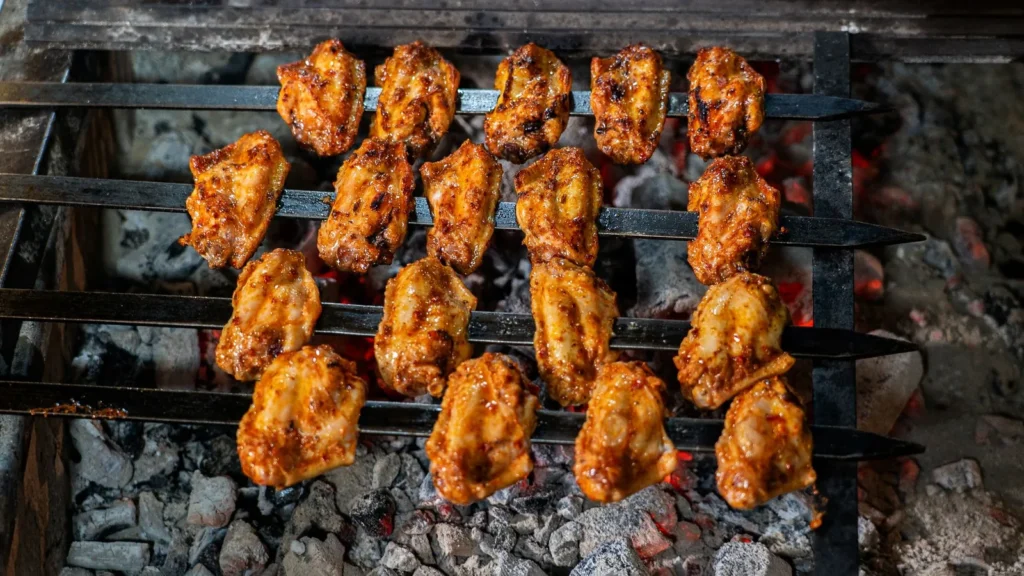
Hot honey chicken wings are the answer when you want something crisp, sticky, and loud with heat without standing over a fryer. This recipe bakes the wings on a rack so the fat renders and the skin tightens into a shell that holds up under a warm honey-chili glaze. You get a sweet burn that builds, not a one-note sugary coat.
The method below is built for consistency: a dry dredge, a high oven, and a glaze that goes on after the wings are already crisp. That order matters because honey scorches fast, and putting it on too early turns bitter. If you like grilled chicken thighs, the same glaze works there too. Making this hot honey chicken wings at home is surprisingly straightforward once you know the key steps.
Baking powder: Replace with an equal amount of cornstarch if you avoid aluminum-based leaveners. Cornstarch crisps the skin but lacks the pH lift that baking powder gives, so expect a slightly less puffed, thinner crust. The wings will still snap, just with a tighter bite and a paler finish. The hot honey chicken wings works well for weeknight cooking when time is limited.
Chili flakes: Swap the gochugaru for 1 tsp crushed red pepper plus 1/2 tsp cayenne if that is what you keep. Crushed red pepper brings a sharper, more uneven heat with visible seeds, while cayenne adds straight burn without the fruity note. Use medium-low heat when blooming either one so it does not turn acrid. Storing leftover hot honey chicken wings correctly keeps it tasting good for days.
Apple cider vinegar: Use rice vinegar at a 1:1 ratio for a softer tang that reads cleaner against honey. Rice vinegar is less acidic, so the glaze will feel rounder and a touch sweeter overall. You can skip the vinegar entirely, but the glaze then sits heavy and lacks the cut that keeps you eating.
Unsalted butter: Replace with olive oil at 1 tbsp per 1 tbsp butter if you want dairy-free. Olive oil gives a looser glaze with a grassy edge and less mouth-coating richness than butter. The shine stays, but the sauce will not emulsify as tightly and may separate if cooled too long. If you enjoyed this, our hot toddy non is worth trying next.
Dry the wings in the fridge uncovered for up to 3 days if you plan ahead; cold air pulls moisture from the skin and the bake crisps faster. A maillard reaction guide explains why dry surfaces brown better than wet ones.
Use gochugaru instead of generic flakes if you can find it; the heat is clean and the color stays red rather than brown. Pair the wings with brussels sprouts for a sweet-sour side that matches the glaze.
Do not skip the rack; a flat tray steams the underside and you lose the snap. If your rack is small, bake in two batches rather than stack wings.
Reserve 2 tbsp of glaze before tossing if you want a drizzle after plating for shine. The wings soak up more than you expect once off the heat.
Putting honey on before baking is the most common error; it burns by minute ten and turns the skin bitter. Always crisp first, glaze second.
Crowding the rack traps steam and gives rubbery wings. Leave a finger-width gap between pieces so the hot air does its job.
Using baking soda instead of baking powder lifts the skin too fast and leaves a metallic taste. Check the label before you measure.
Plate the wings over quesadillas cut into strips for a shared board with cooling ranch. A crisp slaw with vinegar dressing cuts the honey weight better than a creamy one.
For a full spread, add chicken goujons with a plain dip so kids who avoid heat have an option. Lemon wedges on the side brighten each bite.
Store cooled wings in an airtight container in the fridge for up to 3 days. Keep the glaze on; it protects the meat from drying.
Reheat in an air fryer at 180°C / 350°F for 5 minutes until the skin re-crisps and the center hits 74°C / 165°F. Avoid the microwave; it softens the crust within 30 seconds.
These freeze for freeze for up to 2 months in a sealed bag. Thaw overnight in the fridge before reheating so the inside warms before the glaze burns.
Add 1 tsp liquid smoke to the glaze and bake the wings on a smoker set to 120°C / 250°F for 1 hour before the final crisp at 200°C / 400°F. The result is a deeper, campfire edge under the honey that reads savory first, sweet second.
Swap the chili flakes for 1 tbsp lemon zest and 1 tsp dried oregano in the butter step. You get a bright, peppery glaze with no heat, closer to a lemon chicken profile than the original burn.
Double the chili flakes and add 1 tsp cayenne to the honey step for a faster, sharper heat. The glaze will darken quicker, so watch the pan and pull it at the first thick bubble.
Replace 2 tbsp of honey with 2 tbsp tomato-based bbq sauce for a thicker, smoky-sweet coat. The wings need 1 minute less toss time or the sugars tack up hard on the pan.
Hi, I’m Anna — a wellness enthusiast, recipe creator, and founder of Cook Recipe. I love making healthy, easy, and feel-good meals that inspire others to live happier, more balanced lives. When I’m not in the kitchen, you’ll find me exploring new places or flowing through a yoga session! 🌿

